
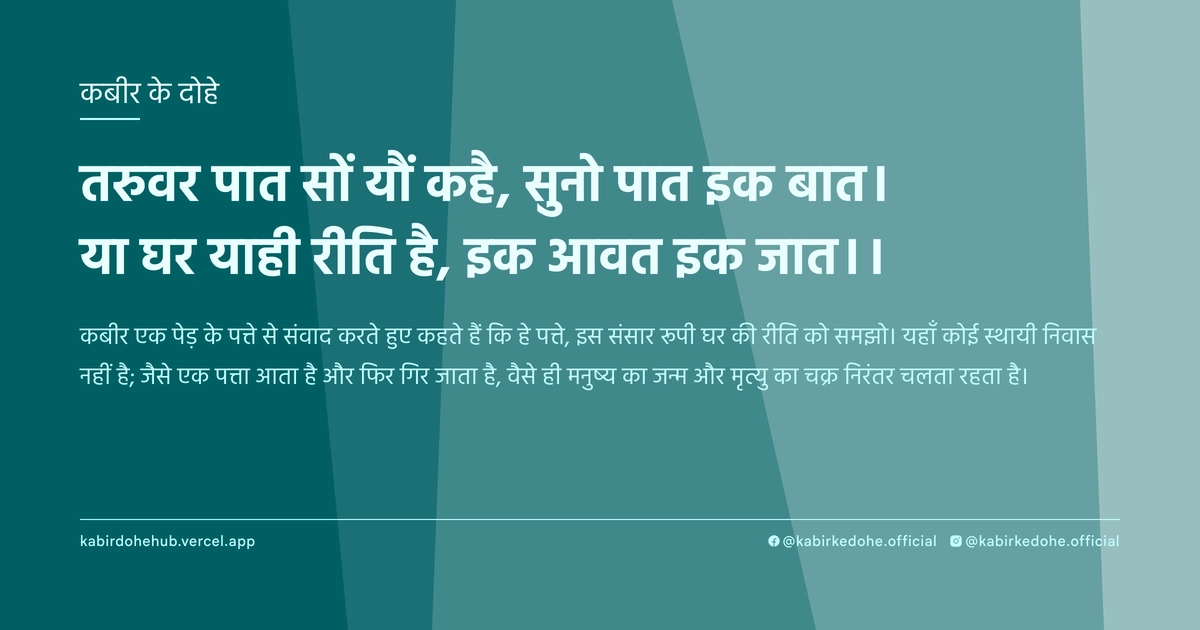
तरुवर पात सों यौं कहै, सुनो पात इक बात।
या घर याही रीति है, इक आवत इक जात।।
Taruvar paat son yaun kahai, suno paat ik baat. Ya ghar yaahi reeti hai, ik aavat ik jaat.
इस पृष्ठ पर इस कबीर दोहे का अर्थ (meaning), हिंदी व्याख्या और अंग्रेज़ी अनुवाद, दार्शनिक विश्लेषण और व्यावहारिक जीवन सीख दी गई है। यह दोहा अनित्य (Impermanence) विषय से जुड़ा है — Kabir doha meaning and explanation in Hindi and English.
अर्थ (Meaning):
कबीर एक पेड़ के पत्ते से संवाद करते हुए कहते हैं कि हे पत्ते, इस संसार रूपी घर की रीति को समझो। यहाँ कोई स्थायी निवास नहीं है; जैसे एक पत्ता आता है और फिर गिर जाता है, वैसे ही मनुष्य का जन्म और मृत्यु का चक्र निरंतर चलता रहता है।
Kabir addresses a leaf of a tree, urging it to listen to a fundamental truth. He explains that in this worldly household, the only constant law is transience: for every arrival, there is an inevitable departure, mirroring the cycle of birth and death.
व्याख्या (Interpretation):
शाब्दिक अर्थ में यह प्रकृति के अवलोकन से शुरू होता है, जहाँ पत्तों का झड़ना मृत्यु का प्रतीक है। रूपक के स्तर पर, 'घर' यह भौतिक शरीर और संसार है। यह दोहा निर्गुण भक्ति के उस सिद्धांत को दर्शाता है जहाँ आत्मा को शरीर से अलग माना गया है। माया हमें यह विश्वास दिलाती है कि हम इस शरीर में स्थायी हैं, जबकि सत्य यह है कि हम केवल यात्री हैं। अद्वैत वेदांत के अनुसार, यह जन्म-मृत्यु का चक्र तब तक चलता है जब तक जीव अपनी वास्तविक पहचान (ब्रह्म) को नहीं पहचान लेता। यहाँ 'आवत' और 'जात' केवल भौतिक आवागमन नहीं, बल्कि चेतना का विभिन्न अवस्थाओं में संक्रमण है।
Literally, the poem begins with a natural observation where falling leaves symbolize death. Metaphorically, the 'house' represents the physical body and the material world. This reflects the Nirgun Bhakti principle that the soul is distinct from the flesh. Maya creates the illusion of permanence, while the truth is that we are mere transients. According to Advaita Vedanta, this cycle of arrival and departure persists until the Jiva realizes its identity as Brahman. 'Coming and going' refers not just to biological birth and death, but to the migration of consciousness through various states of existence, highlighting the paradox of seeking permanence in a fleeting form.
दार्शनिक विश्लेषण (Philosophical Analysis):
कबीर का यह दोहा उस कालखंड का है जब समाज कर्मकांडों और बाहरी आडंबरों में उलझा था। वे यहाँ किसी मंदिर या मस्जिद की बात न कर प्रकृति को ही गुरु बनाते हैं। यह दृष्टिकोण सूफीवाद के 'फना' (अहंकार का विनाश) और अद्वैत के 'माया' सिद्धांत का संगम है। कबीर तर्क देते हैं कि यदि एक छोटा सा पत्ता भी स्थायी नहीं है, तो मनुष्य का अहंकार, जो स्वयं को अमर समझता है, कितना निरर्थक है।
वे जाति और धर्म के भेदों को इस सत्य के सामने तुच्छ बताते हैं। जब मृत्यु सबको समान कर देती है, तो सामाजिक ऊंच-नीच का कोई आधार नहीं बचता। यह विश्लेषण हमें सिखाता है कि मुक्ति बाहरी अनुष्ठानों से नहीं, बल्कि इस नश्वरता के स्वीकार से आती है।
मनोवैज्ञानिक स्तर पर, यह दोहा 'मृत्यु-बोध' (Memento Mori) के माध्यम से वर्तमान क्षण में जीने की प्रेरणा देता है। जब हम यह स्वीकार करते हैं कि हमारा समय सीमित है, तो हम ईर्ष्या, क्रोध और संचय की वृत्ति को त्याग देते हैं।
अद्वैत वेदांत के परिप्रेक्ष्य में, यह 'आगमन और प्रस्थान' केवल तब तक है जब तक द्वैत (duality) है। जिस क्षण साधक यह जान लेता है कि वह वह अविनाशी तत्व है जो पत्तों के गिरने और उगने का साक्षी है, वह इस चक्र से मुक्त हो जाता है।
अंततः, कबीर यहाँ एक क्रांतिकारी बदलाव की बात कर रहे हैं—एक ऐसी चेतना जहाँ मनुष्य स्वयं को 'स्वामी' नहीं बल्कि 'अतिथि' समझे। यह विनम्रता ही अहंकार के विसर्जन का मार्ग है और यही वास्तविक भक्ति का आधार है।
This couplet emerges from an era steeped in ritualism and rigid social hierarchies. Kabir bypasses organized religion, turning nature itself into a spiritual preceptor. His approach is a synthesis of the Sufi concept of 'Fana' (annihilation of the self) and the Advaitic doctrine of 'Maya'. He argues that if a mere leaf is not permanent, the human ego, which perceives itself as eternal, is fundamentally delusional.
He renders caste and religious divisions irrelevant in the face of this universal transience. When death equalizes all, social stratifications lose their foundation. This analysis suggests that liberation comes not from external rituals, but from the profound acceptance of impermanence.
Psychologically, the poem employs the 'Memento Mori' technique to anchor the practitioner in the present. By accepting the finitude of existence, one naturally sheds the burdens of envy, anger, and the compulsive need for accumulation.
From the lens of Advaita Vedanta, this 'coming and going' is a symptom of duality. The moment the seeker realizes they are the timeless Witness (Sakshi) of the leaves falling and growing, they transcend the cycle of Samsara.
Ultimately, Kabir advocates for a revolutionary shift in consciousness—moving from the identity of a 'master' to that of a 'guest'. This humility is the gateway to the dissolution of the ego and the bedrock of true devotion.
मूल संदेश (Core Message):
- मोह ही बंधन है, विरक्ति ही मुक्ति है।
- शरीर एक वस्त्र है, जिसे समय आने पर बदलना होगा।
- अहंकार का अंत ही सत्य की शुरुआत है।
- संसार में रहो, पर संसार को अपने भीतर मत बसने दो।
- आगमन और प्रस्थान प्रकृति का शाश्वत नियम है।
- Attachment is the chain; detachment is the key.
- The body is but a garment to be shed in time.
- The end of ego is the dawn of Truth.
- Dwell in the world, but do not let the world dwell in you.
- Arrival and departure are the eternal rhythms of nature.
व्यावहारिक उदाहरण (Practical Example):
एक समय की बात है, वाराणसी के घाटों पर रहने वाले एक वृद्ध विधवा, जानकी, का जीवन केवल अपनी छोटी सी कुटिया और गंगा की आरती तक सीमित था। वह अपने जीवन भर की जमा पूंजी और कुछ पुराने गहनों को लेकर बहुत आसक्त थी, जिन्हें वह अपनी सुरक्षा मानती थी।
जानकी अक्सर उन लोगों पर क्रोध करती थी जो उनकी कुटिया के पास शोर मचाते थे, क्योंकि वह अपनी शांति और अपनी संपत्ति की रक्षा करना चाहती थी। उसका अहंकार उसे विश्वास दिलाता था कि वह इस घाट की एक स्थायी निवासी है और उसकी वस्तुएं उसकी पहचान हैं।
एक दिन, भारी बारिश के कारण घाट पर बाढ़ आई और उसकी कुटिया का एक हिस्सा ढह गया। उसके गहने मलबे में दब गए और उसकी छोटी सी दुनिया बिखर गई। वह फूट-फूट कर रोने लगी, जैसे उसने अपना अस्तित्व खो दिया हो।
तभी उसकी मुलाकात एक घुमंतू साधु से हुई, जिसने उसे एक पेड़ की ओर इशारा किया जिसके पत्ते तेज हवा और बारिश में झड़ रहे थे। साधु ने मुस्कुराते हुए कहा, 'देखो माता, यह पेड़ भी इसी घाट का पुराना निवासी है, पर क्या इसने कभी गिरते पत्तों पर शोक मनाया?'
जानकी ने देखा कि पेड़ नए पत्तों के आने के लिए पुराने पत्तों को खुशी-खुशी विदा कर रहा था। उसे अचानक कबीर का वह बोध हुआ कि वह भी इस संसार रूपी घर में केवल एक अतिथि है।
उसने महसूस किया कि उसका दुख गहनों के खोने का नहीं, बल्कि इस भ्रम का था कि वह उन गहनों की स्थायी स्वामी थी। यह अहसास उसके भीतर एक गहरी शांति लेकर आया।
उसने अपनी शेष संपत्ति उन लोगों में बांट दी जो बाढ़ से प्रभावित थे। अब वह गहनों की सुरक्षा नहीं, बल्कि आत्मा की मुक्ति की चिंता करने लगी।
उसका व्यवहार पूरी तरह बदल गया। अब वह शोर मचाने वाले बच्चों पर चिल्लाती नहीं थी, बल्कि उन्हें जीवन की नश्वरता और प्रेम की कहानियाँ सुनाती थी।
जानकी ने जान लिया कि जब हम 'पकड़ने' की कोशिश छोड़ देते हैं, तब हम वास्तव में स्वतंत्र होते हैं। उसकी पहचान अब एक 'संपत्ति मालिक' की नहीं, बल्कि एक 'साक्षी' की थी।
उसकी मृत्यु जब हुई, तो वह उसी शांत भाव से गई जैसे एक पत्ता पेड़ से अलग होता है, बिना किसी डर या मोह के।
In the ancient ghats of Varanasi lived an elderly widow named Janaki, whose world revolved around her tiny hut and the evening Aarti. She was deeply attached to her meager life savings and a few old pieces of jewelry, viewing them as her only security.
Janaki often reacted with anger toward those who made noise near her dwelling, as she sought to protect her perceived peace and possessions. Her ego convinced her that she was a permanent resident of the ghat and that her belongings defined her identity.
One year, torrential rains caused the Ganges to overflow, collapsing a portion of her hut. Her jewelry was buried under debris, and her small world shattered. She wept inconsolably, feeling as though her very existence had been erased.
During her grief, she encountered a wandering monk who pointed toward a nearby tree whose leaves were shedding in the storm. The monk smiled and asked, 'Look, Mother, this tree has lived on this ghat longer than you, yet does it ever mourn its falling leaves?'
Janaki observed that the tree released its old leaves with grace to make room for the new. In that moment, Kabir's wisdom struck her: she too was merely a guest in this worldly household.
She realized her suffering stemmed not from the loss of jewelry, but from the illusion that she was the permanent owner of those objects. This realization brought a profound, unexpected peace.
She decided to distribute her remaining resources among other flood victims. She stopped worrying about the security of gold and began focusing on the liberation of the soul.
Her behavior transformed completely. Instead of scolding the noisy children, she began telling them stories of impermanence and universal love.
Janaki understood that when we stop trying to 'grasp,' we finally become free. Her identity shifted from that of a 'possessor' to that of a 'witness.'
When her time eventually came to leave the world, she departed with the same serenity as a leaf detaching from a branch, devoid of fear or clinging.
अभ्यास मार्गदर्शन (Practice Guidance):
- दैनिक चिंतन: प्रतिदिन 10 मिनट मौन बैठें और कल्पना करें कि आपका शरीर एक पत्ता है जो समय की धारा में बह रहा है।
- आत्म-पूछताछ जर्नल: लिखें कि ऐसी कौन सी वस्तुएं या रिश्ते हैं जिन्हें आप 'स्थायी' मानते हैं और यह सोचें कि यदि वे कल न हों, तो आपकी आत्मा पर क्या प्रभाव पड़ेगा।
- व्यवहार परिवर्तन: किसी ऐसी वस्तु का त्याग करें जिससे आप अत्यधिक मोह रखते हों, ताकि आप 'अतिथि' होने के भाव को आत्मसात कर सकें।
- निदान चेकलिस्ट: क्या आप छोटी बातों पर अत्यधिक क्रोधित होते हैं? क्या आप भविष्य की सुरक्षा के लिए वर्तमान की शांति खो रहे हैं? यदि हाँ, तो आप 'स्थायित्व के भ्रम' में जी रहे हैं।
- Daily Contemplation: Spend 10 minutes in silence, visualizing your physical existence as a leaf drifting in the current of time.
- Self-Inquiry Journaling: List the possessions or relationships you consider 'permanent' and reflect on how your essence would remain unchanged if they vanished tomorrow.
- Behavioral Shift: Consciously let go of a material object you are overly attached to, practicing the feeling of being a 'guest' rather than an 'owner'.
- Diagnostic Checklist: Do you react with disproportionate anger to minor losses? Are you sacrificing present peace for future security? If yes, you are operating under the 'Illusion of Permanence'.
चिंतन प्रश्न (Reflection Questions):
- यदि आपकी सामाजिक पहचान (नाम, पद, जाति) छीन ली जाए, तो आपके भीतर क्या बचेगा?
- आप अपनी डिजिटल छवि (सोशल मीडिया) को कितना स्थायी मानते हैं, और यह आपकी वास्तविक शांति को कैसे प्रभावित करता है?
- क्या आपका 'प्रेम' वास्तव में दूसरे के लिए है, या वह केवल उस व्यक्ति को 'पकड़े रखने' की इच्छा है?
- आप मृत्यु के विचार से डरते हैं या उस सत्य से जो मृत्यु आपके सामने उजागर करती है?
- आपके जीवन का वह कौन सा हिस्सा है जिसे आप जबरदस्ती थामे हुए हैं, जबकि वह 'झड़ चुका' है?
- If your social identity—name, rank, caste—were stripped away, what would remain of you?
- To what extent do you perceive your digital persona as permanent, and how does this affect your inner stillness?
- Is your 'love' truly for the other, or is it merely a desire to 'possess' and hold onto them?
- Do you fear death itself, or the truth that death exposes about your illusions?
- Which part of your life are you desperately clinging to, even though it has already 'withered'?