
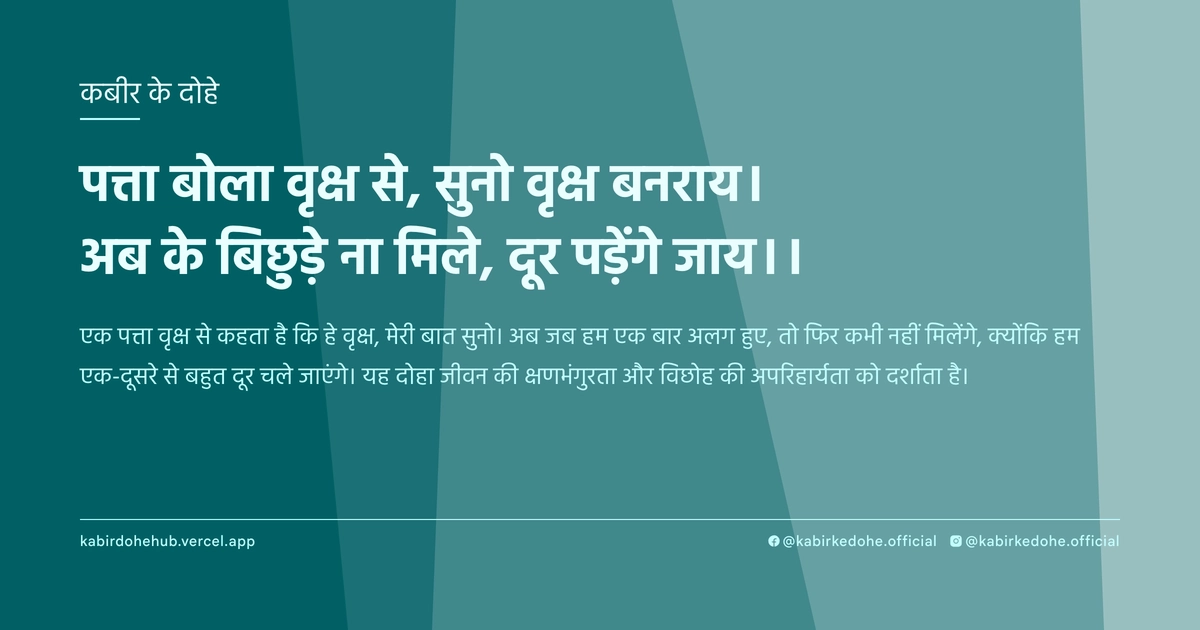
पत्ता बोला वृक्ष से, सुनो वृक्ष बनराय।
अब के बिछुड़े ना मिले, दूर पड़ेंगे जाय।।
Patta bola vriksh se, suno vriksh banray. Ab ke bichhude na mile, door padhenge jaaye.
इस पृष्ठ पर इस कबीर दोहे का अर्थ (meaning), हिंदी व्याख्या और अंग्रेज़ी अनुवाद, दार्शनिक विश्लेषण और व्यावहारिक जीवन सीख दी गई है। यह दोहा अनित्य (Impermanence) विषय से जुड़ा है — Kabir doha meaning and explanation in Hindi and English.
अर्थ (Meaning):
एक पत्ता वृक्ष से कहता है कि हे वृक्ष, मेरी बात सुनो। अब जब हम एक बार अलग हुए, तो फिर कभी नहीं मिलेंगे, क्योंकि हम एक-दूसरे से बहुत दूर चले जाएंगे। यह दोहा जीवन की क्षणभंगुरता और विछोह की अपरिहार्यता को दर्शाता है।
A leaf speaks to the tree, saying, 'O great tree, listen to me. Once we are separated now, we shall never meet again, for we will be cast far apart.' This verse captures the poignant reality of impermanence and the inevitable separation inherent in the physical world.
व्याख्या (Interpretation):
शाब्दिक रूप से यह प्रकृति के चक्र का वर्णन है, जहाँ पतझड़ में पत्ता गिरता है। आध्यात्मिक स्तर पर, पत्ता 'जीवात्मा' है और वृक्ष 'परमात्मा' या मूल स्रोत है। यह विरह की वह अवस्था है जहाँ आत्मा को अपनी नश्वरता का बोध होता है। निर्गुण भक्ति के संदर्भ में, यह माया के प्रभाव को दर्शाता है जो हमें मूल स्रोत से अलग कर देता है। जब तक हम स्वयं को शरीर (पत्ता) मानते हैं, हम विछोह के डर में जीते हैं, लेकिन अद्वैत वेदांत के अनुसार, यह अलगाव केवल एक भ्रम है। वास्तविक सत्य यह है कि पत्ता कभी वृक्ष से अलग था ही नहीं; वह केवल अपनी पहचान भूल गया था। यह विरोधाभास मानव अस्तित्व की त्रासदी और मुक्ति की संभावना दोनों को उजागर करता है।
Literally, this describes the natural cycle where a leaf falls during autumn. Spiritually, the leaf represents the 'Jivatma' (individual soul) and the tree represents the 'Paramatma' (Universal Soul) or the primordial source. It depicts the state of longing and the realization of mortality. In the context of Nirgun Bhakti, this illustrates the influence of Maya, which creates the illusion of separation from the Source. As long as we identify as the body (the leaf), we live in fear of detachment; however, according to Advaita Vedanta, this separation is a mere illusion. The ultimate truth is that the leaf was never truly separate from the tree; it had simply forgotten its essence. This paradox highlights both the tragedy of human existence and the potential for liberation.
दार्शनिक विश्लेषण (Philosophical Analysis):
कबीर का यह दोहा उस युग की उपज है जहाँ बाहरी कर्मकांडों के बजाय आंतरिक अनुभव को प्रधानता दी गई थी। यहाँ पत्ता और वृक्ष का संबंध केवल भौतिक नहीं, बल्कि अस्तित्वगत है। कबीर यहाँ 'शून्यता' और 'विनाश' के माध्यम से जीवन की वास्तविकता को समझा रहे हैं। वे हमें चेतावनी देते हैं कि भौतिक संसार के सभी संबंध क्षणिक हैं।
अद्वैत वेदांत के दृष्टिकोण से, यह विछोह 'अविद्या' (अज्ञान) का परिणाम है। जब तक जीव स्वयं को पृथक इकाई मानता है, वह दुख और भय का अनुभव करता है। कबीर यहाँ सूफी मत के 'इश्क-ए-हकीकी' (ईश्वरीय प्रेम) की झलक देते हैं, जहाँ आत्मा अपने मूल स्रोत से मिलने के लिए तड़पती है।
कबीर ने जाति और धर्म के बंधनों को तोड़कर एक ऐसी भाषा चुनी जो एक साधारण बुनकर और एक विद्वान दोनों को समझ आए। वे कहते हैं कि मंदिर-मस्जिद की दीवारों से अधिक महत्वपूर्ण वह क्षण है जब मनुष्य को अपनी नश्वरता का आभास होता है। यह बोध ही अहंकार के विसर्जन की पहली सीढ़ी है।
मनोवैज्ञानिक स्तर पर, यह दोहा 'मृत्यु की स्वीकृति' (Acceptance of Death) पर केंद्रित है। जब हम यह स्वीकार कर लेते हैं कि सब कुछ विदा होना है, तब हम वर्तमान क्षण की मूल्यवत्ता को समझते हैं। यह भय से मुक्ति का मार्ग है।
अंततः, कबीर यह संदेश देते हैं कि यदि हम इस भौतिक विछोह से बचना चाहते हैं, तो हमें उस 'अविनाशी' तत्व को खोजना होगा जो न कभी गिरता है और न कभी अलग होता है। यह शरीर का अंत नहीं, बल्कि चेतना का विस्तार है।
This couplet is a product of an era where internal experience was prioritized over external rituals. The relationship between the leaf and the tree is not merely physical, but existential. Kabir uses the concepts of 'emptiness' and 'destruction' to explain the reality of life, warning us that all worldly attachments are transient.
From the perspective of Advaita Vedanta, this separation is a result of 'Avidya' (ignorance). As long as the soul perceives itself as a separate entity, it experiences suffering and fear. Kabir reflects the Sufi concept of 'Ishq-e-Haqiqi' (Divine Love), where the soul yearns to reunite with its primordial source.
By breaking the shackles of caste and creed, Kabir adopted a language accessible to both a humble weaver and a scholar. He asserts that the realization of one's own mortality is far more significant than the walls of temples or mosques. This awareness is the first step toward the annihilation of the ego.
Psychologically, the verse focuses on the 'Acceptance of Death.' When we accept that everything must eventually depart, we begin to value the present moment. This is the path to liberation from fear.
Ultimately, Kabir suggests that to escape this physical separation, one must discover the 'Imperishable' element that neither falls nor separates. It is not about the end of the body, but the expansion of consciousness into the Infinite.
मूल संदेश (Core Message):
- मोह ही समस्त दुखों का मूल कारण है।
- नश्वरता को स्वीकार करना ही वास्तविक शांति है।
- व्यक्तिगत पहचान एक भ्रम है, सार्वभौमिक एकता सत्य है।
- विछोह केवल शरीर का होता है, आत्मा का नहीं।
- वर्तमान क्षण में जिएं, क्योंकि भविष्य अनिश्चित है।
- अहंकार का त्याग ही परमात्मा से मिलन का मार्ग है।
- Attachment is the root cause of all suffering.
- Accepting impermanence is the key to true peace.
- Individual identity is an illusion; universal unity is the truth.
- Separation occurs only in the body, never in the soul.
- Live in the present, for the future is uncertain.
- Surrendering the ego is the only path to Divine union.
व्यावहारिक उदाहरण (Practical Example):
राजस्थान के एक छोटे से गाँव में राम सिंह नाम का एक वृद्ध किसान रहता था। उसने अपना पूरा जीवन अपनी जमीन और अपनी फसलों से गहरा लगाव विकसित करने में बिताया। उसके लिए उसकी फसलें केवल अनाज नहीं, बल्कि उसकी संतान जैसी थीं।
एक साल भीषण सूखा पड़ा और उसकी सारी फसलें सूखकर पीली पड़ गईं। राम सिंह गहरे शोक में डूब गया। वह घंटों अपने सूखे खेतों में बैठकर रोता और सोचता कि उसकी मेहनत और उसका अस्तित्व सब कुछ नष्ट हो गया।
एक दिन गाँव के एक फकीर ने उसे देखा और कबीर का यह दोहा सुनाया। फकीर ने कहा, 'राम सिंह, तू इस फसल से इतना क्यों जुड़ा है? यह तो बस एक पत्ता है जो समय आने पर गिरना ही था। तूने फसल को अपना माना, जबकि तू स्वयं उस मिट्टी का हिस्सा है जहाँ से यह फसल आई और जहाँ इसे वापस जाना है।'
राम सिंह को पहले यह बात कड़वी लगी, लेकिन धीरे-धीरे उसे समझ आया कि उसका दुख इस बात से नहीं था कि फसल नष्ट हो गई, बल्कि इस बात से था कि उसने अपनी पहचान उस 'नश्वर' फसल के साथ जोड़ ली थी।
उसने महसूस किया कि वह स्वयं उस 'वृक्ष' की तरह है जिसकी जड़ें गहरी हैं, और फसलें केवल मौसम के अनुसार बदलने वाले पत्ते हैं। इस बोध ने उसके भीतर के मोह को समाप्त कर दिया।
अब वह फसल के नुकसान पर विलाप नहीं करता था, बल्कि प्रकृति के इस चक्र को सहजता से स्वीकार करने लगा। उसने अपनी ऊर्जा अन्य ग्रामीणों की मदद करने में लगाई जो सूखे से जूझ रहे थे।
उसका व्यवहार बदल गया; वह अब अधिक शांत और उदार था। उसने समझा कि सच्चा लगाव उस स्रोत से होना चाहिए जो कभी नहीं बदलता, न कि उन चीजों से जो समय के साथ झड़ जाती हैं।
राम सिंह का जीवन अब एक बोझ नहीं, बल्कि एक उत्सव बन गया क्योंकि उसने 'विछोह' के डर को 'समर्पण' के आनंद में बदल दिया था।
In a small village in Rajasthan lived an elderly farmer named Ram Singh. He had spent his entire life developing a deep attachment to his land and crops. For him, his harvests were not just grain, but like his own children.
One year, a severe drought struck, and all his crops withered and turned yellow. Ram Singh sank into deep grief. He would spend hours sitting in his parched fields, weeping and thinking that his hard work and very existence had been destroyed.
One day, a wandering dervish saw him and recited this Doha of Kabir. The dervish said, 'Ram Singh, why are you so attached to this crop? It is but a leaf that was destined to fall when the time came. You claimed the harvest as yours, forgetting that you yourself are part of the soil from which the crop rose and to which it must return.'
At first, Ram Singh found these words harsh, but gradually he realized that his pain did not stem from the loss of the crop, but from the fact that he had identified his own self with the 'perishable' harvest.
He felt that he was like the 'tree' with deep roots, and the crops were merely leaves that change with the seasons. This realization dissolved his obsessive attachment.
He no longer lamented the loss of the harvest but began to accept the cycle of nature with grace. He redirected his energy toward helping other villagers who were struggling with the drought.
His behavior transformed; he became calmer and more generous. He understood that true attachment should be toward the eternal Source, not toward things that wither with time.
Ram Singh's life ceased to be a burden and became a celebration, as he transformed the fear of 'separation' into the joy of 'surrender.'
अभ्यास मार्गदर्शन (Practice Guidance):
- प्रतिदिन 15 मिनट मौन बैठें और अपने जीवन की उन चीजों की सूची बनाएं जिनसे आप अत्यधिक मोह रखते हैं। विचार करें कि यदि वे कल चले जाएं, तो आपके अस्तित्व का कौन सा हिस्सा बचेगा।
- जर्नलिंग प्रॉम्प्ट: 'मैं वह पत्ता हूँ जो गिर रहा है, लेकिन मैं वह वृक्ष भी हूँ जो स्थिर है।' इस विरोधाभास पर विचार करें और लिखें कि आपकी स्थायी पहचान क्या है।
- व्यवहारिक परिवर्तन: किसी ऐसी वस्तु या संबंध का त्याग करें जो अब आपके विकास में बाधक है, इसे 'पत्ते के गिरने' की तरह एक प्राकृतिक प्रक्रिया मानें।
- डायग्नोस्टिक चेकलिस्ट: क्या आप किसी के जाने पर अत्यधिक विलाप करते हैं? क्या आप भौतिक वस्तुओं को अपनी पहचान मानते हैं? यदि हाँ, तो आप अभी भी 'पत्ते' के भ्रम में हैं।
- Sit in silence for 15 minutes daily and list the things in your life to which you are excessively attached. Contemplate what part of your existence would remain if they were gone tomorrow.
- Journaling Prompt: 'I am the leaf that is falling, but I am also the tree that remains still.' Reflect on this paradox and write about what constitutes your permanent identity.
- Behavioral Change: Let go of an object or a relationship that is no longer serving your growth; view this as a natural process, similar to the 'falling of a leaf.'
- Diagnostic Checklist: Do you grieve excessively when someone leaves? Do you identify yourself through material possessions? If yes, you are still operating under the illusion of the 'leaf'.
चिंतन प्रश्न (Reflection Questions):
- यदि आपकी सामाजिक प्रतिष्ठा और डिजिटल पहचान आज छीन ली जाए, तो आपके पास 'स्वयं' के रूप में क्या बचेगा?
- आप किन रिश्तों को पकड़े हुए हैं जो वास्तव में 'सूखे पत्ते' बन चुके हैं, फिर भी आप उन्हें गिराने से डरते हैं?
- क्या आपका प्रेम दूसरे व्यक्ति के अस्तित्व के लिए है, या उस छवि के लिए जो आपने उनके बारे में बनाई है?
- मृत्यु का विचार आपको भयभीत करता है या यह आपको जीवन को अधिक गहराई से जीने के लिए प्रेरित करता है?
- आपकी कौन सी ऐसी छिपी हुई मान्यताएं हैं जो आपको यह मानने से रोकती हैं कि आप और ब्रह्मांड एक ही हैं?
- If your social status and digital identity were stripped away today, what would remain of 'you' as a self?
- Which relationships are you clinging to that have already become 'dried leaves,' yet you fear letting them fall?
- Is your love for another person based on their actual existence, or on the image you have constructed of them?
- Does the thought of death terrify you, or does it inspire you to live life with greater depth?
- What hidden beliefs prevent you from realizing that you and the universe are one and the same?