
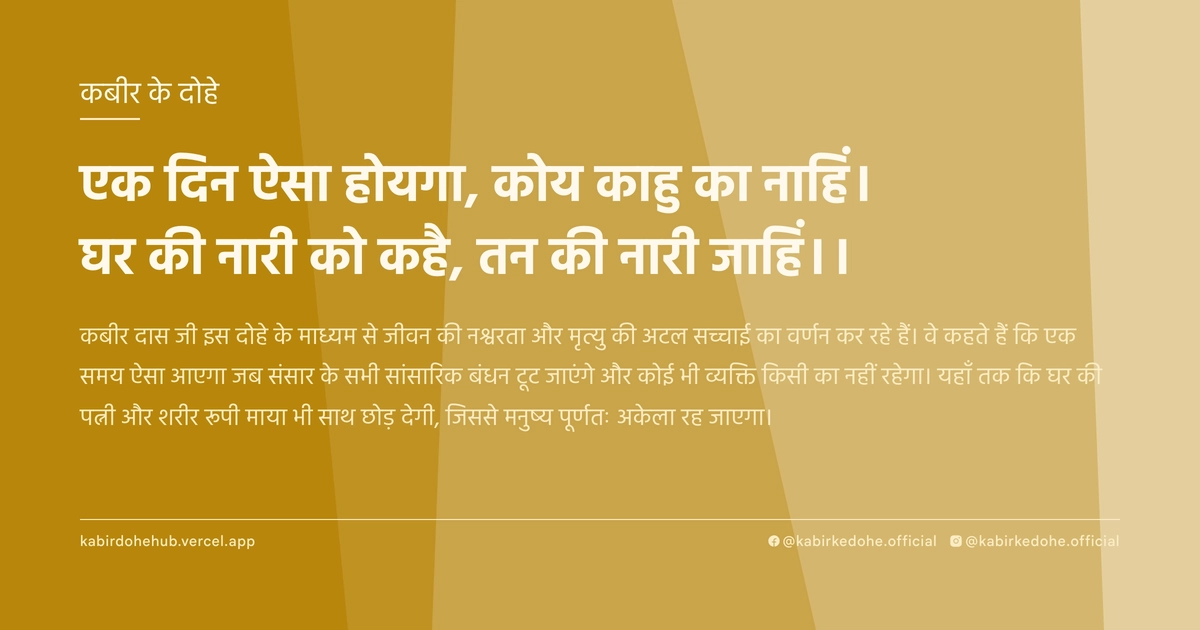
एक दिन ऐसा होयगा, कोय काहु का नाहिं।
घर की नारी को कहै, तन की नारी जाहिं।।
Ek din aisa hoyega, koy kaahu ka naahin. Ghar ki naari ko kahai, tan ki naari jaahin.
इस पृष्ठ पर इस कबीर दोहे का अर्थ (meaning), हिंदी व्याख्या और अंग्रेज़ी अनुवाद, दार्शनिक विश्लेषण और व्यावहारिक जीवन सीख दी गई है। यह दोहा अनित्य (Impermanence) विषय से जुड़ा है — Kabir doha meaning and explanation in Hindi and English.
अर्थ (Meaning):
कबीर दास जी इस दोहे के माध्यम से जीवन की नश्वरता और मृत्यु की अटल सच्चाई का वर्णन कर रहे हैं। वे कहते हैं कि एक समय ऐसा आएगा जब संसार के सभी सांसारिक बंधन टूट जाएंगे और कोई भी व्यक्ति किसी का नहीं रहेगा। यहाँ तक कि घर की पत्नी और शरीर रूपी माया भी साथ छोड़ देगी, जिससे मनुष्य पूर्णतः अकेला रह जाएगा।
Kabir Das describes the inevitable reality of impermanence and death. He asserts that a day will come when all worldly bonds will dissolve, and no one will belong to anyone else. Even the domestic partner and the physical body—the ultimate vessel of identity—will depart, leaving the soul in absolute solitude.
व्याख्या (Interpretation):
शाब्दिक रूप से यह दोहा मृत्यु के बाद के अलगाव को दर्शाता है, लेकिन आध्यात्मिक स्तर पर यह 'माया' के विसर्जन की बात करता है। 'घर की नारी' केवल पत्नी का प्रतीक नहीं है, बल्कि उन सभी सामाजिक और भावनात्मक आसक्तियों का प्रतीक है जिन्हें हम अपना समझते हैं। 'तन की नारी' यहाँ भौतिक शरीर और इंद्रिय सुखों का संकेत है। यह निरगुण भक्ति का सार है, जहाँ साधक को यह समझाना है कि आत्मा का वास्तविक स्वभाव अकेलापन और स्वतंत्रता है। जब अहंकार (I-ness) मिटता है, तब यह बोध होता है कि जिसे हम 'मेरा' कह रहे थे, वह वास्तव में एक भ्रम था। यह अद्वैत वेदांत के उस सत्य की ओर इशारा करता है जहाँ आत्मा अंततः ब्रह्म में विलीन हो जाती है, जहाँ द्वैत (दो होने का भाव) समाप्त हो जाता है।
Literally, this couplet depicts the separation following death, but spiritually, it addresses the dissolution of 'Maya'. The 'woman of the house' is not merely a spouse but a symbol of all social and emotional attachments we claim as ours. The 'woman of the body' signifies the physical vessel and sensory pleasures. This is the essence of Nirgun Bhakti, teaching the seeker that the soul's true nature is solitude and liberation. When the ego (Ahamkara) vanishes, one realizes that everything labeled 'mine' was an illusion. It points toward the Advaita Vedanta truth where the Atman merges into Brahman, extinguishing the duality of 'self' and 'other'.
दार्शनिक विश्लेषण (Philosophical Analysis):
कबीर का यह दृष्टिकोण उनके समय के कट्टरपंथी कर्मकांडों और सामाजिक संरचनाओं के विरुद्ध एक प्रहार था। उन्होंने देखा कि लोग जाति, धर्म और पारिवारिक संबंधों के अहंकार में इतने डूबे हैं कि वे अपनी नश्वरता को भूल गए हैं। यह दोहा सूफी मत के 'फना' (अहंकार का विनाश) के सिद्धांत से मेल खाता है, जहाँ प्रेमी अपने अस्तित्व को मिटाकर परमात्मा में विलीन हो जाता है।
दार्शनिक रूप से, कबीर यहाँ 'वैराग्य' की स्थापना कर रहे हैं। वैराग्य का अर्थ संसार को छोड़ना नहीं, बल्कि संसार के प्रति मोह का त्याग करना है। जब मनुष्य यह समझ लेता है कि शरीर और संबंध अस्थायी हैं, तो वह बाहरी दुनिया के बजाय आंतरिक सत्य की खोज शुरू करता है। यह मनोवैज्ञानिक रूपांतरण है जहाँ भय, मृत्यु के डर से हटकर मुक्ति की प्यास में बदल जाता है।
अद्वैत वेदांत के अनुसार, यह संसार एक 'मिथ्या' है। कबीर इस मिथ्या को उजागर करते हुए कहते हैं कि अंततः केवल आत्मा और परमात्मा का संबंध शेष रहता है। वे चेतावनी देते हैं कि जो व्यक्ति केवल भौतिक संबंधों में सुख खोजता है, वह अंत में गहरे शोक में डूबता है क्योंकि वह एक ऐसी चीज को पकड़ने की कोशिश कर रहा है जो रेत की तरह फिसल जाती है।
कबीर की इस शिक्षा में एक गहरा विरोधाभास है: वे हमें अकेलेपन की बात सिखाते हैं ताकि हम उस 'परम पूर्णता' को पा सकें जो अकेलेपन से परे है। यह अकेलापन अवसाद नहीं, बल्कि एक पवित्र शून्य है जहाँ से नई चेतना का जन्म होता है।
अंततः, यह दोहा हमें सिखाता है कि मृत्यु केवल शरीर का अंत नहीं है, बल्कि यह उन सभी मुखौटों का अंत है जिन्हें हमने समाज के सामने पहना है। जब ये मुखौटे गिरते हैं, तब केवल सत्य बचता है।
Kabir's perspective serves as a critique of the rigid rituals and social hierarchies of his era. He observed people so immersed in the ego of caste, religion, and kinship that they forgot their own transience. This couplet aligns with the Sufi concept of 'Fana' (annihilation of the self), where the lover erases their existence to merge with the Divine.
Philosophically, Kabir is establishing 'Vairagya' (dispassion). Vairagya does not mean abandoning the world, but relinquishing the attachment to it. When a human understands that the body and relationships are ephemeral, they shift their quest from the external world to the internal truth. This is a psychological transformation where fear evolves from the dread of death into a thirst for liberation.
According to Advaita Vedanta, the world is 'Mithya' (illusory). Kabir exposes this illusion, stating that ultimately, only the relationship between the Soul and the Supreme remains. He warns that those seeking happiness solely in material bonds end up in profound grief, attempting to grasp something that slips away like sand.
There is a profound paradox in Kabir's teaching: he speaks of solitude so that we may attain that 'Absolute Fullness' which transcends loneliness. This is not a solitude of depression, but a sacred void from which a new consciousness is born.
Ultimately, this couplet teaches that death is not just the end of the body, but the end of all the masks we wear for society. When these masks fall, only the Truth remains.
मूल संदेश (Core Message):
- सांसारिक संबंध केवल एक अस्थायी पड़ाव हैं, गंतव्य नहीं।
- अहंकार का विसर्जन ही वास्तविक स्वतंत्रता का एकमात्र द्वार है।
- शरीर एक किराए का घर है, जिसे एक दिन खाली करना होगा।
- मोह की जंजीरें हमें उस सत्य से दूर रखती हैं जो शाश्वत है।
- जब 'मेरा' मिटता है, तब 'परमात्मा' का अनुभव शुरू होता है।
- मृत्यु अंत नहीं, बल्कि भ्रम के पर्दे का हटना है।
- Worldly bonds are merely temporary stops, not the destination.
- The dissolution of ego is the only gateway to true liberation.
- The body is a rented house that must be vacated one day.
- The chains of attachment keep us distant from the eternal truth.
- When 'mine' vanishes, the experience of the Divine begins.
- Death is not an end, but the lifting of the veil of illusion.
व्यावहारिक उदाहरण (Practical Example):
वाराणसी के घाटों पर रहने वाले एक वृद्ध बुनकर, माधव, की कहानी है। माधव ने अपना पूरा जीवन बेहतरीन रेशमी साड़ियाँ बुनने में बिताया। उसे अपनी कला और अपने परिवार पर बहुत गर्व था। वह मानता था कि उसकी संपत्ति और उसका नाम उसके बच्चों के लिए एक स्थायी सुरक्षा कवच हैं।
एक समय आया जब माधव का इकलौता पुत्र एक गंभीर बीमारी से जूझने लगा। माधव ने अपनी सारी जमा पूँजी, अपनी सबसे महंगी साड़ियाँ और यहाँ तक कि अपने पुश्तैनी घर को भी इलाज के लिए बेच दिया। लेकिन अंततः, प्रकृति का नियम चला और उसका पुत्र दुनिया छोड़ गया।
माधव गहरे अवसाद में डूब गया। उसे लगा कि उसका पूरा अस्तित्व ही मिट गया है। वह घंटों गंगा किनारे बैठकर सोचता कि जिस 'घर' और 'परिवार' को उसने अपना सर्वस्व माना, वह एक पल में कैसे छिन गया।
तभी उसकी मुलाकात एक घुमक्कड़ फकीर से हुई, जिसने उसे कबीर का यह दोहा सुनाया। फकीर ने कहा, "माधव, तू उस साड़ी के मोह में था जिसे तूने बुना था, लेकिन तू यह भूल गया कि तू खुद भी एक ऐसी साड़ी है जिसे समय की मशीन बुन रही है और एक दिन उधेड़ देगी।"
इस बात ने माधव के भीतर एक बिजली की तरह काम किया। उसे अहसास हुआ कि उसका दुख इस बात से नहीं था कि उसका पुत्र चला गया, बल्कि इस बात से था कि उसने अपनी पहचान उस पुत्र और उस संपत्ति से जोड़ ली थी।
माधव ने अपनी शेष जिंदगी का नजरिया बदल दिया। उसने अब साड़ियाँ बेचना शुरू किया, लेकिन इस बार लाभ के लिए नहीं, बल्कि उन लोगों की मदद के लिए जो अनाथ थे। उसने महसूस किया कि जब 'मेरा' और 'तेरा' का भाव मिट जाता है, तब वास्तव में शांति मिलती है।
वह अब घर की दीवारों में नहीं, बल्कि पूरी मानवता में अपने परिवार को देखने लगा। उसने पाया कि जब वह किसी अजनबी की सेवा करता है, तो उसे वही सुख मिलता है जो उसे अपने पुत्र के साथ मिलता था।
माधव का अहंकार, जो उसकी कला और संपत्ति पर टिका था, अब पूरी तरह टूट चुका था। वह अब एक स्वतंत्र आत्मा बन चुका था, जो मृत्यु के भय से मुक्त था।
उसने सीखा कि जीवन का असली उद्देश्य कुछ इकट्ठा करना नहीं, बल्कि धीरे-धीरे सब कुछ छोड़ने की कला सीखना है।
अंत में, माधव ने अपनी अंतिम सांसें लेते समय मुस्कुराते हुए कहा, "अब मैं वास्तव में स्वतंत्र हूँ, क्योंकि अब मेरे पास खोने के लिए कुछ नहीं बचा है।"
Consider the story of Madhav, an elderly weaver living on the ghats of Varanasi. Madhav spent his entire life weaving the finest silk sarees. He took immense pride in his craft and his family, believing his wealth and reputation were a permanent shield for his children.
There came a time when Madhav's only son suffered from a severe illness. Madhav sold all his savings, his most expensive sarees, and even his ancestral home to afford the treatment. However, the laws of nature prevailed, and his son passed away.
Madhav sank into a deep depression. He felt as though his entire existence had been erased. He would sit for hours by the Ganges, wondering how the 'home' and 'family' he considered his everything could vanish in an instant.
Then, he met a wandering fakir who recited this specific doha of Kabir. The fakir said, "Madhav, you were enamored by the saree you wove, but you forgot that you yourself are a saree being woven by the loom of time, and one day, it will be unraveled."
These words acted like a bolt of lightning. Madhav realized his grief stemmed not just from the loss of his son, but from the fact that he had anchored his entire identity to his son and his possessions.
Madhav changed the trajectory of his remaining years. He continued to weave and sell sarees, but no longer for profit; instead, he used the proceeds to help orphans. He discovered that when the sense of 'mine' and 'thine' dissolves, true peace emerges.
He began to see his family not within the walls of a house, but in all of humanity. He found that serving a stranger brought him the same joy he once felt with his son.
Madhav's ego, once built on his art and assets, was now completely shattered. He became a liberated soul, free from the fear of death.
He learned that the true purpose of life is not to accumulate, but to master the art of letting go gradually.
In the end, as Madhav took his final breaths, he smiled and said, "I am truly free now, for I have nothing left to lose."
अभ्यास मार्गदर्शन (Practice Guidance):
- दैनिक चिंतन: प्रतिदिन 10 मिनट के लिए आँखें बंद करें और कल्पना करें कि आप अपने सभी सांसारिक संबंधों, पद और शरीर को धीरे-धीरे त्याग रहे हैं। महसूस करें कि अंत में केवल एक शुद्ध चेतना बचती है।
- आत्म-पूछताछ जर्नल: एक डायरी लिखें जिसमें उन 5 चीजों की सूची बनाएं जिन्हें आप 'अपना' मानते हैं। फिर अपने आप से पूछें, "यदि ये कल गायब हो जाएं, तो मेरा वास्तविक 'मैं' कौन होगा?"
- व्यवहारिक परिवर्तन: सप्ताह में एक बार किसी ऐसे व्यक्ति की निस्वार्थ सेवा करें जिससे आपका कोई संबंध न हो। यह अभ्यास आपको 'पारिवारिक मोह' से ऊपर उठकर 'वैश्विक प्रेम' की ओर ले जाएगा।
- निदान चेकलिस्ट: यदि आप किसी छोटी सी हानि पर अत्यधिक क्रोधित या दुखी होते हैं, तो यह संकेत है कि आप अभी भी 'मोह' के बंधन में हैं। यदि आप हानि और लाभ को एक समान भाव से देखते हैं, तो आप इस ज्ञान को जी रहे हैं।
- Daily Contemplation: Spend 10 minutes daily with closed eyes, imagining yourself gradually shedding all worldly relationships, titles, and the physical body. Feel the pure consciousness that remains at the end.
- Self-Inquiry Journal: List five things you consider 'yours' in a diary. Then ask yourself, "If these were to vanish tomorrow, who would the real 'I' be?"
- Behavioral Shift: Once a week, perform selfless service for someone with whom you have no connection. This practice elevates you from 'familial attachment' to 'universal love'.
- Diagnostic Checklist: If you feel extreme anger or grief over a small loss, it is a sign you are still bound by 'Moha'. If you view gain and loss with equanimity, you are living this wisdom.
चिंतन प्रश्न (Reflection Questions):
- यदि आज आपकी सामाजिक पहचान (नाम, पेशा, रिश्ता) छीन ली जाए, तो आपके पास क्या बचेगा?
- आप अपने प्रियजनों से प्रेम करते हैं, या उस 'अहसास' से जो आपको उनके होने से मिलता है?
- क्या आपकी डिजिटल पहचान (सोशल मीडिया प्रोफाइल) आपके वास्तविक अस्तित्व को ढक रही है?
- आप मृत्यु से डरते हैं, या उस अज्ञातता से जहाँ आपका कोई नियंत्रण नहीं होगा?
- क्या आप वास्तव में स्वतंत्र हैं, या केवल अपनी इच्छाओं के गुलाम हैं जिन्हें आप स्वतंत्रता समझते हैं?
- आपके जीवन का वह कौन सा हिस्सा है जिसे आप कभी नहीं छोड़ना चाहते? वह बंधन आपको कैसे सीमित कर रहा है?
- If your social identity (name, profession, relationship) were stripped away today, what would remain of you?
- Do you love your dear ones, or do you love the 'feeling' you get from their presence?
- Is your digital identity (social media profile) masking your authentic existence?
- Do you fear death, or the unknown where you will have no control?
- Are you truly free, or merely a slave to desires that you mistake for freedom?
- What part of your life are you most unwilling to let go of? How is that bond limiting you?