
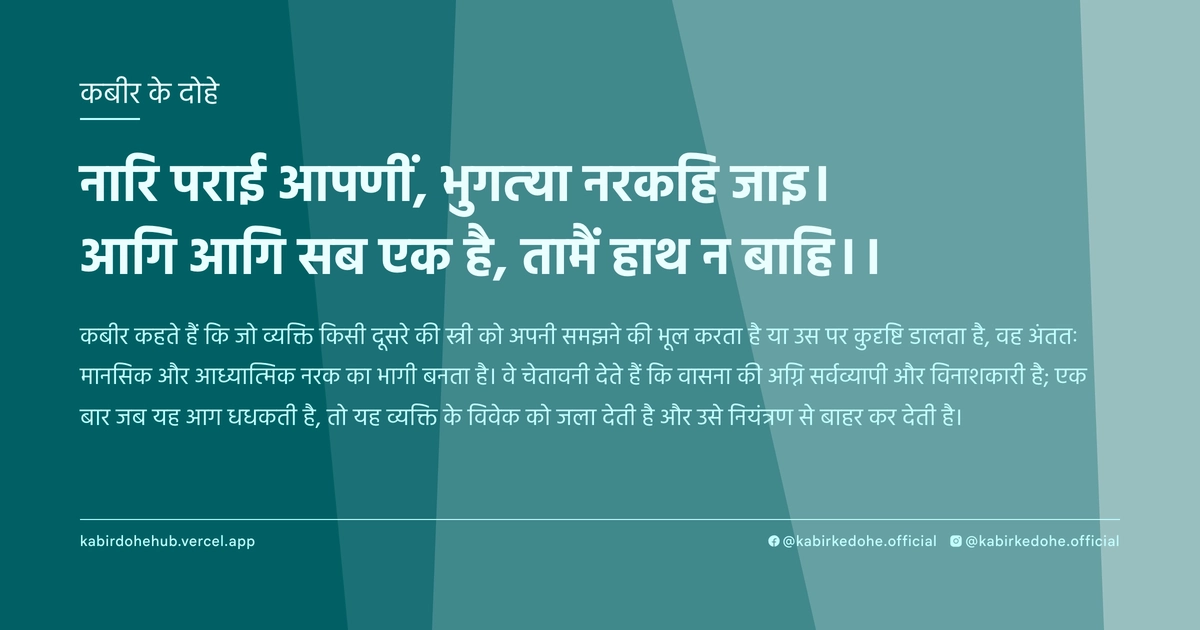
नारि पराई आपणीं, भुगत्या नरकहि जाइ।
आगि आगि सब एक है, तामैं हाथ न बाहि।।
Naari parai aapni, bhugatya narakahi jaai. Aagi aagi sab ek hai, tamain haath na baahi.
इस पृष्ठ पर इस कबीर दोहे का अर्थ (meaning), हिंदी व्याख्या और अंग्रेज़ी अनुवाद, दार्शनिक विश्लेषण और व्यावहारिक जीवन सीख दी गई है। यह दोहा काम (Lust) विषय से जुड़ा है — Kabir doha meaning and explanation in Hindi and English.
अर्थ (Meaning):
कबीर कहते हैं कि जो व्यक्ति किसी दूसरे की स्त्री को अपनी समझने की भूल करता है या उस पर कुदृष्टि डालता है, वह अंततः मानसिक और आध्यात्मिक नरक का भागी बनता है। वे चेतावनी देते हैं कि वासना की अग्नि सर्वव्यापी और विनाशकारी है; एक बार जब यह आग धधकती है, तो यह व्यक्ति के विवेक को जला देती है और उसे नियंत्रण से बाहर कर देती है।
Kabir warns that one who mistakenly claims or desires another's partner as their own invites a state of spiritual and psychological torment, akin to hell. He emphasizes that the fire of lust is a universal destructive force; once ignited, it consumes the intellect and leaves the individual powerless to stop their own descent into chaos.
व्याख्या (Interpretation):
इस दोहे का शाब्दिक अर्थ व्यभिचार के विरुद्ध चेतावनी है, परंतु गहरा आध्यात्मिक अर्थ 'अधिकार' की भावना के विसर्जन से जुड़ा है। यहाँ 'नारि' केवल स्त्री का प्रतीक नहीं, बल्कि किसी भी ऐसी बाहरी वस्तु या व्यक्ति का प्रतीक है जिसे हम अपनी इच्छाओं से बांधना चाहते हैं। 'नरक' बाहरी स्थान नहीं, बल्कि वह आंतरिक अशांति और अपराधबोध है जो माया के मोह से उत्पन्न होता है। यह निर्गुण भक्ति के उस सिद्धांत को दर्शाता है जहाँ आत्मा को बाहरी आकर्षणों से मुक्त होकर परमात्मा में लीन होना चाहिए। जब हम किसी दूसरे के अस्तित्व पर अपना दावा करते हैं, तो हम द्वैत (Duality) को पुष्ट करते हैं, जो अद्वैत वेदांत के मूल सिद्धांत 'एकत्व' के विरुद्ध है। वासना की अग्नि वह 'माया' है जो सत्य को ढक लेती है और मनुष्य को उसके वास्तविक स्वरूप से दूर ले जाती है।
While the literal meaning warns against adultery, the deeper spiritual interpretation addresses the fallacy of 'ownership' and the ego's desire to possess. Here, 'woman' symbolizes any external object or being that the ego attempts to claim. 'Hell' is not a physical destination but the internal state of turmoil and cognitive dissonance born from attachment to Maya. This aligns with Nirgun Bhakti, where the soul must transcend external attractions to realize the formless Divine. By claiming ownership over another, the seeker reinforces the illusion of duality, contradicting the Advaita Vedanta principle of non-duality (Oneness). The 'fire' represents the blinding nature of desire, which obscures the Atman and traps the individual in a cycle of craving and suffering, preventing the realization of the universal Brahman.
दार्शनिक विश्लेषण (Philosophical Analysis):
कबीर का यह दोहा उस सामाजिक और धार्मिक परिवेश में लिखा गया था जहाँ नैतिकता को केवल बाहरी नियमों से मापा जाता था। कबीर ने इसे आंतरिक शुद्धि और मनोवैज्ञानिक रूपांतरण का विषय बनाया। वे कर्मकांडों के बजाय 'मन' की शुद्धि पर बल देते हैं, क्योंकि उनके अनुसार बाहरी तीर्थयात्राएँ व्यर्थ हैं यदि मन वासना और ईर्ष्या से भरा हो।
यह शिक्षण सूफीवाद के 'नफ्स' (Nafs) या निम्न स्वभाव के नियंत्रण से मेल खाता है। सूफी मत में वासना को एक पर्दे की तरह देखा जाता है जो ईश्वर और प्रेमी के बीच खड़ा होता है। कबीर यहाँ यह समझा रहे हैं कि जब तक मनुष्य अपनी इंद्रियों का दास है, वह मुक्ति का अधिकारी नहीं हो सकता।
अद्वैत वेदांत के परिप्रेक्ष्य में, यह दोहा 'मोह' के विनाश की बात करता है। जब हम किसी को 'पराया' या 'अपना' कहते हैं, तो हम वास्तव में विभाजन पैदा कर रहे होते हैं। वास्तविक ज्ञान यह है कि सब कुछ ब्रह्म है। यदि सब एक हैं, तो 'पराया' शब्द का कोई अस्तित्व ही नहीं बचता, लेकिन यह बोध केवल वासना के शांत होने पर ही आता है।
कबीर जाति और वर्ग के बंधनों को तोड़ते हुए यह संदेश देते हैं कि नैतिक पतन किसी एक वर्ग की बपौती नहीं है। चाहे वह पंडित हो या मौलवी, यदि वह वासना की अग्नि में जल रहा है, तो वह आध्यात्मिक रूप से मृत है। यह एक क्रांतिकारी दृष्टिकोण था जिसने धर्म को मंदिर-मस्जिद से निकालकर व्यक्तिगत आचरण और ईमानदारी पर केंद्रित किया।
अंततः, यह विश्लेषण हमें अहंकार के विसर्जन की ओर ले जाता है। 'हाथ न बाहि' का अर्थ है कि जब वासना हावी होती है, तो विवेक (Intellect) काम करना बंद कर देता है। मनोवैज्ञानिक रूप से, यह उस स्थिति का वर्णन है जहाँ आवेग (Impulse) तर्क पर हावी हो जाते हैं, जिससे मनुष्य स्वयं का शत्रु बन जाता है।
Kabir composed this couplet in a socio-religious era where morality was often measured by external adherence to rituals. He shifted the focus toward internal purification and psychological transformation. He emphasizes the cleansing of the 'Man' (mind) over ritualistic piety, arguing that pilgrimages are futile if the heart remains clouded by lust and envy.
This teaching resonates deeply with the Sufi concept of 'Nafs' (the lower self). In Sufism, carnal desire is viewed as a veil that separates the lover from the Beloved (the Divine). Kabir illustrates that as long as a human remains a slave to their senses, spiritual liberation remains an impossibility.
From the lens of Advaita Vedanta, this doha addresses the annihilation of 'Moha' (attachment). The very act of labeling someone as 'another's' or 'mine' reinforces the illusion of separation. True gnosis reveals that all existence is Brahman. If all is One, the concept of 'another' vanishes, but this realization only dawns once the fire of desire is extinguished.
By dismantling caste and class barriers, Kabir asserts that moral decay is not limited to any specific social stratum. Whether a priest or a cleric, anyone consumed by the fire of lust is spiritually bankrupt. This was a revolutionary stance, moving religion from the sanctuary of temples and mosques to the realm of personal conduct and integrity.
Ultimately, the analysis leads to the dissolution of the ego. The phrase 'hand cannot stop it' describes the psychological state where impulse overrides intellect. When the fire of passion ignites, the capacity for discernment vanishes, and the individual becomes a prisoner of their own biological and psychological cravings.
मूल संदेश (Core Message):
- वासना एक भ्रम है जो आत्मा को सत्य से दूर ले जाता है।
- किसी अन्य के अस्तित्व पर दावा करना स्वयं के विनाश का मार्ग है।
- प्रेम मुक्ति है, जबकि अधिकार की भावना एक मानसिक कारागार है।
- इंद्रियों का नियंत्रण ही वास्तविक आध्यात्मिक स्वतंत्रता की कुंजी है।
- जब 'मेरा' मिटता है, तब सार्वभौमिक एकत्व का अनुभव होता है।
- Lust is an illusion that alienates the soul from the Truth.
- Claiming ownership over another is a path to self-destruction.
- Love is liberation, while the sense of possession is a mental prison.
- Mastery over the senses is the key to genuine spiritual freedom.
- When 'mine' vanishes, the experience of universal oneness begins.
व्यावहारिक उदाहरण (Practical Example):
वाराणसी के एक पुराने घाट पर रहने वाले माधव एक कुशल मूर्तिकार थे, जो पत्थरों में जान फूंक देते थे। माधव का जीवन शांत था, लेकिन उनके मन में एक गहरा द्वंद्व था। वे अपनी पत्नी से प्रेम करते थे, परंतु पड़ोस में रहने वाली एक युवती की सुंदरता और उसकी बातों ने उनके मन में एक अनकही तड़प पैदा कर दी थी।
माधव ने धीरे-धीरे उस युवती को अपना मान लिया, हालांकि वह विवाहित थी। उन्होंने अपनी कला के बहाने उससे मिलना शुरू किया। बाहरी दुनिया के लिए माधव एक संत समान कलाकार थे, लेकिन भीतर ही भीतर वे एक युद्ध लड़ रहे थे। वे रात भर जागते, उस युवती के ख्यालों में खोए रहते और अपनी पत्नी की उपेक्षा करने लगे।
उनकी कला, जो कभी भक्ति का माध्यम थी, अब वासना का साधन बन गई। वे उसकी मूर्तियाँ बनाने लगे, जिनमें प्रेम कम और अधिकार अधिक था। माधव को लगा कि वे प्रेम कर रहे हैं, लेकिन वास्तव में वे एक मानसिक नरक का निर्माण कर रहे थे। उनकी नींद उड़ गई, स्वभाव में चिड़चिड़ापन आ गया और उनके काम की गुणवत्ता गिरने लगी।
एक दिन, माधव की मुलाकात एक वृद्ध संन्यासी से हुई, जिन्होंने माधव की आँखों में वह 'अग्नि' देख ली। संन्यासी ने उनसे कहा, "माधव, तुम पत्थर को तराश रहे हो, लेकिन तुम्हारी अपनी आत्मा वासना की आग में पिघल रही है। जिसे तुम अपना कह रहे हो, वह केवल एक भ्रम है। तुम उसकी आत्मा से नहीं, बल्कि अपनी कल्पना से प्रेम कर रहे हो।"
संन्यासी ने उन्हें समझाया कि जब हम किसी दूसरे के अस्तित्व पर अपना दावा करते हैं, तो हम वास्तव में अपनी शांति का सौदा करते हैं। माधव को एहसास हुआ कि जिसे वे 'प्रेम' समझ रहे थे, वह वास्तव में एक 'कब्ज़ा' करने की इच्छा थी। उन्होंने देखा कि उनकी यह इच्छा उन्हें उनकी पत्नी और उनके ईश्वर, दोनों से दूर ले गई है।
माधव ने उस रात अपनी बनाई हुई सभी गुप्त मूर्तियों को तोड़ दिया। यह केवल पत्थर तोड़ना नहीं था, बल्कि अपने भीतर के उस अहंकार को तोड़ना था जो कहता था कि "यह मेरी है।" उन्होंने महसूस किया कि असली प्रेम मुक्ति देता है, बंधन नहीं।
अगले कुछ महीनों तक माधव ने मौन व्रत रखा और केवल अपनी सांसों पर ध्यान केंद्रित किया। उन्होंने सीखा कि बाहरी आकर्षण केवल मन के भटकाव हैं। उन्होंने अपनी पत्नी के प्रति अपनी दृष्टि बदली और उसमें उसी परमात्मा को देखा जिसे वे पत्थरों में खोज रहे थे।
समय के साथ, माधव की कला में एक नई गहराई आई। अब उनकी मूर्तियों में कामुकता नहीं, बल्कि एक अलौकिक शांति थी। उन्होंने जान लिया कि जब मन से 'मेरा' और 'तेरा' का भेद मिट जाता है, तभी वास्तविक सृजन संभव है। माधव अब वास्तव में स्वतंत्र थे क्योंकि उन्होंने वासना की उस आग को ज्ञान के जल से शांत कर दिया था।
Madhav was a skilled sculptor living on the ancient ghats of Varanasi, known for breathing life into stone. His life appeared serene, but internally, he harbored a deep conflict. While he loved his wife, he became captivated by the beauty and conversation of a young woman living in the neighborhood.
Madhav began to perceive this woman as his own, despite her being married. Using his art as a pretext, he sought her company. To the world, Madhav remained a saintly artist, but inside, he was fighting a losing battle. He spent sleepless nights consumed by thoughts of her, gradually neglecting his own wife.
His art, once a medium of devotion, transformed into a tool of desire. He began sculpting her, but the figures lacked love and were instead filled with a sense of possession. Madhav believed he was in love, but in reality, he was constructing a psychological hell for himself. His peace vanished, irritability grew, and the quality of his work plummeted.
One day, Madhav encountered an elderly sanyasi who saw the 'fire' in Madhav's eyes. The sanyasi told him, "Madhav, you are carving stone, but your own soul is melting in the fire of lust. What you claim as yours is merely an illusion. You do not love her soul; you love your own projection of her."
The sanyasi explained that claiming ownership over another's existence is a trade-off where one exchanges inner peace for temporary gratification. Madhav realized that what he called 'love' was actually a desire for 'control.' He saw how this craving had alienated him from his wife and his Divine.
That night, Madhav smashed all the secret sculptures he had created. This was not merely the breaking of stone, but the shattering of the ego that whispered, "This belongs to me." He understood that true love liberates, while lust imprisons.
For the following months, Madhav observed a vow of silence and focused solely on his breath. He learned that external attractions are merely distractions of the mind. He shifted his gaze toward his wife, recognizing in her the same Divine presence he had sought in stones.
Over time, a new depth emerged in Madhav's art. His sculptures no longer radiated sensuality, but a transcendental peace. He discovered that true creation is only possible when the distinction between 'mine' and 'thine' dissolves. Madhav was finally free, having quenched the fire of lust with the water of wisdom.
अभ्यास मार्गदर्शन (Practice Guidance):
- दैनिक अवलोकन: दिन भर में जब भी किसी व्यक्ति या वस्तु के प्रति 'अधिकार' या 'कब्ज़ा' करने की भावना जागे, तो रुकें और स्वयं से पूछें— "क्या यह वास्तव में मेरा है, या मैं केवल अपनी इच्छा को थोप रहा हूँ?"
- साक्षी भाव का अभ्यास: अपनी वासनाओं और आकर्षणों को दबाने के बजाय, उन्हें एक तटस्थ दर्शक की तरह देखें। महसूस करें कि कैसे यह 'अग्नि' मन में उठती है और कैसे यह विवेक को धुंधला करती है।
- आत्म-पूछताछ जर्नल: प्रतिदिन लिखें कि किन स्थितियों में आपका अहंकार 'मेरे' और 'तेरे' के बीच विभाजन पैदा करता है। विश्लेषण करें कि यह विभाजन आपकी मानसिक शांति को कैसे प्रभावित कर रहा है।
- निदान चेकलिस्ट: यदि आप निम्नलिखित लक्षणों को महसूस करते हैं, तो समझें कि आप इस ज्ञान के विपरीत जी रहे हैं: 1. किसी की अनुपस्थिति में अत्यधिक बेचैनी। 2. दूसरों के जीवन में हस्तक्षेप करने की तीव्र इच्छा। 3. प्रेम के नाम पर नियंत्रण की भावना। 4. अपनी इच्छाएं पूरी न होने पर क्रोध और हताशा।
- Daily Observation: Whenever a feeling of 'ownership' or 'possession' arises toward a person or object, pause and ask— "Does this truly belong to me, or am I merely imposing my desire?"
- Practice of Witness Consciousness: Instead of suppressing lust or attraction, observe them as a neutral witness. Notice how this 'fire' ignites in the mind and how it clouds your discernment.
- Self-Inquiry Journaling: Daily record instances where your ego creates a division between 'mine' and 'thine.' Analyze how this perceived separation affects your mental tranquility.
- Diagnostic Checklist: Recognize you are living contrary to this wisdom if you experience: 1. Extreme restlessness in someone's absence. 2. An intense urge to interfere in others' lives. 3. A desire for control masked as love. 4. Anger and frustration when desires are not met.
चिंतन प्रश्न (Reflection Questions):
- मेरे जीवन में 'प्रेम' और 'कब्ज़े' के बीच की महीन रेखा कहाँ है?
- मैं अपनी डिजिटल पहचान (Social Media) के माध्यम से दूसरों की प्रशंसा या जीवन पर किस तरह का अदृश्य दावा करता हूँ?
- क्या मेरी नैतिकता केवल सामाजिक डर पर आधारित है, या यह आंतरिक बोध से उपजी है?
- वह कौन सी 'अग्नि' है जो मेरे विवेक को बार-बार जला देती है, और उसका मूल कारण क्या है?
- यदि मैं अपनी सभी पहचान और रिश्तों के दावे छोड़ दूँ, तो मेरे भीतर क्या बचेगा?
- क्या मैं वास्तव में दूसरों की स्वतंत्रता का सम्मान करता हूँ, या मैं केवल उन्हें अपनी इच्छा के अनुसार ढालना चाहता हूँ?
- Where does the thin line between 'love' and 'possession' lie in my own life?
- In what ways do I exert an invisible claim over others' lives or admiration through my digital identity?
- Is my morality based on social fear, or does it arise from an internal realization?
- What is the specific 'fire' that repeatedly consumes my discernment, and what is its root cause?
- If I relinquished all claims to identity and relationships, what would remain within me?
- Do I truly respect the autonomy of others, or do I merely wish to mold them according to my desires?