
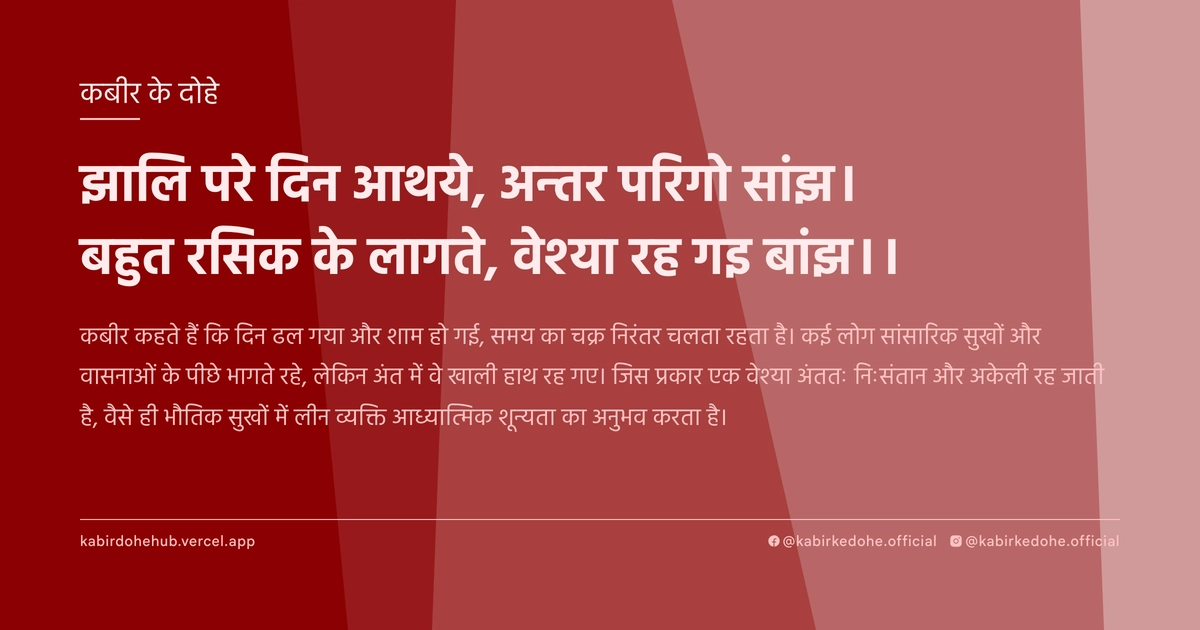
झालि परे दिन आथये, अन्तर परिगो सांझ।
बहुत रसिक के लागते, वेश्या रह गइ बांझ।।
Jhaali pare din aathye, antar parigo saanjh. Bahut rasik ke laagate, veshya rah gai baanjh.
इस पृष्ठ पर इस कबीर दोहे का अर्थ (meaning), हिंदी व्याख्या और अंग्रेज़ी अनुवाद, दार्शनिक विश्लेषण और व्यावहारिक जीवन सीख दी गई है। यह दोहा अनित्य (Impermanence) विषय से जुड़ा है — Kabir doha meaning and explanation in Hindi and English.
अर्थ (Meaning):
कबीर कहते हैं कि दिन ढल गया और शाम हो गई, समय का चक्र निरंतर चलता रहता है। कई लोग सांसारिक सुखों और वासनाओं के पीछे भागते रहे, लेकिन अंत में वे खाली हाथ रह गए। जिस प्रकार एक वेश्या अंततः निःसंतान और अकेली रह जाती है, वैसे ही भौतिक सुखों में लीन व्यक्ति आध्यात्मिक शून्यता का अनुभव करता है।
Kabir observes that the day has faded and evening has arrived, symbolizing the inevitable passage of time. Many seekers of pleasure chased worldly desires, yet they remained empty. Just as a courtesan may eventually find herself barren and alone despite her many admirers, those obsessed with material lusts end up spiritually void and isolated.
व्याख्या (Interpretation):
यह दोहा समय की नश्वरता और माया के भ्रम पर प्रहार करता है। 'दिन' और 'सांझ' यहाँ जीवन के विभिन्न चरणों और मृत्यु की अनिवार्यता के प्रतीक हैं। कबीर 'रसिक' शब्द का प्रयोग उन लोगों के लिए करते हैं जो इंद्रिय सुखों को ही सत्य मानते हैं। यहाँ 'वेश्या' और 'बांझ' का रूपक अत्यंत गहरा है; यह केवल शारीरिक स्थिति नहीं, बल्कि उस आत्मा की स्थिति है जिसने अपनी ऊर्जा को बाहरी आकर्षणों में व्यर्थ किया और आंतरिक बीज (आध्यात्मिक ज्ञान) को कभी अंकुरित नहीं होने दिया। यह निर्गुण भक्ति का आह्वान है, जहाँ बाहरी आडंबरों और वासनाओं को त्यागकर उस निराकार ब्रह्म से जुड़ने की बात कही गई है, जो समय और मृत्यु से परे है।
This couplet strikes at the transience of time and the illusion of Maya. 'Day' and 'Evening' symbolize the stages of life and the inevitability of death. Kabir uses the term 'Rasik' for those who mistake sensory pleasure for ultimate truth. The metaphor of the 'courtesan' and 'barrenness' is profound; it refers not to physical state, but to a soul that has squandered its energy on external attractions, failing to germinate the internal seed of spiritual gnosis. It is a call toward Nirgun Bhakti, urging the seeker to abandon external adornments and lusts to unite with the Formless Brahman, who exists beyond the cycle of time and decay.
दार्शनिक विश्लेषण (Philosophical Analysis):
कबीर का यह दोहा मध्यकालीन भारत के सामाजिक और धार्मिक परिवेश में रचित है, जहाँ एक ओर कर्मकांडीय कट्टरता थी और दूसरी ओर विलासिता का प्रभाव। कबीर यहाँ 'माया' के उस जाल की चर्चा कर रहे हैं जो मनुष्य को यह विश्वास दिलाता है कि सुख बाहरी वस्तुओं या शरीर के भोग में है। अद्वैत वेदांत के अनुसार, यह द्वैत (मैं और मेरा सुख) ही बंधन का कारण है। जब तक मनुष्य स्वयं को शरीर मानता है, वह समय के अधीन रहता है।
सूफी मत के 'फना' (अहंकार का विनाश) के सिद्धांत से जोड़कर देखें तो, कबीर यहाँ वासनाओं के प्रति आसक्ति को मिटाने की बात कर रहे हैं। वे तर्क देते हैं कि जो सुख क्षणभंगुर है, वह अंततः दुःख और अकेलेपन में बदल जाता है। यह 'बांझपन' वास्तव में आध्यात्मिक शून्यता है—एक ऐसी स्थिति जहाँ व्यक्ति के पास सब कुछ होते हुए भी वह आंतरिक शांति से रिक्त है।
कबीर जाति और धर्म के भेदभाव को नकारते हुए यह संदेश देते हैं कि आध्यात्मिक पतन किसी विशेष वर्ग तक सीमित नहीं है; चाहे वह राजा हो या रसिक, यदि वह वासना का दास है, तो वह समान रूप से रिक्त है। वे ritualism (कर्मकांड) के बजाय 'सहज' मार्ग पर बल देते हैं, जहाँ हृदय की शुद्धि ही एकमात्र सत्य है।
मनोवैज्ञानिक स्तर पर, यह दोहा 'डोपामाइन' के अंतहीन चक्र की चेतावनी है। आधुनिक संदर्भ में, यह डिजिटल आकर्षणों और क्षणिक संतुष्टि की भूख जैसा है, जो अंततः व्यक्ति को गहरे अवसाद और अकेलेपन की ओर ले जाता है।
अंततः, कबीर का उद्देश्य डराना नहीं, बल्कि जगाना है। वे चाहते हैं कि साधक यह समझे कि समय रेत की तरह फिसल रहा है। वास्तविक 'संतान' या उपलब्धि वह नहीं है जो दुनिया देखे, बल्कि वह आत्म-साक्षात्कार है जो मृत्यु के बाद भी बना रहता है।
This couplet is rooted in the socio-religious landscape of medieval India, caught between ritualistic orthodoxy and the allure of luxury. Kabir addresses the web of 'Maya' (illusion), which convinces humans that happiness resides in external objects or bodily gratifications. According to Advaita Vedanta, this duality—the perception of 'I' and 'my pleasure'—is the primary cause of bondage. As long as one identifies with the physical body, they remain subject to the decay of time.
Connecting this to the Sufi concept of 'Fana' (annihilation of the ego), Kabir advocates for the eradication of attachment to lusts. He argues that pleasures which are transient inevitably transform into sorrow and isolation. This 'barrenness' is actually spiritual emptiness—a state where a person possesses everything externally yet remains void of internal peace.
Rejecting caste and religious hierarchies, Kabir suggests that spiritual decay is not limited to any specific class; whether a king or a connoisseur, if one is a slave to desire, they are equally empty. He emphasizes the 'Sahaj' (natural/spontaneous) path over ritualism, asserting that purity of heart is the only truth.
On a psychological level, this verse warns against the endless cycle of dopamine-seeking. In a modern context, this mirrors the hunger for digital validation and fleeting gratifications, which ultimately lead to profound depression and loneliness.
Ultimately, Kabir's intent is not to terrify, but to awaken. He wants the seeker to realize that time is slipping away like sand. The true 'offspring' or achievement is not what the world perceives, but the self-realization that persists beyond the threshold of death.
मूल संदेश (Core Message):
- बाहरी आकर्षण एक सुंदर लेकिन खाली खोल है।
- समय की रेत फिसल रही है, जागृत हो जाओ।
- इंद्रिय सुख अंततः आध्यात्मिक अकेलेपन को जन्म देते हैं।
- सच्ची उर्वरता आंतरिक ज्ञान के अंकुरण में है।
- माया का त्याग ही मोक्ष का एकमात्र द्वार है।
- अहंकार का विसर्जन ही परमात्मा से मिलन है।
- External attraction is a beautiful but empty shell.
- The sands of time are slipping; awaken now.
- Sensory pleasures eventually breed spiritual isolation.
- True fertility lies in the germination of inner wisdom.
- Renouncing Maya is the only gateway to liberation.
- The dissolution of ego is the only union with the Divine.
व्यावहारिक उदाहरण (Practical Example):
वाराणसी के घाटों पर रहने वाले एक वृद्ध विधवा, जानकी की कहानी है। जानकी ने अपना पूरा जीवन दूसरों की सेवा और सामाजिक मर्यादाओं के पालन में बिताया, लेकिन उनके मन में हमेशा एक टीस रहती थी कि उन्होंने कभी अपने लिए कुछ नहीं किया। वे अक्सर उन लोगों को देखती थीं जो धन और विलासिता के पीछे भागते थे, और उन्हें लगता था कि शायद वही लोग वास्तव में 'जी' रहे हैं।
एक दिन उनकी मुलाकात एक युवा साधु से हुई, जो घाट पर मौन बैठे थे। जानकी ने उनसे पूछा, 'क्या मेरा जीवन व्यर्थ गया? मैंने न तो सुख भोगा, न ही कोई नाम कमाया।' साधु ने मुस्कुराते हुए उन्हें एक सूखे पेड़ और एक फलदार पेड़ का उदाहरण दिया। उन्होंने कहा कि जो केवल बाहरी दिखावे और क्षणिक सुखों के रसिक होते हैं, वे अंत में उस सूखे पेड़ की तरह हो जाते हैं जिसमें कोई फल नहीं होता।
जानकी को अचानक कबीर का यह दोहा याद आया जो उन्होंने बचपन में सुना था। उन्हें समझ आया कि जिस 'सुख' को वे दूसरों में देख रही थीं, वह वास्तव में एक भ्रम था। वे लोग जो विलासिता में डूबे थे, वे वास्तव में भीतर से उतने ही अकेले थे जितने कि वे स्वयं।
इस बोध ने जानकी के भीतर एक गहरा परिवर्तन लाया। उन्होंने अपनी उदासी को त्याग दिया और यह महसूस किया कि उनकी सादगी और निस्वार्थ सेवा ही उनकी वास्तविक आध्यात्मिक पूंजी थी।
उन्होंने अब अपना समय केवल परंपराओं के पालन में नहीं, बल्कि आत्म-चिंतन में बिताना शुरू किया। उन्होंने महसूस किया कि बाहरी दुनिया की 'रसिकता' वास्तव में एक मानसिक कारागार है।
वे अब घाट पर आने वाले अन्य दुखी लोगों को सांत्वना देने लगीं, उन्हें यह समझाते हुए कि जीवन की सार्थकता संग्रह में नहीं, बल्कि विसर्जन में है।
उनकी आँखों में अब एक नई चमक थी, जो किसी भौतिक सुख से नहीं, बल्कि इस सत्य की प्राप्ति से आई थी कि वे अब माया के जाल से मुक्त हैं।
जानकी का जीवन अब एक 'बांझ' अस्तित्व से बदलकर एक 'उपजाऊ' आध्यात्मिक यात्रा बन गया, जहाँ हर सांस एक प्रार्थना थी।
उन्होंने सीखा कि जब हम बाहरी इच्छाओं को मार देते हैं, तभी आंतरिक चेतना का जन्म होता है।
यह 'कबीर ट्विस्ट' था—जहाँ उन्होंने अपनी कमी को ही अपनी सबसे बड़ी शक्ति बना लिया।
Consider the story of Janaki, an elderly widow living on the ghats of Varanasi. Janaki spent her entire life serving others and adhering to strict social norms, yet a lingering ache remained in her heart—the feeling that she had never truly lived for herself. She often watched those chasing wealth and luxury, believing that they were the ones truly 'experiencing' life.
One day, she encountered a young monk sitting in silence on the ghats. Janaki asked him, 'Has my life been wasted? I neither tasted pleasure nor earned a name.' The monk smiled and gave her the example of a withered tree versus a fruiting one. He explained that those who are mere connoisseurs of external appearances and fleeting pleasures eventually become like the withered tree—devoid of any real fruit.
Suddenly, Janaki recalled this specific Doha of Kabir she had heard in her childhood. She realized that the 'pleasure' she envied in others was merely a mirage. Those immersed in luxury were, in reality, just as lonely and empty inside as she felt she was.
This realization triggered a profound transformation within Janaki. She shed her melancholy and understood that her simplicity and selfless service were her true spiritual assets.
She stopped spending her time merely following traditions and began practicing deep self-reflection. She realized that the 'sophistication' of the external world was actually a mental prison.
She began comforting other grieving souls who visited the ghats, teaching them that the meaning of life lies not in accumulation, but in surrender.
There was now a new light in her eyes, born not from material comfort, but from the realization that she was finally free from the web of Maya.
Janaki's life transformed from a 'barren' existence into a fertile spiritual journey, where every breath became a prayer.
She learned that only when external desires are extinguished does the internal consciousness truly awaken.
This was the 'Kabir Twist'—where she turned her perceived lack into her greatest spiritual strength.
अभ्यास मार्गदर्शन (Practice Guidance):
- प्रतिदिन 20 मिनट मौन बैठें और विचार करें कि आपकी कौन सी इच्छाएं केवल सामाजिक दिखावे (Digital Ego) के कारण हैं।
- एक 'इच्छा-डायरी' लिखें: उन चीजों की सूची बनाएं जिन्हें आप पाना चाहते हैं, और फिर विश्लेषण करें कि क्या वे वास्तव में आपको स्थायी शांति देंगी या केवल क्षणिक सुख।
- व्यवहार परिवर्तन: सप्ताह में एक दिन 'इंद्रिय उपवास' करें, जहाँ आप विलासितापूर्ण भोजन, सोशल मीडिया और अनावश्यक मनोरंजन से दूर रहें।
- निदान चेकलिस्ट: क्या आप अकेले रहने पर बेचैनी महसूस करते हैं? क्या आपकी खुशी दूसरों की प्रशंसा पर निर्भर है? यदि हाँ, तो आप अभी भी 'रसिक' के भ्रम में हैं।
- Sit in silence for 20 minutes daily and contemplate which of your desires are driven solely by social validation (Digital Ego).
- Maintain a 'Desire Journal': List the things you long for, then analyze whether they provide permanent peace or merely fleeting stimulation.
- Behavioral Shift: Practice a weekly 'Sensory Fast,' abstaining from luxury foods, social media, and unnecessary entertainment.
- Diagnostic Checklist: Do you feel restlessness when alone? Is your happiness dependent on external praise? If yes, you are still trapped in the illusion of the 'Rasik'.
चिंतन प्रश्न (Reflection Questions):
- यदि आज आपकी सारी सामाजिक पहचान और उपलब्धियां छीन ली जाएं, तो आपके भीतर क्या बचेगा?
- आप अपनी छवि को बेहतर बनाने के लिए अपनी आत्मा के किन हिस्सों को नजरअंदाज कर रहे हैं?
- क्या आपकी 'सफलता' वास्तव में आपकी अपनी है, या यह केवल समाज द्वारा परिभाषित एक 'रसिकता' है?
- आपकी कौन सी गुप्त इच्छाएं आपको मानसिक रूप से 'बांझ' या रिक्त बना रही हैं?
- क्या आप मृत्यु के समय अपनी भौतिक संपत्तियों को याद करेंगे, या अपनी आंतरिक शांति को?
- आपकी डिजिटल पहचान (Online Persona) और आपके वास्तविक स्वरूप के बीच कितना अंतर है?
- If all your social identities and achievements were stripped away today, what would remain within you?
- Which parts of your soul are you ignoring in order to polish your public image?
- Is your 'success' truly your own, or is it merely a socially defined 'sophistication'?
- Which hidden desires are rendering you mentally 'barren' or empty?
- At the moment of death, will you remember your material possessions or your inner peace?
- How wide is the gap between your digital persona and your authentic self?