
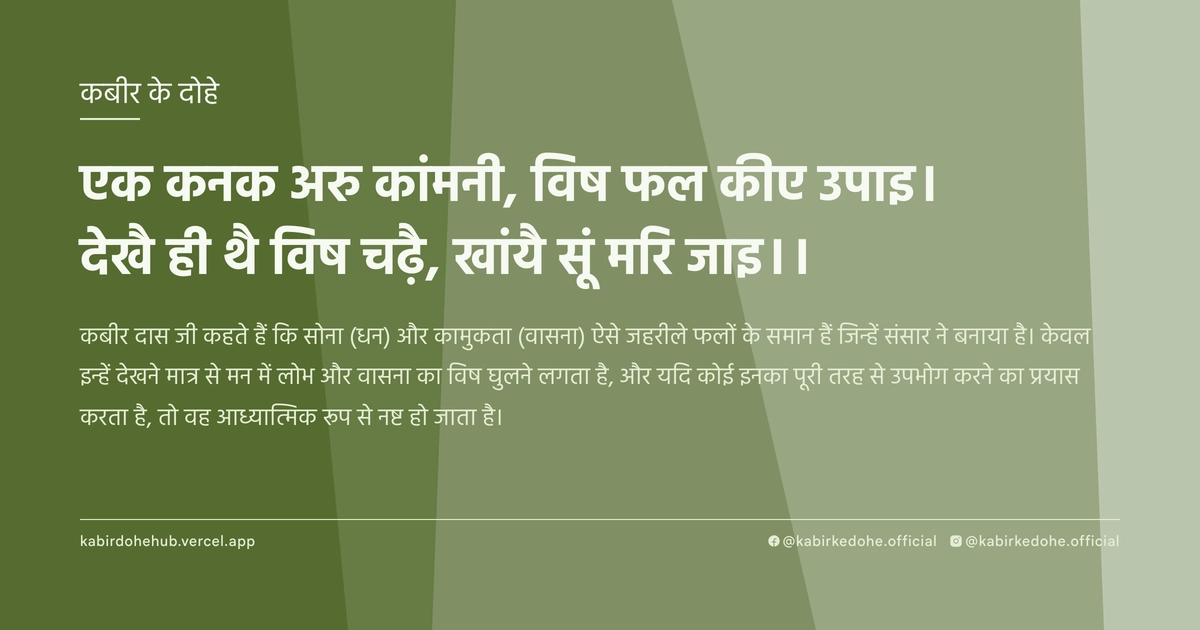
एक कनक अरु कांमनी, विष फल कीए उपाइ।
देखै ही थै विष चढ़ै, खांयै सूं मरि जाइ।।
Ek kanak aru kamani, vish phal kie upai. Dekhai hi thai vish chadhai, khayai sun mari jaaye.
इस पृष्ठ पर इस कबीर दोहे का अर्थ (meaning), हिंदी व्याख्या और अंग्रेज़ी अनुवाद, दार्शनिक विश्लेषण और व्यावहारिक जीवन सीख दी गई है। यह दोहा काम (Lust) विषय से जुड़ा है — Kabir doha meaning and explanation in Hindi and English.
अर्थ (Meaning):
कबीर दास जी कहते हैं कि सोना (धन) और कामुकता (वासना) ऐसे जहरीले फलों के समान हैं जिन्हें संसार ने बनाया है। केवल इन्हें देखने मात्र से मन में लोभ और वासना का विष घुलने लगता है, और यदि कोई इनका पूरी तरह से उपभोग करने का प्रयास करता है, तो वह आध्यात्मिक रूप से नष्ट हो जाता है।
Kabir asserts that gold (wealth) and lust (sensual desire) are like poisonous fruits cultivated by the world. Merely glancing at them allows the poison of greed and longing to seep into the consciousness; however, attempting to consume or possess them fully leads to the total annihilation of the spiritual self.
व्याख्या (Interpretation):
यहाँ 'कनक' और 'कामनी' केवल भौतिक वस्तुओं के प्रतीक नहीं हैं, बल्कि वे उस माया के सूक्ष्म जाल हैं जो आत्मा को ब्रह्म से अलग करते हैं। कबीर एक विरोधाभास प्रस्तुत करते हैं जहाँ वह बाहरी सुंदरता को आंतरिक विष के रूप में परिभाषित करते हैं। यह निरगुण भक्ति का मार्ग है, जहाँ साधक को चेतावनी दी जाती है कि इंद्रिय सुख वास्तव में आत्मा की कैद हैं। जब हम धन और वासना की ओर आकर्षित होते हैं, तो हम वास्तव में अपने अहंकार (Ego) को पोषित कर रहे होते हैं, जो अद्वैत वेदांत के अनुसार अज्ञानता का मूल कारण है। यह विष शरीर को नहीं, बल्कि चेतना को मारता है, जिससे मनुष्य स्वयं को ईश्वर से अलग समझने लगता है। अंततः, यह दोहा हमें सिखाता है कि वास्तविक मुक्ति बाहरी आकर्षणों के त्याग और आंतरिक शून्यता की प्राप्ति में है।
Here, 'Kanak' (gold) and 'Kaamni' (lust) are not merely physical objects but symbols of the subtle web of Maya that separates the Atman from Brahman. Kabir presents a paradox where external beauty is redefined as internal poison. This aligns with the path of Nirgun Bhakti, warning the seeker that sensory pleasures are actually prisons for the soul. When we are drawn toward wealth and desire, we are nourishing the Ego, which according to Advaita Vedanta, is the root cause of ignorance. This poison does not kill the physical body but the consciousness, causing the human to perceive themselves as separate from the Divine. Ultimately, the couplet teaches that true liberation lies in the renunciation of external attractions and the realization of internal emptiness.
दार्शनिक विश्लेषण (Philosophical Analysis):
कबीर का यह दोहा उस समय के सामाजिक और धार्मिक पाखंड पर एक गहरा प्रहार है, जहाँ धर्म के नाम पर विलासिता और वासना को छिपाया जाता था। कबीर ने स्पष्ट किया कि चाहे कोई पंडित हो या मुल्ला, यदि वह धन और काम के वशीभूत है, तो उसकी सारी साधना व्यर्थ है। यह दृष्टिकोण सूफी मत के 'नफ्स' (न्यूनतम इच्छाओं का दमन) और बौद्ध धर्म के 'तृष्णा' के विचार से मेल खाता है।
दार्शनिक स्तर पर, कबीर यहाँ 'माया' की प्रकृति की व्याख्या कर रहे हैं। माया वह शक्ति है जो सत्य को ढक देती है। सोना और कामुकता माया के दो सबसे शक्तिशाली उपकरण हैं क्योंकि वे मनुष्य को 'स्व' (Self) के भ्रम में डालते हैं। जब व्यक्ति कहता है 'यह मेरा धन है' या 'यह मेरी इच्छा है', तो वह अद्वैत के सिद्धांत का उल्लंघन करता है, क्योंकि वास्तव में केवल एक ही चेतना है।
कबीर का विरोध केवल धन से नहीं, बल्कि उस 'आसक्ति' (Attachment) से है जो मनुष्य को वर्तमान क्षण से दूर ले जाती है। वे तर्क देते हैं कि भौतिक सुख क्षणभंगुर हैं, लेकिन उनसे उत्पन्न होने वाला मानसिक क्लेश स्थायी होता है। यह मनोवैज्ञानिक परिवर्तन की मांग करता है जहाँ व्यक्ति बाहरी दुनिया से अपनी पहचान हटाकर आंतरिक ज्योति की ओर मुड़े।
इस दोहे में 'विष' शब्द का प्रयोग अत्यंत सटीक है। विष धीरे-धीरे काम करता है। पहले यह आकर्षण (देखना) के रूप में आता है, फिर यह आदत (चखना) बन जाता है, और अंत में यह व्यक्तित्व का हिस्सा बन जाता है। यह आध्यात्मिक पतन की एक क्रमिक प्रक्रिया है जिसे कबीर ने एक चेतावनी के रूप में प्रस्तुत किया है।
अंततः, यह शिक्षण हमें सिखाता है कि अहंकार का विसर्जन ही एकमात्र उपाय है। जब तक 'मैं' और 'मेरा' का भाव रहेगा, तब तक कनक और कामनी का विष प्रभाव डालेगा। केवल वही मुक्त है जिसने इन दोनों को केवल मिट्टी के समान समझा और अपनी चेतना को निराकार ईश्वर में विलीन कर दिया।
This couplet is a profound critique of the social and religious hypocrisy of Kabir's era, where luxury and lust were often masked by religious piety. Kabir clarifies that whether one is a priest or a cleric, if they are enslaved by wealth and desire, all their spiritual practices are futile. This perspective aligns with the Sufi concept of 'Nafs' (the struggle against the lower self) and the Buddhist teaching on 'Tanha' (craving).
On a philosophical level, Kabir is explaining the nature of 'Maya'. Maya is the cosmic illusion that veils the ultimate truth. Gold and lust are the two most potent tools of Maya because they trap the human in the illusion of the 'separate self'. When a person claims 'this is my wealth' or 'this is my desire', they violate the principle of Advaita, as there is ultimately only one universal consciousness.
Kabir's opposition is not to wealth itself, but to the 'attachment' (Raga) that distracts the human from the present moment. He argues that material pleasures are ephemeral, but the mental anguish they generate is enduring. This necessitates a psychological transformation where the individual shifts their identity from the external world to the internal light.
The use of the word 'poison' (Vish) is surgically precise. Poison works gradually. First, it arrives as attraction (seeing), then it becomes a habit (tasting), and finally, it integrates into the personality. This is a gradual process of spiritual decay that Kabir presents as a stark warning.
Ultimately, this teaching posits that the dissolution of the ego is the only remedy. As long as the sense of 'I' and 'Mine' persists, the poison of gold and lust will continue to act. Only he is liberated who perceives these attractions as mere dust and merges their consciousness into the Formless Divine.
मूल संदेश (Core Message):
- बाहरी आकर्षण वास्तव में आंतरिक बंधन के सूक्ष्म रूप हैं।
- लोभ और वासना आत्मा की स्पष्टता को धुंधला कर देते हैं।
- सच्ची समृद्धि भौतिक संचय में नहीं, बल्कि आंतरिक संतोष में है।
- इंद्रियों का दास बनना आध्यात्मिक मृत्यु का पहला चरण है।
- निराकार ब्रह्म की खोज के लिए साकार मोह का त्याग अनिवार्य है।
- External attractions are subtle forms of internal bondage.
- Greed and lust cloud the clarity of the soul's perception.
- True prosperity lies in inner contentment, not material accumulation.
- Becoming a slave to the senses is the first step toward spiritual death.
- Renouncing material attachment is essential to find the Formless Divine.
व्यावहारिक उदाहरण (Practical Example):
वाराणसी के एक पुराने घाट पर माधव नाम का एक वृद्ध बुनकर रहता था। माधव अपनी कला में निपुण था, लेकिन उसके मन में हमेशा एक टीस रहती थी कि वह जीवन में कभी बहुत अमीर नहीं बन पाया। वह अक्सर उन व्यापारियों को देखता जो रेशमी वस्त्रों के लिए उसे कम दाम देते थे, फिर भी वे विलासिता में डूबे रहते थे।
एक दिन माधव को एक पुराने संदूक में सोने के सिक्कों से भरा एक छोटा थैला मिला। अचानक माधव की दुनिया बदल गई। उसने अपनी सादगी छोड़ दी और शहर के सबसे महंगे मकान में रहने लगा। उसने सोचा कि अब वह अपनी सारी इच्छाएं पूरी कर सकता है।
जैसे-जैसे उसके पास धन बढ़ा, उसकी शांति कम होने लगी। वह अब रात भर जागकर अपने धन की सुरक्षा की चिंता करता। उसे लगने लगा कि हर कोई उसके पैसों के कारण उससे जुड़ा है, न कि उसके व्यक्तित्व के कारण। वह अब और अधिक धन पाने की लालसा में दिन-रात भागने लगा।
इसी बीच, उसे एक सुंदर युवती से प्रेम हो गया, जो वास्तव में उसके धन की भूखी थी। माधव ने उसे खुश रखने के लिए अपनी सारी जमापूंजी उसके गहनों और सुख-सुविधाओं पर खर्च कर दी। वह उस आकर्षण के जाल में ऐसा फँसा कि उसने अपने पुराने मित्रों और अपनी बुनकरी की कला को पूरी तरह भुला दिया।
समय बीता और वह युवती उसे छोड़कर किसी और अमीर व्यक्ति के पास चली गई। माधव अब न केवल आर्थिक रूप से कंगाल था, बल्कि मानसिक रूप से भी टूट चुका था। वह जिस सोने को अपनी ताकत समझ रहा था, वही उसके विनाश का कारण बना।
एक शाम, वह वापस उसी घाट पर पहुँचा जहाँ वह कभी शांति से बुनकरी करता था। उसने देखा कि उसके पुराने साथी, जिनके पास धन तो नहीं था, लेकिन उनके चेहरों पर एक असीम संतोष था। माधव को तब कबीर का वह दोहा याद आया कि सोना और वासना विष के समान हैं।
उसे अहसास हुआ कि जब उसने सोने को 'देखा' था, तभी उसके मन में लालच का विष घुल गया था, और जब उसने उसका 'उपभोग' किया, तो उसने अपनी आत्मा की शांति को मार डाला। वह समझ गया कि बाहरी चमक वास्तव में एक अंधेरा था।
माधव ने फिर से अपना करघा उठाया। इस बार उसने धन के लिए नहीं, बल्कि उस आनंद के लिए बुनना शुरू किया जो केवल सृजन में मिलता है। उसने सीखा कि असली संपदा वह है जो हमें मुक्त करती है, न कि वह जो हमें बांधती है।
On an ancient ghat in Varanasi lived an elderly weaver named Madhav. Madhav was masterly in his craft, but a constant ache resided in his heart that he had never become truly wealthy. He often observed the merchants who paid him pittance for his silk fabrics yet lived in utter luxury.
One day, Madhav found a small pouch filled with gold coins in an old chest. Suddenly, Madhav's world shifted. He abandoned his simplicity and moved into the most expensive house in the city. He believed he could now fulfill every desire he had ever harbored.
As his wealth grew, his peace diminished. He began spending his nights awake, consumed by anxiety over the security of his gold. He felt that everyone associated with him only for his money, not for his soul. He started racing day and night to acquire even more.
During this time, he fell in love with a beautiful woman who was, in reality, hungry for his riches. Madhav spent his entire savings on her jewelry and comforts to keep her happy. He became so entangled in this attraction that he completely forgot his old friends and the art of weaving.
Time passed, and the woman left him for a wealthier man. Madhav was now not only financially bankrupt but mentally shattered. The gold he had perceived as his strength had become the instrument of his destruction.
One evening, he returned to the same ghat where he once wove in peace. He saw his old companions; though they lacked wealth, their faces radiated a boundless contentment. It was then that Kabir's couplet echoed in his mind: gold and lust are like poison.
He realized that the moment he 'saw' the gold with greed, the poison had entered his mind, and when he 'consumed' it, he had killed the peace of his own soul. He understood that external glitter was actually a profound darkness.
Madhav picked up his loom once again. This time, he did not weave for money, but for the joy found only in creation. He learned that true wealth is that which liberates us, not that which binds us.
अभ्यास मार्गदर्शन (Practice Guidance):
- प्रतिदिन 20 मिनट मौन ध्यान करें, जहाँ आप अपने भीतर उठने वाली इच्छाओं को केवल एक साक्षी (Witness) की तरह देखें, बिना उन्हें सही या गलत ठहराए।
- एक 'इच्छा-डायरी' बनाएँ। जब भी किसी भौतिक वस्तु या व्यक्ति के प्रति तीव्र आकर्षण महसूस हो, तो लिखें कि यह आकर्षण आपकी आत्मा को कैसे बांध रहा है।
- सप्ताह में एक दिन 'पूर्ण त्याग' का अभ्यास करें, जहाँ आप विलासिता की सभी वस्तुओं का त्याग कर न्यूनतम संसाधनों में जिएँ ताकि आप अपनी निर्भरता को पहचान सकें।
- नैदानिक चेकलिस्ट (Diagnostic Checklist): क्या मैं किसी वस्तु के खोने के डर से परेशान रहता हूँ? क्या मेरी खुशी दूसरों की प्रशंसा पर टिकी है? क्या मैं अपनी शांति को भौतिक सुखों के बदले बेच रहा हूँ?
- Practice 20 minutes of silent meditation daily, observing the desires arising within you as a mere witness, without judging them as right or wrong.
- Maintain a 'Desire Journal'. Whenever you feel an intense attraction toward a material object or person, write down how this attraction is binding your soul.
- Practice one day of 'Total Renunciation' per week, living with minimal resources and abstaining from all luxuries to recognize your dependencies.
- Diagnostic Checklist: Do I suffer from the fear of losing a possession? Is my happiness dependent on the admiration of others? Am I trading my inner peace for material comforts?
चिंतन प्रश्न (Reflection Questions):
- मेरे जीवन में वह कौन सी 'कनक' (सोना) है जिसे मैं अपनी पहचान मान बैठा हूँ?
- क्या मेरी इच्छाएं वास्तव में मेरी हैं, या वे समाज द्वारा थोपे गए विज्ञापन और अपेक्षाएं हैं?
- जब मैं किसी की प्रशंसा पाता हूँ, तो क्या मेरा अहंकार बढ़ता है या मेरी करुणा?
- यदि आज मेरी सारी भौतिक उपलब्धियां छीन ली जाएं, तो मेरे पास 'मैं' के रूप में क्या बचेगा?
- मैं अपनी डिजिटल पहचान (Social Media Ego) को बनाए रखने के लिए कितनी मानसिक शांति का बलिदान दे रहा हूँ?
- क्या मैं प्रेम कर रहा हूँ, या मैं केवल अपनी वासनाओं को दूसरे व्यक्ति के माध्यम से संतुष्ट कर रहा हूँ?
- What is the 'Kanak' (gold) in my life that I have mistaken for my identity?
- Are my desires truly mine, or are they merely advertisements and expectations imposed by society?
- When I receive praise, does it nourish my ego or expand my compassion?
- If all my material achievements were stripped away today, what would remain of 'I'?
- How much mental peace am I sacrificing to maintain my digital identity (Social Media Ego)?
- Am I truly loving, or am I merely satisfying my lust through another person?