
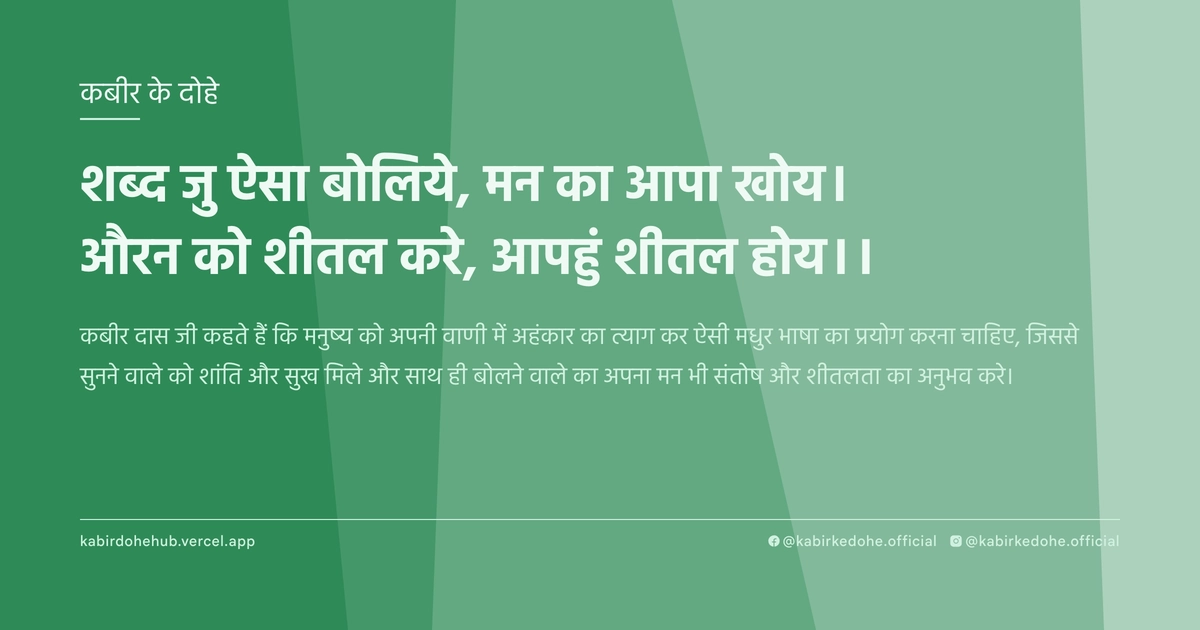
शब्द जु ऐसा बोलिये, मन का आपा खोय।
औरन को शीतल करे, आपहुं शीतल होय।।
Shabd ju aisa boliye, man ka aapa khoy. Auran ko sheetal kare, aapahun sheetal hoye.
इस पृष्ठ पर इस कबीर दोहे का अर्थ (meaning), हिंदी व्याख्या और अंग्रेज़ी अनुवाद, दार्शनिक विश्लेषण और व्यावहारिक जीवन सीख दी गई है। यह दोहा विनम्रता (Humility) विषय से जुड़ा है — Kabir doha meaning and explanation in Hindi and English.
अर्थ (Meaning):
कबीर दास जी कहते हैं कि मनुष्य को अपनी वाणी में अहंकार का त्याग कर ऐसी मधुर भाषा का प्रयोग करना चाहिए, जिससे सुनने वाले को शांति और सुख मिले और साथ ही बोलने वाले का अपना मन भी संतोष और शीतलता का अनुभव करे।
Kabir suggests that one should speak words devoid of ego and arrogance. By employing a gentle and sweet tone, a person not only brings peace and comfort to the listener but also experiences a profound sense of inner tranquility and coolness within their own soul.
व्याख्या (Interpretation):
इस दोहे का शाब्दिक अर्थ मधुर बोलने से है, परंतु आध्यात्मिक स्तर पर यह 'आपा' यानी अहंकार के विसर्जन की बात करता है। जब हम अहंकार को त्यागते हैं, तब हमारी वाणी केवल शब्दों का समूह नहीं, बल्कि आत्मा की अभिव्यक्ति बन जाती है। यह निर्गुण भक्ति के उस मार्ग को दर्शाता है जहाँ साधक स्वयं को शून्य कर ईश्वर की करुणा को आत्मसात करता है। माया हमें अलग-अलग पहचानों में बाँटती है, लेकिन प्रेमपूर्ण वाणी उस द्वैत को समाप्त कर अद्वैत की स्थिति पैदा करती है। यहाँ 'शीतलता' केवल शारीरिक सुख नहीं, बल्कि मानसिक शांति और आध्यात्मिक तृप्ति का प्रतीक है। यह विरोधाभास है कि दूसरों को शांति देते हुए हम स्वयं शांति प्राप्त करते हैं।
Literally, the verse advocates for sweet speech, but metaphorically, it demands the dissolution of 'Aapa' or the ego. When the ego is surrendered, speech ceases to be a tool for dominance and becomes a reflection of the soul's purity. This aligns with Nirgun Bhakti, where the seeker empties the self to be filled with the formless Divine. Maya creates the illusion of separation through pride, but compassionate speech bridges this gap, mirroring the non-duality of Advaita Vedanta. The 'coolness' mentioned is not a physical sensation but a spiritual state of equilibrium. It presents the beautiful paradox that by bestowing peace upon others, the giver becomes the primary recipient of that peace.
दार्शनिक विश्लेषण (Philosophical Analysis):
कबीर का यह संदेश उनके युग के सामाजिक और धार्मिक तनावों के बीच एक सेतु की तरह था। उस समय धर्म के नाम पर कट्टरता और जातिगत श्रेष्ठता का बोलबाला था, जहाँ वाणी का प्रयोग अक्सर दूसरों को नीचा दिखाने के लिए किया जाता था। कबीर ने कर्मकांडों और बाहरी आडंबरों के बजाय आंतरिक शुद्धि पर बल दिया। उनका यह दृष्टिकोण सूफी मत के 'इश्क' (प्रेम) और वेदांत के 'अहं ब्रह्मास्मि' के करीब है, जहाँ व्यक्ति यह समझता है कि दूसरा कोई और नहीं, बल्कि स्वयं का ही विस्तार है।
दार्शनिक रूप से, 'आपा' वह झूठा अहंकार है जो मनुष्य को उसकी वास्तविक प्रकृति से दूर रखता है। जब तक 'मैं' जीवित है, तब तक वाणी में कठोरता और निर्णय लेने की प्रवृत्ति रहती है। कबीर सिखाते हैं कि वाणी का परिमार्जन वास्तव में चेतना का परिमार्जन है। यदि शब्द कड़वे हैं, तो इसका अर्थ है कि भीतर क्रोध और ईर्ष्या का वास है।
यह दोहा केवल शिष्टाचार नहीं, बल्कि एक मनोवैज्ञानिक रूपांतरण की प्रक्रिया है। जब हम विनम्र होते हैं, तो हम अपने भीतर के 'अहं' को नष्ट करते हैं, जो कि मोक्ष का पहला कदम है। यह सूफीवाद के 'फना' (स्वयं का विनाश) होने जैसा है, जहाँ व्यक्ति अपनी पहचान को ईश्वर की इच्छा में विलीन कर देता है।
कबीर का विरोध उन पंडितों और मुल्लाओं से था जो शास्त्रों का ज्ञान तो रखते थे, लेकिन उनकी वाणी में करुणा नहीं थी। उनके लिए वास्तविक ज्ञान वह है जो व्यवहार में उतरे और जिससे समाज में प्रेम बढ़े। वे तर्क देते हैं कि यदि आपका धर्म आपको कठोर बनाता है, तो वह धर्म नहीं, बल्कि एक मानसिक बंधन है।
अंततः, यह विश्लेषण हमें बताता है कि वाणी का प्रभाव सीधा हृदय पर पड़ता है। जब हम बिना किसी स्वार्थ या अहंकार के बोलते हैं, तो हम ब्रह्मांडीय ऊर्जा के साथ तालमेल बिठाते हैं। यह अद्वैत की वह स्थिति है जहाँ बोलने वाला, सुनने वाला और बोला गया शब्द, तीनों एक ही चेतना के विभिन्न रूप बन जाते हैं।
Kabir's message emerged as a bridge during an era of intense socio-religious friction. His time was marked by rigid caste hierarchies and religious dogmatism, where language was often weaponized to assert superiority. By emphasizing the purity of speech over ritualistic piety, Kabir challenged the systemic arrogance of the priestly classes. His philosophy resonates deeply with the Sufi concept of 'Ishq' (Divine Love) and the Vedantic realization of 'Aham Brahmasmi' (I am Brahman), suggesting that the other is merely a reflection of oneself.
Philosophically, 'Aapa' represents the false ego—the psychological construct that separates the individual from the universal consciousness. As long as this ego persists, speech remains a tool for judgment and control. Kabir posits that the refinement of speech is actually the refinement of consciousness. Harsh words are merely symptoms of an internal state of turmoil, anger, and attachment.
This verse is not a lesson in etiquette but a blueprint for psychological transformation. Humility in speech is a practical exercise in ego-annihilation, which is the prerequisite for spiritual liberation. This mirrors the Sufi concept of 'Fana', the annihilation of the self in the Divine, where the individual identity dissolves into the ocean of universal love.
Kabir's critique was aimed at the scholars and clerics who possessed textual knowledge but lacked compassion. For him, true knowledge is that which manifests in behavior and fosters communal harmony. He argued that any religion that fosters hardness of heart is not a path to God but a mental shackle.
Ultimately, this analysis reveals that speech is the most direct manifestation of one's spiritual state. When we speak without ego, we align ourselves with the cosmic rhythm. This is the state of Advaita (non-duality), where the speaker, the listener, and the spoken word merge into a single, unified stream of consciousness.
मूल संदेश (Core Message):
- अहंकार वाणी का सबसे बड़ा शत्रु है।
- मधुरता केवल शिष्टाचार नहीं, आध्यात्मिक साधना है।
- दूसरों को शांति देना स्वयं को शांत करने का मार्ग है।
- शब्द आत्मा के दर्पण होते हैं।
- अद्वैत का अनुभव प्रेमपूर्ण संवाद से संभव है।
- Ego is the primary adversary of mindful speech.
- Gentleness is not mere etiquette, but a spiritual discipline.
- Bestowing peace upon others is the only way to find it within.
- Words are the mirrors reflecting the state of the soul.
- The experience of non-duality is achieved through compassionate dialogue.
व्यावहारिक उदाहरण (Practical Example):
एक समय की बात है, वाराणसी के घाटों पर रहने वाले एक वृद्ध बुनकर थे, जिनका नाम माधव था। माधव अपनी कला में निपुण थे, लेकिन उनका स्वभाव अत्यंत क्रोधी था। वे अक्सर अपने सहायकों और पड़ोसियों पर चिल्लाते थे, जिससे पूरा मोहल्ला उनसे कतराता था। उनका मानना था कि उनकी श्रेष्ठता उन्हें कठोर होने का अधिकार देती है।
एक दिन, उनके घर में एक युवा साधु आया, जिसने माधव की कड़वाहट को देखा। साधु ने माधव से कहा, "तुम्हारे कपड़ों की बुनाई तो बहुत सुंदर है, लेकिन तुम्हारी वाणी के धागे उलझे हुए और कांटेदार हैं।"
माधव को पहले तो यह बात चुभी, लेकिन साधु ने उन्हें एक चुनौती दी। उन्होंने कहा, "अगले सात दिनों तक, चाहे कोई तुम्हें कितना भी उकसाए, तुम केवल वही शब्द बोलोगे जो दूसरे के मन को शांति दें। यदि तुम ऐसा कर सके, तो मैं तुम्हें बुनाई की एक ऐसी गुप्त तकनीक बताऊंगा जिससे तुम्हारा कपड़ा सोने जैसा चमकेगा।"
शुरुआत में माधव के लिए यह अत्यंत कठिन था। जब एक पड़ोसी ने उनकी गलती निकाली, तो माधव का गला सूख गया और चेहरा लाल हो गया। लेकिन उन्हें उस गुप्त तकनीक की लालसा थी। उन्होंने गहरी सांस ली और विनम्रता से कहा, "शायद आप सही कह रहे हैं, मैं इसे सुधारने का प्रयास करूँगा।"
हैरानी की बात यह थी कि जब माधव ने विनम्रता दिखाई, तो सामने वाले व्यक्ति का क्रोध भी शांत हो गया। वह पड़ोसी, जो हमेशा उनसे झगड़ता था, अचानक उनकी मदद करने के लिए आगे आया।
धीरे-धीरे माधव ने महसूस किया कि जब वे अहंकार छोड़कर बोलते हैं, तो उनके भीतर का तनाव गायब हो जाता है। उन्हें अब उस गुप्त तकनीक की आवश्यकता महसूस नहीं हो रही थी, क्योंकि उनके जीवन में एक अलग ही चमक आ गई थी।
उनके घर का वातावरण बदल गया। जो सहायक डरकर काम करते थे, वे अब प्रेम और निष्ठा से काम करने लगे। माधव ने पाया कि उनकी वाणी की शीतलता ने उनके चारों ओर के लोगों को न केवल शांत किया, बल्कि उन्हें स्वयं के भीतर एक असीम शांति का अनुभव कराया।
एक दिन माधव ने उस साधु से पूछा, "वह गुप्त तकनीक क्या थी?" साधु मुस्कुराए और बोले, "वह तकनीक तुम्हारी अपनी वाणी में ही छिपी थी। जब तुमने 'आपा' खोया, तो तुमने वह सोना पा लिया जो किसी धागे में नहीं, बल्कि आत्मा में होता है।"
माधव अब केवल एक कुशल बुनकर नहीं थे, बल्कि मोहल्ले के सबसे प्रिय व्यक्ति बन गए थे। उन्होंने सीखा कि शब्दों का सही चयन केवल दूसरों को खुश करने के लिए नहीं, बल्कि स्वयं के मोक्ष के लिए आवश्यक है।
Once, on the ghats of Varanasi, lived an elderly weaver named Madhav. Madhav was a master of his craft, but his temperament was volatile and harsh. He frequently shouted at his assistants and neighbors, causing the entire community to avoid him. He believed his professional superiority granted him the right to be abrasive.
One day, a young monk visited his home and observed Madhav's bitterness. The monk remarked, "The weave of your cloth is exquisite, but the threads of your speech are tangled and thorny."
Initially, Madhav felt insulted, but the monk offered a challenge: "For the next seven days, no matter how much you are provoked, speak only words that bring peace to others. If you succeed, I will teach you a secret weaving technique that will make your fabric shine like gold."
At first, this was an agonizing struggle for Madhav. When a neighbor criticized his work, Madhav's throat tightened and his face flushed with rage. However, the desire for the secret technique pushed him forward. He took a deep breath and replied softly, "Perhaps you are right; I shall try to improve it."
To his astonishment, when Madhav responded with humility, the other person's anger vanished instantly. The neighbor, who had been his perennial adversary, suddenly offered to help him with his chores.
Gradually, Madhav realized that by abandoning his ego, the internal tension he had carried for decades began to dissolve. He no longer craved the secret technique because a different kind of radiance had entered his life.
The atmosphere of his home transformed. The assistants who once worked out of fear now worked with love and loyalty. Madhav discovered that the coolness of his speech not only calmed others but provided him with an unprecedented inner serenity.
One day, Madhav asked the monk, "What was that secret technique?" The monk smiled and replied, "The technique was hidden in your own speech. When you lost your 'Aapa' (ego), you found the gold that exists not in the thread, but in the soul."
Madhav was no longer just a skilled weaver; he became the most beloved person in the neighborhood. He learned that the conscious choice of words is not merely for social harmony, but a vital step toward one's own spiritual liberation.
अभ्यास मार्गदर्शन (Practice Guidance):
- दैनिक मौन अभ्यास: प्रतिदिन 30 मिनट का पूर्ण मौन रखें और विचार करें कि आपके शब्द दूसरों को कैसे प्रभावित करते हैं।
- आत्म-निरीक्षण जर्नल: हर रात उन क्षणों को लिखें जब आपने अहंकारवश कठोर शब्द कहे और विश्लेषण करें कि उस समय आपके भीतर कौन सा डर या असुरक्षा थी।
- सचेत प्रतिक्रिया: किसी के क्रोध का उत्तर देने से पहले तीन गहरी सांसें लें और स्वयं से पूछें, "क्या मेरा उत्तर शांति लाएगा या केवल मेरी श्रेष्ठता सिद्ध करेगा?"
- निदान चेकलिस्ट: यदि आप दूसरों की आलोचना पर तुरंत उत्तेजित होते हैं या बातचीत के बाद मानसिक थकान महसूस करते हैं, तो समझें कि आपका 'आपा' अभी हावी है।
- Daily Silence Practice: Maintain 30 minutes of absolute silence daily to observe how your internal dialogue shapes your external speech.
- Self-Inquiry Journaling: Every night, record instances where you spoke harshly out of ego and analyze the underlying fear or insecurity that triggered the reaction.
- Conscious Response: Before responding to anger, take three deep breaths and ask yourself, "Will my answer bring peace, or is it merely an attempt to prove my superiority?"
- Diagnostic Checklist: If you find yourself instantly triggered by criticism or feel mentally exhausted after a conversation, recognize that your 'Aapa' (ego) is still dominating your consciousness.
चिंतन प्रश्न (Reflection Questions):
- क्या मेरी विनम्रता वास्तव में आंतरिक है, या यह केवल दूसरों से कुछ पाने के लिए एक मुखौटा है?
- जब मैं दूसरों को सही सलाह देता हूँ, तो क्या मैं उनकी मदद कर रहा होता हूँ या अपनी बौद्धिक श्रेष्ठता सिद्ध कर रहा होता हूँ?
- मेरे डिजिटल व्यवहार (सोशल मीडिया) में मेरा 'आपा' किस तरह प्रकट होता है?
- क्या मैं उन लोगों के प्रति भी शीतल रह सकता हूँ जिन्होंने मुझे गहरा मानसिक दुख पहुँचाया है?
- मेरी वाणी में वह कौन सा छिपा हुआ अहंकार है जो मुझे वास्तव में 'शून्य' होने से रोकता है?
- Is my humility genuine, or is it a strategic mask used to manipulate others for my benefit?
- When I offer advice, am I truly helping the other person, or am I subconsciously asserting my intellectual dominance?
- How does my 'Aapa' manifest in my digital identity and interactions on social media?
- Can I maintain a 'cool' and compassionate tone toward those who have caused me profound emotional pain?
- What is the hidden layer of ego in my speech that prevents me from achieving true spiritual emptiness?