
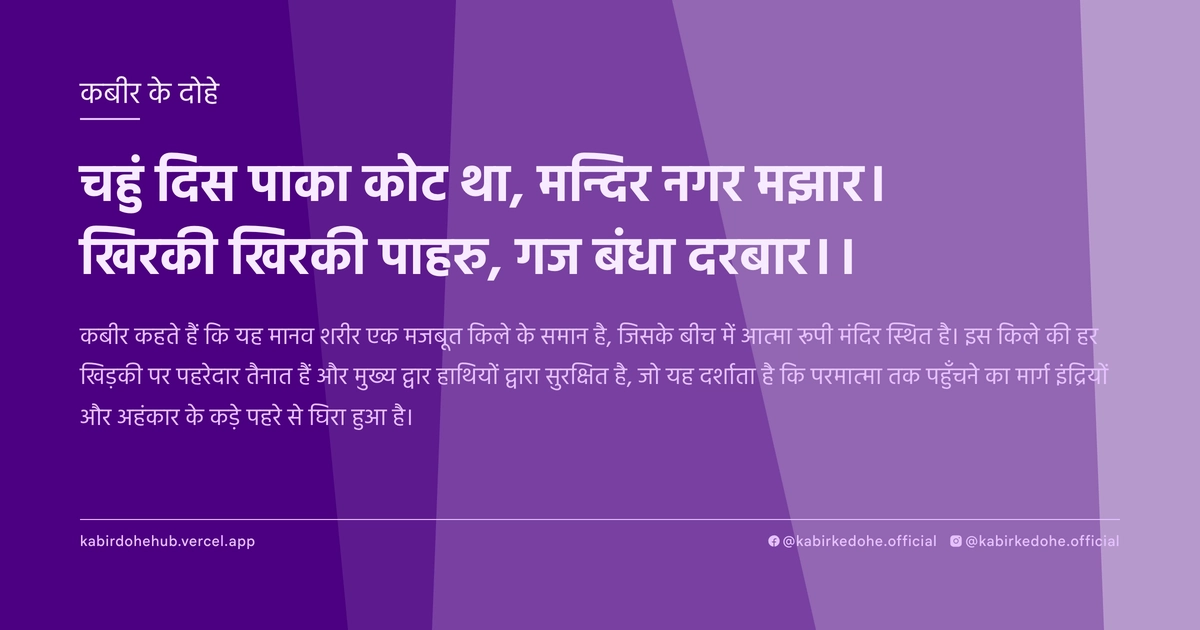
चहुं दिस पाका कोट था, मन्दिर नगर मझार।
खिरकी खिरकी पाहरु, गज बंधा दरबार।।
Chahun dis paka kot tha, mandir nagar majhar. Khirki khirki pahru, gaj bandha darbar.
इस पृष्ठ पर इस कबीर दोहे का अर्थ (meaning), हिंदी व्याख्या और अंग्रेज़ी अनुवाद, दार्शनिक विश्लेषण और व्यावहारिक जीवन सीख दी गई है। यह दोहा आत्मा और शरीर (Soul and Body) विषय से जुड़ा है — Kabir doha meaning and explanation in Hindi and English.
अर्थ (Meaning):
कबीर कहते हैं कि यह मानव शरीर एक मजबूत किले के समान है, जिसके बीच में आत्मा रूपी मंदिर स्थित है। इस किले की हर खिड़की पर पहरेदार तैनात हैं और मुख्य द्वार हाथियों द्वारा सुरक्षित है, जो यह दर्शाता है कि परमात्मा तक पहुँचने का मार्ग इंद्रियों और अहंकार के कड़े पहरे से घिरा हुआ है।
Kabir describes the human body as a fortified castle, with the temple of the soul residing in its center. Every window is guarded by sentinels, and the main gateway is blocked by elephants, symbolizing how the path to the Divine is heavily guarded by the senses, ego, and worldly attachments.
व्याख्या (Interpretation):
यह दोहा शरीर की भौतिक संरचना और आध्यात्मिक अवरोधों का एक गहन रूपक है। 'पाका कोट' या मजबूत किला हमारी भौतिक देह और उसके साथ जुड़े अहंकार का प्रतीक है। 'मन्दिर नगर मझार' उस अंतरात्मा की ओर संकेत करता है जहाँ ईश्वर का वास है, लेकिन वह बाहरी शोर और माया के परतों के नीचे दबा हुआ है। 'खिरकी खिरकी पाहरु' हमारी पाँच इंद्रियों और मन के उन विचारों का प्रतिनिधित्व करते हैं जो हमें निरंतर बाहरी दुनिया की ओर खींचते हैं, जिससे हम आंतरिक शांति से दूर रहते हैं। 'गज बंधा दरबार' उस गहरे अज्ञान और सामाजिक कंडीशनिंग का प्रतीक है जो आत्मा के द्वार को बंद रखता है। यह निरगुण भक्ति का सार है, जहाँ साधक को यह समझना होता है कि ईश्वर कहीं बाहर नहीं, बल्कि इसी शरीर के भीतर है, परंतु पहुँचने के लिए इन मानसिक पहरेदारों को पार करना होगा। यह अद्वैत वेदांत के उस सत्य को उजागर करता है जहाँ जीव और ब्रह्म एक हैं, लेकिन माया का पर्दा उन्हें अलग करता है।
This couplet serves as a profound metaphor for the physical structure of the body and the spiritual barriers within. The 'fortified castle' represents the physical form and the accompanying ego. The 'temple in the center of the city' signifies the inner soul where the Divine resides, though it remains buried beneath layers of noise and Maya. The 'sentinels at every window' represent the five senses and the restless thoughts that constantly pull us toward the external world, distancing us from inner silence. The 'elephants guarding the gate' symbolize deep-seated ignorance and social conditioning that keep the doors of the soul locked. This is the essence of Nirgun Bhakti, where the seeker realizes that God is not external but within, yet reaching Him requires bypassing these mental guards. It highlights the Advaita Vedanta truth that the Atman and Brahman are one, separated only by the veil of illusion.
दार्शनिक विश्लेषण (Philosophical Analysis):
कबीर का यह दृष्टिकोण उनके युग के धार्मिक पाखंड और कर्मकांडों के विरुद्ध एक सशक्त प्रहार है। उन्होंने यह स्पष्ट किया कि तीर्थयात्रा या बाहरी पूजा-पाठ व्यर्थ हैं यदि व्यक्ति अपने भीतर के किले को नहीं पहचानता। यह विश्लेषण सूफी मत के 'इन्सान-ए-कामिल' (पूर्ण मानव) की अवधारणा से मेल खाता है, जहाँ हृदय को ईश्वर का घर माना गया है।
ऐतिहासिक रूप से, कबीर ने जाति और धर्म के बंधनों को तोड़कर एक ऐसी आध्यात्मिकता की बात की जो सार्वभौमिक थी। यहाँ 'किले' का रूपक यह बताता है कि मनुष्य ने स्वयं को अपनी पहचान, पद और प्रतिष्ठा के घेरे में कैद कर लिया है। यह मनोवैज्ञानिक बंधन ही है जो उसे उसकी वास्तविक प्रकृति से दूर रखता है।
अद्वैत वेदांत के अनुसार, यह शरीर केवल एक आवरण है। जब तक साधक 'अहं' (ego) के पहरेदारों को नहीं हटाता, तब तक वह उस 'एकत्व' का अनुभव नहीं कर सकता। कबीर यहाँ चेतावनी देते हैं कि बाहरी सुरक्षा (सामाजिक प्रतिष्ठा, धन, ज्ञान) वास्तव में आध्यात्मिक प्रगति में बाधाएँ हैं।
सूफीवाद में 'नफ्स' (lower self) को वश में करना अनिवार्य है। कबीर की 'खिड़कियों के पहरेदार' इसी नफ्स के विभिन्न स्तरों को दर्शाते हैं। जब तक इच्छाएं और वासनाएं सक्रिय हैं, आत्मा का मंदिर अदृश्य रहता है।
अंततः, यह दोहा मनोवैज्ञानिक रूपांतरण की बात करता है। यह केवल शरीर का वर्णन नहीं है, बल्कि चेतना के स्तरों का मानचित्र है। मुक्ति का मार्ग बाहरी खोज नहीं, बल्कि आंतरिक विखंडन है—अहंकार का विखंडन, ताकि वह मंदिर फिर से खोजा जा सके जो हमारे भीतर ही स्थित है।
Kabir's perspective is a powerful strike against the religious hypocrisy and ritualism of his era. He clarifies that pilgrimages and external worship are futile if one does not recognize the fortress within. This analysis aligns with the Sufi concept of 'Insan-e-Kamil' (the Perfect Human), where the heart is viewed as the dwelling of God.
Historically, Kabir broke the shackles of caste and creed to propose a spirituality that was universal. The metaphor of the 'fort' suggests that humans have imprisoned themselves within the boundaries of identity, status, and prestige. This psychological bondage is what distances the individual from their true nature.
According to Advaita Vedanta, the body is merely a veil. Until the seeker removes the sentinels of 'Aham' (ego), they cannot experience the 'Oneness'. Kabir warns that external securities—social prestige, wealth, and intellectual pride—are actually obstacles to spiritual progress.
In Sufism, conquering the 'Nafs' (lower self) is essential. Kabir's 'sentinels at the windows' represent the various levels of the Nafs. As long as desires and lusts are active, the temple of the soul remains invisible.
Ultimately, this couplet speaks of psychological transformation. It is not merely a description of the body but a map of levels of consciousness. The path to liberation is not an external quest but an internal dismantling—the dismantling of the ego—so that the temple residing within can be rediscovered.
मूल संदेश (Core Message):
- बाहरी खोज एक भ्रम है; सत्य भीतर छिपा है।
- इंद्रियां और अहंकार आत्मा के मार्ग के सबसे बड़े अवरोध हैं।
- शरीर केवल एक माध्यम है, लक्ष्य उसके भीतर का मंदिर है।
- मौन और जागरूकता ही पहरेदारों को हटाने की कुंजी है।
- जब 'मैं' मिटता है, तब 'वह' प्रकट होता है।
- External searching is an illusion; truth is hidden within.
- Senses and ego are the greatest barriers to the soul.
- The body is merely a medium; the goal is the temple inside.
- Silence and awareness are the keys to removing the sentinels.
- When the 'I' vanishes, the 'Divine' appears.
व्यावहारिक उदाहरण (Practical Example):
एक समय की बात है, वाराणसी के घाटों पर माधव नाम का एक वृद्ध बुनकर रहता था। माधव अपने काम में निपुण था, लेकिन उसका मन हमेशा अशांत रहता था। वह दिन भर मंदिर जाता, घंटों पूजा करता और दान-पुण्य करता, फिर भी उसे वह शांति नहीं मिलती थी जिसकी उसे तलाश थी। वह मानता था कि उसकी समस्या बाहरी दुनिया की गंदगी और लोगों का लालच है।
एक दिन उसकी मुलाकात एक घुमंतू संत से हुई, जिसने माधव की बेचैनी को देखा। संत ने उससे पूछा, 'माधव, तुम बाहर के मंदिर की सफाई में इतना समय क्यों बिताते हो, जबकि तुम्हारे भीतर का मंदिर धूल से भरा है?' माधव हैरान रह गया। उसने कहा, 'मेरे भीतर कौन सा मंदिर?'
संत ने उसे कबीर का यह दोहा सुनाया और समझाया कि उसका शरीर एक किले की तरह है। माधव की 'खिड़कियां' उसकी इंद्रियां थीं—उसका क्रोध, उसका अहंकार कि वह शहर का सबसे अच्छा बुनकर है, और उसकी यह धारणा कि केवल वह ही धार्मिक है। ये सभी पहरेदार थे जिन्होंने उसके हृदय के द्वार को बंद कर रखा था।
माधव ने महसूस किया कि वह बाहरी दुनिया को बदलने की कोशिश कर रहा था, जबकि असली युद्ध उसके भीतर था। उसने अपनी दिनचर्या बदली। अब वह पूजा के साथ-साथ मौन का अभ्यास करने लगा। जब भी उसे किसी पर क्रोध आता, वह सोचता, 'देखो, एक पहरेदार फिर से जाग गया है।'
धीरे-धीरे, उसने अपने अहंकार को त्यागना शुरू किया। उसने उन लोगों की मदद करना शुरू किया जिन्हें वह पहले तुच्छ समझता था। उसने पाया कि जैसे-जैसे उसका अहंकार कम हुआ, उसके मन की खिड़कियां खुलने लगीं।
एक दिन, एक गरीब भिखारी उसके पास आया और उसकी मदद मांगी। पहले का माधव उसे झिड़क देता, लेकिन अब उसने उसे प्रेम से गले लगाया। उस क्षण उसे एक ऐसी शांति महसूस हुई जो उसे किसी बड़े मंदिर की मूर्ति के सामने नहीं मिली थी।
उसे समझ आया कि 'गज बंधा दरबार' उसका वह पुराना विश्वास था कि धर्म केवल कर्मकांडों में है। जब उसने उस विश्वास को तोड़ा, तो उसके भीतर का मंदिर प्रकट हो गया।
माधव अब केवल कपड़े नहीं बुनता था, वह प्रेम और करुणा के धागों से जीवन बुनने लगा। उसकी आँखों में अब एक अलग चमक थी, क्योंकि उसने अपने भीतर के किले के पहरेदारों को शांत कर दिया था।
Once, on the ghats of Varanasi, lived an elderly weaver named Madhav. Madhav was skilled in his craft, but his mind was perpetually restless. He spent his days visiting temples, praying for hours, and giving charity, yet he never found the peace he sought. He believed his problem lay in the filth of the external world and the greed of people.
One day, he met a wandering saint who noticed Madhav's agitation. The saint asked, 'Madhav, why do you spend so much time cleaning the external temple while the temple within you is covered in dust?' Madhav was stunned. He asked, 'What temple within me?'
The saint recited this doha of Kabir and explained that his body was like a fort. Madhav's 'windows' were his senses—his anger, his pride in being the city's best weaver, and his belief that only he was truly religious. These were the sentinels guarding the doors of his heart.
Madhav realized he had been trying to change the external world while the real battle was within. He changed his routine. Alongside his prayers, he began practicing silence. Whenever anger flared, he would think, 'Look, a sentinel has awakened again.'
Slowly, he began to shed his ego. He started helping those he previously considered insignificant. He discovered that as his ego diminished, the windows of his mind began to open.
One day, a poor beggar approached him for help. The old Madhav would have dismissed him, but now he embraced him with love. In that moment, he felt a peace that he had never experienced before any idol in a grand temple.
He understood that the 'elephants guarding the gate' were his old beliefs that religion was merely about rituals. When he broke those beliefs, the temple within him revealed itself.
Madhav no longer just wove cloth; he began weaving a life of love and compassion. There was a new light in his eyes, for he had finally quieted the sentinels of his inner fortress.
अभ्यास मार्गदर्शन (Practice Guidance):
- दैनिक मौन अभ्यास: प्रतिदिन 20 मिनट पूर्ण मौन में बैठें। जब भी कोई विचार या भावना (क्रोध, लोभ, ईर्ष्या) आए, उसे एक 'पहरेदार' के रूप में देखें और बिना प्रतिक्रिया दिए उसे केवल देखें।
- आत्म-पूछताछ जर्नल: हर रात लिखें कि आज किस 'पहरेदार' (अहंकार, निर्णय, या डर) ने आपको आपके आंतरिक केंद्र से दूर रखा। विश्लेषण करें कि वह भावना कहाँ से आई।
- इंद्रिय जागरूकता: भोजन करते समय या चलते समय, यह देखें कि आपकी इंद्रियां आपको कैसे बाहरी उत्तेजनाओं की ओर खींचती हैं। सचेत रूप से अपना ध्यान वापस अपनी सांसों पर लाएं।
- निदान चेकलिस्ट: क्या मैं दूसरों को बदलने की कोशिश कर रहा हूँ? (यदि हाँ, तो अहंकार का पहरेदार सक्रिय है)। क्या मैं बाहरी अनुष्ठानों में शांति खोज रहा हूँ? (यदि हाँ, तो आंतरिक मंदिर की उपेक्षा हो रही है)।
- Daily Silence Practice: Sit in complete silence for 20 minutes daily. Whenever a thought or emotion (anger, greed, jealousy) arises, view it as a 'sentinel' and observe it without reacting.
- Self-Inquiry Journal: Every night, write down which 'sentinel' (ego, judgment, or fear) kept you away from your inner center today. Analyze the origin of that emotion.
- Sensory Awareness: While eating or walking, notice how your senses pull you toward external stimuli. Consciously bring your attention back to your breath.
- Diagnostic Checklist: Am I trying to change others? (If yes, the sentinel of ego is active). Am I seeking peace in external rituals? (If yes, the inner temple is being neglected).
चिंतन प्रश्न (Reflection Questions):
- मेरे जीवन का वह कौन सा 'पहरेदार' है जिसे मैं सबसे अधिक पोषण देता हूँ—मेरा ज्ञान, मेरी नैतिकता, या मेरी सामाजिक छवि?
- यदि मैं अपनी सभी बाहरी पहचान (नाम, पेशा, धर्म) हटा दूँ, तो उस 'किले' के भीतर क्या बचेगा?
- मैं अपनी डिजिटल पहचान (सोशल मीडिया) के माध्यम से किस तरह के नए पहरेदार खड़े कर रहा हूँ जो मुझे वास्तविक शांति से दूर रखते हैं?
- क्या मेरी धार्मिकता वास्तव में मुझे ईश्वर के करीब ले जा रही है, या यह केवल मेरे अहंकार को संतुष्ट करने का एक तरीका है?
- मेरे भीतर का वह कौन सा डर है जो 'दरबार के हाथी' की तरह मेरे आध्यात्मिक विकास के द्वार को बंद किए हुए है?
- Which 'sentinel' in my life do I nourish the most—my knowledge, my morality, or my social image?
- If I stripped away all external identities (name, profession, religion), what would remain inside that 'fortress'?
- Through my digital identity (social media), what new sentinels am I creating that distance me from real peace?
- Is my religiosity actually bringing me closer to the Divine, or is it merely a way to satisfy my ego?
- What is that fear within me that, like the 'elephants at the gate,' keeps the doors of my spiritual growth closed?