
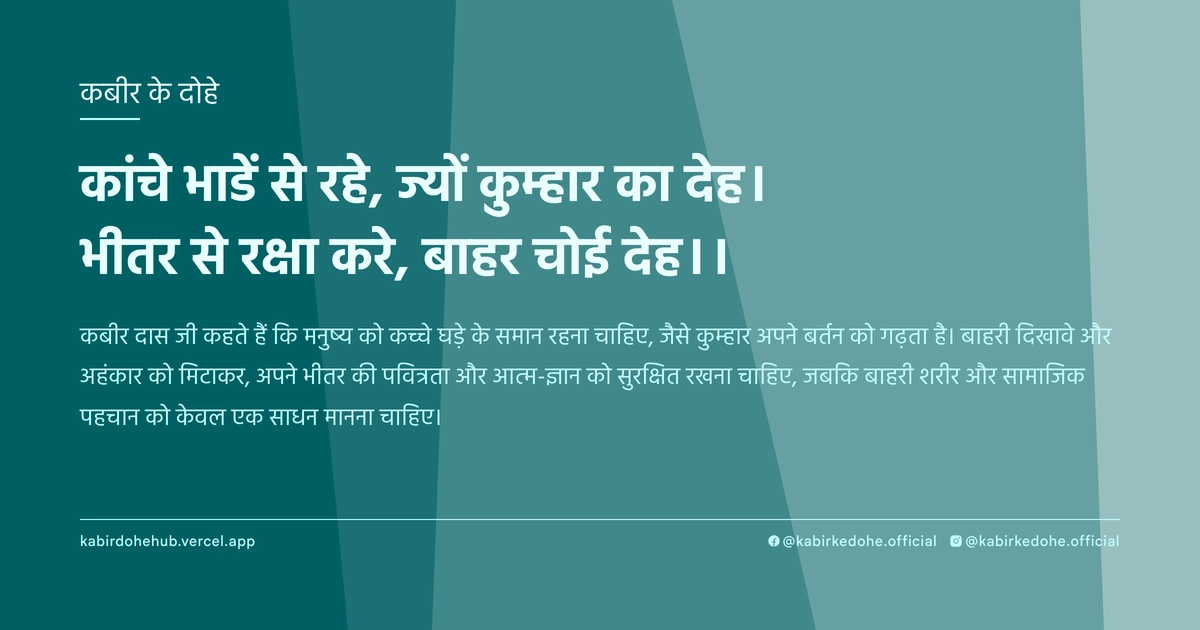
कांचे भाडें से रहे, ज्यों कुम्हार का देह।
भीतर से रक्षा करे, बाहर चोई देह।।
Kaanche bhaade se rahe, jyon kumhaar ka deh. Bhitar se raksha kare, baahar choi deh.
इस पृष्ठ पर इस कबीर दोहे का अर्थ (meaning), हिंदी व्याख्या और अंग्रेज़ी अनुवाद, दार्शनिक विश्लेषण और व्यावहारिक जीवन सीख दी गई है। यह दोहा आत्मा और शरीर (Soul and Body) विषय से जुड़ा है — Kabir doha meaning and explanation in Hindi and English.
अर्थ (Meaning):
कबीर दास जी कहते हैं कि मनुष्य को कच्चे घड़े के समान रहना चाहिए, जैसे कुम्हार अपने बर्तन को गढ़ता है। बाहरी दिखावे और अहंकार को मिटाकर, अपने भीतर की पवित्रता और आत्म-ज्ञान को सुरक्षित रखना चाहिए, जबकि बाहरी शरीर और सामाजिक पहचान को केवल एक साधन मानना चाहिए।
Kabir suggests that a human should remain like an unbaked clay pot, similar to how a potter shapes his creation. One must discard the external facade of ego and social identity, focusing instead on preserving the inner sanctity and spiritual essence while treating the physical body as a mere vessel.
व्याख्या (Interpretation):
इस दोहे में 'कांचा भांडा' या कच्चा घड़ा अज्ञान और अहंकार से मुक्त, विनम्र मन का प्रतीक है। कुम्हार यहाँ परमात्मा या गुरु का प्रतीक है जो आत्मा को आकार देता है। 'भीतर राखे राखणा' का अर्थ है कि वास्तविक सत्य और ईश्वर का वास हृदय के भीतर है, जिसे बाहरी शोर से बचाकर रखना आवश्यक है। 'बाहर चोई देह' का तात्पर्य है कि शरीर और सांसारिक प्रतिष्ठा नश्वर हैं और उन्हें केवल एक आवरण समझना चाहिए। यह निर्गुण भक्ति का सार है जहाँ रूप और रंग का त्याग कर निराकार ब्रह्म की खोज की जाती है। माया का पर्दा तब हटता है जब हम बाहरी दिखावे को 'चोई' यानी मिटा देते हैं। अंततः, यह अद्वैत वेदांत के उस सत्य की ओर संकेत करता है जहाँ आत्मा और परमात्मा का भेद समाप्त हो जाता है।
In this couplet, the 'unbaked clay pot' symbolizes a mind that is humble and free from the rigidity of ego. The potter represents the Divine or the Guru who molds the soul. 'Bhitar rakhe rakhna' implies that the ultimate truth and the Divine reside within the heart, which must be protected from external distractions. 'Bahar choi deh' suggests that the physical body and social status are transient and should be viewed merely as a covering. This encapsulates the essence of Nirgun Bhakti, where one transcends form and color to seek the formless Brahman. The veil of Maya is lifted only when the external facade is erased. Ultimately, it points toward the Advaita Vedanta truth where the duality between the Atman and Brahman dissolves into oneness.
दार्शनिक विश्लेषण (Philosophical Analysis):
कबीर का यह दर्शन उनके समय के कट्टरपंथ और कर्मकांडों के विरुद्ध एक सशक्त प्रहार था। उस युग में लोग बाहरी प्रतीकों—जैसे माला, तिलक या विशेष वस्त्रों—को मोक्ष का साधन मानते थे। कबीर ने इस 'बाहरी आवरण' को निरर्थक बताते हुए आंतरिक शुद्धि पर बल दिया। उनका दृष्टिकोण सूफी मत के 'फना' (अहंकार का विनाश) और वेदांत के 'नेति-नेति' (यह नहीं, वह नहीं) के करीब है।
यहाँ 'कच्चे घड़े' का रूपक अत्यंत गहरा है। पका हुआ घड़ा कठोर होता है, वह टूटता है लेकिन बदलता नहीं; ठीक वैसे ही, एक अहंकारी व्यक्ति अपने विचारों में इतना कठोर हो जाता है कि वह नए सत्य को ग्रहण नहीं कर पाता। कच्चा घड़ा लचीला होता है, जिसे कुम्हार अपनी इच्छा अनुसार ढाल सकता है। यह आध्यात्मिक समर्पण की वह अवस्था है जहाँ साधक स्वयं को पूरी तरह शून्य कर देता है।
कबीर जाति और धर्म के भेदों को शरीर की बाहरी बनावट मानते थे। उनके लिए शरीर केवल मिट्टी का एक पुतला है। जब व्यक्ति यह समझ लेता है कि वह शरीर नहीं बल्कि वह चेतना है जो शरीर के भीतर है, तब वह सामाजिक भेदभाव से ऊपर उठ जाता है। यह मनोवैज्ञानिक रूपांतरण है जहाँ 'मैं' (अहंकार) का विलोपन होता है और 'वह' (परमात्मा) का उदय होता है।
सूफीवाद में भी इसी तरह की आंतरिक यात्रा का वर्णन है, जहाँ साधक बाहरी दुनिया के भ्रमों को त्याग कर 'इश्क-ए-हकीकी' या ईश्वरीय प्रेम में लीन हो जाता है। कबीर का यह संदेश कि 'भीतर राखो', वास्तव में अंतर्मुखी होने का आह्वान है। वे कहते हैं कि मंदिर, मस्जिद या तीर्थों में भटकने के बजाय अपने हृदय के भीतर झांकें।
अंतिम विश्लेषण में, यह दोहा हमें सिखाता है कि सत्य किसी बाहरी ढांचे में नहीं, बल्कि उस रिक्तता में है जो अहंकार के मिटने के बाद बचती है। जब हम अपनी पहचान (Identity) को मिटा देते हैं, तभी हम उस सार्वभौमिक सत्य का हिस्सा बन पाते हैं। यह एक ऐसी प्रक्रिया है जिसमें स्वयं को मिटाकर ही स्वयं को पाया जा सकता है।
Kabir's philosophy serves as a powerful critique of the dogmatism and ritualism prevalent during his era. At a time when people viewed external symbols—such as prayer beads, tilaks, or specific attire—as vehicles for salvation, Kabir dismissed this 'external covering' as futile, emphasizing inner purification instead. His perspective aligns closely with the Sufi concept of 'Fana' (annihilation of the ego) and the Vedantic practice of 'Neti-Neti' (not this, not that).
The metaphor of the 'unbaked pot' is profoundly deep. A baked pot is rigid; it may break, but it cannot be reshaped. Similarly, an egoistic person becomes so rigid in their beliefs that they cannot absorb new truths. An unbaked pot is malleable, allowing the potter to shape it as desired. This represents the state of spiritual surrender where the seeker renders themselves completely void.
Kabir viewed caste and religious divisions as mere external constructs of the body. To him, the body is but a puppet of clay. When an individual realizes they are not the body but the consciousness residing within it, they transcend social hierarchies. This is a psychological transformation where the 'I' (ego) is annihilated, and the 'That' (Divine) emerges.
Sufism similarly describes an internal journey where the seeker discards the illusions of the material world to immerse themselves in 'Ishq-e-Haqiqi' or Divine Love. Kabir's instruction to 'keep it within' is a call for introversion. He argues that instead of wandering through temples, mosques, or pilgrimages, one must look within their own heart.
In final analysis, this doha teaches us that truth does not reside in any external structure, but in the void that remains after the ego is erased. Only when we dissolve our constructed identity can we become part of the universal truth. It is a process where one must be lost to be found.
मूल संदेश (Core Message):
- बाहरी दिखावा आत्मा की वास्तविक प्रगति में सबसे बड़ी बाधा है।
- विनम्रता वह द्वार है जिससे होकर सत्य भीतर प्रवेश करता है।
- अहंकार का विलोपन ही वास्तविक आध्यात्मिक उपलब्धि है।
- शरीर एक अस्थायी वस्त्र है, इसे अपनी पहचान न बनाएँ।
- भीतर की शांति को बाहरी शोर से बचाकर रखना ही सच्ची साधना है।
- लचीलापन और समर्पण ही ईश्वर से मिलन का एकमात्र मार्ग है।
- External facade is the greatest obstacle to the soul's true progress.
- Humility is the gateway through which truth enters the inner self.
- The annihilation of ego is the only true spiritual achievement.
- The body is a temporary garment; do not mistake it for your identity.
- Preserving inner peace from external noise is the essence of true practice.
- Flexibility and surrender are the only paths to union with the Divine.
व्यावहारिक उदाहरण (Practical Example):
वाराणसी के एक पुराने घाट पर माधव नाम का एक वृद्ध बुनकर रहता था। माधव अपनी कला में निपुण था, लेकिन उसे अपनी श्रेष्ठता का बहुत अहंकार था। वह शहर के हर बुनकर को नीचा दिखाता था और मानता था कि उसकी बनाई साड़ियाँ ही ईश्वर की सच्ची कृति हैं। वह अपनी पहचान को अपने काम और अपनी प्रसिद्धि से जोड़ चुका था।
एक दिन, एक फकीर उसके पास आया और उसने माधव की सबसे महंगी साड़ी को देखा। फकीर ने मुस्कुराते हुए कहा, 'यह कपड़ा सुंदर है, लेकिन इसे पहनने वाला यदि भीतर से मैला है, तो यह रेशम भी केवल एक कफ़न है।' माधव को यह बात चुभी, उसने फकीर को अपनी कला का ज्ञान देना चाहा, लेकिन फकीर ने उसे एक मिट्टी के कच्चे घड़े की ओर इशारा किया जो धूप में सूख रहा था।
फकीर ने कहा, 'देखो इस घड़े को। यह अभी कच्चा है, इसलिए इसे कुम्हार फिर से बदल सकता है। लेकिन जिस दिन यह पक जाएगा, यह अपनी जिद पर अड़ जाएगा। तुम्हारा अहंकार इसी पके हुए घड़े की तरह है। तुम खुद को इतना 'पूर्ण' मान चुके हो कि अब तुम्हारे भीतर किसी नए सत्य के लिए जगह नहीं बची है।'
माधव पहले तो क्रोधित हुआ, लेकिन रात भर वह उन शब्दों के बारे में सोचता रहा। उसने महसूस किया कि उसकी प्रसिद्धि और उसकी कला का घमंड वास्तव में उसे दूसरों से अलग कर रहा था। वह जिसे अपनी 'पहचान' समझ रहा था, वह वास्तव में एक दीवार थी जिसने उसे उसके अपने समुदाय और उसकी आत्मा से काट दिया था।
अगले दिन, माधव ने अपनी कार्यशाला के दरवाजे सबके लिए खोल दिए। उसने उन युवा बुनकरों को सिखाना शुरू किया जिन्हें वह पहले तुच्छ समझता था। उसने अपनी साड़ियों पर अपना नाम लिखना बंद कर दिया। उसने महसूस किया कि जब वह 'सर्वश्रेष्ठ बुनकर' होने का बोझ उतार फेंकता है, तो वह वास्तव में स्वतंत्र महसूस करता है।
उसने देखा कि अब उसकी कला में एक नई विनम्रता और गहराई आ गई थी। वह अब केवल कपड़ा नहीं बुन रहा था, बल्कि रिश्तों को बुन रहा था। उसकी बाहरी पहचान एक 'महान कलाकार' से बदलकर एक 'सहयोगी' की हो गई थी।
उसने अपनी दिनचर्या में मौन का अभ्यास शुरू किया। वह हर सुबह गंगा के किनारे बैठकर यह सोचता कि वह केवल एक मिट्टी का पुतला है, जिसका उद्देश्य केवल सेवा है। उसने अपने भीतर की शांति को सहेजना सीखा और बाहरी प्रशंसा की भूख को मिटा दिया।
समय के साथ, माधव की प्रसिद्धि और बढ़ गई, लेकिन अब वह उसे प्रभावित नहीं करती थी। वह 'कच्चे घड़े' की तरह लचीला हो गया था। जब कोई उसकी आलोचना करता, तो वह उसे सुधार का अवसर मानता, न कि अपने अहंकार पर चोट।
अंततः, माधव ने पाया कि असली खुशी उस समय मिली जब उसने अपनी 'मैं' को मिटा दिया। वह अब केवल एक बुनकर नहीं था, वह उस अनंत चेतना का हिस्सा बन गया था जहाँ न कोई छोटा था, न बड़ा।
उसकी कहानी पूरे शहर में फैल गई, लेकिन माधव अब शांत था। उसने जान लिया था कि बाहरी आवरण को 'चोई' यानी मिटाकर ही भीतर के असली हीरे को पाया जा सकता है।
On an old ghat in Varanasi lived an elderly weaver named Madhav. Madhav was masterful in his craft, but he possessed a towering ego regarding his superiority. He looked down upon every other weaver in the city, believing that only his sarees were true creations of God. He had tied his entire identity to his work and his fame.
One day, a wandering dervish came to him and looked at Madhav's most expensive saree. The dervish smiled and said, 'This fabric is beautiful, but if the wearer is soiled within, this silk is nothing but a shroud.' Madhav felt stung; he tried to lecture the dervish on his artistry, but the dervish pointed toward an unbaked clay pot drying in the sun.
The dervish said, 'Look at this pot. It is still raw, so the potter can reshape it. But the day it is fired, it becomes rigid and stubborn. Your ego is like this baked pot. You have considered yourself so "complete" that there is no longer room within you for any new truth.'
Madhav was initially angered, but he spent the entire night contemplating those words. He realized that his pride in his fame and craft was actually isolating him. What he perceived as his 'identity' was in fact a wall that had severed him from his community and his own soul.
The next day, Madhav opened the doors of his workshop to everyone. He began teaching the young weavers whom he had previously dismissed as insignificant. He stopped signing his name on his sarees. He felt that by shedding the burden of being the 'greatest weaver,' he had finally become free.
He noticed that a new humility and depth had entered his art. He was no longer just weaving fabric; he was weaving relationships. His external identity shifted from that of a 'great artist' to that of a 'companion.'
He began practicing silence in his daily routine. Every morning, sitting by the Ganges, he would remind himself that he was merely a puppet of clay whose only purpose was service. He learned to preserve the peace within and extinguished his hunger for external praise.
Over time, Madhav's fame grew even further, but it no longer affected him. He had become flexible like the 'unbaked pot.' When someone criticized him, he viewed it as an opportunity for improvement rather than an assault on his ego.
Ultimately, Madhav found that true happiness arrived only when he erased his 'I.' He was no longer just a weaver; he had become part of that infinite consciousness where there is no high or low.
His story spread throughout the city, but Madhav remained serene. He had learned that only by erasing the external facade could one discover the true diamond within.
अभ्यास मार्गदर्शन (Practice Guidance):
- प्रतिदिन 20 मिनट 'शून्य ध्यान' का अभ्यास करें, जहाँ आप अपनी सभी सामाजिक भूमिकाओं (पिता, पुत्र, कर्मचारी, पद) को मानसिक रूप से उतार कर केवल एक 'साक्षी' के रूप में बैठें।
- स्व-पूछताछ जर्नल लिखें: 'यदि मेरी सारी उपलब्धियाँ और मेरी पहचान आज छीन ली जाए, तो मेरे भीतर क्या बचेगा?' इस प्रश्न पर गहराई से विचार करें।
- व्यवहार परिवर्तन: दिन में कम से कम एक बार ऐसी स्थिति पैदा करें जहाँ आप अपनी राय को सही साबित करने के बजाय दूसरे की बात को पूरी विनम्रता से सुनें, भले ही आप असहमत हों।
- निदान चेकलिस्ट: क्या मैं प्रशंसा मिलने पर उत्साहित और आलोचना मिलने पर क्रोधित होता हूँ? यदि हाँ, तो मेरा 'घड़ा' पक चुका है (अहंकारी है)। क्या मैं बदलावों को सहजता से स्वीकार करता हूँ? यदि हाँ, तो मैं 'कच्चे घड़े' की तरह लचीला हूँ।
- Practice 20 minutes of 'Void Meditation' daily, where you mentally strip away all social roles (parent, child, employee, title) and sit simply as a 'witness'.
- Maintain a self-inquiry journal: 'If all my achievements and my identity were stripped away today, what would remain within me?' Reflect deeply on this question.
- Behavioral Shift: At least once a day, consciously choose to listen to someone with complete humility instead of trying to prove your point, even if you disagree.
- Diagnostic Checklist: Do I feel elated by praise and enraged by criticism? If yes, my 'pot' is baked (egoistic). Do I accept changes and corrections with ease? If yes, I am flexible like the 'unbaked pot'.
चिंतन प्रश्न (Reflection Questions):
- मेरी वह कौन सी 'सामाजिक पहचान' है जिसे मैं खोने से सबसे ज्यादा डरता हूँ?
- क्या मेरी विनम्रता वास्तविक है, या यह केवल दूसरों को प्रभावित करने का एक रणनीतिक मुखौटा है?
- मैं अपनी डिजिटल पहचान (सोशल मीडिया) को कितना सच मानता हूँ, और वह मेरे वास्तविक स्वरूप से कितना अलग है?
- जब मैं किसी की मदद करता हूँ, तो क्या मैं वास्तव में निस्वार्थ होता हूँ, या मैं अपनी 'दाता' वाली छवि का आनंद ले रहा होता हूँ?
- मेरे जीवन का वह कौन सा हिस्सा है जिसे मैं 'पका हुआ घड़ा' बना चुका हूँ—जहाँ मैं किसी भी तर्क को सुनने को तैयार नहीं हूँ?
- यदि मैं पूरी तरह से 'शून्य' हो जाऊँ, तो क्या मैं अभी भी खुद को प्यार कर पाऊँगा?
- Which 'social identity' am I most afraid of losing?
- Is my humility genuine, or is it merely a strategic mask to influence others?
- How much of my digital identity (social media) do I perceive as true, and how far does it deviate from my actual self?
- When I help someone, am I truly selfless, or am I enjoying the image of being a 'benefactor'?
- Which part of my life have I turned into a 'baked pot'—where I am no longer open to any opposing logic?
- If I were to become completely 'void,' would I still be able to love myself?