
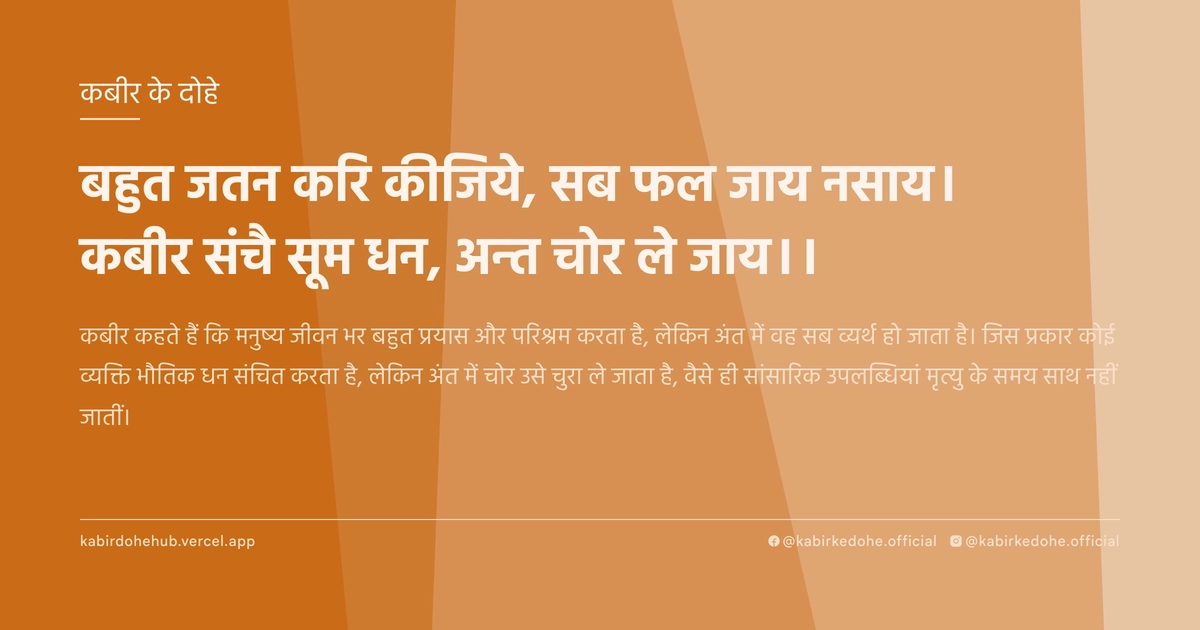
बहुत जतन करि कीजिये, सब फल जाय नसाय।
कबीर संचै सूम धन, अन्त चोर ले जाय।।
Bahut jatan kari kijiye, sab phal jaaye nasay. Kabir sanchai soom dhan, ant chor le jaaye.
इस पृष्ठ पर इस कबीर दोहे का अर्थ (meaning), हिंदी व्याख्या और अंग्रेज़ी अनुवाद, दार्शनिक विश्लेषण और व्यावहारिक जीवन सीख दी गई है। यह दोहा अनित्य (Impermanence) विषय से जुड़ा है — Kabir doha meaning and explanation in Hindi and English.
अर्थ (Meaning):
कबीर कहते हैं कि मनुष्य जीवन भर बहुत प्रयास और परिश्रम करता है, लेकिन अंत में वह सब व्यर्थ हो जाता है। जिस प्रकार कोई व्यक्ति भौतिक धन संचित करता है, लेकिन अंत में चोर उसे चुरा ले जाता है, वैसे ही सांसारिक उपलब्धियां मृत्यु के समय साथ नहीं जातीं।
Kabir asserts that humans exert immense effort throughout their lives, yet the fruits of such labor eventually perish. Just as a person accumulates material wealth only for a thief to steal it in the end, worldly achievements are fleeting and cannot be carried beyond the threshold of death.
व्याख्या (Interpretation):
इस दोहे का शाब्दिक अर्थ भौतिक संपत्ति की नश्वरता है, लेकिन इसका गहरा आध्यात्मिक अर्थ 'अहंकार' और 'माया' के मोह से जुड़ा है। यहाँ 'जतन' का अर्थ केवल शारीरिक श्रम नहीं, बल्कि वह मानसिक प्रयास है जो हम अपनी सामाजिक छवि और संचय बनाने में लगाते हैं। 'सूम धन' या संचित धन यहाँ उस झूठी पहचान का प्रतीक है जिसे हम जीवन भर पालते हैं। कबीर निरगुण भक्ति के माध्यम से समझाते हैं कि जब तक हम स्वयं को शरीर या संपत्ति से जोड़ते हैं, हम भ्रम (माया) में होते हैं। 'चोर' यहाँ काल या मृत्यु का प्रतीक है, जो बिना किसी चेतावनी के सब कुछ छीन लेता है। यह विरोधाभास है कि हम उस चीज़ को बचाने की कोशिश करते हैं जो वास्तव में कभी हमारी थी ही नहीं। अंततः, केवल वह ज्ञान या प्रेम शेष रहता है जो द्वैत से परे है और आत्मा को ब्रह्म से जोड़ता है।
The literal meaning addresses the transience of material wealth, but the deeper spiritual layer concerns the attachment to 'Ego' and 'Maya'. Here, 'jatan' (effort) refers not just to physical labor, but the mental energy spent constructing a social persona and accumulating possessions. 'Soom dhan' (accumulated wealth) symbolizes the false identity we nurture throughout our lives. Through the lens of Nirgun Bhakti, Kabir explains that as long as we identify ourselves with the body or possessions, we remain trapped in illusion. The 'thief' represents Time or Death, which arrives unannounced to strip away everything. It is a profound paradox: we strive to protect that which was never truly ours. Ultimately, only the wisdom or love that transcends duality and unites the Atman with Brahman remains.
दार्शनिक विश्लेषण (Philosophical Analysis):
कबीर का यह दोहा उनके समय के सामाजिक और धार्मिक पाखंड के विरुद्ध एक सशक्त प्रहार है। 15वीं शताब्दी में, जब लोग कर्मकांडों और बाहरी दिखावे में लीन थे, कबीर ने 'अंदरूनी धन' यानी आत्म-ज्ञान पर जोर दिया। वे स्पष्ट करते हैं कि बाहरी पूजा-पाठ और संचय केवल अहंकार को बढ़ाते हैं, जो अंततः विनाश का कारण बनता है।
अद्वैत वेदांत के दृष्टिकोण से, यह दोहा 'माया' के पर्दे को हटाने का आह्वान है। जब तक साधक यह मानता है कि वह एक अलग इकाई है जिसके पास 'अपना' धन है, वह सत्य से दूर है। कबीर का दर्शन यह है कि वास्तविक धन वह है जो 'अविनाशी' है—अर्थात वह चेतना जो जन्म और मृत्यु के चक्र से परे है।
सूफीवाद के प्रभाव में, कबीर यहाँ 'फना' (अहंकार का विलीनीकरण) की बात कर रहे हैं। जिस प्रकार एक सूफी अपनी पहचान को ईश्वर में विलीन कर देता है, कबीर भी कहते हैं कि सांसारिक संचय का त्याग ही वास्तविक प्राप्ति है। जो कुछ भी 'मेरा' है, वह खो जाएगा; जो 'सबका' या 'ईश्वर' का है, वही स्थायी है।
मनोवैज्ञानिक स्तर पर, यह दोहा मनुष्य की उस गहरी असुरक्षा को दर्शाता है जो उसे संचय की ओर धकेलती है। हम वस्तुओं को इकट्ठा करते हैं ताकि हम सुरक्षित महसूस करें, लेकिन यह संचय ही हमारी सबसे बड़ी बाधा बन जाता है क्योंकि यह हमें वर्तमान क्षण से दूर कर देता है।
कबीर का संदेश यह नहीं है कि व्यक्ति काम करना छोड़ दे, बल्कि यह है कि वह 'आसक्ति' (attachment) छोड़ दे। कर्म करो, लेकिन फल की इच्छा और उसके प्रति मोह को त्याग दो। यही वह बिंदु है जहाँ भक्ति मार्ग और ज्ञान मार्ग का मिलन होता है, जिससे साधक मृत्यु के भय से मुक्त होकर अनंत शांति को प्राप्त करता है।
This couplet is a powerful critique of the social and religious hypocrisy of Kabir's era. In the 15th century, when people were immersed in rituals and outward displays of piety, Kabir emphasized 'internal wealth'—the realization of the Self. He clarifies that external rituals and accumulation only inflate the ego, which eventually leads to spiritual ruin.
From the perspective of Advaita Vedanta, this Doha is a call to lift the veil of 'Maya'. As long as a seeker believes they are a separate entity possessing 'their own' wealth, they remain distant from the Truth. Kabir's philosophy posits that true wealth is that which is 'imperishable'—the consciousness that exists beyond the cycle of birth and death.
Influenced by Sufism, Kabir speaks here of 'Fana' (the annihilation of the ego). Just as a Sufi dissolves their identity into the Divine, Kabir suggests that renouncing worldly accumulation is the only true gain. Whatever is labeled as 'mine' will be lost; only that which belongs to the Universal/Divine is permanent.
On a psychological level, this verse highlights the deep-seated insecurity that drives human accumulation. We gather objects to feel secure, but this very hoarding becomes our greatest obstacle, distancing us from the present moment and the reality of existence.
Kabir's message is not an exhortation to cease all work, but to relinquish 'attachment'. Perform your duties, but abandon the craving for the fruit and the obsession with ownership. This is where the path of devotion (Bhakti) and the path of knowledge (Jnana) converge, freeing the seeker from the fear of death and leading them toward eternal peace.
मूल संदेश (Core Message):
- बाहरी संचय एक भ्रम है जो अंततः दुःख देता है।
- मृत्यु वह अंतिम सत्य है जो सभी भौतिक बंधनों को काट देता है।
- असली धन आत्म-साक्षात्कार और आंतरिक शांति है।
- अहंकार का त्याग ही वास्तविक आध्यात्मिक उपलब्धि है।
- वर्तमान क्षण में जिएं, भविष्य के संचय के मोह को त्यागें।
- External accumulation is an illusion that eventually leads to suffering.
- Death is the ultimate truth that severs all material ties.
- True wealth lies in self-realization and inner peace.
- The surrender of the ego is the only real spiritual achievement.
- Live in the present; relinquish the obsession with future hoarding.
व्यावहारिक उदाहरण (Practical Example):
वाराणसी के घाटों पर रहने वाले एक वृद्ध बुनकर थे, जिनका नाम माधव था। माधव ने अपना पूरा जीवन रेशमी साड़ियों के व्यापार में लगाया। उन्होंने अपनी कला में महारत हासिल की और शहर के सबसे अमीर बुनकरों में गिने जाने लगे। उनके पास बड़ा घर था, तिजोरियाँ सोने के सिक्कों से भरी थीं और समाज में बहुत मान-सम्मान था। माधव का पूरा ध्यान इस बात पर था कि वह अपनी अगली पीढ़ी के लिए और कितना धन संचित कर सकें। वे अक्सर अपने शिष्यों को सिखाते थे कि कैसे अधिक लाभ कमाया जाए और कैसे संसाधनों को जमा किया जाए।
एक दिन, माधव बहुत बीमार पड़ गए। उनके पास बेहतरीन वैद्यों और औषधियों का प्रबंध था, लेकिन उनकी स्थिति बिगड़ती गई। अपनी अंतिम घड़ियों में, उन्होंने अपने चारों ओर रखे सोने के गहनों और रेशमी कपड़ों को देखा। उन्हें अचानक महसूस हुआ कि जिस धन को उन्होंने 'अपना' मानकर जीवन भर संजोया, वह अब उनके किसी काम का नहीं था। वह धन अब उनके लिए बोझ बन गया था क्योंकि वह उन्हें इस दुनिया से अलग कर रहा था, लेकिन उन्हें शांति नहीं दे रहा था।
तभी उनकी मुलाकात एक फकीर से हुई, जिसने उन्हें कबीर का यह दोहा सुनाया। फकीर ने कहा, 'माधव, तुमने रेशम के धागों से कपड़े तो बहुत बुने, लेकिन अपनी आत्मा के धागे को परमात्मा से जोड़ना भूल गए। यह धन वह चोर है जिसने तुम्हारा समय और शांति चुरा ली।'
माधव की आँखों में आँसू आ गए। उन्हें समझ आया कि उन्होंने जीवन भर केवल 'बाहरी संचय' किया, जबकि 'भीतरी रिक्तता' को कभी नहीं भरा। उन्होंने महसूस किया कि उनकी असली पहचान उनकी तिजोरी नहीं, बल्कि वह प्रेम और करुणा थी जो उन्होंने दूसरों को दी थी, जो कि बहुत कम थी।
अगले कुछ दिनों में, माधव ने एक अभूतपूर्व परिवर्तन किया। उन्होंने अपनी संपत्ति का एक बड़ा हिस्सा उन गरीब बुनकरों के बच्चों की शिक्षा के लिए दान कर दिया जो उनके अधीन काम करते थे। उन्होंने अपने अहंकार को त्याग कर क्षमा और प्रेम का मार्ग अपनाया।
जब उन्होंने अपनी संपत्ति बांटी, तो उन्हें एक ऐसी हल्की अनुभूति हुई जो उन्होंने सोने के सिक्कों को गिनते समय कभी महसूस नहीं की थी। उनका मन अब भय से मुक्त था।
उन्होंने अपने अंतिम समय में अपने परिवार को सिखाया कि असली धन वह है जिसे कोई चोर नहीं चुरा सकता—अर्थात सद्गुण, संतोष और ईश्वर के प्रति समर्पण।
माधव की मृत्यु शांतिपूर्ण थी। उनके जाने के बाद, लोग उन्हें उनकी संपत्ति के लिए नहीं, बल्कि उनकी उदारता और उनके अंतिम समय के बोध के लिए याद करते रहे। यह कबीर का वह 'ट्विस्ट' था जिसने एक संचयकर्ता को एक मुक्त आत्मा में बदल दिया।
In the ghats of Varanasi lived an elderly weaver named Madhav. Madhav had dedicated his entire life to the trade of silk sarees. He mastered his craft and became one of the wealthiest weavers in the city. He owned a grand house, chests overflowing with gold coins, and enjoyed immense social prestige. Madhav's entire focus was on how much more wealth he could accumulate for the next generation. He often taught his apprentices how to maximize profit and hoard resources.
One day, Madhav fell gravely ill. He had the best physicians and medicines, but his condition worsened. In his final hours, he looked at the gold jewelry and silk fabrics surrounding him. He suddenly realized that the wealth he had cherished as 'his' throughout his life was now useless. That wealth had become a burden, distancing him from the world but providing no inner peace.
At that moment, he met a wandering fakir who recited this specific Doha of Kabir. The fakir said, 'Madhav, you wove many fabrics with silk threads, but you forgot to weave the thread of your soul with the Divine. This wealth is the thief that stole your time and your peace.'
Tears welled up in Madhav's eyes. He understood that he had spent his life on 'external accumulation' while leaving his 'internal void' unfilled. He realized his true identity was not his treasury, but the love and compassion he had shared with others, which had been far too little.
Over the next few days, Madhav underwent a profound transformation. He donated a vast portion of his wealth to the education of the children of the poor weavers who worked under him. He abandoned his ego and embraced the path of forgiveness and love.
As he distributed his wealth, he felt a lightness of being that he had never experienced while counting gold coins. His mind was now free from fear.
In his final moments, he taught his family that true wealth is that which no thief can steal—namely virtue, contentment, and surrender to the Divine.
Madhav's passing was peaceful. After he left, people remembered him not for his riches, but for his generosity and the awakening he achieved at the end. This was the 'Kabir Twist' that transformed a hoarder into a liberated soul.
अभ्यास मार्गदर्शन (Practice Guidance):
- दैनिक चिंतन: हर सुबह 10 मिनट शांत बैठें और विचार करें कि आपकी कौन सी उपलब्धियां स्थायी हैं और कौन सी केवल सामाजिक मुखौटे हैं।
- अनासक्ति का अभ्यास: सप्ताह में एक बार ऐसी वस्तु का दान करें जिससे आप भावनात्मक रूप से जुड़े हों, ताकि संचय की आदत टूटे।
- आत्म-पूछताछ जर्नल: लिखें कि 'यदि आज मेरा सब कुछ छिन जाए, तो मेरे भीतर क्या बचेगा?' इस उत्तर को गहराई से खोजें।
- डायग्नोस्टिक चेकलिस्ट: क्या आप अपनी पहचान अपनी पदवी या संपत्ति से जोड़ते हैं? क्या किसी चीज़ के खोने का डर आपकी नींद उड़ाता है? यदि हाँ, तो आप अभी भी 'माया' के प्रभाव में हैं।
- Daily Contemplation: Sit in silence for 10 minutes every morning and reflect on which of your achievements are permanent and which are merely social masks.
- Practice of Non-attachment: Once a week, donate an item you are emotionally attached to, in order to break the habit of accumulation.
- Self-Inquiry Journal: Write and explore the question: 'If everything I possess were taken away today, what would remain within me?'
- Diagnostic Checklist: Do you link your identity to your title or possessions? Does the fear of losing something disturb your sleep? If yes, you are still under the influence of 'Maya'.
चिंतन प्रश्न (Reflection Questions):
- वह कौन सी 'अदृश्य संपत्ति' है जिसे आप संचित कर रहे हैं, और क्या वह वास्तव में आपकी है?
- आपकी सामाजिक छवि (Digital/Social Ego) को बनाए रखने के लिए आप कितनी मानसिक ऊर्जा व्यर्थ कर रहे हैं?
- यदि आपकी सारी भौतिक उपलब्धियां छीन ली जाएं, तो क्या आप स्वयं को स्वीकार कर पाएंगे?
- क्या आपका 'दान' वास्तव में त्याग है, या यह केवल प्रशंसा पाने का एक और तरीका है?
- आप किस 'चोर' (डर, क्रोध, लोभ) को अपने भीतर पाल रहे हैं जो आपकी शांति चुरा रहा है?
- क्या आप जीवन को एक यात्रा के रूप में देखते हैं या एक संग्रह केंद्र के रूप में?
- What is the 'invisible wealth' you are accumulating, and is it truly yours?
- How much mental energy are you wasting to maintain your social image (Digital/Social Ego)?
- If all your material achievements were stripped away, would you still be able to accept yourself?
- Is your 'charity' a genuine act of renunciation, or just another way to seek validation?
- Which 'thief' (fear, anger, greed) are you nurturing within that is stealing your peace?
- Do you view life as a journey of experience or as a center for collection?