
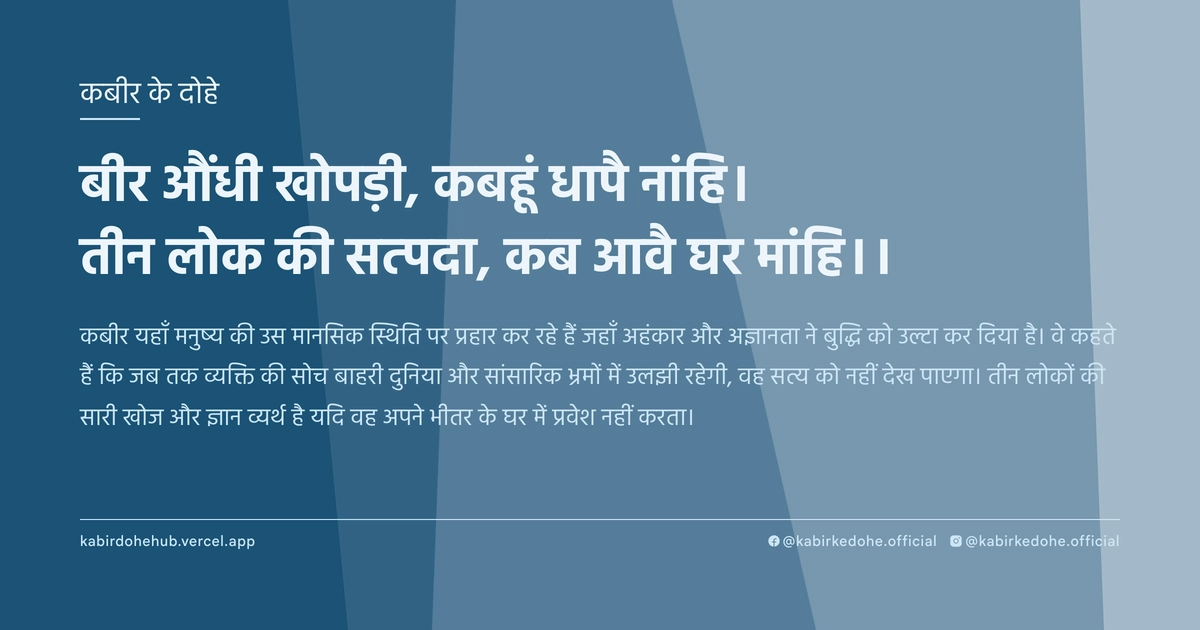
बीर औंधी खोपड़ी, कबहूं धापै नांहि।
तीन लोक की सत्पदा, कब आवै घर मांहि।।
Beer aandhi khopadi, kabahun dhapai naahi. Teen lok ki satpada, kab aavai ghar maahi.
इस पृष्ठ पर इस कबीर दोहे का अर्थ (meaning), हिंदी व्याख्या और अंग्रेज़ी अनुवाद, दार्शनिक विश्लेषण और व्यावहारिक जीवन सीख दी गई है। यह दोहा सहज योग (Sahaja Yoga) विषय से जुड़ा है — Kabir doha meaning and explanation in Hindi and English.
अर्थ (Meaning):
कबीर यहाँ मनुष्य की उस मानसिक स्थिति पर प्रहार कर रहे हैं जहाँ अहंकार और अज्ञानता ने बुद्धि को उल्टा कर दिया है। वे कहते हैं कि जब तक व्यक्ति की सोच बाहरी दुनिया और सांसारिक भ्रमों में उलझी रहेगी, वह सत्य को नहीं देख पाएगा। तीन लोकों की सारी खोज और ज्ञान व्यर्थ है यदि वह अपने भीतर के घर में प्रवेश नहीं करता।
Kabir critiques the inverted consciousness of the human mind, where ego and ignorance have flipped perception. He asserts that as long as one's intellect is preoccupied with external validations and worldly illusions, the truth remains elusive. All the knowledge and travels across the three realms are futile if the soul fails to return to its own internal sanctuary.
व्याख्या (Interpretation):
इस दोहे में 'औंधी खोपड़ी' एक शक्तिशाली रूपक है जो आध्यात्मिक अंधता और मानसिक जड़ता को दर्शाता है। इसका शाब्दिक अर्थ है उल्टा सिर, लेकिन आध्यात्मिक अर्थ है वह दृष्टि जो सत्य को देखने के बजाय भ्रम को देखती है। कबीर निर्गुण भक्ति के माध्यम से समझाते हैं कि मनुष्य माया के प्रभाव में आकर बाहर की ओर भागता है, जबकि परमात्मा उसके भीतर स्थित है। 'तीन लोक' का उल्लेख यह बताने के लिए है कि ब्रह्मांड की समस्त यात्राएं व्यर्थ हैं यदि आत्म-साक्षात्कार न हो। यह अद्वैत वेदांत के उस सिद्धांत को पुष्ट करता है जहाँ आत्मा और ब्रह्म एक हैं, परंतु अहंकार की दीवार उन्हें अलग करती है। यहाँ विरोधाभास यह है कि हम जिसे खोजने के लिए पूरी दुनिया छान मारते हैं, वह वास्तव में खोजने वाले के भीतर ही छिपा है। अंततः, 'घर' का अर्थ भौतिक निवास नहीं, बल्कि शुद्ध चेतना की वह अवस्था है जहाँ द्वैत समाप्त हो जाता है।
In this couplet, the 'inverted skull' serves as a potent metaphor for spiritual blindness and mental rigidity. Literally meaning an upside-down head, it spiritually signifies a perception that gazes upon illusion rather than Truth. Through the lens of Nirgun Bhakti, Kabir explains that under the influence of Maya, humans flee outward, unaware that the Divine resides within. The mention of 'three realms' emphasizes that all cosmic journeys are futile without self-realization. This aligns with Advaita Vedanta's core tenet of the non-duality of Atman and Brahman, obscured only by the veil of ego. The central paradox presented is that the object of our lifelong search is the very seeker themselves. Ultimately, 'home' does not refer to a physical dwelling, but to the state of pure consciousness where duality dissolves into unity.
दार्शनिक विश्लेषण (Philosophical Analysis):
कबीर का यह दोहा उनके युग के उस सामाजिक और धार्मिक परिवेश की प्रतिक्रिया है जहाँ धर्म केवल बाहरी कर्मकांडों, तीर्थयात्राओं और शास्त्रार्थ तक सीमित हो गया था। कबीर ने देखा कि लोग मोक्ष के लिए बाहरी प्रतीकों और कठिन अनुष्ठानों का सहारा ले रहे थे, जबकि आंतरिक शुद्धि की पूरी तरह उपेक्षा कर रहे थे। वे इस 'औंधी खोपड़ी' के माध्यम से उस बौद्धिक अहंकार पर प्रहार करते हैं जो खुद को ज्ञानी मानता है लेकिन अपने स्वभाव से अनभिज्ञ है।
दार्शनिक स्तर पर, यह सूफीवाद के 'अनलहक' (मैं ही सत्य हूँ) और अद्वैत वेदांत के 'अहं ब्रह्मास्मि' के करीब है। कबीर तर्क देते हैं कि जब तक मनुष्य स्वयं को शरीर या सामाजिक पहचान (जाति, धर्म) के रूप में देखता है, उसकी दृष्टि 'औंधी' रहती है। यह मनोवैज्ञानिक भ्रम उसे बाहरी दुनिया में सुख खोजने के लिए प्रेरित करता है, जो कि एक अंतहीन चक्र है।
ritualism (कर्मकांड) का विरोध करते हुए कबीर यह स्पष्ट करते हैं कि ईश्वर किसी मंदिर, मस्जिद या किसी विशेष भौगोलिक स्थान पर नहीं रहता। वह 'घट-घट' में व्याप्त है। जब व्यक्ति अपनी बाहरी दौड़ को रोकता है और अंतर्मुखी होता है, तभी वह 'घर' वापस आता है। यह परिवर्तन केवल बौद्धिक नहीं, बल्कि अनुभवात्मक होना चाहिए।
अहंकार का विलोपन ही वह कुंजी है जिससे यह उल्टा सिर सीधा होता है। कबीर के अनुसार, जब तक 'मैं' (अहंकार) जीवित है, तब तक सत्य का अनुभव असंभव है। यह एक प्रकार का मनोवैज्ञानिक विखंडन है जहाँ व्यक्ति को अपनी झूठी पहचान को नष्ट करना पड़ता है ताकि उसकी वास्तविक पहचान उभर सके।
अंततः, यह दोहा हमें चेतावनी देता है कि ज्ञान का संचय करना और सत्य को जीना दो अलग बातें हैं। एक विद्वान जो केवल शास्त्रों को जानता है लेकिन अपने भीतर के अंधकार को नहीं पहचानता, वह कबीर की दृष्टि में 'औंधी खोपड़ी' वाला व्यक्ति ही है। सच्चा ज्ञान वह है जो व्यक्ति को बाहरी शोर से हटाकर आंतरिक मौन की ओर ले जाए।
This couplet is a direct response to the socio-religious climate of Kabir's era, where spirituality had devolved into mere external rituals, pilgrimages, and sterile scholastic debates. Kabir observed that people sought liberation through outward symbols and rigorous penance while completely neglecting internal purification. Through the 'inverted skull,' he attacks the intellectual arrogance of those who claim knowledge yet remain ignorant of their own essential nature.
Philosophically, this resonates with the Sufi concept of 'Ana al-Haqq' (I am the Truth) and the Advaita Vedanta realization of 'Aham Brahmasmi' (I am Brahman). Kabir argues that as long as a human identifies with the body or a social construct—be it caste or creed—their perception remains 'inverted.' This psychological delusion drives them to seek happiness in the external world, creating an endless cycle of longing and disappointment.
By rejecting ritualism, Kabir clarifies that the Divine does not reside in temples, mosques, or specific geographies; rather, the Divine permeates every atom of existence. The return 'home' occurs only when a person ceases their outward race and turns inward. This transformation must be experiential, not merely intellectual.
The annihilation of the ego is the only mechanism to 'right' the inverted consciousness. According to Kabir, as long as the 'I' (the egoic self) persists, the experience of Truth is impossible. It is a psychological dismantling where the false identity must be destroyed for the authentic Self to emerge.
Ultimately, the couplet warns that the accumulation of information is distinct from the embodiment of Truth. A scholar who knows the scriptures but remains blind to their own inner darkness is, in Kabir's eyes, the one with the 'inverted skull.' True gnosis is that which shifts the seeker from external noise to internal silence.
मूल संदेश (Core Message):
- बाहरी खोज एक भ्रम है, सत्य केवल भीतर है।
- अहंकार वह पर्दा है जो आत्मा को परमात्मा से अलग करता है।
- शास्त्रों का ज्ञान व्यर्थ है यदि वह व्यवहार में न उतरे।
- वास्तविक घर वह अवस्था है जहाँ 'मैं' समाप्त हो जाता है।
- चेतना का उलटना ही अज्ञानता है, उसका सीधा होना ही ज्ञान है।
- External searching is an illusion; Truth exists only within.
- Ego is the veil that separates the soul from the Divine.
- Scriptural knowledge is futile if not embodied in behavior.
- The true home is the state where the 'I' ceases to exist.
- The inversion of consciousness is ignorance; its alignment is enlightenment.
व्यावहारिक उदाहरण (Practical Example):
वाराणसी के घाटों पर रहने वाले एक वृद्ध विधवा, जानकी की कहानी है। जानकी ने अपना पूरा जीवन धर्मशास्त्रों के अध्ययन और कठोर नियमों के पालन में बिता दिया था। वह मानती थी कि मोक्ष केवल कठिन तपस्या और बाहरी शुद्धता से ही मिल सकता है। वह दिन भर गंगा स्नान करती और घंटों मंत्र जाप करती, लेकिन उसके मन में हमेशा दूसरों के प्रति निर्णय और अपनी श्रेष्ठता का भाव रहता था।
एक दिन, वह एक साधारण से बुनकर के पास बैठी, जो कबीर के विचारों का अनुयायी था। वह बुनकर बहुत शांति से अपना काम कर रहा था और बीच-बीच में मुस्कुराकर लोगों से बात करता था। जानकी ने उससे पूछा, 'तुम इतने लापरवाह कैसे हो? क्या तुम्हें मोक्ष की चिंता नहीं है? क्या तुम जानते हो कि शास्त्र क्या कहते हैं?'
बुनकर ने धीरे से मुस्कुराते हुए कहा, 'माता, आप पूरी दुनिया के शास्त्रों को पढ़ चुकी हैं, लेकिन क्या आपने कभी अपनी सांसों के संगीत को सुना है? आप गंगा में शरीर धोती हैं, लेकिन क्या आपने कभी अपने भीतर के अहंकार को धोया है?'
जानकी को यह बात चुभी। उसने क्रोध में कहा, 'मैं एक विद्वान हूँ, मैं सब जानती हूँ!'
बुनकर ने शांति से उत्तर दिया, 'यही तो आपकी औंधी खोपड़ी है। आप ज्ञान को बाहर खोज रही हैं, जबकि वह आपके भीतर ही आपका इंतज़ार कर रहा है। आप तीन लोकों की यात्रा कर लें, लेकिन जब तक आप अपने भीतर के घर में नहीं लौटेंगी, आप कभी शांत नहीं होंगी।'
यह बात जानकी के हृदय में गहरे तक उतर गई। उसे एहसास हुआ कि उसकी सारी तपस्या केवल एक मुखौटा थी। उसने महसूस किया कि वह जिसे 'पवित्रता' समझ रही थी, वह वास्तव में उसका अहंकार था जो उसे दूसरों से अलग कर रहा था।
अगले कुछ महीनों में, जानकी ने बाहरी दिखावे को कम किया। उसने मंत्रों के बजाय मौन का अभ्यास शुरू किया। उसने पाया कि जब वह दूसरों की सेवा बिना किसी श्रेष्ठता के भाव के करती है, तो उसे वह शांति मिलती है जो उसे हज़ारों तीर्थयात्राओं में नहीं मिली थी।
उसने महसूस किया कि उसका 'घर' कहीं दूर नहीं था, बल्कि उसके अपने हृदय की करुणा और सरलता में था। उसकी 'औंधी खोपड़ी' अब सीधी हो चुकी थी।
अब वह घाटों पर केवल पूजा करने नहीं, बल्कि लोगों के दुखों को सुनने और उन्हें बिना किसी निर्णय के स्वीकार करने के लिए बैठती थी। उसका जीवन अब एक प्रदर्शन नहीं, बल्कि एक प्रार्थना बन गया था।
This is the story of Janaki, an elderly widow living on the ghats of Varanasi. Janaki had spent her entire life studying religious scriptures and adhering to rigorous ascetic rules. She believed that liberation could only be achieved through severe penance and external purity. She spent her days bathing in the Ganges and chanting mantras for hours, yet her heart remained filled with judgment toward others and a sense of spiritual superiority.
One day, she sat beside a simple weaver who followed the teachings of Kabir. The weaver worked peacefully, occasionally smiling and chatting with passersby. Janaki asked him, 'How can you be so careless? Do you not worry about salvation? Do you even know what the scriptures say?'
The weaver smiled gently and replied, 'Mother, you have read the scriptures of the entire world, but have you ever listened to the music of your own breath? You wash your body in the Ganges, but have you ever washed the ego within you?'
Janaki felt stung by this. She replied angrily, 'I am a scholar; I know everything!'
The weaver calmly answered, 'That is exactly your inverted skull. You are searching for knowledge outside, while it is waiting for you within. You may travel the three realms, but until you return to the home inside yourself, you will never find peace.'
These words pierced Janaki's heart. She realized that all her penance had been nothing more than a mask. She saw that what she perceived as 'purity' was actually her ego, separating her from the rest of humanity.
Over the next few months, Janaki reduced her external displays of piety. She began practicing silence instead of rote chanting. She discovered that when she served others without any sense of superiority, she found a peace that thousands of pilgrimages had never provided.
She realized that her 'home' was not in some distant heaven, but in the compassion and simplicity of her own heart. Her 'inverted skull' had finally been set right.
Now, she sat on the ghats not just to perform rituals, but to listen to the sorrows of others and accept them without judgment. Her life was no longer a performance; it had become a prayer.
अभ्यास मार्गदर्शन (Practice Guidance):
- प्रतिदिन 20 मिनट 'साक्षी भाव' का अभ्यास करें: अपने विचारों को ऐसे देखें जैसे आप किसी और के विचार देख रहे हों, बिना किसी निर्णय के।
- आत्म-पूछताछ जर्नल: हर रात लिखें कि आज किस क्षण में मेरा अहंकार (Ego) हावी हुआ और मैंने सत्य के बजाय अपनी छवि (Image) को प्राथमिकता दी।
- बाहरी शोर का त्याग: सप्ताह में एक दिन डिजिटल उपवास करें और बाहरी सूचनाओं के बजाय आंतरिक मौन पर ध्यान केंद्रित करें।
- निदान चेकलिस्ट: क्या मैं दूसरों को सुधारने की कोशिश कर रहा हूँ? क्या मैं अपनी धार्मिक/नैतिक श्रेष्ठता महसूस कर रहा हूँ? यदि हाँ, तो मेरी 'खोपड़ी' अभी भी औंधी है।
- Practice 'Witness Consciousness' for 20 minutes daily: Observe your thoughts as if they belong to someone else, without any judgment.
- Self-Inquiry Journaling: Every night, record the moments where your ego took over and you prioritized your image over the truth.
- Shedding External Noise: Implement a weekly digital fast, shifting focus from external information to internal silence.
- Diagnostic Checklist: Am I trying to 'fix' others? Do I feel a sense of moral or religious superiority? If yes, my 'skull' remains inverted.
चिंतन प्रश्न (Reflection Questions):
- मेरी वह कौन सी 'धार्मिक' या 'नैतिक' पहचान है जिसे मैं अपनी असलियत से ज्यादा प्यार करता हूँ?
- मैं दुनिया को क्या दिखाने की कोशिश कर रहा हूँ, और उस दिखावे के पीछे मैं क्या छुपा रहा हूँ?
- क्या मेरी प्रार्थनाएँ ईश्वर को पाने के लिए हैं, या अपनी श्रेष्ठता सिद्ध करने के लिए?
- यदि मेरी सारी उपाधियाँ और उपलब्धियाँ छीन ली जाएँ, तो मेरा 'मैं' क्या बचेगा?
- मैं किन लोगों को 'अज्ञानी' मानता हूँ, और क्या वह निर्णय मेरी अपनी 'औंधी खोपड़ी' का परिणाम है?
- Which 'religious' or 'moral' identity do I love more than my actual self?
- What image am I projecting to the world, and what am I hiding behind that facade?
- Are my prayers intended to reach the Divine, or to validate my own righteousness?
- If all my titles and achievements were stripped away, what would remain of my 'I'?
- Whom do I label as 'ignorant,' and is that judgment a result of my own 'inverted skull'?