
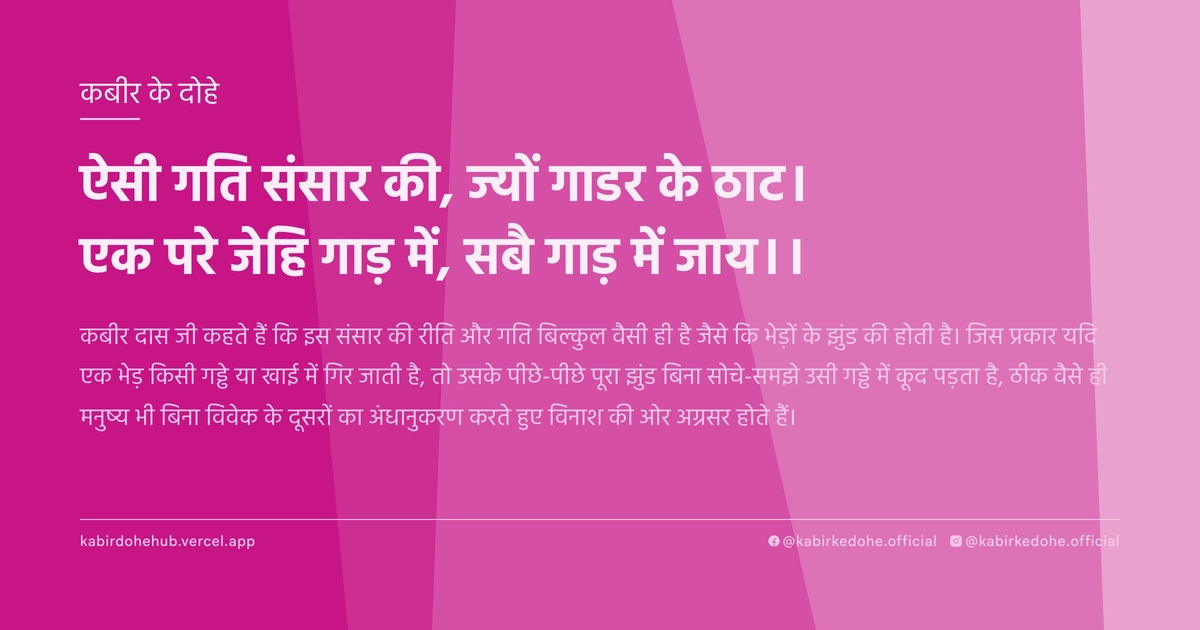
ऐसी गति संसार की, ज्यों गाडर के ठाट।
एक परे जेहि गाड़ में, सबै गाड़ में जाय।।
Aisi gati sansar ki, jyon gadar ke thaat. Ek pare jehi gaad me, sabai gaad me jaaye.
इस पृष्ठ पर इस कबीर दोहे का अर्थ (meaning), हिंदी व्याख्या और अंग्रेज़ी अनुवाद, दार्शनिक विश्लेषण और व्यावहारिक जीवन सीख दी गई है। यह दोहा अनित्य (Impermanence) विषय से जुड़ा है — Kabir doha meaning and explanation in Hindi and English.
अर्थ (Meaning):
कबीर दास जी कहते हैं कि इस संसार की रीति और गति बिल्कुल वैसी ही है जैसे कि भेड़ों के झुंड की होती है। जिस प्रकार यदि एक भेड़ किसी गड्ढे या खाई में गिर जाती है, तो उसके पीछे-पीछे पूरा झुंड बिना सोचे-समझे उसी गड्ढे में कूद पड़ता है, ठीक वैसे ही मनुष्य भी बिना विवेक के दूसरों का अंधानुकरण करते हुए विनाश की ओर अग्रसर होते हैं।
Kabir observes that the movement of the world mirrors the behavior of a flock of sheep. Just as the entire flock blindly plunges into a pit if a single sheep falls in, human beings tend to follow the crowd blindly, drifting toward spiritual or moral ruin simply because others are doing so, devoid of individual discernment.
व्याख्या (Interpretation):
शाब्दिक अर्थ में यह दोहा भीड़ की मानसिकता पर प्रहार है, परंतु आध्यात्मिक स्तर पर यह 'माया' के प्रभाव का वर्णन है। यहाँ 'गाडर' (भेड़) उस अज्ञानी जीव का प्रतीक है जो विवेक शून्य है। 'गाड़' या गड्ढा वह सांसारिक मोह-माया और झूठे रीति-रिवाजों का प्रतीक है जो आत्मा को बंधन में डालता है। यह निरगुण भक्ति के उस सिद्धांत को दर्शाता है जहाँ साधक को भीड़ से अलग होकर स्वयं के भीतर के सत्य को खोजना होता है। अद्वैत वेदांत के अनुसार, जब तक मनुष्य स्वयं को भीड़ का हिस्सा मानता है, वह अपनी वास्तविक ब्रह्म-स्वरूप पहचान को भूल जाता है। यह विरोधाभास है कि मनुष्य समाज में रहकर भी अकेला महसूस करता है क्योंकि वह दूसरों की नकल कर रहा है, न कि अपने स्वभाव का अनुसरण।
Literally, this couplet critiques herd mentality, but metaphorically, it describes the grip of 'Maya' (illusion). The 'sheep' represents the ignorant soul lacking discernment, while the 'pit' symbolizes the trap of worldly attachments and hollow rituals that bind the spirit. This aligns with Nirgun Bhakti, where the seeker must detach from the collective delusion to find the formless Truth. In Advaita Vedanta, as long as one identifies with the crowd, the realization of the Atman-Brahman non-duality remains obscured. The central paradox is that the human condition often mistakes social conformity for security, while in reality, it is a collective descent into spiritual oblivion.
दार्शनिक विश्लेषण (Philosophical Analysis):
कबीर का यह दोहा उस युग की सामाजिक और धार्मिक जड़ता पर एक तीखा प्रहार है जहाँ लोग केवल इसलिए किसी परंपरा को मानते थे क्योंकि उनके पूर्वज ऐसा करते थे। कबीर ने देखा कि धर्म के नाम पर लोग केवल बाहरी आडंबरों का अनुसरण कर रहे हैं, बिना यह जाने कि सत्य क्या है। यह दृष्टिकोण सूफी मत के 'इश्क-ए-हकीकी' (परम सत्य से प्रेम) के करीब है, जहाँ व्यक्ति को बाहरी दुनिया के शोर को छोड़कर अपने आंतरिक हृदय की पुकार सुननी होती है।
दार्शनिक रूप से, यह दोहा 'अविद्या' (ignorance) की चर्चा करता है। जब विवेक मर जाता है, तो मनुष्य केवल एक प्रतिक्रियाशील इकाई बन जाता है। कबीर यहाँ यह समझा रहे हैं कि मोक्ष या मुक्ति भीड़ में नहीं, बल्कि एकांत और आत्म-साक्षात्कार में है। वे जाति और संप्रदाय के उन बंधनों को तोड़ना चाहते थे जो लोगों को एक-दूसरे के प्रति अंध-निष्ठा रखने पर मजबूर करते थे।
अद्वैत वेदांत के परिप्रेक्ष्य में, यह 'माया' का जाल है। माया हमें यह विश्वास दिलाती है कि जो सब कर रहे हैं, वही सही है। यह सामूहिक सम्मोहन (collective hypnosis) है। कबीर का तर्क है कि यदि आप उस भेड़ की तरह हैं जो केवल पीछे चलने वाली है, तो आप कभी भी उस 'परम पद' को प्राप्त नहीं कर सकते।
मनोवैज्ञानिक स्तर पर, यह 'कन्फर्मिटी' (conformity) के डर को दर्शाता है। मनुष्य अकेले चलने से डरता है, भले ही वह रास्ता उसे विनाश की ओर ले जा रहा हो। कबीर इस डर को चुनौती देते हैं और व्यक्ति को अपनी चेतना को जगाने का आह्वान करते हैं।
अंततः, यह दोहा हमें यह सिखाता है कि आध्यात्मिक यात्रा व्यक्तिगत होती है। कोई भी गुरु या ग्रंथ केवल मार्ग दिखा सकता है, लेकिन गड्ढे में गिरने से बचने के लिए अपनी आँखें खुद खोलनी पड़ती हैं। यह अंधविश्वास के विरुद्ध विवेक की विजय का घोषणापत्र है।
This doha is a sharp critique of the social and religious inertia of Kabir's era, where traditions were followed blindly simply because of ancestral precedent. Kabir observed that people were adhering to external rituals without any understanding of the underlying Truth. This perspective resonates with the Sufi concept of 'Ishq-e-Haqiqi' (Divine Love), which demands that the seeker silence the noise of the external world to hear the whisper of the heart.
Philosophically, the poem addresses 'Avidya' (ignorance). When discernment dies, the human becomes a merely reactive entity. Kabir suggests that liberation (Mukti) is not found in the crowd but in solitude and self-realization. He sought to dismantle the caste and sectarian barriers that forced individuals into a state of blind loyalty to a group identity.
From the lens of Advaita Vedanta, this is the web of 'Maya'. Maya convinces us that the path taken by the majority is the correct one, creating a state of collective hypnosis. Kabir argues that if one remains a 'sheep'—merely following the trail—the realization of the formless Absolute remains unattainable.
Psychologically, this reflects the fear of non-conformity. Humans often fear standing alone, even when the collective path leads to destruction. Kabir challenges this fear, calling for an awakening of individual consciousness over social validation.
Ultimately, the doha teaches that the spiritual journey is profoundly solitary. While a guide or scripture can point the way, the act of avoiding the pit requires individual vigilance. It is a manifesto for the victory of reason and intuition over blind faith.
मूल संदेश (Core Message):
- भीड़ की सुरक्षा अक्सर आध्यात्मिक विनाश का मार्ग होती है।
- विवेक ही वह एकमात्र प्रकाश है जो हमें सामूहिक गड्ढों से बचाता है।
- सत्य बहुमत में नहीं, बल्कि व्यक्तिगत अनुभव और आत्म-साक्षात्कार में निहित है।
- अंधानुकरण अहंकार का एक सूक्ष्म रूप है जो हमें स्वयं से दूर करता है।
- साहस का अर्थ है उस रास्ते पर चलना जहाँ कोई और नहीं जा रहा, यदि वह सत्य है।
- बाहरी शोर को शांत करें ताकि भीतर की दिव्य आवाज सुनाई दे सके।
- The security of the crowd is often a highway to spiritual oblivion.
- Discernment is the only light that saves us from collective pitfalls.
- Truth resides not in the majority, but in personal experience and self-realization.
- Blind imitation is a subtle form of ego that alienates us from our true self.
- Courage is walking the path where no one else treads, provided it is the path of Truth.
- Silence the external noise to hear the divine resonance within.
व्यावहारिक उदाहरण (Practical Example):
वाराणसी के एक पुराने मोहल्ले में रामदीन नाम का एक बुनकर रहता था। वह अपनी कला में निपुण था, लेकिन उसके मन में एक गहरी बेचैनी थी। उसने देखा कि उसके गाँव के सभी लोग एक विशेष प्रकार के कठिन और महंगे अनुष्ठान को अनिवार्य मानते थे, जिसे करने के लिए वे अपनी जीवन भर की जमा पूँजी खर्च कर देते थे। रामदीन ने देखा कि जो लोग इस अनुष्ठान को करते थे, वे अंततः कर्ज में डूब जाते थे और उनके परिवारों में कलह बढ़ जाती थी, फिर भी हर नया व्यक्ति उसी रास्ते पर चलता था क्योंकि 'सब ऐसा ही करते हैं'।
रामदीन ने एक दिन अपने बुजुर्ग पिता से पूछा, 'पिताजी, यदि यह रास्ता सबको दुखी कर रहा है, तो हम सब इस गड्ढे में क्यों कूद रहे हैं?' उसके पिता ने उसे डांटा और कहा कि परंपरा का उल्लंघन पाप है। रामदीन ने महसूस किया कि वह भी उसी भेड़ के झुंड का हिस्सा बन रहा है।
उसने एक साहसी निर्णय लिया। उसने उन महंगे अनुष्ठानों को पूरी तरह त्याग दिया और अपनी जमा पूँजी का उपयोग अपने बच्चों की शिक्षा और गरीब बुनकरों की मदद के लिए किया। शुरुआत में, समाज ने उसे बहिष्कृत कर दिया। लोग उसे 'पापी' और 'विद्रोही' कहने लगे। उसे अकेलापन महसूस हुआ, जैसे वह झुंड से अलग हो गया हो।
लेकिन जैसे-जैसे समय बीता, रामदीन के जीवन में एक अद्भुत शांति आई। उसका घर खुशहाल था और उसका काम और निखर गया। उसने पाया कि जिस 'पाप' से दुनिया डर रही थी, वह वास्तव में केवल एक मानसिक बेड़ी थी।
धीरे-धीरे, मोहल्ले के अन्य लोग, जो कर्ज और तनाव से टूट चुके थे, रामदीन के पास आने लगे। उन्होंने देखा कि बिना उन बाहरी आडंबरों के भी रामदीन अधिक आध्यात्मिक और संतुष्ट था।
एक दिन एक युवा बुनकर ने उससे पूछा, 'आप अकेले चलने का साहस कैसे जुटा पाए?' रामदीन ने मुस्कुराते हुए कबीर का यह दोहा सुनाया और कहा, 'जब मैंने देखा कि पूरा झुंड गड्ढे की ओर जा रहा है, तो मैंने रुककर पीछे मुड़ना बेहतर समझा।'
रामदीन का यह बदलाव केवल आर्थिक नहीं था, बल्कि मानसिक था। उसने 'भीड़ की सुरक्षा' के भ्रम को त्यागकर 'सत्य की एकाकी यात्रा' को चुना।
अंततः, रामदीन ने अपने गाँव में एक छोटा सा केंद्र खोला जहाँ वह लोगों को अंधविश्वास से मुक्त कर विवेकपूर्ण जीवन जीने की प्रेरणा देने लगा। वह अब केवल एक बुनकर नहीं, बल्कि एक जागृत मनुष्य बन चुका था।
In an ancient neighborhood of Varanasi lived a weaver named Ramdeen. He was skilled in his craft, but a deep restlessness plagued his mind. He noticed that everyone in his village adhered to a specific, expensive ritual, spending their life savings on it. Ramdeen observed that those who performed these rites often ended up in crushing debt and familial strife, yet every new generation followed the same path because 'that is what everyone does.'
One day, Ramdeen asked his elderly father, 'Father, if this path only brings misery, why are we all jumping into this pit?' His father scolded him, claiming that defying tradition was a sin. Ramdeen realized he was becoming just another sheep in the flock.
He took a bold step. He completely abandoned the costly rituals and instead used his savings for his children's education and to help struggling fellow weavers. Initially, society ostracized him. People labeled him a 'sinner' and a 'rebel.' He felt a profound loneliness, as if he had been cast out of the herd.
However, as time passed, a strange peace descended upon Ramdeen's life. His home became joyful, and his artistry flourished. He discovered that the 'sin' the world feared was actually just a mental shackle.
Gradually, other villagers, broken by debt and stress, began to visit Ramdeen. They saw that without external pomps, Ramdeen was more spiritual and content than any of them.
One day, a young weaver asked, 'How did you find the courage to walk alone?' Ramdeen smiled and recited this doha of Kabir, saying, 'When I saw the entire flock heading toward the pit, I decided that stopping and turning back was the only way to survive.'
Ramdeen's transformation was not merely financial, but psychological. He traded the illusion of 'herd security' for the 'solitary journey of truth.'
Eventually, Ramdeen opened a small center in his village where he inspired others to free themselves from superstition and live a life of discernment. He was no longer just a weaver; he had become an awakened soul.
अभ्यास मार्गदर्शन (Practice Guidance):
- दैनिक आत्म-निरीक्षण: हर रात सोने से पहले खुद से पूछें, 'आज मैंने जो भी निर्णय लिया, क्या वह मेरी अपनी समझ पर आधारित था या केवल इसलिए क्योंकि दूसरे ऐसा कर रहे थे?'
- मौन अभ्यास: सप्ताह में एक दिन कम से कम 3 घंटे का पूर्ण मौन रखें। इस दौरान बाहरी दुनिया के शोर से हटकर अपने आंतरिक विचारों का अवलोकन करें और देखें कि कौन से विचार 'भीड़' द्वारा आरोपित हैं।
- विवेकपूर्ण प्रश्नोत्तरी (Journaling): एक डायरी लिखें जिसमें उन परंपराओं या सामाजिक मानदंडों की सूची बनाएं जिन्हें आप बिना सोचे-समझे मान रहे हैं। उनके पीछे के तर्क की जांच करें और यदि वे अतार्किक हैं, तो उन्हें छोड़ने का संकल्प लें।
- निदान चेकलिस्ट (Diagnostic Checklist): यदि आप निम्नलिखित अनुभव कर रहे हैं, तो आप 'भेड़ मानसिकता' के प्रभाव में हैं: 1. किसी निर्णय पर संदेह होने के बावजूद केवल इसलिए आगे बढ़ना क्योंकि सब कर रहे हैं। 2. अकेले खड़े होने के विचार से अत्यधिक भय महसूस करना। 3. अपनी मान्यताओं को सिद्ध करने के लिए बहुमत का सहारा लेना।
- Daily Self-Inquiry: Every night before sleep, ask yourself: 'Were the decisions I made today based on my own discernment, or did I simply follow the crowd?'
- Silence Practice: Observe complete silence for at least 3 hours once a week. Detach from the external noise and observe which of your thoughts are actually 'borrowed' from the collective.
- Discernment Journaling: Maintain a list of traditions or social norms you follow blindly. Analyze the logic behind them; if they are found to be irrational or harmful, consciously resolve to detach from them.
- Diagnostic Checklist: You are likely under the influence of 'herd mentality' if: 1. You proceed with a decision despite inner doubt, simply because others are doing it. 2. You feel extreme anxiety at the thought of standing alone. 3. You rely on the majority to validate your personal beliefs.
चिंतन प्रश्न (Reflection Questions):
- मेरे जीवन का वह कौन सा सबसे बड़ा निर्णय था जिसे मैंने केवल सामाजिक दबाव के कारण लिया, और उसने मेरी आत्मा को कैसे प्रभावित किया?
- क्या मेरी धार्मिक या आध्यात्मिक मान्यताएं वास्तव में मेरी अपनी हैं, या मैं केवल एक 'सांस्कृतिक भेड़' हूँ?
- जब मैं भीड़ से अलग होता हूँ, तो मुझे जो डर लगता है, वह वास्तव में किस बात का डर है—अकेलेपन का या अपनी वास्तविकता का सामना करने का?
- डिजिटल युग में, सोशल मीडिया के 'ट्रेंड्स' किस तरह मुझे एक नए प्रकार के सामूहिक गड्ढे की ओर धकेल रहे हैं?
- क्या मैं उन लोगों का सम्मान करता हूँ जो समाज की धारा के विरुद्ध चलते हैं, या मैं उन्हें चुपके से तुच्छ समझता हूँ?
- यदि आज दुनिया के सभी लोग एक गलत रास्ते पर चलें, तो क्या मुझमें अकेले सही खड़े रहने का साहस और स्पष्टता है?
- What was the biggest decision in my life made solely due to social pressure, and how did it impact my soul?
- Are my religious or spiritual beliefs truly my own, or am I merely a 'cultural sheep'?
- When I am apart from the crowd, what is the root of my fear—loneliness, or the confrontation with my own reality?
- In the digital age, how are social media 'trends' pushing me toward a new kind of collective pit?
- Do I genuinely respect those who swim against the current, or do I secretly dismiss them?
- If the entire world marched toward a falsehood today, would I possess the clarity and courage to stand alone in the Truth?