
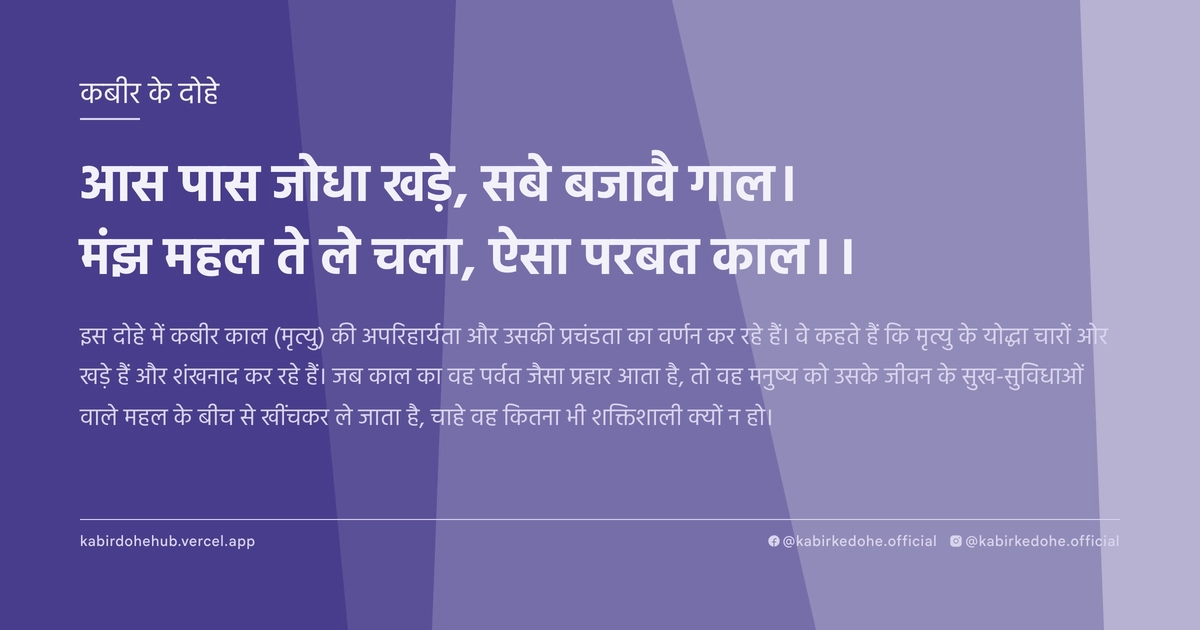
आस पास जोधा खड़े, सबे बजावै गाल।
मंझ महल ते ले चला, ऐसा परबत काल।।
Aas paas jodha khade, sabe bajavai gaal. Manjh mahal te le chala, aisa parbat kaal.
इस पृष्ठ पर इस कबीर दोहे का अर्थ (meaning), हिंदी व्याख्या और अंग्रेज़ी अनुवाद, दार्शनिक विश्लेषण और व्यावहारिक जीवन सीख दी गई है। यह दोहा मृतुक्यता (Mortality) विषय से जुड़ा है — Kabir doha meaning and explanation in Hindi and English.
अर्थ (Meaning):
इस दोहे में कबीर काल (मृत्यु) की अपरिहार्यता और उसकी प्रचंडता का वर्णन कर रहे हैं। वे कहते हैं कि मृत्यु के योद्धा चारों ओर खड़े हैं और शंखनाद कर रहे हैं। जब काल का वह पर्वत जैसा प्रहार आता है, तो वह मनुष्य को उसके जीवन के सुख-सुविधाओं वाले महल के बीच से खींचकर ले जाता है, चाहे वह कितना भी शक्तिशाली क्यों न हो।
In this couplet, Kabir describes the inevitability and fierce nature of Time (Death). He suggests that the warriors of death stand poised all around, sounding their horns of warning. When the mountain-like force of Time arrives, it forcibly drags the individual away from the center of their worldly palace of comforts, regardless of their status or strength.
व्याख्या (Interpretation):
यहाँ 'जोधा' मृत्यु के दूतों का प्रतीक हैं जो निरंतर सचेत कर रहे हैं। 'महल' केवल ईंट-पत्थर का घर नहीं, बल्कि अहंकार, सामाजिक प्रतिष्ठा और भौतिक आसक्तियों का संचय है। कबीर यहाँ निरगुण भक्ति के परिप्रेक्ष्य से समझाते हैं कि माया का यह महल क्षणभंगुर है। 'परबत काल' उस अजेय शक्ति को दर्शाता है जिसे कोई तर्क या प्रार्थना नहीं रोक सकती। यह अद्वैत वेदांत के उस सत्य की ओर संकेत है जहाँ शरीर नश्वर है और केवल आत्मा (ब्रह्म) शाश्वत है। जब तक मनुष्य स्वयं को इस महल का स्वामी मानता है, वह भयभीत रहता है; लेकिन जब वह स्वयं को उस अनंत चेतना का हिस्सा मानता है, तब मृत्यु केवल एक वस्त्र परिवर्तन बन जाती है। यह विरोधाभास है कि जिसे हम जीवन कहते हैं, वह वास्तव में मृत्यु की ओर एक निरंतर यात्रा है।
Here, 'Jodha' (warriors) symbolize the messengers of death who are constantly alerting the soul. The 'palace' is not merely a physical structure but the accumulation of ego, social prestige, and material attachments. From the perspective of Nirgun Bhakti, Kabir explains that this palace of Maya is ephemeral. 'Parbat Kaal' (Mountain of Time) represents the invincible force that no logic or prayer can halt. This points toward the Advaita Vedanta truth where the body is transient and only the Atman (Brahman) is eternal. As long as one considers themselves the owner of the palace, they remain in fear; however, when one identifies as part of the infinite consciousness, death becomes a mere change of raiment. It is the central paradox that what we call life is, in reality, a continuous journey toward death.
दार्शनिक विश्लेषण (Philosophical Analysis):
कबीर का यह दोहा उस युग की उपज है जहाँ धर्म के नाम पर कर्मकांड और बाहरी आडंबर चरम पर थे। कबीर ने देखा कि लोग मोक्ष के लिए तीर्थों और अनुष्ठानों का सहारा ले रहे थे, जबकि वे मृत्यु के बुनियादी सत्य से आँखें मूँदे हुए थे। वे यहाँ स्पष्ट करते हैं कि मृत्यु जाति, धर्म या आर्थिक स्थिति का भेद नहीं करती। यह सूफी मत के 'फना' (अहंकार का विनाश) के विचार से मेल खाता है, जहाँ साधक को पहले अपनी नश्वरता को स्वीकार करना होता है ताकि वह परमात्मा में विलीन हो सके।
दार्शनिक स्तर पर, यह दोहा 'माया' के जाल पर प्रहार करता है। मनुष्य जिस 'महल' (पहचान और संपत्ति) का निर्माण करता है, वह वास्तव में उसकी कैद बन जाता है। अद्वैत वेदांत के अनुसार, जब तक 'मैं' और 'मेरा' का भाव रहता है, तब तक द्वैत बना रहता है और भय बना रहता है। कबीर का उद्देश्य डराना नहीं, बल्कि जगाना है। वे चाहते हैं कि मनुष्य मृत्यु के आने का इंतज़ार न करे, बल्कि जीवित रहते हुए ही अपने अहंकार की मृत्यु कर ले।
यह विश्लेषण हमें बताता है कि कबीर की दृष्टि केवल भौतिक मृत्यु पर नहीं, बल्कि आध्यात्मिक पुनर्जन्म पर थी। वे ritualism (कर्मकांड) को इसलिए नकारते हैं क्योंकि कोई भी बाहरी क्रिया काल के प्रहार को नहीं रोक सकती। केवल आंतरिक रूपांतरण और ईश्वर के प्रति निस्वार्थ प्रेम ही वह सेतु है जो इस भय को शांति में बदल सकता है।
मनोवैज्ञानिक रूप से, यह दोहा 'Memento Mori' (मृत्यु को याद रखो) के विचार को पुष्ट करता है। जब हम अपनी नश्वरता को गहराई से स्वीकार करते हैं, तो हमारी अनावश्यक इच्छाएं और क्रोध कम होने लगते हैं। हम वर्तमान क्षण की कीमत समझने लगते हैं और दूसरों के प्रति अधिक करुणावान हो जाते हैं क्योंकि हम जानते हैं कि हम सब एक ही अंतिम गंतव्य की ओर बढ़ रहे हैं।
अंततः, कबीर यह संदेश देते हैं कि वास्तविक मुक्ति उस महल को छोड़ने में नहीं है जिसे काल छीन ले जाएगा, बल्कि उस चेतना को पाने में है जो काल से परे है। यह 'अकाल' (Timeless) होने की यात्रा है। जब साधक स्वयं को शरीर के बजाय शुद्ध चेतना के रूप में देखता है, तो काल का पर्वत उसे डराने के बजाय उसे मुक्त करने वाला माध्यम बन जाता है।
This couplet is a product of an era where rituals and external pomposity in the name of religion were at their peak. Kabir observed people relying on pilgrimages and rites for salvation while remaining blind to the fundamental truth of death. He clarifies here that death does not discriminate based on caste, religion, or economic status. This aligns with the Sufi concept of 'Fana' (annihilation of the ego), where the seeker must first acknowledge their mortality to merge with the Divine.
On a philosophical level, this verse attacks the web of 'Maya'. The 'palace' (identity and possessions) that a human constructs actually becomes their prison. According to Advaita Vedanta, as long as the sense of 'I' and 'Mine' persists, duality and fear remain. Kabir's intent is not to terrify, but to awaken. He urges the individual not to wait for death to arrive, but to kill their ego while still alive.
This analysis reveals that Kabir's vision was not merely focused on physical death, but on spiritual rebirth. He rejects ritualism because no external act can halt the blow of Time. Only internal transformation and selfless love for the Divine serve as the bridge that converts this fear into peace.
Psychologically, this verse reinforces the concept of 'Memento Mori'. When we deeply accept our mortality, our unnecessary desires and anger begin to diminish. We start valuing the present moment and become more compassionate toward others, knowing we are all heading toward the same final destination.
Ultimately, Kabir conveys that true liberation is not in abandoning the palace that Time will eventually seize, but in attaining the consciousness that exists beyond Time. It is the journey toward becoming 'Akaal' (Timeless). When the seeker views themselves as pure consciousness rather than a body, the mountain of Time ceases to be a threat and instead becomes the medium of liberation.
मूल संदेश (Core Message):
- मृत्यु का भय केवल अहंकार का प्रतिबिंब है।
- भौतिक संपत्ति आध्यात्मिक सुरक्षा प्रदान नहीं करती।
- अहंकार का त्याग ही वास्तविक अमरता का मार्ग है।
- नश्वरता को स्वीकार करना ही मुक्ति की पहली सीढ़ी है।
- आत्मा काल से परे है, शरीर केवल एकtemporary निवास है।
- The fear of death is merely a reflection of the ego.
- Material wealth provides no spiritual security.
- Relinquishing the ego is the only path to true immortality.
- Accepting mortality is the first step toward liberation.
- The soul is beyond time; the body is but a temporary dwelling.
व्यावहारिक उदाहरण (Practical Example):
वाराणसी के एक संकरी गली में माधव नाम का एक पुराना कपड़ा व्यापारी रहता था। माधव का व्यापार शहर में सबसे बड़ा था और उसका घर एक आलीशान हवेली जैसा था। वह अपनी संपत्ति और सामाजिक रूतबे के अहंकार में इतना डूबा था कि वह अपने नौकरों और छोटे दुकानदारों को तुच्छ समझता था। वह मानता था कि उसका धन और प्रभाव उसे हर संकट से बचा लेगा।
एक दिन, माधव के शहर में एक फकीर आया, जिसने उसकी हवेली के बाहर बैठकर केवल एक बात कही, 'महल की दीवारें कितनी भी ऊँची हों, काल का रास्ता हमेशा खुला रहता है।' माधव ने उसे अहंकारवश अनदेखा कर दिया और अपनी विलासिता में मग्न रहा।
कुछ समय बाद, माधव को एक गंभीर बीमारी ने घेर लिया। देखते ही देखते, उसकी सारी संपत्ति, उसके महंगे बिस्तर और उसके रसूखदार मित्र उसके किसी काम न आए। वह जिस 'महल' के गर्व में जीता था, वह अब उसे एक जेल जैसा लगने लगा। उसे महसूस हुआ कि वह जिस दुनिया का स्वामी था, वह वास्तव में एक रेत का घर था।
मृत्यु के करीब पहुँचकर, माधव को उस फकीर की बात याद आई। उसने महसूस किया कि उसने अपना पूरा जीवन बाहरी दीवारों को सजाने में लगा दिया, लेकिन अपने भीतर के शून्य को कभी नहीं भरा। उसने देखा कि उसके पास धन तो था, लेकिन शांति नहीं थी।
तभी उसे एक 'कबीर ट्विस्ट' मिला। उसने महसूस किया कि उसका डर मृत्यु से नहीं, बल्कि इस बात से है कि वह अपने साथ कुछ भी नहीं ले जा सकता। उसने अचानक अपनी सारी बची हुई संपत्ति उन लोगों के नाम कर दी जिन्हें उसने जीवन भर नीचा दिखाया था।
जैसे ही उसने यह त्याग किया, उसके मन से मृत्यु का भय गायब हो गया। उसे पहली बार महसूस हुआ कि 'महल' का त्याग ही वास्तविक स्वतंत्रता है। उसने अपनी पहचान एक 'व्यापारी' से बदलकर एक 'सेवक' के रूप में की।
उसने अपने अंतिम दिनों में शांति से प्रार्थना करना शुरू किया। वह अब उस महल के बीच में नहीं था, बल्कि उस महल से ऊपर उठ चुका था।
जब अंततः काल का पर्वत आया, तो माधव डरा हुआ नहीं था। उसने मुस्कुराते हुए अपनी आँखें मूँद लीं, क्योंकि उसने पहले ही अपने अहंकार की मृत्यु कर ली थी।
उसका रूपांतरण यह था कि उसने भौतिक स्वामित्व को आध्यात्मिक समर्पण में बदल दिया।
अब वह एक ऐसा व्यक्ति था जिसे काल खींचकर नहीं ले जा रहा था, बल्कि वह स्वयं उस अनंत में विलीन होने के लिए तैयार था।
In a narrow lane of Varanasi lived an old cloth merchant named Madhav. Madhav's business was the largest in the city, and his home was like a lavish mansion. He was so immersed in the ego of his wealth and social standing that he considered his servants and small shopkeepers insignificant. He believed his money and influence would protect him from every crisis.
A wandering ascetic arrived in the city one day and sat outside Madhav's mansion, saying only one thing: 'No matter how high the walls of the palace are, the path for Time always remains open.' Madhav, driven by arrogance, ignored him and remained absorbed in his luxury.
After some time, a severe illness gripped Madhav. Rapidly, all his wealth, his expensive beds, and his influential friends became useless. The 'palace' he lived in with such pride now felt like a prison. He realized that the world he thought he owned was actually a house of sand.
As he neared death, Madhav remembered the words of the ascetic. He felt that he had spent his entire life decorating external walls but had never filled the void within. He saw that while he had wealth, he lacked peace.
Then came the 'Kabir Twist'. He realized his fear was not of death itself, but of the fact that he could take nothing with him. Suddenly, he bequeathed all his remaining wealth to the very people he had belittled throughout his life.
The moment he made this sacrifice, the fear of death vanished from his mind. For the first time, he felt that relinquishing the 'palace' was true freedom. He shifted his identity from a 'merchant' to a 'servant'.
In his final days, he began to pray with peace. He was no longer trapped in the middle of the palace; he had risen above it.
When the mountain of Time finally arrived, Madhav was not afraid. He closed his eyes with a smile, for he had already killed his ego.
His transformation lay in converting material ownership into spiritual surrender.
He was no longer someone being dragged away by Time, but someone ready to merge into the Infinite.
अभ्यास मार्गदर्शन (Practice Guidance):
- दैनिक चिंतन: प्रतिदिन 10 मिनट मौन बैठें और विचार करें कि यदि आज अंतिम दिन हो, तो आपकी कौन सी उपलब्धियां वास्तव में मायने रखेंगी।
- आत्म-पूछताछ जर्नल: लिखें कि आपके जीवन का 'महल' (अहंकार/पहचान) क्या है? वह कौन सी चीज़ है जिसे खोने के डर से आप सबसे अधिक तनाव में रहते हैं?
- व्यवहारिक परिवर्तन: सप्ताह में एक बार अपनी किसी प्रिय वस्तु का त्याग करें या किसी ऐसे व्यक्ति की निस्वार्थ मदद करें जिससे आपका कोई स्वार्थ न हो, ताकि 'स्वामित्व' की भावना कम हो।
- डायग्नोस्टिक चेकलिस्ट: क्या आप अपनी उपलब्धियों का श्रेय स्वयं लेते हैं? क्या आप मृत्यु के विचार से घबराते हैं? क्या आप दूसरों को अपनी सामाजिक स्थिति से आंकते हैं? यदि हाँ, तो आप अभी भी 'महल' के मोह में हैं।
- Daily Contemplation: Sit in silence for 10 minutes daily and reflect: If today were your last day, which of your achievements would truly matter?
- Self-Inquiry Journal: Write down what constitutes the 'palace' (ego/identity) of your life. What is the one thing you fear losing the most, causing you the most stress?
- Behavioral Change: Once a week, give away a cherished possession or help someone selflessly without any expectation, to diminish the sense of 'ownership'.
- Diagnostic Checklist: Do you take sole credit for your achievements? Do you panic at the thought of death? Do you judge others by their social status? If yes, you are still under the spell of the 'palace'.
चिंतन प्रश्न (Reflection Questions):
- आपकी वह कौन सी 'डिजिटल पहचान' या सामाजिक छवि है जिसे आप खोने से सबसे ज्यादा डरते हैं?
- यदि आपका पद, पैसा और परिवार आपसे छीन लिया जाए, तो 'आप' वास्तव में कौन बचेंगे?
- क्या आपका धर्म और आपके अनुष्ठान आपको मृत्यु के भय से मुक्त कर रहे हैं, या वे केवल एक सुरक्षा कवच का भ्रम दे रहे हैं?
- आप अपने जीवन के 'महल' को सजाने में कितने घंटे बिताते हैं और अपनी आत्मा को जानने में कितने?
- क्या आप दूसरों की मृत्यु पर शोक मनाते हैं या उसे एक सत्य के रूप में देखते हैं जो आपको अपनी नश्वरता की याद दिलाता है?
- What is that 'digital identity' or social image you are most afraid of losing?
- If your title, money, and family were taken away, who would 'you' actually be?
- Are your religion and rituals freeing you from the fear of death, or are they merely providing an illusion of a safety net?
- How many hours do you spend decorating the 'palace' of your life versus knowing your own soul?
- Do you mourn the death of others, or do you see it as a truth that reminds you of your own mortality?