
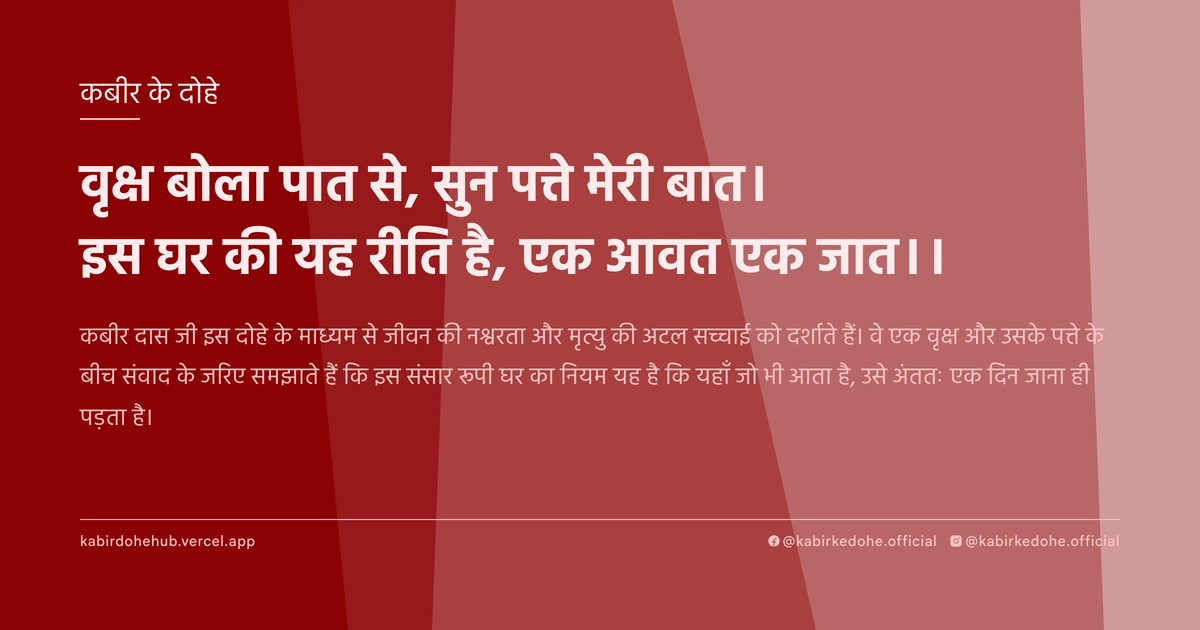
वृक्ष बोला पात से, सुन पत्ते मेरी बात।
इस घर की यह रीति है, एक आवत एक जात।।
Vriksh bola paat se, sun patte meri baat. Is ghar ki yeh reeti hai, ek aavat ek jaat.
इस पृष्ठ पर इस कबीर दोहे का अर्थ (meaning), हिंदी व्याख्या और अंग्रेज़ी अनुवाद, दार्शनिक विश्लेषण और व्यावहारिक जीवन सीख दी गई है। यह दोहा मृतुक्यता (Mortality) विषय से जुड़ा है — Kabir doha meaning and explanation in Hindi and English.
अर्थ (Meaning):
कबीर दास जी इस दोहे के माध्यम से जीवन की नश्वरता और मृत्यु की अटल सच्चाई को दर्शाते हैं। वे एक वृक्ष और उसके पत्ते के बीच संवाद के जरिए समझाते हैं कि इस संसार रूपी घर का नियम यह है कि यहाँ जो भी आता है, उसे अंततः एक दिन जाना ही पड़ता है।
Kabir uses the metaphor of a tree and its leaf to illustrate the inevitability of death and the transient nature of existence. He explains that the fundamental law of this worldly home is that every soul who enters must eventually depart, leaving behind all earthly attachments.
व्याख्या (Interpretation):
यहाँ वृक्ष शरीर या संसार का प्रतीक है और पत्ता व्यक्तिगत आत्मा का। शाब्दिक अर्थ में यह प्रकृति के चक्र की बात है, लेकिन आध्यात्मिक स्तर पर यह 'माया' के मोह को तोड़ने का आह्वान है। निर्गुण भक्ति के अनुसार, आत्मा अविनाशी है, परंतु शरीर नश्वर है। जब पत्ता गिरता है, तो वह वृक्ष से अलग नहीं होता, बल्कि अपने मूल स्रोत में विलीन हो जाता है। यह अद्वैत वेदांत के उस सत्य को दर्शाता है जहाँ जीव और ब्रह्म का भेद मिट जाता है। मृत्यु यहाँ अंत नहीं, बल्कि एक संक्रमण है, जो अहंकार के विसर्जन और परमात्मा के साथ एकाकार होने की प्रक्रिया है। यह विरोधाभास है कि जिसे हम 'अंत' समझते हैं, वही वास्तव में वास्तविक अस्तित्व की शुरुआत है।
The tree symbolizes the cosmic existence or the physical body, while the leaf represents the individual soul. Literally, it describes a natural cycle, but metaphorically, it is a call to shatter the illusions of Maya. In Nirgun Bhakti, while the body is perishable, the soul is eternal. The falling of the leaf is not a separation but a return to the source, mirroring the Advaita Vedanta principle of non-duality where the Atman merges back into Brahman. Death is presented not as a termination, but as a transition—the annihilation of the ego to achieve union with the Divine. The central paradox lies in the fact that what humans perceive as the 'end' is actually the commencement of true, liberated existence.
दार्शनिक विश्लेषण (Philosophical Analysis):
कबीर का यह दोहा उस कालखंड में लिखा गया जब समाज कर्मकांडों और मृत्यु के भय से ग्रस्त था। कबीर ने बाहरी आडंबरों के बजाय आंतरिक सत्य पर जोर दिया। वे बताते हैं कि मनुष्य अपनी पहचान को शरीर, पद और संपत्ति से जोड़ लेता है, जो कि एक बड़ी भूल है। यह दृष्टिकोण सूफी मत के 'फना' (अहंकार का विनाश) के करीब है, जहाँ साधक स्वयं को मिटाकर ईश्वर में लीन हो जाता है।
अद्वैत वेदांत के परिप्रेक्ष्य में, यह दोहा 'देहवाद' का खंडन करता है। जब हम स्वयं को केवल एक 'पत्ता' मानते हैं, तो हम डरते हैं, लेकिन जब हम स्वयं को 'वृक्ष' (समष्टि) के रूप में देखते हैं, तो मृत्यु केवल एक वस्त्र बदलने जैसी प्रक्रिया बन जाती है। कबीर यहाँ जाति और धर्म के भेदभाव को भी निरस्त करते हैं, क्योंकि मृत्यु सबको समान स्तर पर ला खड़ा करती है।
मनोवैज्ञानिक स्तर पर, यह बोध व्यक्ति को वर्तमान क्षण में जीने के लिए प्रेरित करता है। जब मृत्यु की अनिवार्यता स्वीकार कर ली जाती है, तो क्रोध, ईर्ष्या और लोभ का प्रभाव कम होने लगता है। यह 'वैराग्य' की वह अवस्था है जो पलायन नहीं, बल्कि जागरूकता है।
कबीर की निर्गुण साधना हमें सिखाती है कि ईश्वर किसी मंदिर या मस्जिद में नहीं, बल्कि इसी नश्वरता के बोध में छिपा है। जो व्यक्ति अपनी नश्वरता को पहचान लेता है, वह वास्तव में अमरता की ओर कदम बढ़ाता है क्योंकि वह अब समय और स्थान के बंधनों से मुक्त होने की कोशिश करता है।
अंततः, यह विश्लेषण हमें यह समझाता है कि जीवन का उद्देश्य संचय करना नहीं, बल्कि स्वयं को परिष्कृत करना है। जैसे पत्ता गिरकर मिट्टी को उपजाऊ बनाता है, वैसे ही एक मनुष्य का जीवन दूसरों के काम आने और आध्यात्मिक उत्थान में व्यतीत होना चाहिए, ताकि वह इस संसार रूपी घर से गरिमा के साथ प्रस्थान कर सके।
This couplet emerged during an era dominated by rigid ritualism and a profound fear of death. Kabir shifted the focus from external ceremonies to internal truth, arguing that humans erroneously tie their identity to the body, status, and wealth. This perspective aligns closely with the Sufi concept of 'Fana' (annihilation of the self), where the seeker dissolves their ego to merge with the Divine.
From the lens of Advaita Vedanta, the verse refutes 'Dehavada' (body-centric identity). When we perceive ourselves merely as a 'leaf,' we experience fear; however, when we realize ourselves as the 'tree' (the universal whole), death becomes a simple change of raiment. Kabir implicitly dismantles caste and religious hierarchies here, as death is the ultimate equalizer that strips away all social constructs.
Psychologically, this realization compels an individual to live mindfully in the present. Once the inevitability of death is accepted, the grip of anger, jealousy, and greed loosens. This is the state of 'Vairagya' (dispassion), which is not an escape from life, but a heightened awareness of its nature.
Kabir's Nirgun practice teaches that the Divine is not found in temples or mosques, but within the realization of this very impermanence. One who acknowledges their mortality begins the journey toward immortality by attempting to transcend the limitations of time and space.
Ultimately, this analysis reveals that the purpose of life is not accumulation, but refinement. Just as a fallen leaf nourishes the soil, a human life should be spent in service and spiritual evolution, ensuring a dignified departure from this worldly home.
मूल संदेश (Core Message):
- शरीर एक वस्त्र है, आत्मा शाश्वत सत्य है।
- मोह ही वह बंधन है जो विदाई को दुखदायी बनाता है।
- नश्वरता को स्वीकार करना ही वास्तविक स्वतंत्रता है।
- अहंकार का विसर्जन ही परमात्मा से मिलन का मार्ग है।
- जीवन का मूल्य संचय में नहीं, बल्कि समर्पण में है।
- The body is a garment; the soul is the eternal truth.
- Attachment is the only chain that makes departure painful.
- Accepting impermanence is the gateway to true liberation.
- Dissolving the ego is the only path to union with the Divine.
- The value of life lies not in accumulation, but in surrender.
व्यावहारिक उदाहरण (Practical Example):
एक समय की बात है, वाराणसी के घाटों पर रहने वाले एक वृद्ध बुनकर थे, जिनका नाम माधव था। माधव अपने काम में निपुण थे, लेकिन उनका हृदय हमेशा इस चिंता में रहता था कि उनके बाद उनके परिवार का क्या होगा। वे अपनी संपत्ति और अपनी कला को सहेजने में इतने व्यस्त थे कि उन्होंने अपने आसपास के लोगों की खुशियों को नजरअंदाज करना शुरू कर दिया।
माधव का एक छोटा सा बेटा था, जो अक्सर उनसे पूछता था कि वे इतनी मेहनत क्यों करते हैं। माधव हमेशा यही कहते, "ताकि मैं इस दुनिया में अपना नाम छोड़ सकूँ।"
एक दिन माधव की मुलाकात एक फकीर से हुई, जिसने उन्हें कबीर का यह दोहा सुनाया। फकीर ने माधव को एक पुराने बरगद के पेड़ के नीचे बिठाया और गिरते हुए पत्तों की ओर इशारा किया।
फकीर ने कहा, "देखो माधव, यह पत्ता कभी इस डाल का गौरव था, लेकिन अब यह मिट्टी में मिल रहा है। क्या यह दुखी है? नहीं, क्योंकि यह जानता है कि यह वृक्ष का हिस्सा था और अब वापस वृक्ष की जड़ों में जा रहा है।"
माधव को अचानक अहसास हुआ कि वे जिस 'नाम' और 'संपत्ति' को बचाने की कोशिश कर रहे थे, वह उस पत्ते की तरह है जो एक दिन गिरना ही है। उन्होंने महसूस किया कि असली संपत्ति वह प्रेम और शांति है जो वे दूसरों को देते हैं।
अगले ही दिन से माधव का व्यवहार बदल गया। उन्होंने अपनी कला को केवल पैसे कमाने का जरिया नहीं बनाया, बल्कि गरीब बच्चों को मुफ्त में बुनाई सिखाना शुरू कर दिया।
उनके मन का तनाव गायब हो गया। अब वे केवल भविष्य की चिंता नहीं करते थे, बल्कि वर्तमान के हर धागे को प्रेम से बुनते थे।
जब माधव का अंतिम समय आया, तो उनके चेहरे पर कोई डर नहीं था। उनके परिवार और शिष्यों की आँखों में आँसू तो थे, लेकिन उनके दिल में एक गहरी शांति थी क्योंकि माधव ने उन्हें सिखाया था कि कैसे गरिमा के साथ विदा होना है।
यह 'कबीर ट्विस्ट' था—मृत्यु के भय को जीवन के उत्सव में बदलना। माधव ने समझा कि घर छोड़ने का समय तब आता है जब हम घर के भीतर सब कुछ साझा कर चुके होते हैं।
उनकी कहानी आज भी उन गलियों में सुनाई जाती है, जो याद दिलाती है कि हम सब यहाँ केवल कुछ समय के मेहमान हैं।
Once, in the narrow lanes of Varanasi, lived an elderly weaver named Madhav. Madhav was a master of his craft, but his heart was perpetually clouded by anxiety over what would happen to his family after his passing. He became so obsessed with accumulating wealth and preserving his legacy that he began ignoring the simple joys of those around him.
Madhav had a young son who often asked why he worked so relentlessly. Madhav would always reply, "So that I may leave a lasting name in this world."
One day, Madhav encountered a wandering mystic who recited this specific Doha of Kabir. The mystic led Madhav to the shade of an ancient banyan tree and pointed toward the falling leaves.
The mystic said, "Look, Madhav. This leaf was once the pride of its branch, but now it returns to the earth. Is it grieving? No, because it knows it was part of the tree and is now returning to the roots."
Madhav suddenly realized that the 'name' and 'wealth' he was desperately clinging to were like that leaf—destined to fall. He understood that the only true legacy is the love and peace one distributes to others.
From the next day, Madhav's behavior underwent a radical shift. He stopped viewing his art merely as a means of income and began teaching weaving to underprivileged children for free.
The tension in his mind vanished. He stopped worrying about the distant future and started weaving every thread of the present with love and mindfulness.
When Madhav's final hour arrived, there was no fear on his face. While his family and students wept, there was a profound sense of peace in their hearts because Madhav had taught them how to depart with dignity.
This was the 'Kabir Twist'—transforming the fear of death into a celebration of life. Madhav realized that the time to leave the house comes only after we have shared everything within it.
His story is still told in those lanes, serving as a reminder that we are all merely temporary guests in this cosmic dwelling.
अभ्यास मार्गदर्शन (Practice Guidance):
- प्रतिदिन 10 मिनट 'मृत्यु ध्यान' (Death Meditation) करें, जहाँ आप कल्पना करें कि आप इस शरीर और अपनी पहचान को धीरे-धीरे छोड़ रहे हैं।
- एक जर्नल लिखें जिसमें उन 5 चीजों की सूची हो जिन्हें आप 'अपना' मानते हैं, और फिर विचार करें कि यदि वे कल न हों, तो आपकी आत्मा पर क्या प्रभाव पड़ेगा।
- व्यवहार परिवर्तन: प्रतिदिन कम से कम एक ऐसा कार्य करें जिसमें आपका कोई व्यक्तिगत लाभ न हो, केवल निस्वार्थ सेवा हो।
- डायग्नोस्टिक चेकलिस्ट: क्या आप छोटी-छोटी बातों पर अत्यधिक क्रोधित होते हैं? क्या आप भविष्य की चिंता में वर्तमान को खो रहे हैं? यदि हाँ, तो आप अभी भी 'पत्ते' के मोह में हैं।
- Practice 'Death Meditation' for 10 minutes daily, visualizing the gradual release of your physical body and social identity.
- Maintain a journal listing five things you consider 'yours,' then contemplate how your soul would remain untouched if they were gone tomorrow.
- Behavioral Shift: Perform at least one act of selfless service daily that offers no personal gain or recognition.
- Diagnostic Checklist: Do you react with extreme anger to trivial matters? Are you losing the present moment to future anxieties? If yes, you are still clinging to the 'leaf' of ego.
चिंतन प्रश्न (Reflection Questions):
- यदि आज आपकी मृत्यु हो जाए, तो आपके पीछे बचा हुआ 'अहंकार' दुनिया को क्या बताएगा और आपकी 'आत्मा' क्या महसूस करेगी?
- आप अपनी डिजिटल पहचान (सोशल मीडिया) को सहेजने में कितना समय बिताते हैं, जबकि वह एक गिरते हुए पत्ते से अधिक नश्वर है?
- क्या आपका प्रेम वास्तव में दूसरे के लिए है, या आप केवल अपनी जरूरतों को दूसरे के माध्यम से पूरा कर रहे हैं?
- वह कौन सा डर है जो आपको इस सत्य को स्वीकार करने से रोकता है कि आप इस संसार में केवल एक मेहमान हैं?
- यदि आप स्वयं को इस शरीर से अलग देख सकें, तो आपकी वर्तमान समस्याएँ कितनी छोटी नजर आएंगी?
- If you were to pass away today, what would your remaining 'ego' tell the world, and what would your 'soul' actually feel?
- How much time do you spend curating your digital identity, knowing it is more fragile than a falling leaf?
- Is your love truly for the other, or are you merely fulfilling your own needs through another person?
- What is the specific fear that prevents you from accepting the truth that you are merely a guest in this world?
- If you could perceive yourself as separate from this body, how insignificant would your current problems appear?