
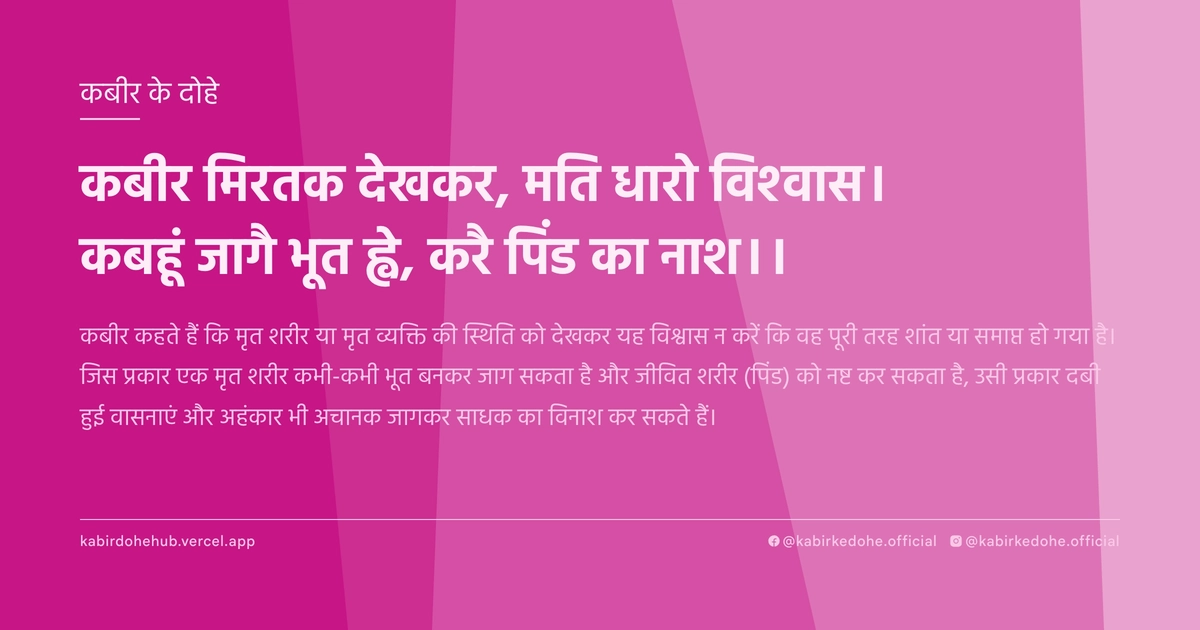
कबीर मिरतक देखकर, मति धारो विश्वास।
कबहूं जागै भूत ह्वे, करै पिंड का नाश।।
Kabir mirtak dekhkar, mati dhaaro vishwas. Kabahun jaagai bhoot hve, karai pind ka naash.
इस पृष्ठ पर इस कबीर दोहे का अर्थ (meaning), हिंदी व्याख्या और अंग्रेज़ी अनुवाद, दार्शनिक विश्लेषण और व्यावहारिक जीवन सीख दी गई है। यह दोहा जागृति (The Wake-up Call) विषय से जुड़ा है — Kabir doha meaning and explanation in Hindi and English.
अर्थ (Meaning):
कबीर कहते हैं कि मृत शरीर या मृत व्यक्ति की स्थिति को देखकर यह विश्वास न करें कि वह पूरी तरह शांत या समाप्त हो गया है। जिस प्रकार एक मृत शरीर कभी-कभी भूत बनकर जाग सकता है और जीवित शरीर (पिंड) को नष्ट कर सकता है, उसी प्रकार दबी हुई वासनाएं और अहंकार भी अचानक जागकर साधक का विनाश कर सकते हैं।
Kabir warns against trusting the apparent stillness of a corpse. Just as a dead body might unexpectedly rise as a ghost to destroy the living flesh, latent desires and the dormant ego—which seem dead—can suddenly awaken to destroy the spiritual progress and stability of the seeker.
व्याख्या (Interpretation):
शाब्दिक अर्थ में यह दोहा मृत्यु और प्रेतवाधित भय की बात करता है, परंतु आध्यात्मिक स्तर पर 'मिरतक' (मृत शरीर) हमारे उन विकारों, वासनाओं और अहंकार का प्रतीक है जिन्हें हमने केवल दबाया है, मिटाया नहीं। यह निर्गुण भक्ति के उस सिद्धांत को दर्शाता है जहाँ साधक को लगता है कि उसने माया पर विजय पा ली है, जबकि माया केवल सुप्त अवस्था में होती है। जब साधक इस झूठी शांति पर विश्वास करता है, तो वह 'भूत' के रूप में वापस आता है, जो वास्तव में अनसुलझे मानसिक संस्कार हैं। यह अद्वैत वेदांत के उस सत्य को उजागर करता है कि जब तक अज्ञान का पूर्ण विनाश नहीं होता, वह किसी न किसी रूप में लौटकर आत्मा की शांति को भंग करता है। यहाँ 'पिंड' का अर्थ भौतिक शरीर और सूक्ष्म अहंकार दोनों से है, जिसका विनाश आध्यात्मिक पतन के रूप में होता है।
Literally, the couplet speaks of the horror of a corpse returning as a ghost. Metaphorically, the 'corpse' represents the latent desires, traumas, and egoic tendencies that the seeker believes they have conquered. In the path of Nirgun Bhakti, there is a dangerous phase where the practitioner mistakes the suppression of ego for its annihilation. This is the 'illusion of stillness' (Maya). When the seeker trusts this superficial peace, the dormant impurities awaken as 'ghosts'—unresolved subconscious impressions (Samskaras)—which then attack the 'pind' (the physical and subtle vessel of the practitioner). This highlights the paradox of the human condition: the things we believe are dead within us are often the most dangerous because they operate in the shadows of the unconscious, waiting for a moment of complacency to trigger a spiritual collapse.
दार्शनिक विश्लेषण (Philosophical Analysis):
कबीर का यह दोहा मध्यकालीन भारत के उस सामाजिक और धार्मिक परिवेश में रचा गया जहाँ बाहरी कर्मकांडों और दिखावे को मोक्ष का मार्ग माना जाता था। कबीर ने इस दिखावे का खंडन करते हुए आंतरिक शुद्धि पर बल दिया। वे यहाँ 'मृत्यु' को केवल शारीरिक अंत नहीं, बल्कि मानसिक संस्कारों के अंत के रूप में देखते हैं।
अद्वैत वेदांत के परिप्रेक्ष्य में, यह दोहा 'अविद्या' (अज्ञान) की सूक्ष्मता की व्याख्या करता है। अविद्या कभी पूरी तरह समाप्त नहीं होती; वह केवल सूक्ष्म रूप में छिप जाती है। जब साधक अपनी उपलब्धियों के अहंकार में डूबकर यह मान लेता है कि वह अब दोषरहित है, तब वही अविद्या 'भूत' बनकर प्रकट होती है।
सूफी मत के 'नफ्स' (अहंकार) की अवधारणा के साथ इसका गहरा संबंध है। सूफीवाद में 'नफ्स-अल-अम्मारा' वह निम्नतम अहंकार है जो बार-बार पुनर्जीवित होता है। कबीर चेतावनी देते हैं कि केवल बाहरी शांति या मौन को आध्यात्मिक प्रगति न मानें, क्योंकि यदि जड़ें नहीं कटीं, तो विकार पुनः उग आएंगे।
यह दोहा कर्मकांडीय धर्म के विरुद्ध एक प्रहार है। लोग सोचते हैं कि तीर्थयात्रा या जप के कुछ घंटों से उनके पाप 'मर' गए हैं। कबीर कहते हैं कि यह विश्वास खतरनाक है। वास्तविक मुक्ति केवल तब होती है जब अहंकार का पूर्ण विसर्जन (annihilation) हो जाए, न कि केवल उसका दमन।
मनोवैज्ञानिक स्तर पर, यह 'रिप्रेशन' (दमन) की प्रक्रिया को दर्शाता है। जो भावनाएं चेतना से बाहर धकेल दी जाती हैं, वे अवचेतन में जीवित रहती हैं और संकट के समय हिंसक रूप में उभरती हैं। कबीर यहाँ एक आध्यात्मिक मनोवैज्ञानिक के रूप में चेतावनी दे रहे हैं कि आत्म-निरीक्षण निरंतर होना चाहिए।
This Doha emerges from Kabir's era of intense ritualism and caste-based spiritual hierarchies. Kabir rejects the notion that spiritual liberation is a destination reached through external rites, instead framing it as a continuous process of internal vigilance. He uses the visceral imagery of a corpse and a ghost to shatter the complacency of the religious practitioner.
From the lens of Advaita Vedanta, the 'corpse' symbolizes Avidya (ignorance). Ignorance is not merely the absence of knowledge but a positive force that veils the Truth. When a seeker believes they have eradicated their flaws, they have merely pushed them into the subconscious. This 'dormant ignorance' is the ghost that haunts the spiritual journey, proving that the ego is a shapeshifter that survives even the most rigorous disciplines.
Connecting this to Sufism, the struggle is against the 'Nafs' (the lower self). The Nafs is notoriously resilient; it mimics death to deceive the seeker into a false sense of security. Kabir’s warning aligns with the Sufi practice of 'Muraqaba' (meditation/watchfulness), where the heart must be guarded against the subtle return of worldly attachments.
Kabir’s rejection of ritualism is central here. He argues that rituals create a facade of purity. A person may look like a saint (a dead corpse of ego), but inside, the ghosts of greed, anger, and pride are merely sleeping. The 'death' of the ego must be absolute—a total dissolution into the Brahman—rather than a temporary suppression.
Psychologically, this is a profound analysis of repression. In modern terms, the 'ghost' is the shadow self. When we deny our darker impulses instead of integrating and transforming them, they manifest as compulsive behaviors or spiritual crises. Kabir advocates for a radical, honest confrontation with one's inner darkness to ensure that the 'corpse' of the ego never rises again.
मूल संदेश (Core Message):
- दमन मुक्ति नहीं है, यह केवल विलंब है।
- अहंकार की शांति अक्सर एक छलावा होती है।
- सच्ची आध्यात्मिक प्रगति निरंतर सतर्कता में है।
- दबे हुए विकार सबसे अधिक विनाशकारी होते हैं।
- पूर्ण विसर्जन ही एकमात्र स्थायी समाधान है।
- Suppression is not liberation; it is merely a delay.
- The stillness of the ego is often a deceptive mask.
- True spiritual progress lies in ceaseless vigilance.
- Dormant vices are the most destructive forces.
- Total dissolution is the only permanent solution.
व्यावहारिक उदाहरण (Practical Example):
वाराणसी के एक पुराने घाट पर रहने वाले एक वृद्ध विधवा, जानकी, का जीवन अत्यंत सरल था। उन्होंने अपना पूरा जीवन तपस्या, उपवास और कठोर नियमों में बिताया था। शहर के लोग उन्हें 'पवित्र' मानते थे और उनके पास आध्यात्मिक सलाह के लिए आते थे। जानकी को भी विश्वास हो गया था कि उन्होंने अपने क्रोध और मोह को पूरी तरह मार दिया है।
एक दिन, उनके छोटे से घर में एक युवा युवती आई जो अपने जीवन की उलझनों से परेशान थी। उस युवती ने अनजाने में जानकी की सबसे प्रिय पुरानी माला को गिरा दिया और वह टूट गई। उस क्षण, जानकी के भीतर एक ऐसा भयानक क्रोध जागा जिसे उन्होंने दशकों से दबा रखा था।
वे उस युवती पर चिल्लाने लगीं, अपशब्द कहे और अपनी सारी संचित कुंठा उस मासूम लड़की पर उतार दी। वह क्रोध इतना तीव्र था कि जानकी खुद भी हैरान रह गईं। उन्हें लगा जैसे कोई बाहरी शक्ति उन्हें नियंत्रित कर रही है।
उस रात, जब वे शांत हुईं, उन्हें कबीर का यह दोहा याद आया। उन्हें समझ आया कि उन्होंने क्रोध को 'मारा' नहीं था, बल्कि उसे केवल 'दबाया' था। उनकी वर्षों की तपस्या ने केवल एक बाहरी आवरण बनाया था, जबकि भीतर क्रोध एक 'मिरतक' की तरह सोया हुआ था।
वह क्रोध 'भूत' बनकर जागा और उनकी वर्षों की अर्जित शांति और गरिमा (पिंड) को एक पल में नष्ट कर दिया। जानकी को एहसास हुआ कि उन्होंने अपनी पवित्रता का भ्रम पाला था, सत्य का नहीं।
इस घटना के बाद, जानकी ने कठोर नियमों का त्याग कर दिया। उन्होंने अब उपवास के बजाय 'साक्षी भाव' का अभ्यास शुरू किया। वे अब अपने भीतर उठने वाले छोटे-छोटे आवेगों को दबाने के बजाय उन्हें देखना और समझना शुरू कीं।
उन्होंने सीखा कि वास्तविक शांति वह नहीं है जहाँ कोई तूफान न आए, बल्कि वह है जहाँ तूफान आने पर भी आप विचलित न हों। उन्होंने अपनी 'पवित्र' छवि के मुखौटे को उतार फेंका और एक साधारण इंसान के रूप में जीना शुरू किया।
अंततः, जानकी ने पाया कि जब वे अपनी कमियों को स्वीकार करने लगीं, तब वे वास्तव में शांत होने लगीं। अब उनके भीतर कोई 'भूत' नहीं बचा था क्योंकि उन्होंने उसे पहचान कर विसर्जित कर दिया था।
In the ancient ghats of Varanasi lived an elderly widow named Janaki. Her life was a testament to austerity, fasting, and rigid adherence to spiritual laws. The community revered her as a 'saint,' and Janaki herself believed she had completely eradicated all traces of anger and attachment from her soul.
One afternoon, a young woman visited Janaki, seeking solace for her personal grief. In a moment of clumsiness, the girl accidentally knocked over and broke Janaki's oldest prayer beads—a relic of decades of devotion. In an instant, a dormant volcano of rage erupted within Janaki.
She screamed at the girl, using harsh words and venting years of suppressed frustrations and bitterness. The intensity of the outburst was so violent that Janaki felt as if she were possessed by an external entity. She was no longer the 'saint' the world knew.
That night, in the silence of her room, Kabir’s words echoed in her mind. She realized that she had never actually 'killed' her anger; she had merely buried it alive under a mountain of rituals and social expectations.
Her anger had been a 'corpse'—seemingly dead, but still holding its essence. Now, it had awakened as a 'ghost,' destroying the 'pind' (the vessel) of her hard-won spiritual reputation and inner peace in a single stroke.
Janaki understood that her 'purity' was a facade. She had mistaken the absence of conflict for the presence of peace. The ghost of her ego had simply been waiting for a trigger to prove it was still alive.
Following this epiphany, Janaki abandoned her rigid asceticism. Instead of fighting her emotions through suppression, she began the practice of 'Sakshi' (witnessing). She stopped trying to be a saint and started trying to be honest.
She began to observe every flicker of irritation or greed without judgment, allowing the emotion to be seen and then dissolve, rather than pushing it into the subconscious cellar.
Eventually, Janaki found a genuine tranquility. By accepting her shadows, she ensured that no ghost could ever surprise her again, for there was no longer a hidden corpse of ego to be awakened.
अभ्यास मार्गदर्शन (Practice Guidance):
- दैनिक आत्म-निरीक्षण: प्रतिदिन 20 मिनट मौन बैठें और उन भावनाओं को पहचानें जिन्हें आप 'गलत' मानकर दबा देते हैं। उन्हें दबाने के बजाय केवल देखें।
- छाया-लेखन (Shadow Journaling): उन स्थितियों के बारे में लिखें जब आपको अचानक तीव्र क्रोध या ईर्ष्या महसूस हुई। विश्लेषण करें कि यह भावना कहाँ से आई और आपने इसे कब से दबा रखा था।
- व्यवहारिक परिवर्तन: जब भी आप किसी की प्रशंसा पाएं, सचेत रहें कि आपका अहंकार उसे 'पवित्रता' का प्रमाण मानकर आपको लापरवाह न बना दे।
- निदान चेकलिस्ट: क्या आप दूसरों की गलतियों पर तुरंत प्रतिक्रिया देते हैं? क्या आप खुद को दूसरों से 'अधिक आध्यात्मिक' मानते हैं? यदि हाँ, तो आपके भीतर 'मिरतक' अभी जीवित है।
- Daily Self-Observation: Spend 20 minutes in silence daily, identifying emotions you typically suppress as 'wrong.' Observe them without judgment instead of pushing them away.
- Shadow Journaling: Document instances of sudden, intense anger or jealousy. Analyze the root of these emotions and identify how long they had been dormant in your subconscious.
- Behavioral Shift: Whenever you receive praise for your virtues, consciously recognize that the ego may use this to create a false sense of spiritual arrival, leading to complacency.
- Diagnostic Checklist: Do you react disproportionately to others' flaws? Do you secretly feel 'more evolved' than those around you? If yes, the 'corpse' of your ego is still present and active.
चिंतन प्रश्न (Reflection Questions):
- मेरे व्यक्तित्व का वह कौन सा हिस्सा है जिसे मैं दुनिया से छिपाकर 'मार' चुका हूँ, लेकिन वह संकट के समय वापस आ जाता है?
- क्या मेरी आध्यात्मिक शांति वास्तविक है, या यह केवल बाहरी परिस्थितियों के अनुकूल होने का परिणाम है?
- मैं अपनी 'अच्छी छवि' को बनाए रखने के लिए अपने भीतर किन अंधेरों को पोषण दे रहा हूँ?
- यदि मेरा सबसे बुरा गुण आज सबके सामने प्रकट हो जाए, तो मेरा 'आध्यात्मिक अहंकार' कैसे प्रतिक्रिया करेगा?
- क्या मैं वास्तव में बदल रहा हूँ, या मैं केवल अपनी आदतों को नए और 'पवित्र' शब्दों में ढाल रहा हूँ?
- Which part of my personality have I convinced myself is 'dead,' only to have it resurface during a crisis?
- Is my inner peace a genuine realization, or is it merely a result of favorable external circumstances?
- What shadows am I feeding in secret just to maintain the facade of a 'good' or 'spiritual' person?
- If my darkest trait were exposed to the world today, how would my 'spiritual ego' react to the loss of image?
- Am I truly transforming, or am I simply rebranding my old habits with more 'sacred' terminology?