
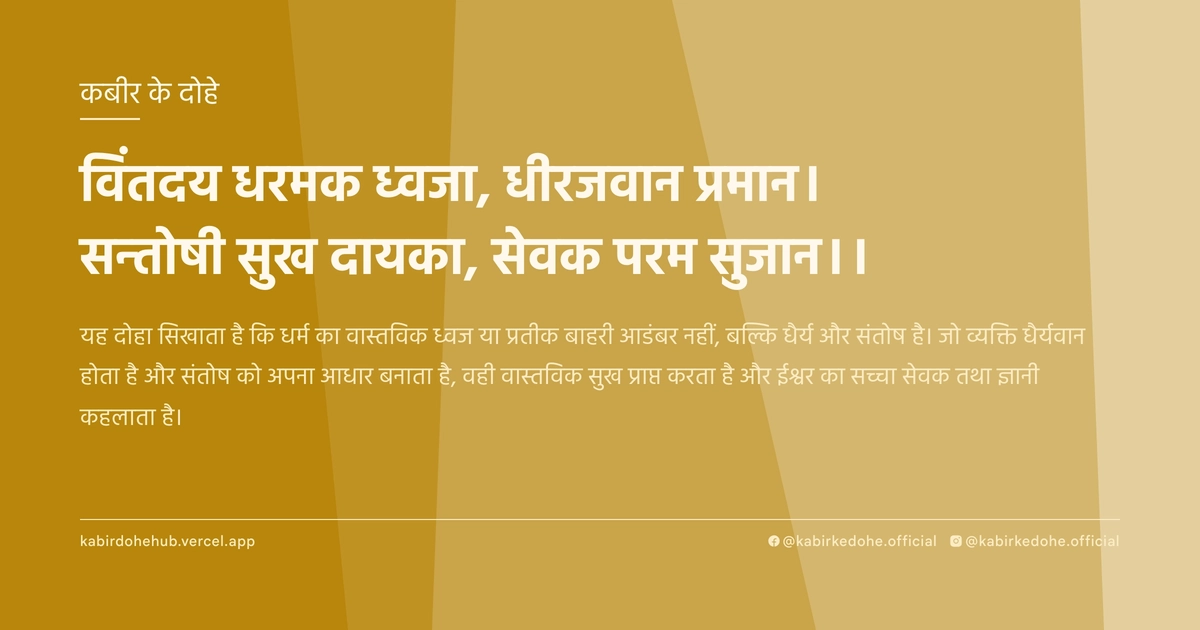
विंतदय धरमक ध्वजा, धीरजवान प्रमान।
सन्तोषी सुख दायका, सेवक परम सुजान।।
Vintday dharmak dhvaja, dheerajvan praman. Santoshi sukh dayaka, sevak param sujaan.
इस पृष्ठ पर इस कबीर दोहे का अर्थ (meaning), हिंदी व्याख्या और अंग्रेज़ी अनुवाद, दार्शनिक विश्लेषण और व्यावहारिक जीवन सीख दी गई है। यह दोहा संतोष (Contentment) विषय से जुड़ा है — Kabir doha meaning and explanation in Hindi and English.
अर्थ (Meaning):
यह दोहा सिखाता है कि धर्म का वास्तविक ध्वज या प्रतीक बाहरी आडंबर नहीं, बल्कि धैर्य और संतोष है। जो व्यक्ति धैर्यवान होता है और संतोष को अपना आधार बनाता है, वही वास्तविक सुख प्राप्त करता है और ईश्वर का सच्चा सेवक तथा ज्ञानी कहलाता है।
This couplet teaches that the true banner of righteousness is not found in external rituals, but in patience and contentment. One who possesses steadfast patience and embraces contentment as their foundation attains genuine bliss and is recognized as a truly wise servant of the Divine.
व्याख्या (Interpretation):
शाब्दिक अर्थ में, कबीर यहाँ धर्म के प्रतीकों (ध्वजा) की तुलना आंतरिक गुणों से कर रहे हैं। गहरा विश्लेषण यह है कि 'धर्म' यहाँ केवल मजहब नहीं, बल्कि 'धृति' (धैर्य) है। निरगुण भक्ति के अनुसार, जब साधक माया के प्रलोभनों को त्यागकर धैर्य धारण करता है, तब वह द्वैत से अद्वैत की ओर बढ़ता है। संतोष यहाँ निष्क्रियता नहीं, बल्कि पूर्णता का अहसास है। यह वह अवस्था है जहाँ आत्मा यह जान लेती है कि वह ब्रह्म का ही अंश है, जिससे बाहरी इच्छाओं का अंत होता है। इस प्रकार, धैर्य और संतोष ही वह सेतु हैं जो जीव को उसकी मूल प्रकृति से मिलाते हैं।
Literally, Kabir compares the outward symbols of religion (banners) with internal virtues. In a deeper metaphorical sense, 'Dharma' here refers not to organized religion, but to 'Dhriti' (fortitude). According to Nirgun Bhakti, when a seeker transcends the lures of Maya and embraces patience, they move from duality toward non-duality. Contentment here is not passive resignation, but the realization of wholeness. It is the state where the Atman recognizes itself as identical to Brahman, extinguishing external cravings. Thus, patience and contentment are the bridges that reconnect the individual soul to its primordial source.
दार्शनिक विश्लेषण (Philosophical Analysis):
कबीर का यह दोहा उस समय के सामाजिक परिवेश पर प्रहार है जहाँ धर्म को केवल बाहरी प्रतीकों, जैसे कि ध्वजाओं, मालाओं और तीर्थों से जोड़ा जाता था। कबीर ने स्पष्ट किया कि धर्म कोई वस्तु नहीं जिसे लहराया जाए, बल्कि एक आंतरिक स्थिति है। यह विचार अद्वैत वेदांत के करीब है, जहाँ बाहरी जगत को माया माना गया है और आंतरिक शांति को ही एकमात्र सत्य।
सूफी मत के 'सब्र' (धैर्य) और 'रज़ा' (ईश्वर की इच्छा में संतोष) का प्रभाव यहाँ स्पष्ट दिखता है। कबीर का तर्क है कि जब तक मनुष्य बाहरी दुनिया में सुख खोजता है, वह वास्तव में दुख का संचय कर रहा होता है। वास्तविक ज्ञान (सुजान) वह है जो यह समझ ले कि ईश्वर कहीं बाहर नहीं, बल्कि संतोषी हृदय के भीतर ही निवास करता है।
यहाँ 'सेवक' शब्द का प्रयोग अहंकार के विसर्जन के लिए किया गया है। जब व्यक्ति स्वयं को ब्रह्मांडीय चेतना का एक छोटा सा हिस्सा मानकर समर्पित हो जाता है, तब उसका 'मैं' समाप्त हो जाता है। यह अहंकार का विनाश ही मोक्ष का द्वार है।
कबीर कर्मकांडों का विरोध करते हुए यह संदेश देते हैं कि यदि आपके पास धैर्य नहीं है, तो आपकी सारी पूजा व्यर्थ है। धैर्य वह अग्नि है जो वासनाओं को जला देती है।
अंततः, यह विश्लेषण हमें बताता है कि आध्यात्मिक प्रगति का पैमाना यह नहीं है कि आपने कितने व्रत रखे, बल्कि यह है कि आप विपरीत परिस्थितियों में कितने शांत और संतुष्ट रहे। यही वास्तविक धर्म की विजय है।
Kabir's couplet strikes at the social fabric of his era, where religion was reduced to external symbols like banners, beads, and pilgrimages. He clarifies that Dharma is not an object to be hoisted, but an internal state of being. This aligns with Advaita Vedanta, which views the external world as Maya (illusion) and internal stillness as the only absolute truth.
The influence of the Sufi concepts of 'Sabr' (patience) and 'Raza' (contentment with the Divine will) is evident here. Kabir argues that as long as a human seeks happiness in the external world, they are merely accumulating suffering. True wisdom (Sujan) is the realization that the Divine does not reside in a distant heaven, but within a contented heart.
The term 'Sevak' (servant) is used here to signify the dissolution of the ego. When an individual surrenders their identity, viewing themselves as a mere instrument of the cosmic consciousness, the 'I' vanishes. This annihilation of the ego is the gateway to liberation.
Opposing ritualism, Kabir suggests that without patience, all prayers are futile. Patience is the spiritual fire that incinerates worldly cravings and attachments.
Ultimately, this analysis reveals that the metric of spiritual progress is not the number of rituals performed, but the degree of equanimity and contentment maintained during adversity. This is the true victory of Dharma.
मूल संदेश (Core Message):
- बाहरी दिखावा धर्म नहीं, आंतरिक धैर्य ही वास्तविक पूजा है।
- अतृप्ति ही समस्त दुखों की जड़ है; संतोष ही एकमात्र औषधि है।
- धैर्य केवल प्रतीक्षा करना नहीं, बल्कि प्रतीक्षा के दौरान सकारात्मक रहना है।
- अहंकार का त्याग ही ईश्वर की सच्ची सेवा और ज्ञान की प्राप्ति है।
- शांति बाहर की परिस्थितियों में नहीं, बल्कि भीतर के स्वीकार में है।
- External display is not Dharma; internal patience is the true worship.
- Insatiability is the root of all suffering; contentment is the only cure.
- Patience is not merely waiting, but remaining positive while waiting.
- Surrendering the ego is the only true service to the Divine and the path to wisdom.
- Peace resides not in external circumstances, but in internal acceptance.
व्यावहारिक उदाहरण (Practical Example):
वाराणसी के एक पुराने घाट पर रामदीन नाम का एक वृद्ध नाविक रहता था। उसका जीवन कठिन था; कभी नाव चलती, कभी नहीं। उसके आस-पास के अन्य नाविक हमेशा इस बात की शिकायत करते थे कि ग्राहक कम हैं या प्रशासन भ्रष्ट है। वे अक्सर क्रोधित रहते और अपनी किस्मत को कोसते थे।
रामदीन अलग था। वह अपनी छोटी सी नाव को साफ रखता और हर आने वाले यात्री का स्वागत एक शांत मुस्कान के साथ करता। वह कभी अधिक पैसे के लिए लालच नहीं करता था और जो मिलता, उसमें प्रसन्न रहता। लोग उसे 'मूर्ख' कहते थे क्योंकि वह अपनी गरीबी को स्वीकार कर चुका था।
एक बार गंगा में भीषण बाढ़ आई। कई नाविकों की नावें बह गईं और वे अपनी संपत्ति खोने के गम में विलाप करने लगे। रामदीन की नाव भी बह गई, लेकिन वह शांत रहा। उसने केवल इतना कहा, 'जो नदी का था, वह नदी में चला गया।'
उसकी इस शांति ने शहर के एक बड़े व्यापारी को हैरान कर दिया। व्यापारी ने पूछा, 'तुम्हारे पास अब कुछ नहीं बचा, फिर भी तुम मुस्कुरा रहे हो? क्या तुम्हें दुख नहीं है?'
रामदीन ने विनम्रता से उत्तर दिया, 'साहब, मेरी नाव तो लकड़ी का टुकड़ा थी, मेरा असली धन तो मेरा संतोष है, जिसे बाढ़ नहीं बहा सकती।'
व्यापारी, जो करोड़ों की संपत्ति के बावजूद अनिद्रा और तनाव से ग्रस्त था, रामदीन के चरणों में झुक गया। उसे समझ आया कि वह दुनिया का सबसे अमीर व्यक्ति होकर भी सबसे गरीब था, क्योंकि उसके पास संतोष नहीं था।
रामदीन की इस 'कबीर ट्विस्ट' ने व्यापारी के जीवन को बदल दिया। उसने अपनी संपत्ति का एक बड़ा हिस्सा गरीबों के लिए खोल दिया और शांति की तलाश में ध्यान लगाना शुरू किया।
रामदीन ने साबित किया कि असली 'धर्म ध्वज' उसकी नाव नहीं, बल्कि उसका वह धैर्य था जिसने उसे तूफानों में भी स्थिर रखा।
On an ancient ghat in Varanasi lived an elderly boatman named Ramdeen. His life was precarious; some days the boat sailed, other days it stayed idle. The other boatmen around him constantly complained about the lack of customers or the corruption of the administration. They lived in a state of perpetual anger, cursing their fate.
Ramdeen was different. He kept his small boat meticulously clean and welcomed every passenger with a serene smile. He never succumbed to greed for more money and remained happy with whatever he earned. Others called him a 'fool' because he seemed to have accepted his poverty too easily.
One year, a devastating flood hit the Ganges. Many boatmen lost their vessels and wailed in agony over their lost assets. Ramdeen's boat was also swept away, yet he remained calm. He simply said, 'That which belonged to the river has returned to the river.'
His composure stunned a wealthy merchant of the city. The merchant asked, 'You have nothing left, yet you smile. Do you feel no grief?'
Ramdeen replied humbly, 'Sir, my boat was merely a piece of wood. My true wealth is my contentment, which no flood can wash away.'
The merchant, despite possessing millions, suffered from chronic insomnia and stress. He fell at Ramdeen's feet, realizing that while he was the richest man in the city, he was the poorest in spirit because he lacked contentment.
This 'Kabir Twist' transformed the merchant's life. He opened a large portion of his wealth for the poor and began practicing meditation in search of the peace he saw in the boatman.
Ramdeen proved that the true 'banner of Dharma' was not his physical boat, but the patience that kept him steady amidst the fiercest storms.
अभ्यास मार्गदर्शन (Practice Guidance):
- प्रतिदिन 20 मिनट मौन अभ्यास करें, जहाँ आप केवल अपनी सांसों को देखें और आने वाले विचारों को बिना किसी निर्णय के केवल साक्षी भाव से देखें।
- एक 'संतोष जर्नल' बनाएँ: हर रात उन तीन चीजों को लिखें जिनके लिए आप आभारी हैं, चाहे वे कितनी ही छोटी क्यों न हों।
- व्यवहार परिवर्तन: जब भी आप किसी परिस्थिति में क्रोध या अधीरता महसूस करें, तो 10 तक गिनती गिनें और स्वयं से पूछें, 'क्या यह प्रतिक्रिया मेरी शांति से अधिक मूल्यवान है?'
- निदान चेकलिस्ट: क्या आप दूसरों की सफलता से जलते हैं? क्या आप भविष्य की चिंता में वर्तमान को खो रहे हैं? यदि हाँ, तो आप संतोष के मार्ग से भटक रहे हैं।
- Practice 20 minutes of daily silence, observing your breath and witnessing arising thoughts without judgment or attachment.
- Maintain a 'Contentment Journal': Every night, list three things you are grateful for, regardless of how minuscule they may seem.
- Behavioral Shift: Whenever you feel anger or impatience, count to ten and ask yourself, 'Is this reaction more valuable than my inner peace?'
- Diagnostic Checklist: Do you feel envy at others' success? Are you losing the present moment to anxiety about the future? If yes, you are drifting away from the path of contentment.
चिंतन प्रश्न (Reflection Questions):
- क्या मेरी धार्मिक पहचान मेरे व्यवहार से अधिक मेरे बाहरी प्रतीकों (कपड़ों, तिलक, भाषा) पर टिकी है?
- मैं अपनी उपलब्धियों के बावजूद किस चीज की कमी महसूस करता हूँ, और क्या वह वास्तव में आवश्यक है?
- जब चीजें मेरी योजना के अनुसार नहीं होतीं, तो मेरा 'धैर्य' कितनी जल्दी क्रोध में बदल जाता है?
- क्या मेरा 'डिजिटल अहंकार' (सोशल मीडिया पर दिखना) मुझे वास्तविक संतोष से दूर ले जा रहा है?
- यदि आज मुझसे मेरी सारी सामाजिक प्रतिष्ठा छीन ली जाए, तो क्या मेरे भीतर कुछ बचेगा जिसे मैं 'सुख' कह सकूँ?
- Is my religious identity based more on external symbols (attire, marks, language) than on my actual behavior?
- Despite my achievements, what void do I still feel, and is that void truly necessary to fill?
- When things do not go according to my plan, how quickly does my 'patience' dissolve into anger?
- Is my 'digital ego' (the curated image on social media) distancing me from authentic contentment?
- If all my social status were stripped away today, would there be anything left within me that I could call 'happiness'?