
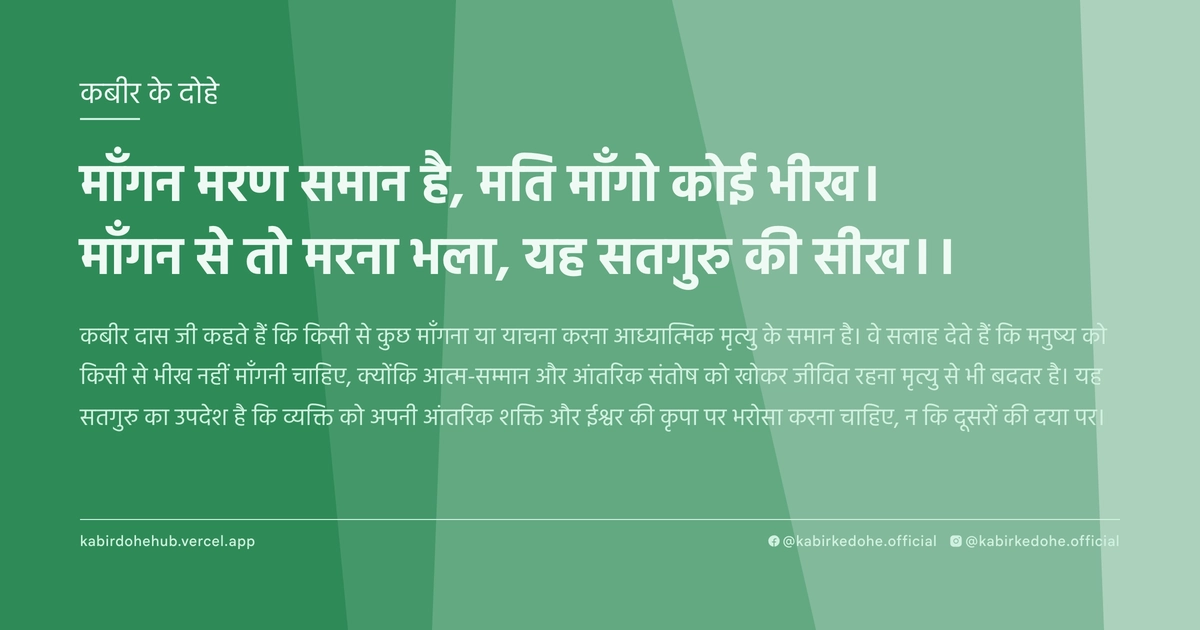
माँगन मरण समान है, मति माँगो कोई भीख।
माँगन से तो मरना भला, यह सतगुरु की सीख।।
Maangan maran saman hai, mati maango koi bheekh. Maangan se to marna bhala, yeh satguru ki seekh.
इस पृष्ठ पर इस कबीर दोहे का अर्थ (meaning), हिंदी व्याख्या और अंग्रेज़ी अनुवाद, दार्शनिक विश्लेषण और व्यावहारिक जीवन सीख दी गई है। यह दोहा संतोष (Contentment) विषय से जुड़ा है — Kabir doha meaning and explanation in Hindi and English.
अर्थ (Meaning):
कबीर दास जी कहते हैं कि किसी से कुछ माँगना या याचना करना आध्यात्मिक मृत्यु के समान है। वे सलाह देते हैं कि मनुष्य को किसी से भीख नहीं माँगनी चाहिए, क्योंकि आत्म-सम्मान और आंतरिक संतोष को खोकर जीवित रहना मृत्यु से भी बदतर है। यह सतगुरु का उपदेश है कि व्यक्ति को अपनी आंतरिक शक्ति और ईश्वर की कृपा पर भरोसा करना चाहिए, न कि दूसरों की दया पर।
Kabir asserts that the act of begging or pleading for sustenance and favors is equivalent to spiritual death. He advises against seeking alms or handouts, suggesting that physical death is preferable to the erosion of one's soul and dignity through dependency. This teaching from the Satguru emphasizes that true liberation comes from relying on inner strength and Divine Grace rather than the fickle mercy of other humans.
व्याख्या (Interpretation):
शाब्दिक रूप से यह दोहा भौतिक भिक्षा के विरुद्ध है, परंतु इसका गहरा आध्यात्मिक अर्थ 'मानसिक याचना' से जुड़ा है। यहाँ 'माँगन' का अर्थ केवल धन माँगना नहीं, बल्कि दूसरों से मान्यता, प्रेम, या आध्यात्मिक मोक्ष की भीख माँगना है। यह निर्गुण भक्ति के उस सिद्धांत को दर्शाता है जहाँ आत्मा स्वयं को पूर्ण मानती है। जब हम माँगते हैं, तो हम अपनी 'अपूर्णता' को स्वीकार करते हैं, जो माया के जाल को और मजबूत करता है। अद्वैत वेदांत के अनुसार, यदि आत्मा ही ब्रह्म है, तो वह किसी और से क्या माँगेगा? यह विरोधाभास है कि हम उस ईश्वर से माँगते हैं जो वास्तव में हमारे भीतर ही स्थित है। अतः, माँगना अहंकार की एक सूक्ष्म अभिव्यक्ति है जो यह मानती है कि कुछ 'बाहर' है जिसे प्राप्त करना है।
Literally, this couplet warns against physical begging, but its profound spiritual essence targets 'mental solicitation.' Here, 'begging' encompasses not just material wealth, but the craving for validation, love, or spiritual salvation from external sources. This aligns with Nirgun Bhakti, where the soul recognizes its own inherent wholeness. When we beg, we affirm our 'incompleteness,' thereby strengthening the shackles of Maya (illusion). According to Advaita Vedanta, if the Atman is identical to Brahman, the very notion of lacking something is a fallacy. The paradox lies in our tendency to ask the Divine for things that the Divine has already provided within us. Thus, begging is a subtle manifestation of the ego, which erroneously believes that fulfillment exists 'outside' the self.
दार्शनिक विश्लेषण (Philosophical Analysis):
कबीर का यह विचार उनके युग के सामाजिक और धार्मिक पाखंड पर एक कड़ा प्रहार है। उस समय धर्म के नाम पर याचना और निर्भरता को पवित्र माना जाता था, लेकिन कबीर ने इसे आत्म-विस्मृति कहा। वे ritualism (कर्मकांड) को नकारते हुए यह समझाते हैं कि ईश्वर किसी मंदिर या मस्जिद में नहीं, बल्कि आत्म-साक्षात्कार में है।
दार्शनिक स्तर पर, यह सूफी मत के 'फना' (अहंकार का विनाश) और अद्वैत के 'अहं ब्रह्मास्मि' से जुड़ता है। जब तक मनुष्य 'याचक' बना रहता है, वह द्वैत (duality) में जीता है—एक माँगने वाला और एक देने वाला। इस द्वैत का अंत ही वास्तविक मुक्ति है।
कबीर यहाँ मनोवैज्ञानिक रूपांतरण की बात कर रहे हैं। माँगने की प्रवृत्ति वास्तव में डर और असुरक्षा से उपजती है। जब व्यक्ति यह अनुभव करता है कि वह स्वयं पूर्ण है, तो उसकी बाहरी निर्भरता समाप्त हो जाती है। यह 'अपरिग्रह' और 'संतोष' की पराकाष्ठा है।
अक्सर लोग इसे केवल गरीबी या भौतिक अभाव से जोड़कर देखते हैं, लेकिन कबीर का प्रहार उस 'मानसिक भिक्षावृत्ति' पर है जहाँ हम अपनी खुशी की चाबी दूसरों के हाथ में सौंप देते हैं। यह आत्म-निर्भरता का आह्वान है, जो व्यक्ति को मानसिक गुलामी से मुक्त करता है।
अंततः, यह दोहा हमें सिखाता है कि भक्ति का अर्थ याचना नहीं, बल्कि समर्पण है। याचना में स्वार्थ होता है, जबकि समर्पण में स्वयं को मिटाकर सत्य को पाना होता है। यही वह बिंदु है जहाँ भक्त और भगवान एक हो जाते हैं और माँगने वाला मिट जाता है।
Kabir's perspective is a fierce critique of the social and religious hypocrisies of his era. During his time, dependency and begging in the name of religion were often romanticized as piety, but Kabir identified this as self-oblivion. By rejecting ritualism, he posits that the Divine is found not in temples or mosques, but through the realization of the self.
Philosophically, this connects to the Sufi concept of 'Fana' (annihilation of the ego) and the Advaitic truth of 'Aham Brahmasmi' (I am Brahman). As long as a person remains a 'supplicant,' they exist in duality—the one who asks and the one who gives. The dissolution of this duality is the only path to true liberation.
Kabir is addressing a psychological transformation. The impulse to beg stems from fear and a deep-seated sense of insecurity. When an individual experiences their own inherent completeness, external dependency vanishes. This represents the pinnacle of 'Aparigraha' (non-possessiveness) and 'Santosha' (contentment).
Common literalist interpretations mistake this for a commentary on poverty. However, Kabir is attacking 'mental mendicancy'—the habit of handing over the key to one's happiness to others. It is a call for spiritual autonomy, liberating the individual from psychological servitude.
Ultimately, this Doha teaches that devotion is not about petitioning, but about surrender. Petitioning is rooted in selfishness, whereas surrender is the act of erasing the self to find the Truth. This is the precise point where the devotee and the Divine merge, and the beggar ceases to exist.
मूल संदेश (Core Message):
- बाहरी निर्भरता आध्यात्मिक पतन का मार्ग है।
- आत्म-सम्मान ही वास्तविक ईश्वर-प्राप्ति का आधार है।
- माँगना अहंकार की सूक्ष्मतम और सबसे खतरनाक अभिव्यक्ति है।
- पूर्णता बाहर नहीं, बल्कि स्वयं के भीतर खोजी जाती है।
- समर्पण में शक्ति है, जबकि याचना में कमजोरी है।
- External dependency is the path to spiritual decline.
- Self-respect is the foundation of true Divine realization.
- Begging is the subtlest and most dangerous expression of the ego.
- Wholeness is discovered within, not sought from without.
- There is power in surrender, but only weakness in petition.
व्यावहारिक उदाहरण (Practical Example):
वाराणसी के घाटों पर रहने वाला एक वृद्ध बुनकर था, जिसका नाम माधव था। माधव अपनी कला में निपुण था, लेकिन वह हमेशा इस बात से दुखी रहता था कि उसके पास पर्याप्त धन नहीं है। वह अक्सर शहर के अमीर व्यापारियों के पास जाता और उनसे अपनी साड़ियों के लिए ऊँचे दामों की याचना करता, कभी-कभी तो उनके सामने गिड़गिड़ाता कि उसकी आर्थिक स्थिति खराब है।
माधव की यह आदत उसे मानसिक रूप से कमजोर बना चुकी थी। वह अपनी कला से ज्यादा अपनी लाचारी पर ध्यान देने लगा था। वह मानता था कि उसकी खुशियाँ उन व्यापारियों की दया पर निर्भर हैं।
एक दिन उसकी मुलाकात एक घुमक्कड़ संत से हुई, जिसने माधव को कबीर का यह दोहा सुनाया। संत ने कहा, 'माधव, जब तुम माँगते हो, तो तुम अपनी कला का अपमान करते हो और अपनी आत्मा को छोटा बनाते हो। तुम यह मान रहे हो कि तुम अधूरे हो।'
माधव को यह बात चुभी, लेकिन उसने गहराई से विचार किया। उसे एहसास हुआ कि वह केवल पैसों की नहीं, बल्कि सम्मान और स्वीकृति की भीख माँग रहा था। उसने तय किया कि वह अब कभी किसी के सामने हाथ नहीं फैलाएगा।
उसने अपनी साड़ियों की कीमत उचित रखी और अपनी गुणवत्ता इतनी बढ़ा दी कि लोग खुद उसके पास आने लगे। उसने अपनी जरूरतों को सीमित किया और संतोष को अपनाया।
शुरुआत में उसे कठिनाई हुई, लेकिन धीरे-धीरे उसका आत्मविश्वास बढ़ा। अब वह व्यापारियों के सामने झुकता नहीं था, बल्कि एक स्वाभिमानी कलाकार के रूप में बात करता था।
उसकी मानसिक स्थिति बदल गई। जो डर उसे सताता था, वह अब शांति में बदल गया था। उसने पाया कि जब उसने माँगना छोड़ा, तो उसे वह सम्मान मिला जो वह सालों से माँग रहा था।
माधव ने समझा कि 'मृत्यु' वास्तव में वह लाचारी थी जिसमें वह जी रहा था, और 'जीवन' वह स्वाभिमान था जिसे उसने पुनः प्राप्त किया। अब वह एक पूर्ण मनुष्य था, जो अपनी मेहनत और ईश्वर की कृपा पर विश्वास करता था।
In the ghats of Varanasi lived an elderly weaver named Madhav. Madhav was a master of his craft, yet he lived in constant distress over his lack of wealth. He would frequently visit the city's wealthy merchants, pleading for higher prices for his sarees, sometimes even groveling about his dire financial state.
This habit had rendered Madhav psychologically fragile. He began to focus more on his helplessness than on his artistry. He believed his happiness was entirely dependent on the mercy of these merchants.
One day, he encountered a wandering saint who recited this specific Doha of Kabir. The saint remarked, 'Madhav, when you beg, you insult your art and diminish your soul. You are operating under the delusion that you are incomplete.'
This struck a chord with Madhav. Upon deep reflection, he realized he wasn't just begging for money, but for validation and acceptance. He vowed never to extend his hand in supplication again.
He set fair prices for his work and elevated the quality of his sarees to such a degree that customers began seeking him out of their own volition.
Initially, he faced hardships, but gradually his self-confidence grew. He no longer bowed before the merchants; instead, he spoke as a dignified artist.
His mental state shifted. The fear that once haunted him was replaced by a profound peace. He discovered that once he stopped begging, he received the very respect he had spent years pleading for.
Madhav understood that 'death' was actually the state of helplessness he had inhabited, and 'life' was the self-respect he had reclaimed. He became a complete man, trusting in his own labor and Divine Grace.
अभ्यास मार्गदर्शन (Practice Guidance):
- दैनिक आत्म-निरीक्षण: प्रतिदिन 15 मिनट मौन बैठें और विचार करें कि दिन भर में आपने कितनी बार दूसरों से मानसिक या भौतिक सहायता की उम्मीद की।
- जर्नलिंग प्रॉम्प्ट: 'यदि मुझे किसी से कुछ नहीं माँगना पड़े, तो मेरा व्यक्तित्व कैसा होगा?' इस प्रश्न पर विस्तार से लिखें।
- व्यवहारिक परिवर्तन: जब भी आप किसी से मदद माँगने का विचार करें, पहले यह सोचें कि क्या आप इस समस्या का समाधान स्वयं के भीतर या अपने प्रयासों से कर सकते हैं।
- डायग्नोस्टिक चेकलिस्ट: क्या आप दूसरों की प्रशंसा के बिना अधूरा महसूस करते हैं? क्या आप अपनी खुशी के लिए दूसरों के व्यवहार पर निर्भर हैं? यदि हाँ, तो आप 'मानसिक भिक्षा' की स्थिति में हैं।
- Daily Self-Inquiry: Sit in silence for 15 minutes daily and observe how many times you sought mental or material validation/help from others throughout the day.
- Journaling Prompt: Write extensively on the question: 'Who would I be if I ceased all forms of begging—emotional, social, or material?'
- Behavioral Shift: Whenever the impulse to ask for help arises, first pause and investigate if the solution can be found within your own strength or through independent effort.
- Diagnostic Checklist: Do you feel incomplete without external praise? Is your happiness contingent upon the behavior of others? If yes, you are currently in a state of 'mental mendicancy'.
चिंतन प्रश्न (Reflection Questions):
- आपकी डिजिटल पहचान (सोशल मीडिया) पर 'लाइक' और 'कमेंट्स' की चाहत किस प्रकार की आधुनिक भिक्षावृत्ति है?
- क्या आप अपने रिश्तों में प्रेम माँगते हैं, या प्रेम को स्वयं के भीतर विकसित कर उसे साझा करते हैं?
- वह कौन सा डर है जो आपको स्वावलंबी होने से रोकता है और आपको दूसरों की दया पर निर्भर करता है?
- यदि दुनिया से आपकी सारी सामाजिक मान्यताएँ छीन ली जाएँ, तो आपके भीतर क्या बचेगा?
- क्या आपकी धार्मिक प्रार्थनाएँ वास्तव में ईश्वर के प्रति समर्पण हैं, या केवल अपनी इच्छाओं की पूर्ति के लिए की गई याचनाएँ?
- In what ways is the craving for 'likes' and 'comments' on social media a form of modern mendicancy?
- Do you beg for love in your relationships, or do you cultivate love within yourself and simply share it?
- What is the specific fear that prevents you from being self-reliant and keeps you dependent on the mercy of others?
- If all your social validations were stripped away, what would remain of your identity?
- Are your religious prayers truly an act of surrender to the Divine, or are they merely petitions to satisfy your desires?