
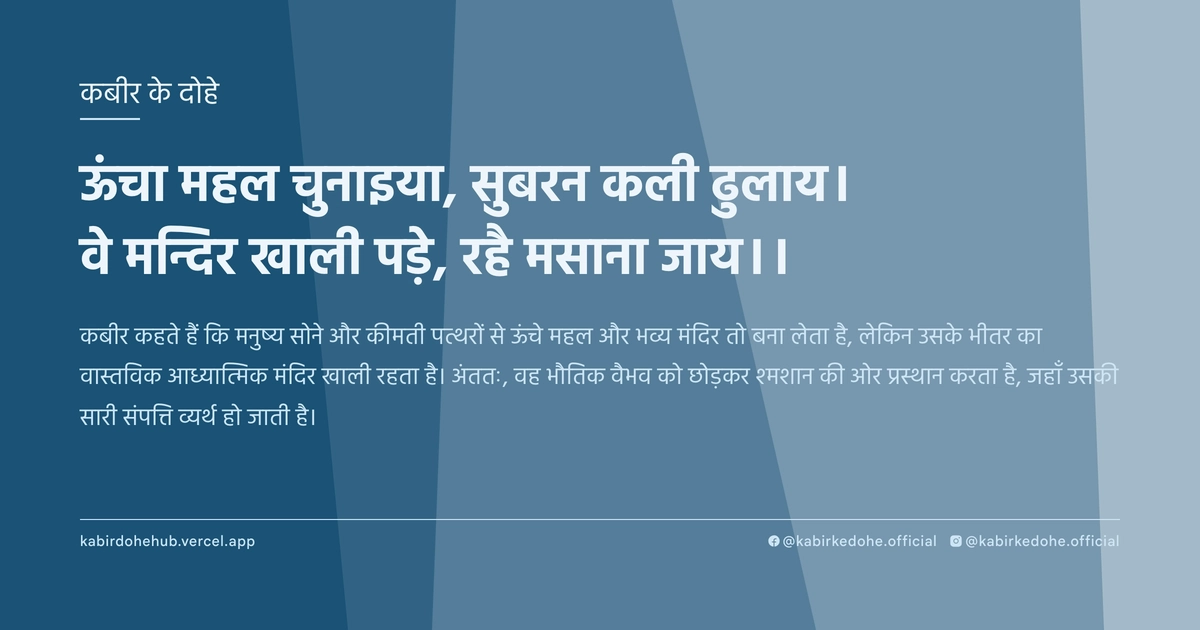
ऊंचा महल चुनाइया, सुबरन कली ढुलाय।
वे मन्दिर खाली पड़े, रहै मसाना जाय।।
Uncha mahal chunaiya, subaran kali dhulay. Ve mandir khali pade, rahaye masana jaaye.
इस पृष्ठ पर इस कबीर दोहे का अर्थ (meaning), हिंदी व्याख्या और अंग्रेज़ी अनुवाद, दार्शनिक विश्लेषण और व्यावहारिक जीवन सीख दी गई है। यह दोहा अनित्य (Impermanence) विषय से जुड़ा है — Kabir doha meaning and explanation in Hindi and English.
अर्थ (Meaning):
कबीर कहते हैं कि मनुष्य सोने और कीमती पत्थरों से ऊंचे महल और भव्य मंदिर तो बना लेता है, लेकिन उसके भीतर का वास्तविक आध्यात्मिक मंदिर खाली रहता है। अंततः, वह भौतिक वैभव को छोड़कर श्मशान की ओर प्रस्थान करता है, जहाँ उसकी सारी संपत्ति व्यर्थ हो जाती है।
Kabir observes that humans expend immense effort building towering palaces and gilding temples with gold, yet the internal temple of the soul remains desolate. Ultimately, all this material grandeur is abandoned as the individual journeys toward the cremation ground, where worldly wealth holds no value.
व्याख्या (Interpretation):
यह दोहा भौतिकता और आध्यात्मिकता के बीच के गहरे विरोधाभास को दर्शाता है। 'ऊंचा महल' और 'सुबरन कली' बाहरी दिखावे और अहंकार का प्रतीक हैं, जबकि 'खाली मंदिर' आत्मा की उपेक्षा को दर्शाता है। कबीर यहाँ निर्गुण भक्ति का आह्वान करते हैं, जहाँ ईश्वर किसी पत्थर की मूर्ति या सोने के महल में नहीं, बल्कि स्वयं के भीतर निवास करता है। माया का भ्रम मनुष्य को बाहरी सजावट में उलझाए रखता है, जिससे वह आत्म-साक्षात्कार से दूर हो जाता है। यह अद्वैत वेदांत के उस सत्य की ओर संकेत है कि जब तक 'मैं' और 'मेरा' का भाव है, तब तक वास्तविक मंदिर (चेतना) रिक्त रहेगा। अंत में, श्मशान (मसाना) यह याद दिलाता है कि शरीर और संपत्ति नश्वर हैं, केवल शुद्ध चेतना ही शाश्वत है।
This couplet illuminates the profound paradox between materialism and spirituality. The 'towering palace' and 'golden carvings' symbolize external ostentation and the inflation of the ego, while the 'empty temple' signifies the neglect of the inner soul. Kabir invokes Nirgun Bhakti, asserting that the Divine resides not in stone idols or gilded halls, but within the self. The illusion of Maya entangles the human mind in superficial adornments, distancing the seeker from self-realization. This aligns with Advaita Vedanta, suggesting that as long as the sense of 'I' and 'mine' persists, the true temple of consciousness remains void. Finally, the reference to the cremation ground (masana) serves as a memento mori, reminding us that the body and its possessions are transient, and only the pure consciousness is eternal.
दार्शनिक विश्लेषण (Philosophical Analysis):
कबीर का यह दोहा उनके युग के सामाजिक और धार्मिक पाखंड पर एक तीखा प्रहार है। उन्होंने देखा कि लोग धर्म के नाम पर भव्य मंदिरों का निर्माण कर रहे थे, लेकिन उनके हृदय में करुणा, सत्य और प्रेम का अभाव था। यह विश्लेषण हमें बताता है कि कबीर केवल भौतिकता के विरोधी नहीं थे, बल्कि वे उस 'अहंकार' के विरोधी थे जो भौतिकता से जन्म लेता है।
दार्शनिक स्तर पर, यह सूफी मत के 'फना' (अहंकार का विनाश) और वेदांत के 'माया' सिद्धांत से मेल खाता है। जब मनुष्य बाहरी दुनिया को सजाने में समय बिताता है, तो वह वास्तव में अपनी आंतरिक शून्यता को ढकने का प्रयास कर रहा होता है। कबीर तर्क देते हैं कि वास्तविक पूजा कर्मकांडों में नहीं, बल्कि अंतर्मन की शुद्धि में है।
जाति और वर्ग के भेदभाव को नकारते हुए, कबीर यह स्पष्ट करते हैं कि श्मशान में राजा और रंक एक समान हो जाते हैं। यह मृत्यु का लोकतंत्र है जो सभी मानवीय श्रेणियों को मिटा देता है। यहाँ 'मसाना' केवल मृत्यु का स्थान नहीं, बल्कि उस सत्य का प्रतीक है जहाँ सारे मुखौटे उतर जाते हैं।
मनोवैज्ञानिक रूप से, यह दोहा 'विस्थापन' (displacement) की प्रक्रिया को दर्शाता है। मनुष्य अपनी आंतरिक असुरक्षाओं को बाहरी उपलब्धियों के माध्यम से भरने की कोशिश करता है। कबीर इस चक्र को तोड़ने का आह्वान करते हैं, ताकि व्यक्ति बाहरी शोर से हटकर आंतरिक मौन की ओर बढ़े।
अंततः, यह संदेश देता है कि आध्यात्मिक प्रगति का मार्ग 'संग्रह' (accumulation) से नहीं, बल्कि 'त्याग' (renunciation) और 'आत्म-बोध' से होकर गुजरता है। जो मंदिर भीतर खाली है, उसे बाहरी सोने से नहीं भरा जा सकता।
Kabir's couplet is a searing critique of the social and religious hypocrisy of his era. He observed a society obsessed with constructing opulent temples in the name of faith, while the hearts of the devotees remained devoid of compassion, truth, and love. This analysis reveals that Kabir was not merely opposed to materiality, but to the 'ego' that materiality nurtures.
Philosophically, this resonates with the Sufi concept of 'Fana' (annihilation of the ego) and the Vedantic principle of 'Maya'. When a human spends their life decorating the external world, they are essentially attempting to mask an internal void. Kabir argues that true worship lies not in ritualistic performance, but in the purification of the inner self.
By rejecting caste and class distinctions, Kabir emphasizes that in the cremation ground, the king and the pauper are equal. This is the 'democracy of death' that erases all human hierarchies. Here, the 'masana' is not just a place of burning corpses, but a symbol of the ultimate truth where all masks are stripped away.
Psychologically, the verse illustrates the process of 'displacement.' Humans attempt to fill their internal insecurities with external achievements. Kabir calls for a rupture in this cycle, urging the individual to move away from external noise toward internal silence.
Ultimately, the message is that spiritual evolution occurs not through 'accumulation,' but through 'renunciation' and 'self-awareness.' A temple that is empty within cannot be filled with external gold.
मूल संदेश (Core Message):
- बाहरी चमक अक्सर आंतरिक अंधकार को छिपाने का एक मुखौटा होती है।
- सच्ची समृद्धि आत्मा की शांति में है, न कि सोने की दीवारों में।
- अहंकार का महल अंततः श्मशान की राख में मिल जाता है।
- ईश्वर को पत्थरों में नहीं, बल्कि अपने भीतर के मौन में खोजें।
- त्याग ही वह एकमात्र मार्ग है जो रिक्त मंदिर को पूर्ण करता है।
- External glitter is often a mask hiding internal darkness.
- True prosperity lies in the peace of the soul, not in golden walls.
- The palace of ego eventually dissolves into the ashes of the cremation ground.
- Seek the Divine not in stones, but in the silence within you.
- Renunciation is the only path that fills the empty inner temple.
व्यावहारिक उदाहरण (Practical Example):
वाराणसी के घाटों पर रहने वाले एक वृद्ध बुनकर, माधव की कहानी है। माधव ने अपना पूरा जीवन रेशमी साड़ियों के सबसे महंगे और भव्य डिजाइन बनाने में बिताया। उसका सपना था कि वह शहर का सबसे समृद्ध बुनकर बने और अपने लिए एक ऐसा घर बनाए जिसे देखकर लोग दंग रह जाएं। उसने अपनी सारी जमापूंजी एक आलीशान हवेली बनाने में लगा दी, जिसमें सोने की नक्काशी और महंगे पत्थर जड़े थे।
जैसे-जैसे उसकी हवेली ऊंची होती गई, माधव का अहंकार भी बढ़ता गया। वह अब अपने पुराने साथियों और गरीब बुनकरों से बात नहीं करता था। वह अपनी संपत्ति को ही अपनी पहचान मानने लगा था। उसके घर के बाहर भव्य द्वार थे, लेकिन उसके भीतर शांति गायब थी। वह रात भर अनिद्रा और चिंता में डूबा रहता था कि कहीं उसकी संपत्ति कम न हो जाए।
एक दिन, माधव ने देखा कि उसके पड़ोस में एक साधारण सा साधु रहता था, जिसके पास केवल एक फटा हुआ कंबल और एक कमंडल था। वह साधु हमेशा शांत और आनंदित रहता था। माधव ने उससे पूछा, 'मेरे पास सब कुछ है, फिर भी मैं बेचैन हूँ। तुम्हारे पास कुछ नहीं है, फिर भी तुम इतने खुश कैसे हो?'
साधु ने मुस्कुराते हुए माधव की आलीशान हवेली की ओर इशारा किया और कहा, 'माधव, तुमने बाहर का महल तो बहुत ऊंचा बना लिया, लेकिन तुम्हारे भीतर का मंदिर खाली पड़ा है। तुमने पत्थरों को तो सजाया, लेकिन अपनी आत्मा को धूल में छोड़ दिया। जिस दिन तुम इस बाहरी चमक को छोड़ोगे, तुम्हें वह असली खजाना मिलेगा जो कभी खत्म नहीं होता।'
माधव को यह बात तुरंत समझ नहीं आई। लेकिन कुछ महीनों बाद, उसके सबसे करीबी मित्र की मृत्यु हुई। जब वह श्मशान गया, तो उसने देखा कि जिस व्यक्ति ने जीवन भर मेहनत की थी, आज उसकी राख और एक गरीब की राख में कोई अंतर नहीं था। वहाँ न कोई महल था, न कोई सोना।
उस क्षण माधव को कबीर का वह दोहा याद आया जो उसने बचपन में सुना था। उसे एहसास हुआ कि उसने अपना पूरा जीवन एक भ्रम को सजाने में बिता दिया। उसने महसूस किया कि उसकी हवेली वास्तव में एक सुंदर जेल थी जिसने उसे उसकी अपनी आत्मा से दूर रखा था।
माधव ने अपनी जीवनशैली बदली। उसने अपनी हवेली के एक बड़े हिस्से को उन गरीब बुनकरों के बच्चों के लिए एक मुफ्त पाठशाला बना दिया। उसने अपनी संपत्ति का उपयोग दूसरों की सेवा के लिए करना शुरू किया।
जैसे-जैसे उसने बाहरी मोह को छोड़ा, उसके भीतर की शून्यता भरने लगी। अब वह रात को चैन से सो पाता था। उसने पाया कि असली सुख सोने की नक्काशी में नहीं, बल्कि निस्वार्थ सेवा और आंतरिक शांति में है। माधव अब एक समृद्ध व्यक्ति नहीं, बल्कि एक जागृत आत्मा बन गया था।
Consider the story of Madhav, an elderly weaver living on the ghats of Varanasi. Madhav spent his entire life creating the most expensive and opulent designs of silk sarees. His dream was to become the wealthiest weaver in the city and build a house that would leave everyone in awe. He invested all his savings into constructing a lavish mansion, adorned with gold carvings and precious stones.
As his mansion grew taller, so did Madhav's ego. He stopped speaking to his old companions and the poorer weavers. He began to equate his identity with his possessions. While his home had grand gates, it lacked internal peace. He spent his nights in insomnia and anxiety, fearing the loss of his wealth.
One day, Madhav noticed a simple monk living nearby, possessing nothing but a tattered blanket and a water pot. Yet, the monk was always serene and joyful. Madhav asked him, 'I have everything, yet I am restless. You have nothing, yet how are you so happy?'
The monk smiled, pointed toward the lavish mansion, and said, 'Madhav, you have built a very high palace outside, but the temple within you remains empty. You decorated the stones, but left your soul in the dust. The day you let go of this external glitter, you will find the true treasure that never diminishes.'
Madhav did not grasp this immediately. However, a few months later, his closest friend passed away. When he went to the cremation ground, he saw that there was no difference between the ashes of a man who had worked hard all his life and those of a pauper. There were no palaces there, no gold.
In that moment, Madhav recalled a couplet by Kabir he had heard in childhood. He realized he had spent his entire life decorating an illusion. He felt that his mansion was actually a beautiful prison that had kept him separated from his own soul.
Madhav changed his way of life. He converted a large portion of his mansion into a free school for the children of poor weavers. He began using his wealth for the service of others.
As he let go of external attachments, the void within him began to fill. He could finally sleep peacefully at night. He discovered that true happiness lay not in golden carvings, but in selfless service and inner stillness. Madhav was no longer just a wealthy man; he had become an awakened soul.
अभ्यास मार्गदर्शन (Practice Guidance):
- दैनिक आत्म-अवलोकन: प्रतिदिन 15 मिनट मौन बैठें और विचार करें कि आप अपनी पहचान बाहरी उपलब्धियों (पद, संपत्ति, प्रशंसा) से कितनी जोड़ रहे हैं।
- आंतरिक मंदिर का निर्माण: हर दिन एक ऐसा कार्य करें जो पूरी तरह निस्वार्थ हो और जिसका कोई बाहरी दिखावा न हो। इसे अपने 'आंतरिक मंदिर' की एक ईंट मानें।
- मृत्यु-चिंतन (Memento Mori): सप्ताह में एक बार श्मशान या किसी ऐसी जगह जाएँ जहाँ जीवन की नश्वरता का बोध हो, ताकि अहंकार का विसर्जन हो सके।
- डायग्नोस्टिक चेकलिस्ट: यदि आप किसी की प्रशंसा न मिलने पर क्रोधित होते हैं या अपनी संपत्ति के खोने के डर से चिंतित रहते हैं, तो समझें कि आपका 'बाहरी महल' अभी भी आपकी चेतना पर हावी है।
- Daily Self-Observation: Spend 15 minutes in silence daily, observing how much of your identity is tied to external achievements (status, wealth, praise).
- Building the Inner Temple: Perform one completely selfless act every day that has no external visibility. Treat this as laying a brick in your 'inner temple'.
- Contemplation of Mortality: Once a week, visit a place that reminds you of the transience of life (like a cemetery or a hospital) to dissolve the ego.
- Diagnostic Checklist: If you feel anger when not praised or anxiety over the potential loss of possessions, recognize that your 'external palace' is still dominating your consciousness.
चिंतन प्रश्न (Reflection Questions):
- यदि आज आपकी सारी भौतिक उपलब्धियाँ छीन ली जाएँ, तो आपके पास 'स्वयं' के रूप में क्या बचेगा?
- आप अपनी छवि को दूसरों की नज़रों में बेहतर बनाने के लिए कितनी ऊर्जा व्यर्थ करते हैं?
- क्या आपका 'डिजिटल व्यक्तित्व' (सोशल मीडिया) आपके वास्तविक आंतरिक जीवन का एक और 'सोने का महल' है?
- वह कौन सा डर है जो आपको अपनी संपत्ति या पद को छोड़ने से रोकता है?
- क्या आप वास्तव में अकेले होने पर खुश रह सकते हैं, या आपको बाहरी शोर की आवश्यकता है?
- If all your material achievements were stripped away today, what would remain of 'you'?
- How much energy do you waste trying to curate a better image of yourself in the eyes of others?
- Is your 'digital persona' (social media) just another 'golden palace' masking your internal reality?
- What is the specific fear that prevents you from letting go of your possessions or status?
- Can you truly be happy in solitude, or do you depend on external noise for validation?