
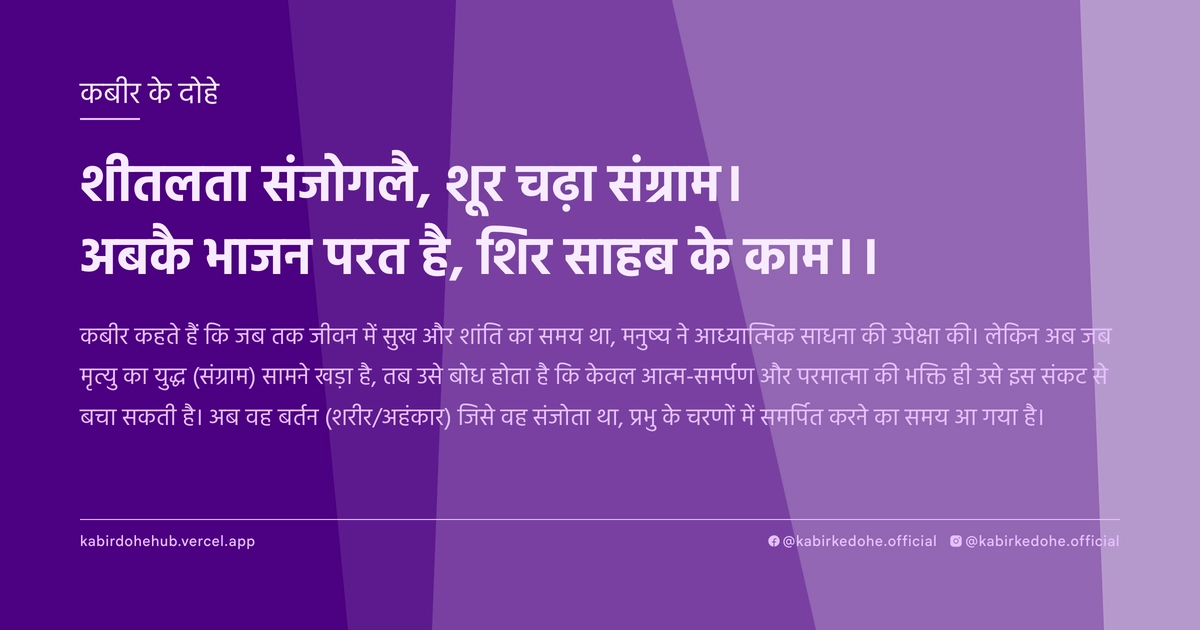
शीतलता संजोगलै, शूर चढ़ा संग्राम।
अबकै भाजन परत है, शिर साहब के काम।।
Sheetalta sanjoglai, shoor chadha sangram. Abkai bhajan parat hai, shir sahab ke kaam.
इस पृष्ठ पर इस कबीर दोहे का अर्थ (meaning), हिंदी व्याख्या और अंग्रेज़ी अनुवाद, दार्शनिक विश्लेषण और व्यावहारिक जीवन सीख दी गई है। यह दोहा प्रपत्ति (Surrender) विषय से जुड़ा है — Kabir doha meaning and explanation in Hindi and English.
अर्थ (Meaning):
कबीर कहते हैं कि जब तक जीवन में सुख और शांति का समय था, मनुष्य ने आध्यात्मिक साधना की उपेक्षा की। लेकिन अब जब मृत्यु का युद्ध (संग्राम) सामने खड़ा है, तब उसे बोध होता है कि केवल आत्म-समर्पण और परमात्मा की भक्ति ही उसे इस संकट से बचा सकती है। अब वह बर्तन (शरीर/अहंकार) जिसे वह संजोता था, प्रभु के चरणों में समर्पित करने का समय आ गया है।
Kabir observes that while the season of comfort and peace lasted, the human soul neglected spiritual awakening. Now, as the fierce battle of death and finality arrives, the realization dawns that only total surrender to the Divine can provide refuge. The vessel of the self, once guarded with pride, must now be offered entirely at the feet of the Eternal Truth.
व्याख्या (Interpretation):
यह दोहा जीवन की क्षणभंगुरता और मृत्यु की अनिवार्यता के बीच के विरोधाभास को दर्शाता है। 'शीतलता' यहाँ सांसारिक सुखों और अज्ञानता की उस शांति का प्रतीक है जहाँ मनुष्य को लगता है कि वह अमर है। 'संग्राम' वह अंतिम संघर्ष है जहाँ अहंकार और सत्य का आमना-सामना होता है। निर्गुण भक्ति के परिप्रेक्ष्य में, यह इस बात पर जोर देता है कि जब तक माया का पर्दा है, हम स्वयं को कर्ता मानते हैं, लेकिन मृत्यु के समय केवल 'साहब' (परमात्मा) ही एकमात्र सत्य बचते हैं। यह अद्वैत वेदांत के उस सिद्धांत को पुष्ट करता है कि देह नश्वर है और केवल आत्मा ही शाश्वत है, जिसे अंततः ब्रह्म में विलीन होना है।
This couplet illustrates the paradox between worldly complacency and the inevitability of death. 'Sheetalta' (coolness) symbolizes the deceptive peace of material comfort and ignorance, where the soul believes itself immortal. 'Sangram' (battle) represents the final existential struggle where the ego confronts the Absolute Truth. In the context of Nirgun Bhakti, it emphasizes that as long as the veil of Maya persists, we perceive ourselves as the doers, but at the threshold of death, only the 'Sahab' (the Formless Divine) remains. It reinforces the Advaita Vedanta principle that the body is transient and only the Atman is eternal, destined to merge back into the Brahman.
दार्शनिक विश्लेषण (Philosophical Analysis):
कबीर का यह संदेश उस युग की प्रतिक्रिया है जहाँ लोग कर्मकांडों और बाहरी आडंबरों में उलझे थे। उन्होंने स्पष्ट किया कि मोक्ष किसी तीर्थ या मंदिर से नहीं, बल्कि आंतरिक जागृति से मिलता है। यहाँ 'शूर' (वीर) वह नहीं है जो युद्ध जीतता है, बल्कि वह है जो अपने अहंकार को मार देता है।
सूफी मत के 'फना' (अहंकार का विनाश) के समान, कबीर यहाँ शरीर को एक 'भाजन' या बर्तन कह रहे हैं। जब तक बर्तन भरा रहता है, उसमें कुछ नया नहीं डाला जा सकता। जब अहंकार का बर्तन टूटता है, तभी परमात्मा का प्रकाश उसमें प्रवेश करता है।
यह विश्लेषण दर्शाता है कि मनुष्य अक्सर तब जागता है जब समय समाप्त होने वाला होता है। यह मनोवैज्ञानिक सत्य है कि भय ही अक्सर सत्य की खोज का उत्प्रेरक बनता है। कबीर हमें चेतावनी देते हैं कि हम 'शीतलता' के भ्रम में न रहें।
जाति और धर्म के बंधनों को नकारते हुए, कबीर यह समझाते हैं कि मृत्यु सबको समान बनाती है। न कोई ब्राह्मण बचता है, न कोई शूद्र; केवल वह बचता है जिसने अपने भीतर के 'साहब' को पहचाना है।
अंततः, यह दोहा हमें याद दिलाता है कि जीवन का वास्तविक उद्देश्य संचय नहीं, बल्कि समर्पण है। जब हम स्वयं को परमात्मा के काम में लगा देते हैं, तब मृत्यु एक अंत नहीं, बल्कि एक मिलन बन जाती है।
Kabir's message is a direct response to an era consumed by ritualism and external piety. He asserts that liberation is not found in pilgrimages or temples, but through internal awakening. Here, the 'Shoor' (warrior) is not one who conquers lands, but one who conquers their own ego.
Parallel to the Sufi concept of 'Fana' (annihilation of the self), Kabir describes the body as a 'Bhaajan' or vessel. As long as the vessel is full of self-importance, it cannot receive divine grace. Only when the vessel of the ego shatters can the light of the Absolute enter.
This analysis reveals the psychological truth that humans often awaken only when time is running out. Fear, in this sense, becomes the catalyst for seeking Truth. Kabir warns against the delusion of 'Sheetalta'—the false security of a comfortable life.
By rejecting caste and religious boundaries, Kabir emphasizes that death is the great equalizer. Neither the priest nor the outcast survives the transition; only the one who has realized the 'Sahab' within remains.
Ultimately, this couplet teaches that the true purpose of life is not accumulation, but surrender. When we dedicate our existence to the Divine will, death ceases to be an end and becomes a sacred union.
मूल संदेश (Core Message):
- सांसारिक सुख एक भ्रम है जो हमें आध्यात्मिक नींद में सुला देता है।
- मृत्यु का भय केवल तब तक है जब तक अहंकार जीवित है।
- सच्ची वीरता स्वयं को मिटाकर परमात्मा में विलीन होने में है।
- शरीर को अहंकार का घर नहीं, बल्कि सेवा का साधन बनाएं।
- समर्पण ही वह एकमात्र कुंजी है जो जन्म-मृत्यु के चक्र को तोड़ती है।
- Worldly comfort is a veil that lulls the soul into spiritual slumber.
- The fear of death exists only as long as the ego remains alive.
- True bravery lies in annihilating the self to merge with the Absolute.
- Transform the body from a fortress of ego into a vessel of service.
- Surrender is the only key that unlocks the cycle of birth and death.
व्यावहारिक उदाहरण (Practical Example):
वाराणसी के एक पुराने घाट पर माधव नाम का एक वृद्ध कुम्हार रहता था। वह अपनी कला में इतना निपुण था कि उसके बनाए मिट्टी के बर्तनों की मांग दूर-दूर तक थी। माधव को अपनी कला पर बहुत गर्व था और वह मानता था कि उसकी कुशलता ही उसकी असली पहचान है। वह अक्सर अन्य कुम्हारों को तुच्छ समझता था और अपनी श्रेष्ठता के अहंकार में डूबा रहता था।
वर्षों तक माधव ने सुख-सुविधाएं जुटाईं और अपने काम को ही अपना धर्म मान लिया। वह आध्यात्मिक चर्चाओं को समय की बर्बादी समझता था। उसके लिए 'शीतलता' उसकी प्रसिद्धि और धन था। उसने कभी नहीं सोचा कि यह शरीर भी मिट्टी का एक बर्तन है जो एक दिन बिखर जाएगा।
एक दिन माधव को एक गंभीर बीमारी ने घेर लिया। अचानक उसकी वह शारीरिक शक्ति चली गई जिससे वह चाक चलाता था। वह बिस्तर पर पड़ गया और उसके पास अब केवल उसकी सांसें बची थीं। अब वह 'संग्राम' का समय था जहाँ उसकी सारी कला, धन और अहंकार उसके किसी काम नहीं आए।
बीमारी के दर्द और मृत्यु के भय ने उसे अंदर से तोड़ दिया। उसे महसूस हुआ कि जिस 'बर्तन' (अहंकार) को उसने जीवन भर संजोया, वह वास्तव में एक बोझ था। उसने देखा कि उसके पास देने के लिए कुछ नहीं था, क्योंकि उसने सब कुछ अपने लिए इकट्ठा किया था।
एक शाम, जब वह घाट की आरती की आवाज सुन रहा था, उसे कबीर का यह विचार याद आया कि शरीर केवल एक माध्यम है। उसे बोध हुआ कि उसने अपनी पूरी जिंदगी केवल मिट्टी को आकार देने में बिता दी, लेकिन अपनी आत्मा को आकार देना भूल गया।
उसने अपनी आँखें बंद कीं और पहली बार अपनी श्रेष्ठता का दावा छोड़कर, पूरी तरह से परमात्मा के सामने आत्म-समर्पण कर दिया। उसने प्रार्थना की, "हे प्रभु, मैं अब तक स्वयं को कर्ता मानता था, अब मैं स्वयं को आपका एक छोटा सा यंत्र मानता हूँ।"
इस समर्पण के क्षण में, माधव को एक ऐसी शांति मिली जो उसने अपनी सबसे बड़ी उपलब्धि के समय भी महसूस नहीं की थी। उसका भय गायब हो गया और वह मृत्यु को एक शत्रु के बजाय एक मित्र के रूप में देखने लगा।
जब माधव ने अंतिम सांस ली, तो उसके चेहरे पर एक अलौकिक मुस्कान थी। उसने अंततः समझ लिया था कि जीवन का असली 'भाजन' वह नहीं है जिसे हम दुनिया को दिखाते हैं, बल्कि वह है जिसे हम ईश्वर के चरणों में अर्पित कर देते हैं।
On an ancient ghat in Varanasi lived an elderly potter named Madhav. He was so skilled in his craft that his clay vessels were sought after from far and wide. Madhav took immense pride in his artistry, believing his skill was his true identity. He often looked down upon other potters, immersed in the ego of his own superiority.
For years, Madhav accumulated comforts and treated his work as his only religion. He dismissed spiritual discourses as a waste of time. For him, 'Sheetalta' was his fame and wealth. He never considered that his own body was also a vessel of clay, destined to shatter one day.
One day, a severe illness struck Madhav. Suddenly, the physical strength he used to turn the potter's wheel vanished. He became bedridden, with nothing left but his fading breaths. This was the time of 'Sangram'—the battle—where all his art, wealth, and pride proved useless.
The pain of illness and the terror of death broke him from within. He realized that the 'vessel' (ego) he had cherished all his life was actually a burden. He saw that he had nothing to offer, for he had spent his life accumulating only for himself.
One evening, while listening to the sounds of the Aarti from the ghats, he recalled Kabir's thought that the body is merely a medium. He realized he had spent his entire life shaping clay but had forgotten to shape his own soul.
Closing his eyes, he abandoned his claims of superiority for the first time and surrendered completely to the Divine. He prayed, "O Lord, I considered myself the doer until now; now I see myself as but a small instrument of Your will."
In that moment of surrender, Madhav experienced a peace he had never felt, even at the height of his professional success. His fear vanished, and he began to see death not as an enemy, but as a friend.
When Madhav took his final breath, there was a transcendental smile on his face. He had finally understood that the true 'vessel' of life is not the one we showcase to the world, but the one we offer at the feet of the Eternal.
अभ्यास मार्गदर्शन (Practice Guidance):
- दैनिक चिंतन: प्रतिदिन 15 मिनट इस विचार पर ध्यान दें कि आपकी वर्तमान उपलब्धियां और पहचान अस्थायी हैं।
- अहंकार का विसर्जन: दिन में एक बार ऐसा कार्य करें जिसमें आप अपनी पहचान या श्रेय को पूरी तरह त्याग दें और उसे ईश्वर या समाज को समर्पित करें।
- आत्म-पूछताछ जर्नल: लिखें कि आप किन चीजों को 'स्थायी' मानकर उनसे चिपके हुए हैं और वे मृत्यु के समय आपके क्या काम आएंगी?
- निदान चेकलिस्ट: क्या आप अभी भी अपनी सफलता का श्रेय स्वयं को देते हैं? क्या आप मृत्यु के विचार से डरते हैं? यदि हाँ, तो आप अभी भी 'शीतलता' के भ्रम में हैं।
- Daily Contemplation: Spend 15 minutes daily reflecting on the transience of your current achievements and identity.
- Ego Dissolution: Once a day, perform an act where you completely renounce credit or identity, offering the result to the Divine or society.
- Self-Inquiry Journal: List the things you consider 'permanent' and honestly analyze if they will hold any value at the moment of death.
- Diagnostic Checklist: Do you still attribute your success solely to yourself? Do you fear the thought of death? If yes, you are still under the illusion of 'Sheetalta'.
चिंतन प्रश्न (Reflection Questions):
- यदि आज आपकी सारी सामाजिक पहचान छीन ली जाए, तो आपके भीतर क्या बचेगा?
- आपकी 'शीतलता' क्या है—वह कौन सा सुख है जो आपको सत्य की खोज से रोक रहा है?
- क्या आपका धर्म और आध्यात्मिकता केवल संकट के समय काम आने वाला 'बीमा' है या एक जीवित अनुभव?
- आप अपनी उपलब्धियों के 'बर्तन' को भरने में कितने व्यस्त हैं कि आपने उसे खाली करना नहीं सीखा?
- मृत्यु के समय आप अपने साथ क्या ले जाना चाहेंगे, यदि भौतिक वस्तुएं वर्जित हों?
- If all your social identities were stripped away today, what would remain within you?
- What is your 'Sheetalta'—which specific comfort is preventing you from seeking the Truth?
- Is your spirituality merely an 'insurance policy' for times of crisis, or is it a living, breathing experience?
- How busy are you in filling the 'vessel' of your achievements that you have forgotten how to empty it?
- What would you wish to carry with you at the moment of death, if all material possessions were forbidden?