
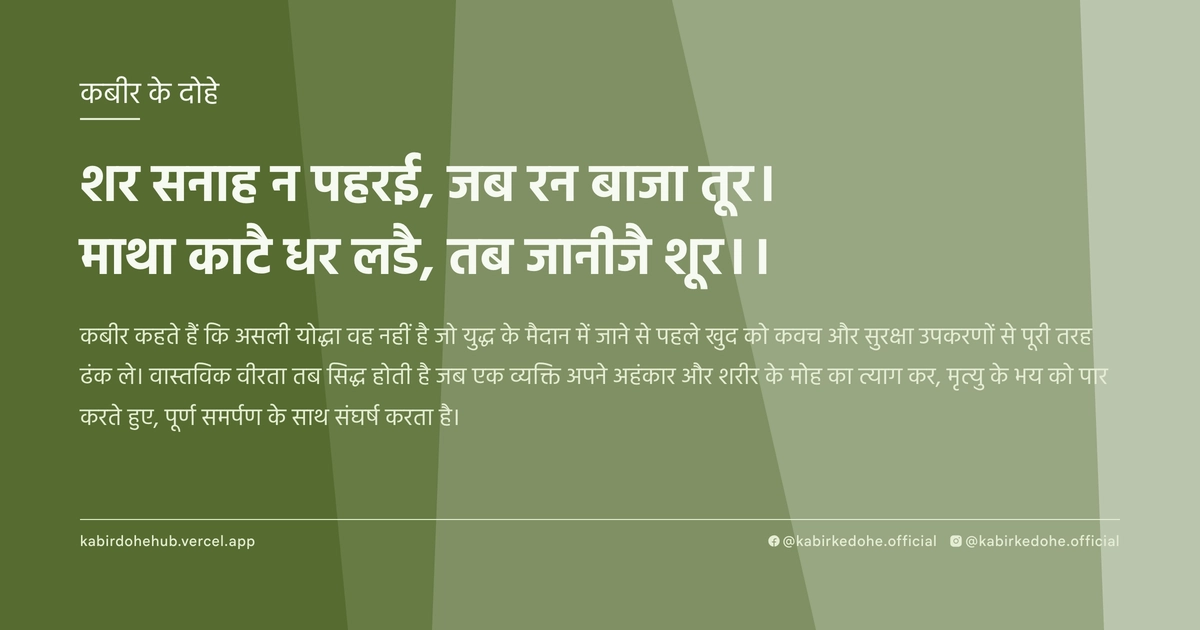
शर सनाह न पहरई, जब रन बाजा तूर।
माथा काटै धर लडै, तब जानीजै शूर।।
Shar sanah na pahrai, jab ran baja tur. Matha katai dhar ladai, tab janijai shur.
इस पृष्ठ पर इस कबीर दोहे का अर्थ (meaning), हिंदी व्याख्या और अंग्रेज़ी अनुवाद, दार्शनिक विश्लेषण और व्यावहारिक जीवन सीख दी गई है। यह दोहा प्रपत्ति (Surrender) विषय से जुड़ा है — Kabir doha meaning and explanation in Hindi and English.
अर्थ (Meaning):
कबीर कहते हैं कि असली योद्धा वह नहीं है जो युद्ध के मैदान में जाने से पहले खुद को कवच और सुरक्षा उपकरणों से पूरी तरह ढंक ले। वास्तविक वीरता तब सिद्ध होती है जब एक व्यक्ति अपने अहंकार और शरीर के मोह का त्याग कर, मृत्यु के भय को पार करते हुए, पूर्ण समर्पण के साथ संघर्ष करता है।
Kabir asserts that a true warrior is not one who shields themselves with armor before entering the battlefield. Genuine bravery is proven when an individual transcends the fear of death and the attachment to the physical body, fighting with total surrender and courage even when the head is severed from the ego.
व्याख्या (Interpretation):
यहाँ 'रण' सांसारिक जीवन और आध्यात्मिक संघर्ष का प्रतीक है, और 'कवच' हमारे अहंकार, सामाजिक प्रतिष्ठा और मानसिक सुरक्षा तंत्र को दर्शाता है। कबीर का तर्क है कि जब तक हम अपनी पहचान और सुरक्षा के खोल में लिपटे रहते हैं, हम सत्य का सामना नहीं कर सकते। 'माथा काटना' वास्तव में अहंकार (I-ness) का विसर्जन है। यह निर्गुण भक्ति का सार है जहाँ साधक अपनी सीमित पहचान को मिटाकर उस असीम ब्रह्म में विलीन हो जाता है। यह द्वैत से अद्वैत की यात्रा है, जहाँ योद्धा और युद्ध एक हो जाते हैं।
Here, the 'battlefield' symbolizes the worldly existence and the spiritual struggle, while the 'armor' represents our ego, social status, and mental defense mechanisms. Kabir argues that as long as we remain wrapped in the shell of identity and security, we cannot encounter the Truth. 'Severing the head' is a metaphor for the dissolution of the ego (Ahamkara). This is the essence of Nirgun Bhakti, where the seeker erases their limited identity to merge into the Infinite Brahman. It is a journey from duality to non-duality, where the warrior and the war become one.
दार्शनिक विश्लेषण (Philosophical Analysis):
कबीर का यह दोहा मध्यकालीन भारत के उस दौर का है जब धर्म और जाति के नाम पर बाहरी आडंबर चरम पर थे। वे यहाँ 'कवच' के माध्यम से उन सभी कर्मकांडों और धार्मिक पहचानों पर प्रहार कर रहे हैं जिन्हें लोग मोक्ष का साधन मानते हैं। उनके अनुसार, बाहरी सुरक्षा या धार्मिक लेबल केवल भ्रम (माया) हैं जो हमें वास्तविक आध्यात्मिक युद्ध से बचाते हैं, लेकिन हमें जीत नहीं दिलाते।
अद्वैत वेदांत के परिप्रेक्ष्य में, यह दोहा 'जीव' और 'शिव' के मिलन की बात करता है। जब तक 'मैं' (अहंकार) जीवित है, तब तक सत्य का अनुभव असंभव है। जिस प्रकार एक योद्धा को जीत के लिए अपने प्राणों का मोह छोड़ना पड़ता है, उसी प्रकार एक साधक को आत्म-साक्षात्कार के लिए अपनी झूठी पहचान की आहुति देनी पड़ती है।
सूफी मत के 'फना' (annihilation) के सिद्धांत से इसकी गहरी समानता है। फना का अर्थ है स्वयं को ईश्वर की इच्छा में पूरी तरह मिटा देना। कबीर यहाँ यह समझा रहे हैं कि आध्यात्मिक वीरता का अर्थ शारीरिक बल नहीं, बल्कि मानसिक और आध्यात्मिक साहस है जो मृत्यु के भय को शून्य कर देता है।
यह विश्लेषण हमें बताता है कि अधिकांश लोग केवल 'सुरक्षित' रहकर आध्यात्मिक होने का ढोंग करते हैं। वे ध्यान और जप को कवच की तरह पहनते हैं ताकि उन्हें अपने गहरे अंधेरों का सामना न करना पड़े। कबीर इस ढोंग को चुनौती देते हैं और सीधे 'सिर काटने' यानी पूर्ण समर्पण की मांग करते हैं।
अंततः, यह दोहा मनोवैज्ञानिक रूपांतरण की बात करता है। जब व्यक्ति अपनी सुरक्षा की सारी दीवारें गिरा देता है, तभी वह उस सार्वभौमिक चेतना का अनुभव करता है जहाँ न कोई योद्धा है, न कोई शत्रु, केवल एक अखंड सत्य है।
This couplet originates from a period in medieval India when external rituals and caste identities were at their peak. Through the metaphor of 'armor,' Kabir attacks all those rituals and religious labels that people mistake for vehicles of liberation. According to him, external protections or religious identities are merely illusions (Maya) that shield us from the real spiritual battle but never grant victory.
From the perspective of Advaita Vedanta, this verse speaks of the union between the Jiva (individual soul) and Shiva (universal consciousness). As long as the 'I' (ego) persists, the experience of Truth is impossible. Just as a warrior must relinquish the attachment to life to achieve victory, a seeker must sacrifice their false identity to achieve self-realization.
There is a profound similarity here with the Sufi concept of 'Fana' (annihilation). Fana refers to the total dissolution of the self in the will of the Divine. Kabir explains that spiritual bravery is not about physical strength, but about the mental and spiritual courage that reduces the fear of death to zero.
This analysis reveals that most people pretend to be spiritual while remaining 'safe.' They wear meditation and chanting like armor so they don't have to face their inner shadows. Kabir challenges this hypocrisy and demands the 'severing of the head,' meaning total surrender.
Ultimately, the verse describes a psychological transformation. When a person tears down all walls of security, they experience that universal consciousness where there is no warrior, no enemy, only one undivided Truth.
मूल संदेश (Core Message):
- बाहरी सुरक्षा और आडंबर आध्यात्मिक प्रगति के सबसे बड़े अवरोध हैं।
- सत्य का साक्षात्कार केवल अहंकार के पूर्ण विसर्जन से संभव है।
- साहस का अर्थ भय का अभाव नहीं, बल्कि भय के बावजूद आगे बढ़ना है।
- जब 'मैं' मिटता है, तभी 'वह' (परमात्मा) प्रकट होता है।
- आध्यात्मिक विजय शरीर की नहीं, बल्कि चेतना की जीत है।
- External security and rituals are the greatest obstacles to spiritual progress.
- Realization of Truth is possible only through the total dissolution of ego.
- Courage is not the absence of fear, but moving forward despite it.
- When the 'I' vanishes, the 'Divine' manifests.
- Spiritual victory is not of the body, but of the consciousness.
व्यावहारिक उदाहरण (Practical Example):
एक समय की बात है, वाराणसी के घाटों पर माधव नाम का एक वृद्ध बुनकर रहता था। माधव अपनी कला में निपुण था, लेकिन वह अपनी सामाजिक प्रतिष्ठा और 'श्रेष्ठ बुनकर' होने के अहंकार के कवच में लिपटा रहता था। वह दूसरों को उनकी गलतियाँ बताता, पर स्वयं को पूर्ण मानता था।
एक दिन उसके शहर में एक फकीर आया, जिसने माधव के अहंकार को चुनौती दी। फकीर ने कहा, "माधव, तुम्हारी कला सुंदर है, लेकिन तुम्हारा हृदय इस रेशमी कवच के नीचे दबा हुआ है। तुम डरते हो कि यदि तुमने अपनी श्रेष्ठता का यह भ्रम छोड़ा, तो लोग तुम्हारा उपहास करेंगे।"
माधव को पहले तो क्रोध आया, लेकिन फकीर की आँखों की गहराई ने उसे झकझोर दिया। उसने महसूस किया कि वह अपनी पूरी जिंदगी केवल अपनी छवि को बचाने में लगा रहा था, जबकि उसके भीतर का वास्तविक मनुष्य घुट रहा था।
उस रात माधव ने एक कठिन निर्णय लिया। उसने अपनी सबसे महंगी साड़ियों का संग्रह, जिसे वह अपनी सफलता का प्रमाण मानता था, गरीब बुनकरों में बाँट दिया। उसने अपनी उस पहचान को त्याग दिया जिसे उसने वर्षों से संजोया था।
शुरुआत में, उसके साथी बुनकरों ने उसका मजाक उड़ाया। उसे लगा कि वह अपनी सामाजिक स्थिति खो रहा है। लेकिन जैसे-जैसे वह अपनी इस 'प्रतिष्ठा' के कवच से मुक्त हुआ, उसे एक अभूतपूर्व शांति का अनुभव हुआ।
अब वह केवल एक 'श्रेष्ठ बुनकर' नहीं था, बल्कि एक ऐसा इंसान बन गया था जो दूसरों के दुख को महसूस कर सकता था। उसने पाया कि जब उसने अपनी श्रेष्ठता का सिर काटा, तब उसे वास्तविक जीवन का स्वाद मिला।
उसने अब काम केवल नाम के लिए नहीं, बल्कि सेवा के लिए करना शुरू किया। उसकी कला में अब एक नई गहराई आ गई थी क्योंकि उसमें अहंकार की जगह प्रेम ने ले ली थी।
गाँव के लोग जो पहले उससे डरते या ईर्ष्या करते थे, अब उसकी ओर खिंचे चले आने लगे। माधव ने सीखा कि असली जीत दूसरों से ऊपर होने में नहीं, बल्कि स्वयं को मिटा देने में है।
यह माधव का 'कबीर ट्विस्ट' था—जहाँ उसने अपनी सुरक्षा और पहचान का कवच उतारकर, शून्य होकर, पूर्णता को प्राप्त किया।
Once upon a time, on the ghats of Varanasi, lived an elderly weaver named Madhav. Madhav was skilled in his craft, but he remained wrapped in the armor of his social prestige and the ego of being the 'superior weaver.' He would point out others' flaws while considering himself flawless.
One day, a wandering dervish arrived in the city and challenged Madhav's ego. The dervish said, "Madhav, your art is beautiful, but your heart is buried beneath this silken armor. You fear that if you let go of this illusion of superiority, people will mock you."
Madhav was initially angered, but the depth in the dervish's eyes shook him. He realized he had spent his entire life protecting his image, while the real human within him was suffocating.
That night, Madhav made a difficult decision. He distributed his collection of the most expensive sarees, which he viewed as proof of his success, among the poor weavers. He renounced the identity he had cherished for years.
Initially, his fellow weavers mocked him. He felt he was losing his social standing. But as he became free from the armor of 'prestige,' he experienced an unprecedented peace.
He was no longer just a 'superior weaver,' but a human being capable of feeling the pain of others. He discovered that when he severed the head of his superiority, he finally tasted real life.
He began to work not for fame, but for service. A new depth entered his art because love had replaced ego.
The villagers, who once feared or envied him, were now drawn to him. Madhav learned that true victory lies not in being above others, but in annihilating the self.
This was Madhav's 'Kabir Twist'—where by shedding the armor of security and identity, he became zero and thus attained wholeness.
अभ्यास मार्गदर्शन (Practice Guidance):
- प्रतिदिन 20 मिनट मौन बैठें और उन मानसिक 'कवचों' की पहचान करें जिन्हें आप अपनी सुरक्षा के लिए पहनते हैं (जैसे: पद, ज्ञान, या नैतिकता का अहंकार)।
- एक डायरी लिखें जिसमें आप उन क्षणों को दर्ज करें जब आपने अपनी छवि (Image) को बचाने के लिए सच को दबाया। पूछें: "मैं इस छवि को बचाने के लिए क्या खो रहा हूँ?"
- सप्ताह में एक बार ऐसा कार्य करें जिसमें आपकी कोई प्रशंसा न हो, बल्कि आपकी पहचान को चुनौती मिले, ताकि आप बिना किसी बाहरी मान्यता के कार्य करना सीखें।
- निदान चेकलिस्ट: क्या मैं अपनी गलतियों को स्वीकार करने में डरता हूँ? क्या मैं दूसरों को नीचा दिखाकर खुद को श्रेष्ठ महसूस करता हूँ? यदि हाँ, तो आप अभी भी कवच में हैं।
- Sit in silence for 20 minutes daily and identify the mental 'armors' you wear for security (e.g., ego of position, knowledge, or morality).
- Keep a journal recording moments where you suppressed the truth to protect your image. Ask: "What am I losing by protecting this image?"
- Once a week, perform an act where you receive no praise and your identity is challenged, learning to act without the need for external validation.
- Diagnostic Checklist: Do I fear admitting my mistakes? Do I feel superior by belittling others? If yes, you are still wearing the armor.
चिंतन प्रश्न (Reflection Questions):
- वह कौन सा 'कवच' है जिसे मैं दुनिया के सामने पहनता हूँ, लेकिन अकेले में वह मुझे बोझ लगता है?
- यदि मेरी सारी सामाजिक उपलब्धियाँ और पद आज छीन लिए जाएँ, तो मेरे भीतर क्या बचेगा?
- क्या मेरा धर्म या मेरी विचारधारा मुझे सत्य की खोज में मदद कर रही है, या वह केवल एक सुरक्षा कवच बन गई है?
- मैं किस डर से अपनी कमजोरियों को छिपाता हूँ, और वह डर मुझे सत्य से कैसे दूर रख रहा है?
- क्या मैं वास्तव में समर्पित हूँ, या मैं केवल समर्पण का अभिनय कर रहा हूँ ताकि मुझे शांति मिले?
- What is the 'armor' I wear before the world, which feels like a burden when I am alone?
- If all my social achievements and titles were stripped away today, what would remain within me?
- Is my religion or ideology helping me find the Truth, or has it merely become a security blanket?
- What fear causes me to hide my vulnerabilities, and how is that fear distancing me from the Truth?
- Am I truly surrendered, or am I merely acting the part of surrender to find a sense of peace?