
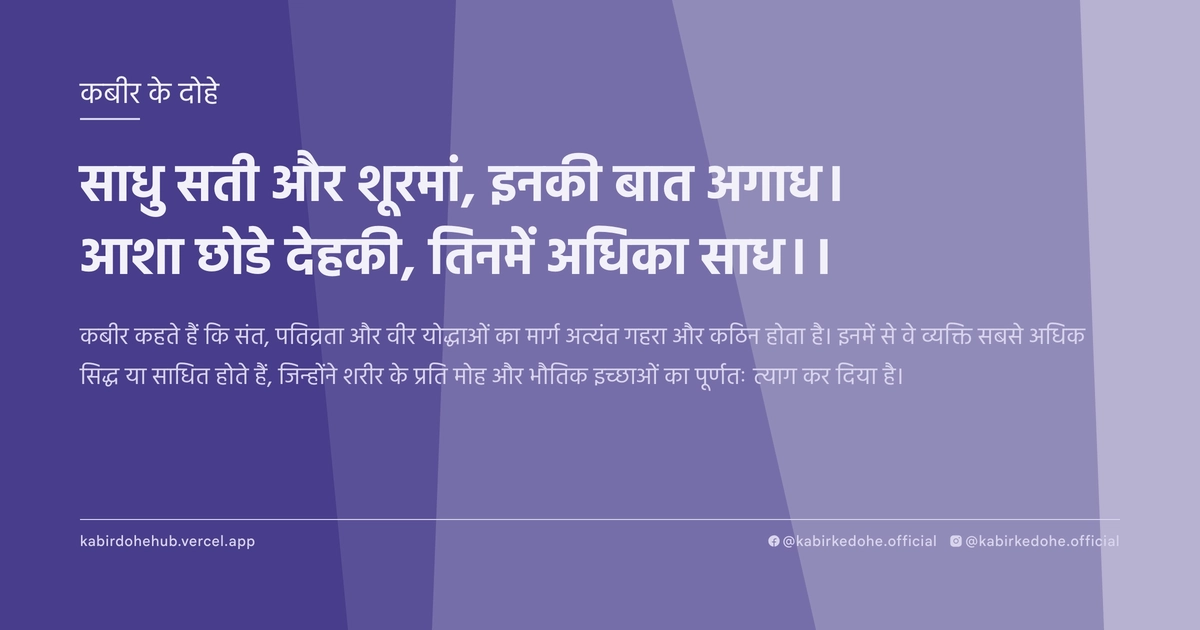
साधु सती और शूरमां, इनकी बात अगाध।
आशा छोडे देहकी, तिनमें अधिका साध।।
Sadhu sati aur shoorman, inki baat agadh. Asha chhode dehki, tinmen adhika sadh.
इस पृष्ठ पर इस कबीर दोहे का अर्थ (meaning), हिंदी व्याख्या और अंग्रेज़ी अनुवाद, दार्शनिक विश्लेषण और व्यावहारिक जीवन सीख दी गई है। यह दोहा वैराग्य (Detachment) विषय से जुड़ा है — Kabir doha meaning and explanation in Hindi and English.
अर्थ (Meaning):
कबीर कहते हैं कि संत, पतिव्रता और वीर योद्धाओं का मार्ग अत्यंत गहरा और कठिन होता है। इनमें से वे व्यक्ति सबसे अधिक सिद्ध या साधित होते हैं, जिन्होंने शरीर के प्रति मोह और भौतिक इच्छाओं का पूर्णतः त्याग कर दिया है।
Kabir asserts that the paths of the saint, the virtuous spouse, and the brave warrior are unfathomably deep. Among them, those who have completely relinquished their attachment to the physical body and worldly desires are the ones who have achieved the highest spiritual attainment.
व्याख्या (Interpretation):
इस दोहे का शाब्दिक अर्थ है कि आध्यात्मिक साधना, नैतिक निष्ठा और वीरता तीनों ही कठिन मार्ग हैं। यहाँ 'अगाध' शब्द उस गहराई को दर्शाता है जहाँ साधारण बुद्धि नहीं पहुँच सकती। कबीर संकेत करते हैं कि केवल बाहरी पहचान (साधु का चोला या योद्धा का शस्त्र) पर्याप्त नहीं है। वास्तविक सिद्धि 'देह की आशा' यानी शारीरिक आसक्ति और अहंकार के विसर्जन में है। यह निर्गुण भक्ति का सार है, जहाँ आत्मा स्वयं को शरीर की सीमाओं से मुक्त कर ब्रह्म में विलीन करती है। जब व्यक्ति यह समझ जाता है कि शरीर नश्वर है और केवल चेतना शाश्वत है, तब वह माया के जाल से मुक्त होकर अद्वैत की स्थिति को प्राप्त करता है।
Literally, the verse suggests that spiritual discipline, moral fidelity, and courage are all profound paths. The word 'agaadh' signifies a depth beyond the reach of ordinary intellect. Kabir suggests that external markers—the robes of a saint or the weapons of a warrior—are insufficient. True realization lies in the abandonment of 'dehkii asha,' or the attachment to the physical form and the ego. This is the essence of Nirgun Bhakti, where the soul liberates itself from bodily limitations to merge with the Formless Brahman. When one realizes that the body is transient and only consciousness is eternal, they transcend the illusion of Maya and achieve the state of non-duality (Advaita).
दार्शनिक विश्लेषण (Philosophical Analysis):
कबीर का यह विचार उनके युग के सामाजिक और धार्मिक पाखंडों के विरुद्ध एक प्रहार है। उस समय धर्म को केवल कर्मकांडों और बाहरी प्रतीकों तक सीमित कर दिया गया था। कबीर ने स्पष्ट किया कि सच्ची वीरता या पवित्रता बाहरी प्रदर्शन में नहीं, बल्कि आंतरिक वैराग्य में है। यह दृष्टिकोण सूफी मत के 'फना' (अहंकार का विनाश) और अद्वैत वेदांत के 'अहं ब्रह्मास्मि' के करीब है, जहाँ व्यक्ति अपनी सीमित पहचान को मिटाकर अनंत में समा जाता है।
यहाँ 'देह की आशा' का अर्थ केवल मृत्यु का भय नहीं, बल्कि शरीर के माध्यम से सुख प्राप्त करने की लालसा और 'मैं' का अहंकार है। कबीर का तर्क है कि जब तक मनुष्य स्वयं को मांस और हड्डियों के इस ढांचे से जोड़कर देखता है, वह सत्य से दूर रहता है। यह शारीरिक पहचान ही जाति, वर्ग और धर्म के भेदभाव को जन्म देती है। अतः, देह का त्याग मानसिक स्तर पर करना ही वास्तविक मुक्ति है।
ऐतिहासिक रूप से, कबीर ने योद्धाओं (शूरमां) और संतों को एक ही धरातल पर रखकर यह बताया कि अनुशासन और समर्पण का मार्ग एक ही है। चाहे वह युद्धभूमि हो या ध्यान की गहराई, जीत केवल उसी की होती है जिसने हारने का डर (देह की आसक्ति) छोड़ दिया हो। यह मनोवैज्ञानिक रूपांतरण है जहाँ भय का स्थान पूर्ण समर्पण ले लेता है।
यह दर्शन हमें सिखाता है कि ritualism या बाहरी दिखावा केवल एक मुखौटा है। यदि एक साधु शरीर के सुखों की कामना करता है, तो वह केवल एक पाखंडी है। वास्तविक 'साध' वह है जो शरीर को केवल एक माध्यम माने, लक्ष्य नहीं। यह विचार भौतिकवाद के ऊपर चेतना की विजय का उद्घोष है।
अंततः, कबीर यहाँ एक विरोधाभास प्रस्तुत करते हैं: जो शरीर को पूरी तरह खो देता है, वही वास्तव में स्वयं को पा लेता है। यह शून्य में विलीन होने की प्रक्रिया है, जहाँ द्वैत समाप्त हो जाता है और केवल एक अखंड सत्य शेष रहता है।
Kabir's perspective is a direct assault on the social and religious hypocrisies of his era, where spirituality was reduced to rituals and external symbols. He clarifies that true bravery or purity does not reside in outward displays but in internal detachment. This aligns with the Sufi concept of 'Fana' (annihilation of the ego) and the Advaita Vedanta realization of 'Aham Brahmasmi,' where the individual dissolves their limited identity into the Infinite.
'Asha chhode dehkii' refers not merely to the fear of death, but to the craving for pleasure through the body and the ego of 'I'. Kabir argues that as long as a human identifies themselves with this frame of flesh and bone, they remain distant from the Truth. This bodily identification is the very root of caste, class, and religious discrimination. Thus, the mental renunciation of the body is the only path to true liberation.
Historically, by placing warriors and saints on the same plane, Kabir demonstrates that the path of discipline and surrender is identical. Whether on the battlefield or in the depths of meditation, victory belongs only to the one who has abandoned the fear of loss—the attachment to the physical self. This is a psychological transformation where fear is replaced by absolute surrender.
This philosophy teaches us that ritualism is merely a mask. If a saint still craves bodily comforts, they are merely a pretender. True 'Saadh' (attainment) belongs to the one who views the body as a medium, not the destination. It is a proclamation of the victory of consciousness over materialism.
Ultimately, Kabir presents a paradox: he who completely loses the body is the one who truly finds themselves. It is the process of merging into the Void (Shunya), where duality vanishes and only one indivisible Truth remains.
मूल संदेश (Core Message):
- बाहरी पहचान केवल एक मुखौटा है, वास्तविक सत्य आंतरिक है।
- देह के प्रति आसक्ति ही सभी दुखों और भयों की जड़ है।
- सच्ची वीरता मृत्यु के भय को मिटाने में निहित है।
- अहंकार का विसर्जन ही परमात्मा से मिलन का एकमात्र द्वार है।
- नश्वर शरीर को त्यागकर ही अविनाशी आत्मा का अनुभव संभव है।
- External identity is merely a mask; the ultimate truth is internal.
- Attachment to the body is the root of all suffering and fear.
- True bravery lies in eradicating the fear of death.
- The dissolution of ego is the only gateway to union with the Divine.
- Experience of the immortal soul is possible only by renouncing the mortal body.
व्यावहारिक उदाहरण (Practical Example):
एक समय की बात है, वाराणसी के घाटों पर रामदीन नाम का एक वृद्ध बुनकर रहता था। वह अपनी कला में निपुण था, लेकिन उसका मन हमेशा इस चिंता में रहता था कि उसकी मृत्यु के बाद उसके परिवार का क्या होगा और उसकी ख्याति कैसे बनी रहेगी। वह स्वयं को एक 'कुशल कलाकार' के रूप में देखता था और अपनी शारीरिक क्षमताओं पर बहुत गर्व करता था।
एक दिन उसने एक फकीर को देखा जो फटे हुए कपड़ों में था, लेकिन उसके चेहरे पर एक ऐसी शांति थी जिसे रामदीन ने अपने जीवन के सबसे महंगे रेशमी कपड़ों में भी नहीं पाया था। रामदीन ने उससे पूछा, "आप इतने अभाव में भी इतने प्रसन्न कैसे हैं?"
फकीर ने मुस्कुराकर कहा, "मैं इस शरीर को एक किराए के घर की तरह मानता हूँ। जब मैं इसे अपना घर समझने लगा था, तब मैं इसकी मरम्मत और सुरक्षा की चिंता में डूबा रहता था। जिस दिन मैंने इसे छोड़ दिया, मैं मुक्त हो गया।"
रामदीन को पहले यह बात समझ नहीं आई। उसने सोचा कि शरीर के बिना जीवन कैसे संभव है? लेकिन वह फकीर के शब्दों को गहराई से सोचने लगा। उसने महसूस किया कि उसका सारा तनाव 'मैं' और 'मेरा' के इर्द-गिर्द घूम रहा था।
कुछ समय बाद, रामदीन को एक गंभीर बीमारी ने घेर लिया। उसकी शारीरिक क्षमताएं घटने लगीं। वह जो कभी अपनी भुजाओं की शक्ति और कुशलता पर गर्व करता था, अब बिस्तर पर लाचार था। उसे लगा कि उसका अस्तित्व खत्म हो रहा है।
तभी उसे फकीर की बात याद आई—'आशा छोड़े देहकी'। उसने महसूस किया कि उसका दुख बीमारी से नहीं, बल्कि इस बात से था कि वह अपनी उस 'पुरानी पहचान' को नहीं छोड़ पा रहा था।
उसने अपनी आँखें बंद कीं और यह स्वीकार किया कि यह शरीर केवल मिट्टी है जो मिट्टी में ही मिल जाएगा। उसने अपनी पहचान को 'बुनकर' या 'बीमार व्यक्ति' से हटाकर उस शुद्ध चेतना पर केंद्रित किया जो शरीर से परे है।
जैसे ही उसने देह के प्रति मोह छोड़ा, उसका मानसिक कष्ट समाप्त हो गया। वह अब बीमारी में भी शांत था। उसने पाया कि जब वह शरीर की चिंता छोड़ देता है, तो वह उस अगाध शांति का अनुभव करता है जिसकी बात कबीर ने की थी।
उसने अपने जीवन के अंतिम दिन दूसरों की सेवा और निस्वार्थ प्रेम में बिताए। वह अब एक 'शूरमां' था, जिसने मृत्यु के भय को जीत लिया था।
उसकी मृत्यु के समय उसके चेहरे पर वही मुस्कान थी जो उस फकीर की थी, क्योंकि उसने देह की आशा को त्याग कर आत्मा की अनंतता को पा लिया था।
Once, on the ghats of Varanasi, lived an elderly weaver named Ramdeen. He was master of his craft, but his mind was always plagued by anxiety about what would happen to his family after his death and how his fame would endure. He viewed himself as a 'skilled artist' and took immense pride in his physical capabilities.
One day, he encountered a fakir dressed in rags, yet possessing a serenity that Ramdeen had never found even in his most expensive silk fabrics. Ramdeen asked, "How are you so content despite such deprivation?"
The fakir smiled and replied, "I treat this body like a rented house. When I considered it my own home, I was consumed by the worry of its repair and security. The day I let go of it, I became free."
Ramdeen did not understand at first. He wondered how life was possible without the body. However, he began to ponder the fakir's words deeply. He realized that all his stress revolved around 'I' and 'Mine'.
Some time later, a severe illness struck Ramdeen. His physical abilities declined. He, who once prided himself on the strength and skill of his arms, was now helpless in bed. He felt his existence was vanishing.
In that moment, he recalled the words—'Asha chhode dehkii'. He realized his suffering was not caused by the illness, but by his inability to let go of his 'old identity'.
He closed his eyes and accepted that this body is merely clay that shall return to clay. He shifted his identity from being a 'weaver' or a 'sick man' to the pure consciousness that exists beyond the body.
As soon as he relinquished the attachment to the body, his mental anguish ceased. He remained peaceful even amidst sickness. He discovered that by abandoning bodily concerns, he could experience the unfathomable peace Kabir spoke of.
He spent the final days of his life in the service of others and selfless love. He had become a 'warrior' who had conquered the fear of death.
At the time of his passing, his face bore the same smile as the fakir's, for he had traded the hope of the body for the infinity of the soul.
अभ्यास मार्गदर्शन (Practice Guidance):
- दैनिक ध्यान: प्रतिदिन 20 मिनट शांत बैठें और विचार करें कि आप शरीर नहीं, बल्कि वह साक्षी हैं जो शरीर को देख रहा है।
- आत्म-पूछताछ जर्नल: लिखें कि आपकी कौन सी शारीरिक या सामाजिक पहचान (पद, रूप, जाति) आपको सबसे अधिक बांधती है और उसे छोड़ने पर कैसा महसूस होता है।
- व्यवहार परिवर्तन: जब भी क्रोध या मोह आए, स्वयं से पूछें, "क्या यह प्रतिक्रिया मेरे 'अहंकार' की है या मेरी 'आत्मा' की?"
- निदान चेकलिस्ट: यदि आप बीमारी, बुढ़ापे या शारीरिक बदलावों पर अत्यधिक विलाप करते हैं, तो समझें कि 'देह की आशा' अभी प्रबल है। यदि आप बदलावों को सहज स्वीकार करते हैं, तो आप सही मार्ग पर हैं।
- Daily Meditation: Sit in silence for 20 minutes daily, contemplating that you are not the body, but the witness observing the body.
- Self-Inquiry Journaling: Write down which physical or social identity (status, appearance, caste) binds you most and how it feels to mentally release it.
- Behavioral Shift: Whenever anger or attachment arises, ask yourself, "Is this reaction coming from my 'ego' or my 'soul'?"
- Diagnostic Checklist: If you grieve excessively over illness, aging, or physical changes, recognize that 'bodily attachment' is still dominant. If you accept changes with equanimity, you are on the right path.
चिंतन प्रश्न (Reflection Questions):
- यदि आज आपकी सारी शारीरिक क्षमताएं और सामाजिक प्रतिष्ठा छीन ली जाए, तो आपके पास क्या बचेगा?
- आप अपनी डिजिटल पहचान (सोशल मीडिया) को कितना वास्तविक मानते हैं, और यह आपके 'देह मोह' को कैसे बढ़ा रहा है?
- क्या आप वास्तव में दूसरों की मदद करते हैं, या आपकी मदद करने की इच्छा आपके स्वयं के 'पुण्य' के अहंकार को संतुष्ट करती है?
- मृत्यु का विचार आपको भयभीत करता है या यह आपको जीवन की नश्वरता के प्रति जागरूक करता है?
- आपके जीवन का वह कौन सा हिस्सा है जिसे आप 'मेरा' कहते हैं, लेकिन वास्तव में वह आपके नियंत्रण में नहीं है?
- If all your physical capabilities and social prestige were stripped away today, what would remain of you?
- To what extent do you perceive your digital identity as real, and how is it amplifying your 'attachment to form'?
- Do you truly help others, or does your desire to help merely satisfy the ego of your own 'virtue'?
- Does the thought of death terrify you, or does it make you conscious of the transience of life?
- What part of your life do you call 'mine', even though it is fundamentally beyond your control?