
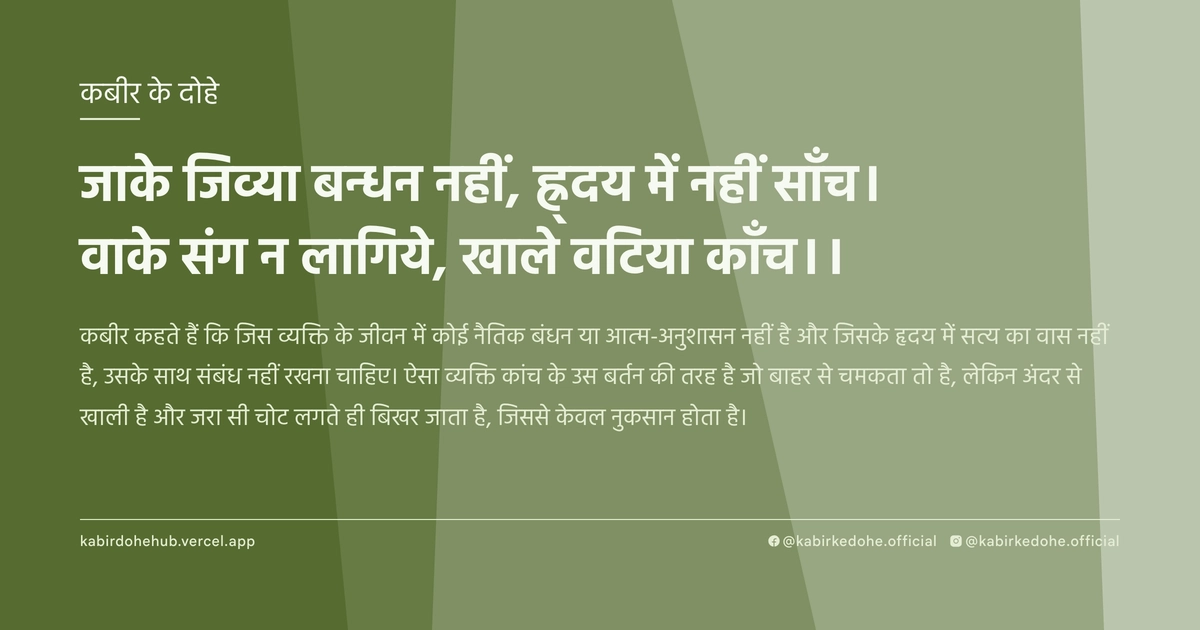
जाके जिव्या बन्धन नहीं, ह्र्दय में नहीं साँच।
वाके संग न लागिये, खाले वटिया काँच।।
Jaake jivya bandhan nahi, hriday mein nahi saanch. Vaake sang na laagiye, khaale vatiya kaanch.
इस पृष्ठ पर इस कबीर दोहे का अर्थ (meaning), हिंदी व्याख्या और अंग्रेज़ी अनुवाद, दार्शनिक विश्लेषण और व्यावहारिक जीवन सीख दी गई है। यह दोहा वैराग्य (Detachment) विषय से जुड़ा है — Kabir doha meaning and explanation in Hindi and English.
अर्थ (Meaning):
कबीर कहते हैं कि जिस व्यक्ति के जीवन में कोई नैतिक बंधन या आत्म-अनुशासन नहीं है और जिसके हृदय में सत्य का वास नहीं है, उसके साथ संबंध नहीं रखना चाहिए। ऐसा व्यक्ति कांच के उस बर्तन की तरह है जो बाहर से चमकता तो है, लेकिन अंदर से खाली है और जरा सी चोट लगते ही बिखर जाता है, जिससे केवल नुकसान होता है।
Kabir warns that one should avoid the company of those who lack moral restraints and possess no truth within their hearts. Such a person is likened to a hollow glass vessel—seemingly bright and attractive on the surface, but devoid of substance and prone to shattering, leaving behind only shards of disappointment and pain.
व्याख्या (Interpretation):
यह दोहा बाहरी दिखावे और आंतरिक शून्यता के बीच के विरोधाभास को दर्शाता है। 'बंधन नहीं' का अर्थ यहाँ अनुशासन और धर्म (नैतिकता) के अभाव से है। कबीर निरगुण भक्ति के माध्यम से समझाते हैं कि बिना सत्य (सांच) के कोई भी आध्यात्मिक साधना व्यर्थ है। माया का प्रभाव व्यक्ति को बाहरी चमक-धमक में उलझा देता है, जिससे वह स्वयं को ज्ञानी समझता है, परंतु वास्तव में वह 'कांच' की तरह भंगुर है। यहाँ आत्मा और परमात्मा के मिलन के लिए आवश्यक पात्रता की बात की गई है; यदि हृदय में सत्य नहीं है, तो व्यक्ति केवल एक भ्रम है। यह अद्वैत वेदांत के उस सिद्धांत की ओर संकेत करता है जहाँ केवल सत्य ही शाश्वत है और असत्य का विनाश निश्चित है।
This couplet highlights the paradox between external appearance and internal void. 'Lack of bonds' here refers to the absence of moral discipline and ethical restraint. Through the lens of Nirgun Bhakti, Kabir explains that any spiritual practice devoid of Truth (Saanch) is futile. The influence of Maya lures individuals into a superficial brilliance, making them perceive themselves as enlightened while remaining as fragile as glass. This points toward the essential prerequisite for the union of Atman and Brahman: an authentic heart. The 'glass' metaphor signifies the fragility of the ego-driven identity, which shatters upon the first touch of reality, emphasizing that only the Truth is permanent while the illusory self is destined for destruction.
दार्शनिक विश्लेषण (Philosophical Analysis):
कबीर का यह संदेश उनके समय के पाखंडी धर्मगुरुओं और उन लोगों पर प्रहार है जो केवल बाहरी कर्मकांडों का पालन करते थे। वे स्पष्ट करते हैं कि बिना आंतरिक रूपांतरण के कोई भी धार्मिक पहचान व्यर्थ है। यह दृष्टिकोण सूफीवाद के 'इश्क-ए-हकीकी' (ईश्वरीय प्रेम) से मिलता है, जहाँ हृदय की पवित्रता को सबसे ऊपर रखा गया है।
दार्शनिक स्तर पर, कबीर यहाँ 'अहंकार' और 'सत्य' के बीच के संघर्ष को चित्रित कर रहे हैं। जब कोई व्यक्ति सत्य को त्याग कर केवल सामाजिक प्रतिष्ठा या दिखावे को अपनाता है, तो वह अपनी आध्यात्मिक नींव खो देता है। यह अद्वैत वेदांत के उस विचार का समर्थन करता है जहाँ 'मिथ्या' (असत्य) को हटाकर ही 'ब्रह्म' (परम सत्य) का अनुभव किया जा सकता है।
कबीर का 'बंधन' शब्द यहाँ सकारात्मक है; वे उन नैतिक बंधनों की बात कर रहे हैं जो मनुष्य को पतन से बचाते हैं। जिस व्यक्ति में करुणा, ईमानदारी और सत्यनिष्ठा नहीं है, वह आध्यात्मिक रूप से मृत है। वे चेतावनी देते हैं कि ऐसे लोगों का साथ हमें भी उसी भ्रम और अस्थिरता की ओर ले जाता है।
मनोवैज्ञानिक रूप से, यह दोहा 'कॉग्निटिव डिसोनेंस' या संज्ञानात्मक विसंगति की बात करता है। जब किसी का बाहरी व्यक्तित्व उसके आंतरिक मूल्यों से मेल नहीं खाता, तो वह व्यक्ति अस्थिर और खतरनाक हो जाता है। कबीर हमें सिखाते हैं कि सत्य की खोज बाहरी दुनिया में नहीं, बल्कि हृदय की गहराई में होनी चाहिए।
अंततः, यह दोहा हमें सिखाता है कि आध्यात्मिक संगति (Satsang) केवल शब्दों से नहीं, बल्कि चरित्र से पहचानी जाती है। जो व्यक्ति स्वयं सत्य में स्थित नहीं है, वह दूसरों को मार्ग नहीं दिखा सकता। यह कर्मकांडीय धर्म के विरुद्ध एक सशक्त घोषणा है, जो केवल आंतरिक शुद्धि और सत्य के प्रति समर्पण पर बल देती है।
Kabir's message is a direct critique of the hypocritical clergy and practitioners of his era who clung to external rituals while ignoring internal purity. He asserts that any religious identity devoid of internal transformation is meaningless. This perspective aligns with the Sufi concept of 'Ishq-e-Haqiqi' (Divine Love), where the purity of the heart is the ultimate prerequisite for spiritual realization.
On a philosophical level, Kabir depicts the conflict between the 'Ego' and 'Truth'. When an individual abandons Truth in favor of social prestige or superficiality, they erode their spiritual foundation. This supports the Advaita Vedanta principle where 'Mithya' (the illusory) must be stripped away to realize 'Brahman' (the Absolute Truth).
Interestingly, Kabir uses 'bondage' (bandhan) in a positive sense here; he refers to the ethical restraints and moral disciplines that prevent human degradation. A person lacking compassion, honesty, and integrity is spiritually void. He warns that associating with such individuals drags us into the same vortex of illusion and instability.
Psychologically, this doha addresses the concept of cognitive dissonance. When a person's external persona is disconnected from their internal values, they become unstable and potentially harmful to others. Kabir teaches that the search for Truth must happen within the depths of the heart, not in the external world.
Ultimately, this couplet teaches that spiritual companionship (Satsang) is identified by character, not by words. One who is not anchored in Truth cannot guide others. It is a powerful declaration against ritualistic religion, emphasizing that only internal purification and surrender to Truth lead to liberation.
मूल संदेश (Core Message):
- बाहरी चमक अक्सर आंतरिक शून्यता का पर्दा होती है।
- बिना नैतिक अनुशासन के ज्ञान केवल एक भ्रम है।
- सत्य शब्दों में नहीं, बल्कि चरित्र की स्थिरता में होता है।
- अहंकार से निर्मित पहचान कांच की तरह भंगुर होती है।
- वास्तविक आध्यात्मिक प्रगति हृदय की पवित्रता से शुरू होती है।
- External brilliance is often a veil for internal emptiness.
- Knowledge without moral discipline is merely an illusion.
- Truth resides not in words, but in the stability of character.
- An identity built on ego is as fragile as glass.
- Real spiritual progress begins with the purity of the heart.
व्यावहारिक उदाहरण (Practical Example):
एक समय की बात है, बनारस के घाटों पर एक वृद्ध विधवा रहती थी, जिसका नाम जानकी था। जानकी का जीवन अत्यंत सरल था, वह केवल भिक्षा और दूसरों की सेवा पर निर्भर थी। उसके मोहल्ले में एक नया व्यक्ति आया, जो स्वयं को बहुत बड़ा विद्वान और संत बताता था। वह रेशमी वस्त्र पहनता था और उसकी बातें बहुत मीठी थीं।
वह व्यक्ति हर दिन जानकी के पास आता और उसे बताता कि कैसे वह मोक्ष प्राप्त कर सकती है। वह उसे बड़े-बड़े शास्त्रों के श्लोक सुनाता और दावा करता कि उसने ईश्वर को पा लिया है। मोहल्ले के कई लोग उसकी चमक-धमक और शब्दों के जाल में फंस गए और उसे अपना गुरु मानने लगे।
जानकी ने गौर किया कि वह व्यक्ति बातें तो सत्य की करता था, लेकिन जब भी किसी गरीब की मदद करने की बात आती, वह बहाने बना देता था। एक दिन, एक छोटा बच्चा भूख से रो रहा था। उस 'संत' ने बच्चे को देखा, लेकिन अपनी रेशमी चादर को गंदा होने के डर से उसने बच्चे की ओर हाथ तक नहीं बढ़ाया और उसे डांटकर भगा दिया।
जानकी ने यह सब देखा और उसे कबीर का यह दोहा याद आया। उसने महसूस किया कि इस व्यक्ति के पास शब्दों का भंडार तो है, लेकिन हृदय में सत्य और करुणा का कोई बंधन नहीं है। वह केवल एक 'कांच के बर्तन' की तरह था—बाहर से चमकदार, लेकिन अंदर से खाली।
कुछ समय बाद, उस व्यक्ति का असली चेहरा सामने आया। उसने मोहल्ले के कई भोले-भाले लोगों से धन इकट्ठा किया और एक रात चुपचाप गायब हो गया। जिन लोगों ने उसकी बाहरी चमक पर विश्वास किया था, वे गहरे दुख और धोखे में डूब गए।
जब लोग जानकी के पास रोते हुए आए, तो उसने उन्हें समझाया कि उन्होंने व्यक्ति के 'शब्दों' को देखा, उसके 'सत्य' को नहीं। उसने उन्हें बताया कि जिस व्यक्ति के जीवन में नैतिकता का बंधन नहीं होता, वह केवल विनाश लाता है।
इस घटना ने पूरे मोहल्ले की सोच बदल दी। लोगों ने अब बाहरी दिखावे के बजाय व्यक्ति के आचरण और उसकी ईमानदारी को परखना शुरू किया। उन्होंने सीखा कि सच्ची आध्यात्मिकता रेशमी वस्त्रों में नहीं, बल्कि निस्वार्थ सेवा और सत्य में बसती है।
जानकी ने उन्हें सिखाया कि सत्य वह नहीं है जो बोला जाए, बल्कि वह है जो जिया जाए। उस दिन के बाद, उस बस्ती में किसी ने भी केवल शब्दों के आधार पर किसी को अपना मार्गदर्शक नहीं बनाया।
यह 'कबीर ट्विस्ट' था—एक बाहरी चमक का टूटना, जिसने लोगों को आंतरिक सत्य की पहचान करना सिखाया। उन्होंने जाना कि कांच की चमक क्षणिक होती है, लेकिन सत्य का प्रकाश शाश्वत होता है।
अंत में, उस बस्ती के लोगों ने एक छोटा सा केंद्र बनाया जहाँ वे केवल उन लोगों की मदद करते थे जो वास्तव में जरूरतमंद थे, बिना किसी दिखावे या अहंकार के।
Once, on the ghats of Varanasi, lived an elderly widow named Janaki. Her life was incredibly simple, relying on alms and serving others. A new man arrived in her neighborhood, presenting himself as a great scholar and saint. He wore fine silk robes, and his speech was honeyed and persuasive.
Every day, this man visited Janaki, telling her how she could achieve salvation. He recited complex shlokas from scriptures and claimed to have realized the Divine. Many in the neighborhood were captivated by his charisma and words, eventually accepting him as their guru.
Janaki, however, noticed a discrepancy. While the man spoke of Truth, he avoided helping the poor. One day, a small child was crying from hunger. The 'saint' saw the child, but fearing his silk robes would get soiled, he didn't even reach out to help and instead scolded the child and drove him away.
Janaki witnessed this and recalled Kabir's doha. She realized that while this man possessed a vocabulary of Truth, he lacked the 'bondage' of morality and compassion in his heart. He was like a 'glass vessel'—shining on the outside, but hollow within.
After some time, the man's true nature was revealed. He had collected significant sums of money from the gullible villagers and vanished one night. Those who had trusted his external brilliance were left in deep sorrow and betrayal.
When the villagers came to Janaki in tears, she explained that they had looked at his 'words' rather than his 'Truth'. She told them that a person without ethical restraints brings only destruction.
This incident transformed the neighborhood's perspective. People stopped judging based on external appearances and began observing a person's conduct and honesty. They learned that true spirituality does not reside in silk robes but in selfless service and integrity.
Janaki taught them that Truth is not what is spoken, but what is lived. From that day forward, no one in the colony accepted a guide based solely on their eloquence.
This was the 'Kabir Twist'—the shattering of an external illusion that taught people to recognize internal truth. They understood that the glitter of glass is momentary, but the light of Truth is eternal.
Eventually, the community established a small center dedicated to helping the needy, operating without any pretense or ego, rooted in the genuine spirit of service.
अभ्यास मार्गदर्शन (Practice Guidance):
- प्रतिदिन 15 मिनट मौन रहकर आत्म-निरीक्षण करें: क्या मेरे शब्द और मेरे कार्य एक ही दिशा में हैं?
- जर्नलिंग प्रॉम्प्ट: 'आज मैंने ऐसा क्या किया जो मेरे द्वारा बोले गए मूल्यों के विपरीत था?' इसे बिना किसी निर्णय के लिखें।
- व्यवहारिक परिवर्तन: किसी की प्रशंसा करने से पहले उसके शब्दों के बजाय उसके छोटे-छोटे कार्यों और व्यवहार का अवलोकन करें।
- डायग्नोस्टिक चेकलिस्ट: क्या मैं दूसरों को प्रभावित करने के लिए अपनी छवि बना रहा हूँ? क्या मैं सत्य बोलने में असहज महसूस करता हूँ यदि वह मेरी छवि को नुकसान पहुँचाता है? यदि हाँ, तो मैं 'कांच के बर्तन' की स्थिति में हूँ।
- Spend 15 minutes in daily silence practicing self-inquiry: Are my words and my actions aligned in the same direction?
- Journaling Prompt: 'What did I do today that contradicted the values I profess to hold?' Write this without judgment.
- Behavioral Change: Before praising someone, observe their small actions and consistent behavior rather than their eloquence.
- Diagnostic Checklist: Am I crafting an image to impress others? Do I feel uncomfortable speaking the truth if it damages my public persona? If yes, I am in the state of the 'glass vessel'.
चिंतन प्रश्न (Reflection Questions):
- मेरे जीवन का वह कौन सा हिस्सा है जिसे मैं दुनिया के सामने 'चमकदार' दिखाता हूँ, जबकि वह अंदर से खाली है?
- क्या मैं उन लोगों से घिर गया हूँ जो केवल मीठी बातें करते हैं, लेकिन उनके कार्यों में सत्य नहीं है?
- यदि मेरी सामाजिक प्रतिष्ठा और पद छीन लिए जाएँ, तो क्या मेरे पास कोई ऐसा 'सत्य' बचेगा जो मुझे परिभाषित करे?
- मैं अपनी डिजिटल पहचान (सोशल मीडिया) और अपने वास्तविक निजी जीवन के बीच के अंतर को कैसे संतुलित करता हूँ?
- क्या मैं सत्य को इसलिए त्याग देता हूँ क्योंकि वह मेरे लिए असुविधाजनक होता है?
- Which part of my life do I present as 'brilliant' to the world, while it remains hollow inside?
- Am I surrounded by people who speak eloquently but lack truth in their actions?
- If my social status and titles were stripped away, would there be any 'Truth' left to define me?
- How do I balance the gap between my digital identity (social media) and my actual private life?
- Do I abandon the truth simply because it is inconvenient for me?