
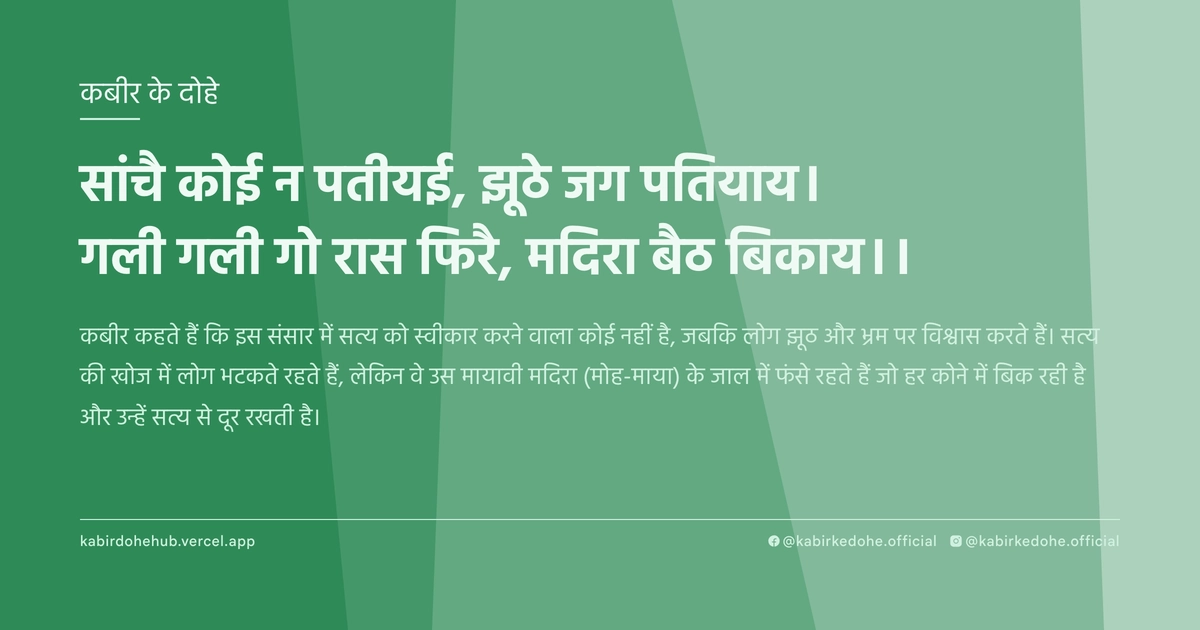
सांचै कोई न पतीयई, झूठे जग पतियाय।
गली गली गो रास फिरै, मदिरा बैठ बिकाय।।
Saanchai koi na patiyai, jhoothe jag patiyay. Gali gali go raas phirai, madira baith bikay.
इस पृष्ठ पर इस कबीर दोहे का अर्थ (meaning), हिंदी व्याख्या और अंग्रेज़ी अनुवाद, दार्शनिक विश्लेषण और व्यावहारिक जीवन सीख दी गई है। यह दोहा सत्य (Truth) विषय से जुड़ा है — Kabir doha meaning and explanation in Hindi and English.
अर्थ (Meaning):
कबीर कहते हैं कि इस संसार में सत्य को स्वीकार करने वाला कोई नहीं है, जबकि लोग झूठ और भ्रम पर विश्वास करते हैं। सत्य की खोज में लोग भटकते रहते हैं, लेकिन वे उस मायावी मदिरा (मोह-माया) के जाल में फंसे रहते हैं जो हर कोने में बिक रही है और उन्हें सत्य से दूर रखती है।
Kabir observes that in this world, no one trusts the Truth, while the masses place their faith in falsehoods. People wander through every street searching for fulfillment, yet they remain intoxicated by the 'wine' of worldly illusions (Maya), which is sold everywhere, blinding them to the ultimate reality.
व्याख्या (Interpretation):
यहाँ 'सांचै' का अर्थ केवल तथ्यात्मक सत्य नहीं, बल्कि निर्गुण ब्रह्म या आत्म-साक्षात्कार है। कबीर एक गहरे विरोधाभास को दर्शाते हैं: मनुष्य सत्य की प्यास तो रखता है, लेकिन वह केवल उन्हीं चीजों पर विश्वास करता है जो उसकी इंद्रियों को संतुष्ट करती हैं। 'मदिरा' यहाँ भौतिक सुखों, अहंकार और धार्मिक पाखंड का प्रतीक है। यह अद्वैत वेदांत के उस सिद्धांत को पुष्ट करता है जहाँ माया एक पर्दा है जो आत्मा को ब्रह्म से अलग दिखाता है। जब तक व्यक्ति इस 'नशे' में है, वह सत्य को देख नहीं पाता क्योंकि वह बाहरी शोर में खोया हुआ है। यह दोहा हमें चेतावनी देता है कि सत्य सरल है, लेकिन हमारी जटिल इच्छाएं उसे कठिन बना देती हैं।
Here, 'Truth' (Saanchai) does not refer to mere factual accuracy, but to the Nirgun Brahman or the realization of the Self. Kabir highlights a profound paradox: humans crave truth, yet they trust only that which gratifies their senses. The 'wine' (madira) serves as a metaphor for worldly attachments, ego, and ritualistic hypocrisy. This aligns with the Advaita Vedanta concept of Maya—the cosmic illusion that veils the non-duality of Atman and Brahman. As long as the seeker is intoxicated by this illusion, the Truth remains invisible, drowned out by the noise of external desires. The doha warns that while Truth is simple, our complex cravings make it seem unattainable, trapping us in a cycle of spiritual blindness.
दार्शनिक विश्लेषण (Philosophical Analysis):
कबीर का यह दोहा 15वीं शताब्दी के सामाजिक-धार्मिक परिवेश की उपज है, जहाँ कर्मकांड और बाहरी दिखावा चरम पर था। उन्होंने देखा कि लोग तीर्थों और मूर्तियों में सत्य खोज रहे थे, जबकि सत्य उनके भीतर था। यह दृष्टिकोण सूफीवाद के 'इश्क-ए-हकीकी' (परमात्मा से प्रेम) और भक्ति आंदोलन के 'सहज मार्ग' का संगम है। कबीर का तर्क है कि सत्य को किसी प्रमाण पत्र या बाहरी संस्था की आवश्यकता नहीं है; वह अनुभवजन्य है।
दार्शनिक स्तर पर, यह दोहा 'अविद्या' (अज्ञानता) पर प्रहार करता है। जब कबीर कहते हैं कि 'झूठे जग पतियाय', तो वे उस सामूहिक चेतना की बात कर रहे हैं जो सामाजिक मान्यताओं और झूठी प्रतिष्ठा को सत्य मान लेती है। यह अहंकार का वह सूक्ष्म जाल है जो व्यक्ति को यह विश्वास दिलाता है कि वह अलग है, जबकि अद्वैत के अनुसार सब एक ही चेतना का हिस्सा हैं।
ritualism (कर्मकांड) के प्रति उनकी घृणा स्पष्ट है। वे मानते हैं कि बाहरी अनुष्ठान केवल 'मदिरा' की तरह हैं—वे क्षणिक शांति देते हैं लेकिन वास्तविक जागृति नहीं। सत्य की प्राप्ति के लिए अहंकार का विसर्जन (annihilation of ego) अनिवार्य है। जब तक 'मैं' जीवित है, सत्य 'पराया' लगता है।
मनोवैज्ञानिक रूप से, यह दोहा पुष्टिकरण पूर्वाग्रह (confirmation bias) की बात करता है। मनुष्य वही सुनना चाहता है जो उसके मौजूदा भ्रमों को पुष्ट करे। सत्य अक्सर कड़वा और चुनौतीपूर्ण होता है क्योंकि यह हमारी पहचान को नष्ट करने की मांग करता है।
अंततः, कबीर हमें यह समझाते हैं कि सत्य कहीं बाहर 'बिकने' वाली वस्तु नहीं है। जो लोग गलियों में सत्य खोज रहे हैं, वे वास्तव में भ्रम की दुकानों पर सौदा कर रहे हैं। वास्तविक सत्य मौन में, अंतर्मुखी होकर और माया के नशे को त्याग कर ही प्राप्त किया जा सकता है।
This doha emerges from the 15th-century socio-religious climate where ritualism and external displays of piety were rampant. Kabir observed people seeking Truth in pilgrimages and idols, while the Truth resided within them. This perspective is a confluence of the Sufi 'Ishq-e-Haqiqi' (Divine Love) and the Bhakti movement's 'Sahaj Marg' (the natural path). Kabir argues that Truth requires no certification or external institution; it is purely experiential.
Philosophically, the verse attacks 'Avidya' (ignorance). When he says 'the world trusts the false,' he refers to the collective consciousness that mistakes social conventions and false prestige for reality. This is the subtle web of ego that convinces the individual of their separation, whereas Advaita teaches that all are manifestations of a single consciousness.
His disdain for ritualism is explicit. He views external rites as 'wine'—providing temporary solace but no genuine awakening. The annihilation of the ego is mandatory for the realization of Truth. As long as the 'I' exists, the Truth feels alien and distant.
Psychologically, the doha addresses confirmation bias. Humans tend to believe what reinforces their existing delusions. Truth is often bitter and challenging because it demands the dismantling of one's constructed identity.
Ultimately, Kabir explains that Truth is not a commodity to be bought or found in the 'streets' of the world. Those searching externally are merely trading in the markets of illusion. Real Truth is found in silence, introspection, and the conscious abandonment of the intoxication of Maya.
मूल संदेश (Core Message):
- बाहरी शोर में सत्य नहीं, बल्कि आंतरिक मौन में निवास करता है।
- सामाजिक मान्यताएं अक्सर सत्य के मार्ग में सबसे बड़ी बाधा होती हैं।
- अहंकार का त्याग ही वास्तविक आध्यात्मिक जागृति की पहली सीढ़ी है।
- सत्य कोई वस्तु नहीं जिसे खरीदा जा सके, यह एक अवस्था है।
- माया का नशा केवल आत्म-साक्षात्कार के माध्यम से ही उतर सकता है।
- Truth resides not in external noise, but in internal silence.
- Social validations are often the greatest obstacles on the path to Truth.
- The surrender of ego is the first step toward genuine spiritual awakening.
- Truth is not a commodity to be acquired, but a state of being.
- The intoxication of Maya can only be cured through Self-realization.
व्यावहारिक उदाहरण (Practical Example):
वाराणसी के एक पुराने घाट पर रहने वाले माधव नाम के एक वृद्ध कुम्हार थे। माधव अपनी कला में निपुण थे, लेकिन उनका मन हमेशा अशांत रहता था। वे शहर के सबसे बड़े पंडितों और धर्मगुरुओं के पास जाते, उनसे यह पूछते कि 'मोक्ष का सही रास्ता क्या है?' पंडित उन्हें कठिन व्रत, महंगे दान और विशेष मंत्रों के जाप की सलाह देते। माधव ने वर्षों तक इन 'नुस्खों' पर विश्वास किया, अपनी सारी जमापूंजी दान कर दी और दिन-रात अनुष्ठानों में लगे रहे, लेकिन उनके भीतर का खालीपन कम नहीं हुआ।
एक दिन, घाट की सीढ़ियों पर एक फकीर बैठा था जो बस मुस्कुरा रहा था। माधव ने उससे वही सवाल पूछा। फकीर ने माधव के हाथ की मिट्टी को देखा और कहा, 'माधव, तुम मिट्टी से घड़ा बनाते हो, लेकिन खुद को मिट्टी का पुतला मानकर अहंकार में डूबे हो। तुम उस सत्य को खोज रहे हो जिसे तुम हर दिन अपने हाथों से छूते हो, लेकिन तुम उसे उन लोगों की बातों में खोज रहे हो जो खुद भ्रम के नशे में हैं।'
माधव को पहले तो यह बात अजीब लगी। उन्हें लगा कि यह फकीर उन्हें मूर्ख बना रहा है। लेकिन फिर उन्होंने गौर किया कि जिन पंडितों ने उन्हें रास्ता दिखाया था, वे खुद आपसी विवादों और प्रतिष्ठा की लड़ाई में उलझे हुए थे। वे 'सत्य' बेच रहे थे, लेकिन उनके जीवन में शांति नहीं थी।
माधव ने महसूस किया कि वे अब तक 'मदिरा' पी रहे थे—वह मदिरा थी 'दिखावे की भक्ति' और 'दूसरों की मान्यता'। उन्होंने बाहरी खोज छोड़ दी और अपने काम में ही ध्यान लगाना शुरू किया।
उन्होंने देखा कि जब वे पूरी तन्मयता से मिट्टी को आकार देते हैं, तो वे और मिट्टी एक हो जाते हैं। वहां कोई 'मैं' नहीं बचता, केवल सृजन बचता है।
इस बोध ने उनके व्यवहार को बदल दिया। अब वे दूसरों को उपदेश नहीं देते थे, बल्कि अपनी शांति से दूसरों को प्रभावित करते थे।
उन्होंने उन सभी कर्मकांडों को त्याग दिया जो केवल सामाजिक प्रतिष्ठा के लिए थे।
अंत में, माधव ने पाया कि जिस सत्य के लिए वे गलियों में भटक रहे थे, वह उनके अपने भीतर की सादगी और वर्तमान क्षण की जागरूकता में छिपा था।
In the ancient ghats of Varanasi lived an elderly potter named Madhav. Madhav was a master of his craft, yet his mind was perpetually restless. He frequently visited the city's most prominent pundits and religious leaders, asking, 'What is the true path to salvation?' The pundits advised him to observe rigorous fasts, make expensive donations, and chant specific complex mantras. For years, Madhav trusted these 'prescriptions,' spending his life savings on rituals, yet the void within him remained unfilled.
One day, he encountered a wandering fakir sitting on the steps of the ghat, simply smiling. Madhav asked him the same question. The fakir looked at the clay on Madhav's hands and said, 'Madhav, you shape pots from clay, yet you are intoxicated by the ego of being a mere clay doll. You seek a Truth that you touch every day with your own hands, but you search for it in the words of those who are themselves drunk on illusion.'
Initially, Madhav found this absurd. He felt the fakir was mocking him. However, he began to notice that the pundits who had guided him were themselves embroiled in petty disputes and battles for prestige. They were 'selling' Truth, but their own lives lacked peace.
Madhav realized he had been drinking 'wine'—the wine of 'performative piety' and 'social validation.' He ceased his external search and began to infuse his daily work with mindfulness.
He discovered that when he shaped the clay with total absorption, the distinction between the potter and the clay vanished. There was no 'I' left, only the act of creation.
This realization transformed his behavior. He stopped preaching to others and instead influenced them through his innate tranquility.
He abandoned all rituals that served only to bolster his social standing.
Ultimately, Madhav found that the Truth he had chased through the streets was hidden in the simplicity of his own being and the awareness of the present moment.
अभ्यास मार्गदर्शन (Practice Guidance):
- प्रतिदिन 20 मिनट मौन का अभ्यास करें, जहाँ आप केवल अपने विचारों को देखें बिना किसी निर्णय के, यह पहचानते हुए कि कौन से विचार 'सत्य' हैं और कौन से 'माया' (भ्रम)।
- एक 'भ्रम डायरी' (Illusion Journal) लिखें: दिन भर में उन क्षणों को नोट करें जब आपने किसी बाहरी प्रशंसा या सामाजिक मान्यता को अपनी खुशी का आधार बनाया।
- व्यवहार परिवर्तन: किसी भी धार्मिक या आध्यात्मिक दावे को आँख मूँदकर मानने के बजाय, उसे अपने व्यक्तिगत अनुभव और विवेक की कसौटी पर कसें।
- निदान चेकलिस्ट: क्या मैं अपनी पहचान अपनी उपलब्धियों या पद से जोड़ रहा हूँ? क्या मैं दूसरों को प्रभावित करने के लिए आध्यात्मिक शब्दों का प्रयोग करता हूँ? यदि हाँ, तो आप अभी भी 'मदिरा' के प्रभाव में हैं।
- Practice 20 minutes of daily silence, observing your thoughts without judgment, distinguishing between what is 'Truth' and what is 'Maya' (illusion).
- Maintain an 'Illusion Journal': Note moments throughout the day when you relied on external praise or social validation for your happiness.
- Behavioral Shift: Instead of blindly accepting religious or spiritual claims, test them against your own personal experience and rational discernment.
- Diagnostic Checklist: Am I tying my identity to my achievements or status? Do I use spiritual terminology primarily to impress others? If yes, you are still under the influence of the 'wine' of ego.
चिंतन प्रश्न (Reflection Questions):
- मेरे जीवन का वह कौन सा 'सत्य' है जिसे मैं केवल इसलिए नहीं मानता क्योंकि वह मेरी सुखद छवि को तोड़ता है?
- मैं अपनी आध्यात्मिक यात्रा में कितना हिस्सा 'दिखावे' के लिए समर्पित कर रहा हूँ?
- यदि मेरी सारी सामाजिक पहचान (पद, नाम, रिश्ता) छीन ली जाए, तो मेरे पास क्या बचेगा?
- क्या मैं वास्तव में सत्य की खोज कर रहा हूँ, या मैं केवल अपने भ्रमों की पुष्टि करने वाले लोगों को खोज रहा हूँ?
- मेरे भीतर का वह कौन सा 'नशा' है जो मुझे वर्तमान क्षण की वास्तविकता को देखने से रोकता है?
- What 'Truth' in my life do I refuse to accept simply because it shatters my comfortable self-image?
- How much of my spiritual journey is dedicated to 'performance' for the eyes of others?
- If all my social identities (status, name, relationships) were stripped away, what would remain of me?
- Am I truly seeking Truth, or am I merely seeking people who confirm my existing delusions?
- What is the specific 'intoxication' within me that prevents me from seeing the reality of the present moment?