
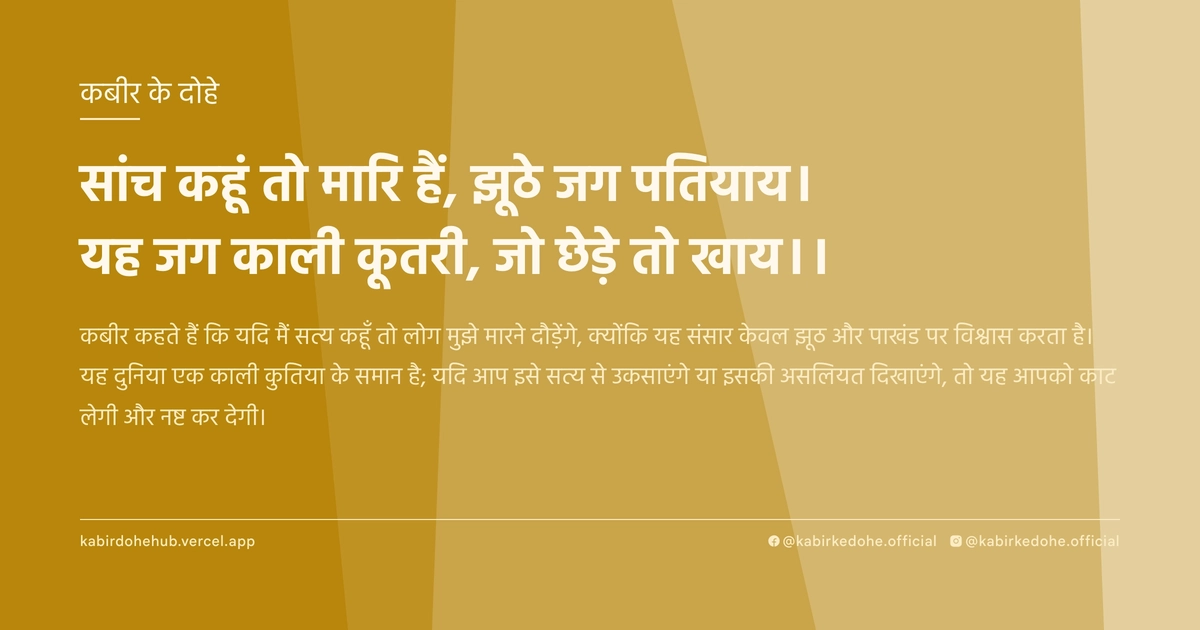
सांच कहूं तो मारि हैं, झूठे जग पतियाय।
यह जग काली कूतरी, जो छेड़े तो खाय।।
Saanch kahun to maari hain, jhoothe jag patiyaay. Yeh jag kaali kootri, jo chhede to khaay.
इस पृष्ठ पर इस कबीर दोहे का अर्थ (meaning), हिंदी व्याख्या और अंग्रेज़ी अनुवाद, दार्शनिक विश्लेषण और व्यावहारिक जीवन सीख दी गई है। यह दोहा सत्य (Truth) विषय से जुड़ा है — Kabir doha meaning and explanation in Hindi and English.
अर्थ (Meaning):
कबीर कहते हैं कि यदि मैं सत्य कहूँ तो लोग मुझे मारने दौड़ेंगे, क्योंकि यह संसार केवल झूठ और पाखंड पर विश्वास करता है। यह दुनिया एक काली कुतिया के समान है; यदि आप इसे सत्य से उकसाएंगे या इसकी असलियत दिखाएंगे, तो यह आपको काट लेगी और नष्ट कर देगी।
Kabir asserts that speaking the truth invites persecution because the world is conditioned to believe in falsehoods. He compares the world to a fierce black dog; if one attempts to provoke it by exposing the truth or challenging its illusions, it will lash out and devour the speaker.
व्याख्या (Interpretation):
यहाँ 'सत्य' केवल शब्दों का सच नहीं, बल्कि आत्म-साक्षात्कार और निराकार ब्रह्म की अनुभूति है। कबीर इस विरोधाभास को दर्शाते हैं कि समाज सत्य की खोज का दावा तो करता है, लेकिन जब सत्य उसके अहंकार और सामाजिक मुखौटों को चुनौती देता है, तो वह हिंसक हो जाता है। 'काली कूतरी' माया और अज्ञान के उस अंधकार का प्रतीक है जो अपनी सत्ता को बचाने के लिए सत्य को निगलने का प्रयास करता है। यह निर्गुण भक्ति का वह पहलू है जहाँ साधक को दुनिया के तिरस्कार और विरोध को सहना पड़ता है क्योंकि वह द्वैत के भ्रम को तोड़ रहा होता है।
Here, 'Truth' refers not merely to factual accuracy, but to the realization of the formless Brahman. Kabir highlights the paradox where society claims to seek truth but reacts violently when that truth challenges its ego and social masks. The 'black dog' symbolizes the darkness of Maya (illusion) and ignorance, which seeks to devour anyone who threatens its perceived stability. This reflects the path of Nirgun Bhakti, where the seeker must endure social ostracization because they are dismantling the duality that the world depends upon for its superficial identity.
दार्शनिक विश्लेषण (Philosophical Analysis):
कबीर का यह दोहा उनके समय के धार्मिक पाखंड और सामाजिक स्तरीकरण पर एक तीखा प्रहार है। वे उस युग में थे जहाँ धर्म बाहरी कर्मकांडों और जातिगत श्रेष्ठता में सिमट गया था। कबीर का 'सत्य' अद्वैत वेदांत के उस सिद्धांत से जुड़ा है जहाँ आत्मा और परमात्मा एक हैं, और कोई भी बाहरी अनुष्ठान या मध्यस्थ इस सत्य तक नहीं पहुँचा सकता।
सूफी मत के 'फना' (अहंकार का विनाश) की तरह, कबीर समझाते हैं कि जब तक मनुष्य अपनी सामाजिक पहचान और झूठी प्रतिष्ठा के मोह में है, वह सत्य को स्वीकार नहीं कर पाएगा। संसार की 'काली कुतिया' वास्तव में सामूहिक अहंकार है। जब एक व्यक्ति सत्य बोलता है, तो वह अनजाने में दूसरों के झूठ का आइना बन जाता है, जिससे लोग असुरक्षित महसूस करते हैं और क्रोधित होते हैं।
यह दोहा इस बात की पुष्टि करता है कि सत्य का मार्ग एकाकी होता है। कबीर ritualism (कर्मकांड) का विरोध इसलिए करते हैं क्योंकि वे इसे सत्य की ओट में छिपा हुआ एक झूठ मानते हैं। उनके लिए, मंदिर-मस्जिद की दीवारों से ऊपर उठकर हृदय की शुद्धि ही वास्तविक धर्म है।
मनोवैज्ञानिक स्तर पर, यह दोहा 'संज्ञानात्मक विसंगति' (Cognitive Dissonance) को दर्शाता है। जब व्यक्ति का स्थापित विश्वास तंत्र चुनौती पाता है, तो वह तर्क के बजाय हिंसा या तिरस्कार का सहारा लेता है। कबीर इस प्रक्रिया को एक चेतावनी के रूप में प्रस्तुत करते हैं कि सत्य की कीमत अक्सर सामाजिक अलगाव होती है।
अंततः, यह संदेश देता है कि सत्य की खोज बाहरी मान्यता प्राप्त करने के लिए नहीं, बल्कि आंतरिक मुक्ति के लिए होनी चाहिए। यदि आप दुनिया की स्वीकृति चाहते हैं, तो आपको झूठ का साथ देना होगा, लेकिन यदि आप मुक्ति चाहते हैं, तो आपको दुनिया के 'काटने' के लिए तैयार रहना होगा।
This couplet is a searing critique of the religious hypocrisy and social stratification of Kabir's era. He lived in a time when spirituality had been reduced to external rituals and caste-based superiority. Kabir's 'Truth' aligns with the Advaita Vedanta principle that the Atman and Brahman are one, and no external ritual or intermediary can bridge this gap.
Similar to the Sufi concept of 'Fana' (annihilation of the ego), Kabir explains that as long as a person is attached to their social identity and false prestige, they cannot accept the Truth. The 'black dog' is a metaphor for the collective ego. When an individual speaks the truth, they inadvertently become a mirror to others' lies, triggering insecurity and aggression.
This verse confirms that the path of truth is inherently solitary. Kabir rejects ritualism because he views it as a lie masquerading as truth. For him, true religion lies in the purification of the heart, transcending the walls of temples and mosques.
Psychologically, this illustrates 'cognitive dissonance.' When a person's established belief system is challenged, they often resort to violence or disdain rather than logic. Kabir presents this as a warning: the price of truth is often social alienation.
Ultimately, the message is that the pursuit of truth should not be for external validation but for internal liberation. If one seeks the world's approval, they must collaborate with falsehood; if they seek liberation, they must be prepared for the world's hostility.
मूल संदेश (Core Message):
- सत्य का मार्ग सामाजिक स्वीकृति से मुक्त होता है।
- अहंकार सत्य को शत्रु की तरह देखता है।
- बाहरी शोर के बीच आंतरिक मौन ही वास्तविक शक्ति है।
- माया का भ्रम केवल तभी टूटता है जब हम आलोचना से नहीं डरते।
- सत्य की खोज स्वयं के लिए करें, दुनिया को दिखाने के लिए नहीं।
- The path of truth is independent of social validation.
- The ego perceives the truth as a mortal enemy.
- Internal silence amidst external noise is the only real power.
- The illusion of Maya breaks only when we cease fearing criticism.
- Seek truth for your own liberation, not for public display.
व्यावहारिक उदाहरण (Practical Example):
एक समय की बात है, बनारस की तंग गलियों में माधव नाम का एक पुराना बुनकर रहता था। माधव ने वर्षों की तपस्या और कबीर की वाणी से यह जान लिया था कि ईश्वर किसी विशेष जाति या मंदिर में नहीं, बल्कि हर इंसान की सांसों में है।
उस समय शहर में एक बहुत बड़ा धार्मिक आयोजन हो रहा था, जहाँ एक प्रभावशाली पंडित यह दावा कर रहे थे कि केवल उच्च कुल के लोग ही मोक्ष पा सकते हैं। माधव ने साहस जुटाकर भीड़ के सामने खड़े होकर कहा, 'महाराज, यदि ईश्वर सबका है, तो वह केवल एक कुल का कैसे हो सकता है? सत्य तो यह है कि हम सब एक ही मिट्टी के पुतले हैं।'
जैसे ही माधव ने यह कहा, भीड़ में सन्नाटा छा गया। पंडित जी को लगा कि उनकी सत्ता और प्रतिष्ठा को चुनौती दी गई है। उन्होंने माधव को 'पाखंडी' और 'अपवित्र' घोषित कर दिया।
देखते ही देखते, जो लोग माधव को कल तक एक कुशल बुनकर मानते थे, वे उसे गालियां देने लगे। कुछ लोगों ने उसकी दुकान के बाहर थूक दिया, और कुछ ने उसके कपड़ों को फाड़ दिया।
माधव को आश्चर्य हुआ कि जिस सत्य को वह प्रेम समझकर बांट रहा था, दुनिया उसे नफरत से क्यों देख रही है। उसे महसूस हुआ कि वह उस 'काली कुतिया' को छेड़ चुका था, जिसे लोग 'धर्म' कह रहे थे लेकिन वह वास्तव में 'अहंकार' था।
उस रात माधव अपने टूटे हुए करघे के पास बैठा था। उसने महसूस किया कि उसकी बाहरी प्रतिष्ठा नष्ट हो गई है, लेकिन उसके भीतर एक अभूतपूर्व शांति है। उसे अब किसी की स्वीकृति की आवश्यकता नहीं थी।
अगले दिन, एक छोटा बच्चा उसके पास आया और पूछा, 'बाबा, सब आपको बुरा कह रहे हैं, क्या आप सच में बुरे हैं?' माधव ने मुस्कुराकर कहा, 'बेटा, जब सच आईना बन जाता है, तो लोग आईना तोड़ना चाहते हैं, चेहरा नहीं।'
माधव ने अब दुनिया से लड़ना छोड़ दिया और मौन रहकर अपनी बुनाई और भक्ति में लीन हो गया। धीरे-धीरे, उसकी शांति ने उन लोगों को भी आकर्षित करना शुरू किया जो धर्म के शोर से थक चुके थे।
उसका जीवन अब एक उदाहरण था कि सत्य की कीमत चुकानी पड़ती है, लेकिन उस कीमत के बाद जो स्वतंत्रता मिलती है, वह अनमोल है।
Once in the narrow lanes of Varanasi lived an old weaver named Madhav. Through years of contemplation and the teachings of Kabir, Madhav realized that God does not reside in a specific caste or temple, but in the breath of every human being.
At that time, a grand religious event was taking place in the city, where an influential priest claimed that only those of high birth could attain salvation. Gathering his courage, Madhav stood before the crowd and said, 'Maharaj, if God belongs to everyone, how can He belong to only one lineage? The truth is that we are all puppets made of the same clay.'
As soon as Madhav spoke, a heavy silence fell over the crowd. The priest felt his authority and prestige were being challenged. He immediately declared Madhav a 'hypocrite' and 'impure.'
Suddenly, the people who had regarded Madhav as a skilled weaver until yesterday began to hurl abuses at him. Some spat outside his shop, and others tore his fabrics.
Madhav was astonished that the truth he was sharing out of love was being met with such hatred. He realized he had provoked the 'black dog'—which people called 'religion' but was actually 'ego.'
That night, sitting by his broken loom, Madhav felt that while his external reputation was destroyed, an unprecedented peace had descended upon him. He no longer craved anyone's approval.
The next day, a small child approached him and asked, 'Baba, everyone says you are bad. Are you really bad?' Madhav smiled and replied, 'Child, when truth becomes a mirror, people prefer to break the mirror rather than fix their face.'
Madhav stopped fighting the world and immersed himself in silence, weaving and devotion. Gradually, his stillness began to attract those who were exhausted by the noise of organized religion.
His life became a testament that while the price of truth is high, the freedom gained after paying it is priceless.
अभ्यास मार्गदर्शन (Practice Guidance):
- प्रतिदिन 20 मिनट मौन का अभ्यास करें, जहाँ आप अपने सामाजिक मुखौटों (जैसे पद, प्रतिष्ठा, जाति) को मानसिक रूप से उतार दें।
- एक 'सत्य-डायरी' लिखें: उन क्षणों को दर्ज करें जब आपने केवल दूसरों को खुश करने के लिए झूठ बोला या चुप रहे। विश्लेषण करें कि उस समय आपका कौन सा डर सक्रिय था।
- व्यवहार परिवर्तन: जब कोई आपकी आलोचना करे, तो तुरंत प्रतिक्रिया देने के बजाय यह देखें कि क्या आपकी बात ने उनके अहंकार को चोट पहुँचाई है।
- निदान चेकलिस्ट: यदि आप सत्य बोलने पर अत्यधिक व्याकुल होते हैं या दूसरों की स्वीकृति के लिए अपनी मान्यताओं को बदलते हैं, तो आप अभी भी 'माया' के प्रभाव में हैं।
- Practice 20 minutes of daily silence, mentally stripping away your social masks (such as rank, prestige, or caste).
- Maintain a 'Truth-Journal': Record moments where you lied or remained silent just to please others. Analyze which fear was active at that moment.
- Behavioral Shift: When criticized, instead of reacting immediately, observe whether your truth bruised the other person's ego.
- Diagnostic Checklist: If you feel extreme anxiety when speaking the truth or constantly alter your beliefs for social approval, you are still under the influence of Maya.
चिंतन प्रश्न (Reflection Questions):
- मेरे जीवन का वह कौन सा 'सत्य' है जिसे मैं दुनिया के डर से दबाकर बैठा हूँ?
- क्या मेरी धार्मिक या आध्यात्मिक पहचान वास्तव में मेरी है, या यह केवल एक सामाजिक मुखौटा है?
- जब कोई मेरी मान्यताओं को चुनौती देता है, तो मुझे क्रोध क्यों आता है? क्या वह मेरा सत्य है या मेरा अहंकार?
- मैं अपनी डिजिटल पहचान (Social Media) पर जो सत्य दिखाता हूँ, वह मेरे वास्तविक जीवन से कितना अलग है?
- क्या मैं सत्य को सुनने की क्षमता रखता हूँ, या मैं भी उस 'काली कुतिया' की तरह हूँ जो सत्य बोलने वालों को काटता है?
- What is the 'truth' in my life that I have suppressed out of fear of the world?
- Is my religious or spiritual identity truly mine, or is it merely a social mask?
- Why do I feel anger when someone challenges my beliefs? Is it my truth being attacked, or my ego?
- How different is the 'truth' I project in my digital identity from my actual lived reality?
- Do I possess the capacity to listen to the truth, or am I also like that 'black dog' who attacks those who speak it?