
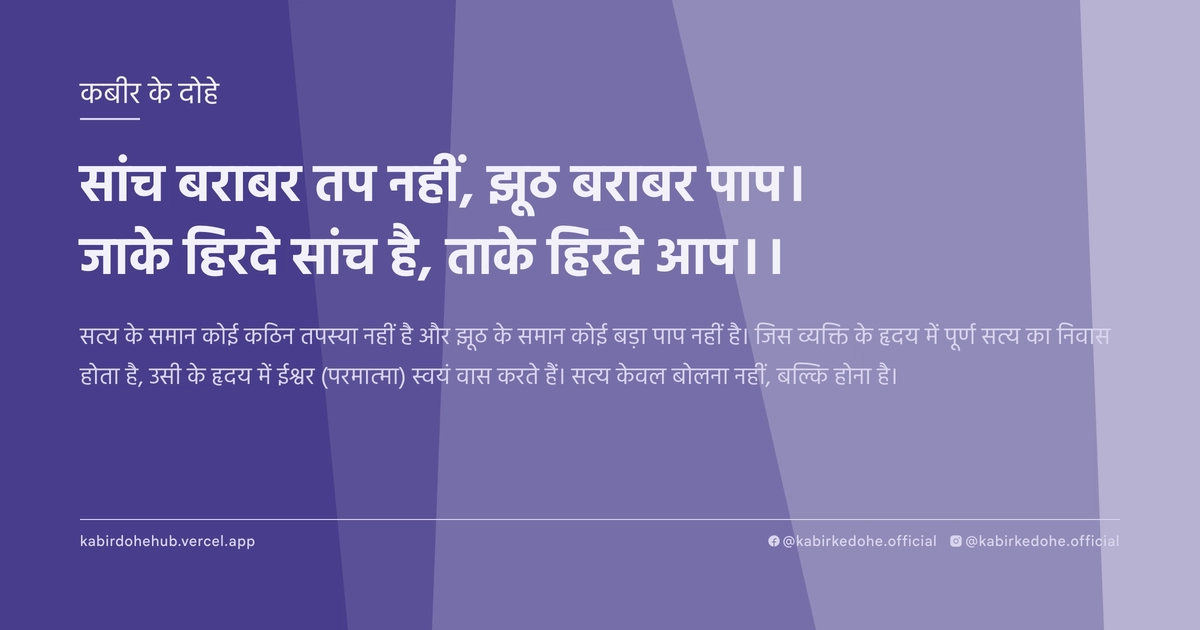
सांच बराबर तप नहीं, झूठ बराबर पाप।
जाके हिरदे सांच है, ताके हिरदे आप।।
Saanch barabar tap nahin, jhooth barabar paap. Jaake hirde saanch hai, taake hirde aap.
इस पृष्ठ पर इस कबीर दोहे का अर्थ (meaning), हिंदी व्याख्या और अंग्रेज़ी अनुवाद, दार्शनिक विश्लेषण और व्यावहारिक जीवन सीख दी गई है। यह दोहा सत्य (Truth) विषय से जुड़ा है — Kabir doha meaning and explanation in Hindi and English.
अर्थ (Meaning):
सत्य के समान कोई कठिन तपस्या नहीं है और झूठ के समान कोई बड़ा पाप नहीं है। जिस व्यक्ति के हृदय में पूर्ण सत्य का निवास होता है, उसी के हृदय में ईश्वर (परमात्मा) स्वयं वास करते हैं। सत्य केवल बोलना नहीं, बल्कि होना है।
There is no austerity as potent as Truth, and no sin as grave as falsehood. In the heart where Truth resides in its purest form, the Divine Himself manifests. Truth is not merely the act of speaking correctly, but the state of being authentic.
व्याख्या (Interpretation):
कबीर यहाँ सत्य को एक बाहरी नियम के बजाय एक आंतरिक साधना के रूप में प्रस्तुत करते हैं। 'तप' का अर्थ यहाँ केवल शारीरिक कष्ट नहीं, बल्कि अहंकार को गलाने की प्रक्रिया है। जब मनुष्य झूठ बोलता है, तो वह वास्तव में माया के जाल में फंसकर स्वयं को और ईश्वर को अलग मानता है। यह द्वैत ही सबसे बड़ा पाप है। निर्गुण भक्ति के अनुसार, सत्य ही ब्रह्म है। जब हृदय से मिथ्यात्व (झूठ) समाप्त होता है, तो आत्मा और परमात्मा का भेद मिट जाता है, और साधक को अनुभव होता है कि वह स्वयं उस अनंत सत्य का हिस्सा है।
Kabir presents Truth not as an external moral commandment, but as an internal spiritual discipline. 'Tap' (austerity) here refers not to physical hardship, but to the process of dissolving the ego. When a human lies, they succumb to the veil of Maya, creating a perceived separation between the self and the Divine. This duality is the ultimate sin. In Nirgun Bhakti, Truth is synonymous with Brahman. Once the falsehood of the ego is eradicated, the distinction between Atman and Brahman vanishes, revealing that the Divine resides within the heart of the truthful seeker.
दार्शनिक विश्लेषण (Philosophical Analysis):
कबीर का यह दोहा मध्यकालीन भारत के उस दौर का है जब धर्म कर्मकांडों और बाहरी दिखावों में सिमट गया था। कबीर ने स्पष्ट किया कि मोक्ष किसी मंदिर, मस्जिद या कठिन व्रत से नहीं, बल्कि आंतरिक ईमानदारी से मिलता है। यह दृष्टिकोण अद्वैत वेदांत के करीब है, जहाँ 'सत्य' (Sat) ही एकमात्र वास्तविकता है और बाकी सब माया है।
झूठ को 'पाप' इसलिए कहा गया है क्योंकि झूठ व्यक्ति को सत्य से दूर ले जाता है और अहंकार को पुष्ट करता है। सूफी मत के 'फना' (अहंकार का विनाश) की तरह, कबीर भी कहते हैं कि जब तक 'मैं' और मेरा 'झूठ' है, तब तक ईश्वर नहीं मिल सकते। सत्य का मार्ग सबसे कठिन है क्योंकि इसमें अपनी गलतियों को स्वीकार करने का साहस चाहिए।
यहाँ 'आप' शब्द का प्रयोग ईश्वर के लिए किया गया है, जो यह दर्शाता है कि परमात्मा कोई बाहरी सत्ता नहीं बल्कि अंतरात्मा की शुद्धता का प्रतिबिंब है। यह कर्मकांडीय धर्म के विरुद्ध एक सशक्त प्रहार है, जो यह सिखाता है कि पवित्रता बाहरी स्नान से नहीं, बल्कि विचारों की सत्यता से आती है।
मनोवैज्ञानिक स्तर पर, झूठ एक आंतरिक संघर्ष पैदा करता है जो चेतना को खंडित करता है। जब व्यक्ति सत्य को अपनाता है, तो उसका व्यक्तित्व एकीकृत हो जाता है, जिससे मानसिक शांति और आध्यात्मिक स्पष्टता प्राप्त होती है।
अंततः, कबीर यह संदेश देते हैं कि सत्य ही वह सेतु है जो मनुष्य को उसकी सीमित पहचान से मुक्त कर उसे सार्वभौमिक चेतना से जोड़ता है। सत्य का पालन करना ही वास्तविक भक्ति है।
This couplet emerges from a medieval Indian era where religion had devolved into rigid rituals and superficial displays. Kabir asserts that liberation is attained not through temples, mosques, or arduous fasts, but through internal integrity. This aligns closely with Advaita Vedanta, where 'Sat' (Truth/Existence) is the only reality and everything else is Maya (illusion).
Falsehood is labeled as 'sin' because it alienates the individual from the Truth and reinforces the ego. Similar to the Sufi concept of 'Fana' (annihilation of the self), Kabir suggests that as long as the 'I' and its lies persist, the Divine cannot be realized. The path of Truth is the most difficult austerity because it requires the courage to confront one's own flaws.
The use of the word 'Aap' for the Divine signifies that God is not an external entity but a reflection of the purity of the inner soul. This is a direct critique of ritualistic religion, teaching that purity comes from the truthfulness of thought, not from ceremonial ablutions.
Psychologically, lying creates an internal conflict that fragments consciousness. When a person embraces Truth, their personality becomes integrated, leading to profound mental peace and spiritual clarity.
Ultimately, Kabir conveys that Truth is the bridge that liberates a human from their limited identity and connects them to universal consciousness. Living in Truth is the highest form of devotion.
मूल संदेश (Core Message):
- अहंकार का झूठ ही ईश्वर और आत्मा के बीच की सबसे बड़ी दीवार है।
- सत्य बोलना केवल नैतिकता नहीं, बल्कि एक गहन आध्यात्मिक साधना है।
- जब आप स्वयं से सच्चे होते हैं, तब आप ब्रह्मांड के सत्य से जुड़ जाते हैं।
- बाहरी आडंबरों से बेहतर है कि हृदय में सत्य की एक छोटी सी लौ जलती रहे।
- सत्य का मार्ग कठिन है, लेकिन यही एकमात्र मार्ग है जो मुक्ति की ओर ले जाता है।
- ईश्वर किसी मंदिर में नहीं, बल्कि सत्यनिष्ठा वाले हृदय में निवास करते हैं।
- The lies of the ego are the greatest wall between the soul and the Divine.
- Speaking the truth is not merely morality, but a profound spiritual discipline.
- When you are true to yourself, you align with the Truth of the Universe.
- A small flame of truth in the heart is superior to all external rituals.
- The path of Truth is arduous, yet it is the only road leading to liberation.
- The Divine resides not in temples, but in the heart of the sincere.
व्यावहारिक उदाहरण (Practical Example):
एक समय की बात है, वाराणसी के घाटों पर माधव नाम का एक वृद्ध बुनकर रहता था। माधव अपनी ईमानदारी के लिए जाना जाता था, लेकिन उसके परिवार की स्थिति बहुत खराब थी।
एक दिन, एक धनी व्यापारी ने उसे एक बहुत महंगा रेशमी कपड़ा बुनने का काम दिया और वादा किया कि यदि कपड़ा त्रुटिहीन हुआ, तो वह उसे सोने की मोहरों से भुगतान करेगा।
माधव ने दिन-रात मेहनत की, लेकिन अंतिम दिन उसे एहसास हुआ कि कपड़े के एक कोने में एक बहुत छोटा सा धागा गलत निकल गया था, जो शायद किसी की नजर में न आता।
व्यापारी ने कपड़ा देखा और बहुत खुश हुआ। उसने माधव को सोने की मोहरें देनी चाही, लेकिन माधव ने रुककर उस छोटी सी गलती के बारे में बताया।
व्यापारी हैरान था। उसने कहा, 'यह गलती इतनी छोटी है कि कोई नहीं देख सकता, फिर तुम अपनी मेहनत का फल क्यों जोखिम में डाल रहे हो?'
माधव ने शांति से उत्तर दिया, 'सेठ जी, आप शायद न देखें, लेकिन मैं तो देख रहा हूँ। और जो मेरे भीतर देख रहा है, उससे मैं झूठ कैसे बोलूँ?'
व्यापारी माधव की इस सत्यनिष्ठा से इतना प्रभावित हुआ कि उसने उसे न केवल पूरा भुगतान किया, बल्कि उसे अपने व्यापार में भागीदार भी बना लिया।
माधव का यह छोटा सा सत्य उसके जीवन की दिशा बदल गया। उसने साबित किया कि सत्य केवल शब्दों में नहीं, बल्कि कार्य की शुद्धता में होता है।
उसने अपनी गरीबी को अपनी ईमानदारी की बलि नहीं चढ़ने दिया, और अंततः उसे वह सम्मान और समृद्धि मिली जिसकी उसने कभी कल्पना नहीं की थी।
यह 'कबीर ट्विस्ट' था—जहाँ एक छोटी सी ईमानदारी ने एक बड़े लालच को हरा दिया और आत्मा को परमात्मा के करीब पहुँचा दिया।
Once, on the ghats of Varanasi, lived an elderly weaver named Madhav. Madhav was known for his honesty, though his family lived in extreme poverty.
One day, a wealthy merchant commissioned him to weave an exquisite silk cloth, promising a payment of gold coins if the work was flawless.
Madhav worked tirelessly day and night, but on the final day, he noticed a tiny flaw—a single misplaced thread in a corner, almost invisible to the naked eye.
The merchant inspected the cloth and was delighted. As he reached for the gold coins, Madhav stopped him and pointed out the small error.
The merchant was baffled. 'This flaw is so minuscule that no one would ever notice. Why risk your hard-earned reward?' he asked.
Madhav replied calmly, 'Seth ji, you may not see it, but I see it. And how can I lie to the One who watches me from within?'
The merchant was so moved by Madhav's unwavering integrity that he not only paid him in full but offered him a partnership in his business.
Madhav's small act of truth transformed the trajectory of his life. He proved that truth is not just in words, but in the purity of action.
He refused to sacrifice his honesty for the sake of poverty, and eventually attained a level of respect and prosperity he had never imagined.
This was the 'Kabir Twist'—where a small moment of integrity defeated a great temptation and brought the soul closer to the Divine.
अभ्यास मार्गदर्शन (Practice Guidance):
- प्रतिदिन 15 मिनट मौन ध्यान करें और अपने दिनभर के झूठों (चाहे वे छोटे ही क्यों न हों) का निरीक्षण करें, बिना किसी निर्णय के।
- एक 'सत्य पत्रिका' (Truth Journal) लिखें, जिसमें आप उन क्षणों को दर्ज करें जब आपने सच बोलने के बजाय आसान झूठ को चुना, और विश्लेषण करें कि डर क्या था।
- व्यवहार परिवर्तन: किसी भी स्थिति में 'सफेद झूठ' (White Lies) बोलने की आदत को धीरे-धीरे त्यागें और विनम्रता के साथ सत्य बोलना सीखें।
- नैदानिक चेकलिस्ट: क्या मैं दूसरों के सामने अपनी छवि बचाने के लिए झूठ बोलता हूँ? क्या मुझे सच बोलने के बाद बेचैनी होती है? क्या मेरा आंतरिक मन और बाहरी व्यवहार एक समान हैं?
- Practice 15 minutes of silent meditation daily, observing the lies told throughout the day (no matter how small) without judgment.
- Maintain a 'Truth Journal' to record moments where you chose a convenient lie over the truth, analyzing the underlying fear.
- Behavioral Shift: Gradually abandon the habit of 'white lies' and learn to speak the truth with kindness and humility.
- Diagnostic Checklist: Do I lie to protect my public image? Do I feel restlessness after speaking the truth? Is my internal state aligned with my external behavior?
चिंतन प्रश्न (Reflection Questions):
- क्या मेरी 'सच्चाई' केवल वही है जो मैं दुनिया को दिखाना चाहता हूँ, या इसमें मेरी अंधेरी परछाइयाँ भी शामिल हैं?
- मैं किन परिस्थितियों में झूठ बोलने को 'जरूरी' मानता हूँ, और वह जरूरत वास्तव में किसकी है—मेरी या मेरे अहंकार की?
- यदि आज मेरा पूरा जीवन एक खुली किताब बन जाए, तो मुझे सबसे ज्यादा डर किस बात का लगेगा?
- क्या मेरा डिजिटल व्यक्तित्व (सोशल मीडिया) मेरे वास्तविक अस्तित्व का सच है या एक निर्मित भ्रम?
- सत्य बोलने से होने वाले नुकसान का डर मुझे ईश्वर से दूर कर रहा है या उनके करीब ला रहा है?
- क्या मैं दूसरों से सत्य की अपेक्षा करता हूँ, जबकि मैं स्वयं सत्य के प्रति कितना प्रतिबद्ध हूँ?
- Is my 'truth' only what I wish to show the world, or does it include my hidden shadows?
- In which situations do I consider lying 'necessary,' and whose need is it—mine or my ego's?
- If my entire life became an open book today, what would I fear the most?
- Is my digital persona a reflection of my true existence or a constructed illusion?
- Is the fear of loss resulting from truth distancing me from the Divine or drawing me closer?
- Do I demand truth from others while remaining uncommitted to it myself?