
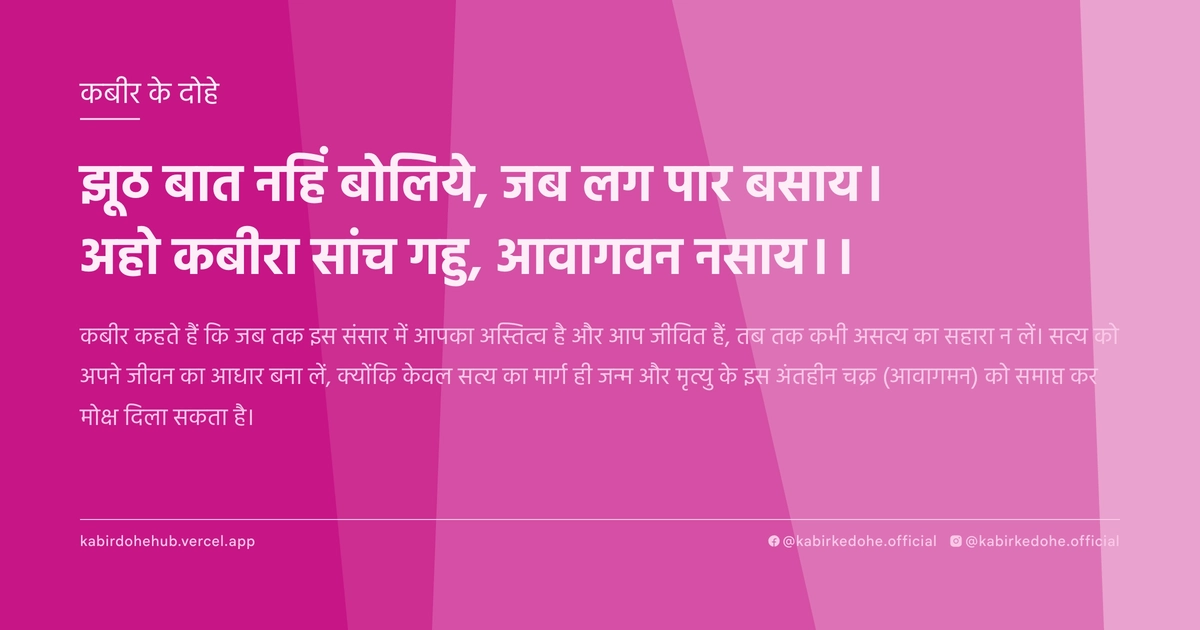
झूठ बात नहिं बोलिये, जब लग पार बसाय।
अहो कबीरा सांच गहु, आवागवन नसाय।।
Jhooth baat nahin boliye, jab lag paar basay. Aho Kabira saanch gahu, aavagavan nasay.
इस पृष्ठ पर इस कबीर दोहे का अर्थ (meaning), हिंदी व्याख्या और अंग्रेज़ी अनुवाद, दार्शनिक विश्लेषण और व्यावहारिक जीवन सीख दी गई है। यह दोहा सत्य (Truth) विषय से जुड़ा है — Kabir doha meaning and explanation in Hindi and English.
अर्थ (Meaning):
कबीर कहते हैं कि जब तक इस संसार में आपका अस्तित्व है और आप जीवित हैं, तब तक कभी असत्य का सहारा न लें। सत्य को अपने जीवन का आधार बना लें, क्योंकि केवल सत्य का मार्ग ही जन्म और मृत्यु के इस अंतहीन चक्र (आवागमन) को समाप्त कर मोक्ष दिला सकता है।
Kabir advises against speaking falsehoods as long as one resides in this mortal realm. He emphasizes that embracing Truth (Satya) as one's core existence is the only way to dissolve the cycle of birth and death, ultimately leading to liberation from the repetitive loop of worldly existence.
व्याख्या (Interpretation):
शाब्दिक रूप से यह दोहा झूठ न बोलने की नैतिक सलाह देता है, परंतु आध्यात्मिक स्तर पर 'सत्य' केवल शब्दों की ईमानदारी नहीं, बल्कि 'सत्य' (Sathya) उस परम तत्व का नाम है जो अपरिवर्तनीय है। यहाँ 'झूठ' का अर्थ है माया और अहंकार के कारण स्वयं को सत्य से अलग मानना। जब साधक इस भ्रम को त्यागकर अपने वास्तविक स्वरूप (आत्मा) को पहचानता है, तो वह द्वैत से अद्वैत की ओर बढ़ता है। यह निर्गुण भक्ति का मार्ग है जहाँ बाहरी कर्मकांडों के बजाय आंतरिक शुद्धि पर बल दिया गया है। आवागमन का नाश होने का अर्थ है कि जब व्यक्ति सत्य में लीन हो जाता है, तो वह पुनर्जन्म के बंधन से मुक्त होकर ब्रह्म में विलीन हो जाता है। यह विरोधाभास है कि जिसे हम 'सत्य' कहते हैं वह केवल एक गुण नहीं, बल्कि स्वयं ईश्वर का स्वरूप है।
Literally, this couplet offers moral advice against lying, but on a spiritual plane, 'Truth' is not merely verbal honesty; it is 'Satya'—the Unchanging Absolute. Here, 'falsehood' represents the illusion (Maya) and ego that lead a soul to perceive itself as separate from the Divine. When a seeker discards this delusion and recognizes their true essence (Atman), they transition from duality to non-duality. This is the path of Nirgun Bhakti, emphasizing internal purification over external rituals. The 'destruction of coming and going' signifies that once a person merges with the Truth, they are liberated from the cycle of reincarnation. The central paradox is that Truth is not just a moral attribute but the very nature of the Divine itself.
दार्शनिक विश्लेषण (Philosophical Analysis):
कबीर का यह संदेश उस युग में आया जब धर्म केवल बाहरी आडंबरों, जातिगत श्रेष्ठता और कठोर कर्मकांडों में सिमट गया था। कबीर ने स्पष्ट किया कि सत्य किसी मंदिर या मस्जिद में नहीं, बल्कि मनुष्य के आचरण और उसकी ईमानदारी में बसता है। यह विचार अद्वैत वेदांत के करीब है, जहाँ यह माना जाता है कि केवल ब्रह्म ही सत्य है और यह जगत मिथ्या है। जब हम झूठ बोलते हैं, तो हम उस मिथ्या जगत (माया) को और अधिक पुष्ट करते हैं, जिससे हमारा अहंकार बढ़ता है और हम सत्य से दूर हो जाते हैं।
सूफी मत के 'फना' (अहंकार का विनाश) के सिद्धांत की तरह, कबीर यहाँ सत्य को पकड़ने की बात करते हैं। सत्य को 'पकड़ने' का अर्थ है अपनी झूठी पहचान (नाम, पद, जाति) को मिटा देना। झूठ केवल शब्दों में नहीं होता, बल्कि यह एक मानसिक अवस्था है जहाँ हम स्वयं को वह मानते हैं जो हम वास्तव में नहीं हैं। यह मनोवैज्ञानिक विखंडन ही दुखों का मूल कारण है।
कबीर का विरोध उन पाखंडियों से था जो शास्त्र पढ़ते थे लेकिन जीवन में सत्य का पालन नहीं करते थे। उनके लिए सत्य एक क्रिया है, केवल एक विचार नहीं। जब सत्य जीवन का स्वभाव बन जाता है, तो व्यक्ति का चित्त शुद्ध हो जाता है और वह सहज अवस्था में पहुँच जाता है।
इस दर्शन में 'आवागमन' का अर्थ केवल भौतिक जन्म-मृत्यु नहीं, बल्कि मानसिक उथल-पुथल और इच्छाओं का निरंतर उतार-चढ़ाव भी है। जब व्यक्ति सत्य को आत्मसात करता है, तो उसकी तृष्णाएँ समाप्त हो जाती हैं, जिससे वह मानसिक शांति और आध्यात्मिक स्वतंत्रता प्राप्त करता है।
अंततः, कबीर यह समझाते हैं कि सत्य का मार्ग कठिन है क्योंकि यह अहंकार की मृत्यु माँगता है। लेकिन यही एकमात्र मार्ग है जो आत्मा को परमात्मा के साथ एकाकार कर सकता है, जिससे समस्त सांसारिक बंधनों का अंत हो जाता है।
Kabir's message emerged during an era when religion was confined to external rituals, caste superiority, and rigid dogma. He clarified that Truth does not reside in temples or mosques but in a human's conduct and integrity. This aligns with Advaita Vedanta, which posits that only Brahman is Truth (Satyam) and the perceived world is an illusion (Maya). When we lie, we reinforce this illusory world, strengthening the ego and distancing ourselves from the Absolute.
Similar to the Sufi concept of 'Fana' (annihilation of the self), Kabir speaks of 'grasping' the Truth. To grasp Truth means to dissolve the false identity—name, rank, and caste. Falsehood is not merely verbal; it is a psychological state where we identify as something we are not. This fragmentation of identity is the root cause of human suffering.
Kabir opposed the hypocrites who recited scriptures but failed to live truthfully. For him, Truth is an action, not just a concept. When Truth becomes one's nature, the consciousness is purified, leading to the state of 'Sahaja' (spontaneous enlightenment).
In this philosophy, 'coming and going' refers not only to physical reincarnation but also to the mental turbulence of oscillating desires. When a person internalizes Truth, their cravings cease, leading to profound mental peace and spiritual liberation.
Ultimately, Kabir explains that the path of Truth is arduous because it demands the death of the ego. Yet, it is the only path that can unify the Atman with the Paramatman, effectively ending all worldly bonds.
मूल संदेश (Core Message):
- झूठ अहंकार का पोषण करता है, सत्य उसे मिटाता है।
- बाहरी ईमानदारी केवल शुरुआत है, आंतरिक सत्य ही लक्ष्य है।
- सत्य का मार्ग कठिन है, लेकिन अंततः यह मुक्त करता है।
- माया का पर्दा झूठ से बनता है, सत्य उसे फाड़ देता है।
- सत्य ही वह सेतु है जो आत्मा को परमात्मा से जोड़ता है।
- Falsehood feeds the ego; Truth annihilates it.
- External honesty is the start; internal Truth is the goal.
- The path of Truth is arduous, yet it is the only path to freedom.
- The veil of Maya is woven from lies; Truth tears it asunder.
- Truth is the bridge connecting the individual soul to the Universal.
व्यावहारिक उदाहरण (Practical Example):
वाराणसी के एक पुराने घाट पर रामदीन नाम का एक वृद्ध नाविक रहता था। वह अपनी ईमानदारी के लिए जाना जाता था, लेकिन उसके जीवन में एक गहरा दुख था—उसका बेटा शहर जाकर झूठ और धोखे के सहारे अमीर बन गया था। रामदीन का बेटा अक्सर अपने पिता का उपहास करता था कि 'पिताजी, आपकी सच्चाई ने आपको गरीब रखा, और मेरे झूठ ने मुझे महल दिया है।'
एक दिन शहर में भारी बाढ़ आई। बेटे का आलीशान घर, जो भ्रष्टाचार और झूठ की बुनियाद पर बना था, ढह गया। वह अपनी सारी संपत्ति खो बैठा और उसके तथाकथित अमीर दोस्त, जिन्होंने झूठ के रिश्तों से नाता जोड़ा था, उसे अकेला छोड़कर चले गए। वह टूटकर अपने पिता के पास वापस आया।
रामदीन ने उसे डांटा नहीं, बल्कि उसे नाव पर बिठाकर गंगा की लहरों के बीच ले गया। उसने कहा, 'बेटा, देख ये लहरें। जो लहर ऊपर उठती है, वह अंततः नीचे गिरती है। यही आवागमन है। तूने झूठ की लहर पर अपना घर बनाया, इसलिए तू गिरा। मैंने सत्य की गहराई में अपना विश्वास रखा, इसलिए मैं स्थिर हूँ।'
बेटे ने महसूस किया कि उसके पास भौतिक सुख तो थे, लेकिन मानसिक शांति शून्य थी। वह हर समय पकड़े जाने के डर में जीता था। उसे समझ आया कि झूठ एक ऐसा कर्ज है जिसे एक दिन भारी ब्याज के साथ चुकाना पड़ता है।
उस रात उसने तय किया कि वह अब कभी असत्य का सहारा नहीं लेगा, चाहे उसे फिर से गरीबी में जीना पड़े। उसने अपने पिता के साथ नाव चलाना शुरू किया। शुरुआत में उसे बहुत कठिनाई हुई, क्योंकि उसकी आदतें बदल रही थीं।
धीरे-धीरे, जब उसने लोगों के साथ ईमानदारी से व्यवहार करना शुरू किया, तो उसे एक अजीब सी शांति महसूस हुई। अब उसे किसी बात का डर नहीं था। उसकी नींद गहरी हो गई और उसका मन हल्का हो गया।
गाँव के लोग अब उसकी ईमानदारी की सराहना करने लगे। उसे वह सम्मान मिला जो उसके पास करोड़ों रुपये होने पर भी नहीं था। उसने पाया कि सत्य केवल नैतिक नहीं है, बल्कि यह मानसिक स्वास्थ्य की कुंजी है।
रामदीन और उसका बेटा अब साथ में नाव चलाते हैं। वे अब केवल नदी पार नहीं कराते, बल्कि जो भी उनके पास आता है, उसे सत्य की शक्ति के बारे में बताते हैं। बेटे का अहंकार पूरी तरह मिट चुका था और वह अब 'सत्य' के आनंद में लीन था।
On an ancient ghat in Varanasi lived an elderly boatman named Ramdeen. He was renowned for his honesty, but he carried a deep sorrow—his son had moved to the city and become wealthy through lies and deception. The son often mocked his father, saying, 'Father, your honesty has kept you poor, while my lies have given me a palace.'
One day, a massive flood hit the city. The son's luxurious house, built on the foundation of corruption and falsehood, collapsed. He lost all his wealth, and his so-called rich friends, whose bonds were forged in deceit, abandoned him. Broken, he returned to his father.
Ramdeen did not scold him. Instead, he took him on the boat into the middle of the Ganges. He said, 'Son, look at these waves. The wave that rises must eventually fall. This is the cycle of coming and going. You built your house on the wave of lies, and so you fell. I placed my faith in the depths of Truth, and so I remain steady.'
The son realized that while he had material luxuries, his mental peace was nonexistent. He had lived in constant fear of being exposed. He understood that a lie is a debt that must eventually be paid back with heavy interest.
That night, he decided he would never resort to falsehood again, even if it meant returning to poverty. He began helping his father row the boat. Initially, it was difficult as he struggled to break his old habits.
Gradually, as he began treating people with genuine honesty, he felt a strange, new peace. He no longer lived in fear. His sleep became deep, and his heart felt light.
The villagers began to admire his integrity. He received a respect that he never possessed even when he had millions of rupees. He discovered that Truth is not just a moral choice but a key to mental well-being.
Ramdeen and his son now row the boat together. They no longer just transport people across the river; they share the power of Truth with everyone they meet. The son's ego had completely vanished, and he was now immersed in the joy of Satya.
अभ्यास मार्गदर्शन (Practice Guidance):
- दैनिक आत्म-निरीक्षण: प्रतिदिन रात को सोने से पहले 10 मिनट बैठें और विचार करें कि आज आपने कहाँ-कहाँ झूठ बोला, चाहे वह छोटा 'सफेद झूठ' ही क्यों न हो।
- सत्य-संकल्प: दिन में कम से कम एक बार ऐसी स्थिति का सामना करें जहाँ झूठ बोलना आसान हो, लेकिन सचेत रूप से सत्य को चुनें, भले ही परिणाम तात्कालिक रूप से कठिन हो।
- मौन अभ्यास: दिन में एक घंटा मौन रहें। जब हम कम बोलते हैं, तो झूठ बोलने की संभावना कम हो जाती है और हम अपने आंतरिक सत्य के करीब पहुँचते हैं।
- डायग्नोस्टिक चेकलिस्ट: क्या आप अपनी छवि बचाने के लिए झूठ बोलते हैं? क्या आप दूसरों की अपेक्षाओं पर खरा उतरने के लिए अपनी वास्तविकता छिपाते हैं? यदि हाँ, तो आप अभी भी 'माया' के प्रभाव में हैं।
- Daily Self-Inquiry: Spend 10 minutes before sleep reflecting on every instance where you spoke a falsehood, even the smallest 'white lies'.
- Truth-Vow: Once a day, consciously choose Truth in a situation where lying would be easier or more beneficial, regardless of the immediate consequence.
- Silence Practice: Practice one hour of silence daily. Speaking less reduces the opportunity for deceit and brings you closer to your internal Truth.
- Diagnostic Checklist: Do you lie to protect your image? Do you hide your reality to meet others' expectations? If yes, you are still under the influence of Maya.
चिंतन प्रश्न (Reflection Questions):
- आप अपनी सार्वजनिक छवि (Public Image) को बनाए रखने के लिए अपने भीतर के कितने सचों को दबाते हैं?
- क्या आपका 'सत्य' केवल दूसरों के प्रति ईमानदारी है, या आप स्वयं के प्रति भी सच्चे हैं?
- यदि आज आपकी सारी सामाजिक पहचान (पद, प्रतिष्ठा) छीन ली जाए, तो आपके पास क्या बचेगा?
- आप किन परिस्थितियों में झूठ को 'जरूरी' मानते हैं, और वह जरूरत वास्तव में किसकी है—आपकी या आपके अहंकार की?
- क्या आप उस सत्य को स्वीकार करने के लिए तैयार हैं जो आपकी वर्तमान मान्यताओं को पूरी तरह नष्ट कर दे?
- How many internal truths do you suppress to maintain your public image?
- Is your 'Truth' merely honesty toward others, or are you honest with yourself?
- If all your social identities (rank, prestige) were stripped away today, what would remain of you?
- In which situations do you consider lying 'necessary,' and whose need is that—yours or your ego's?
- Are you prepared to accept a Truth that completely dismantles your current belief system?