
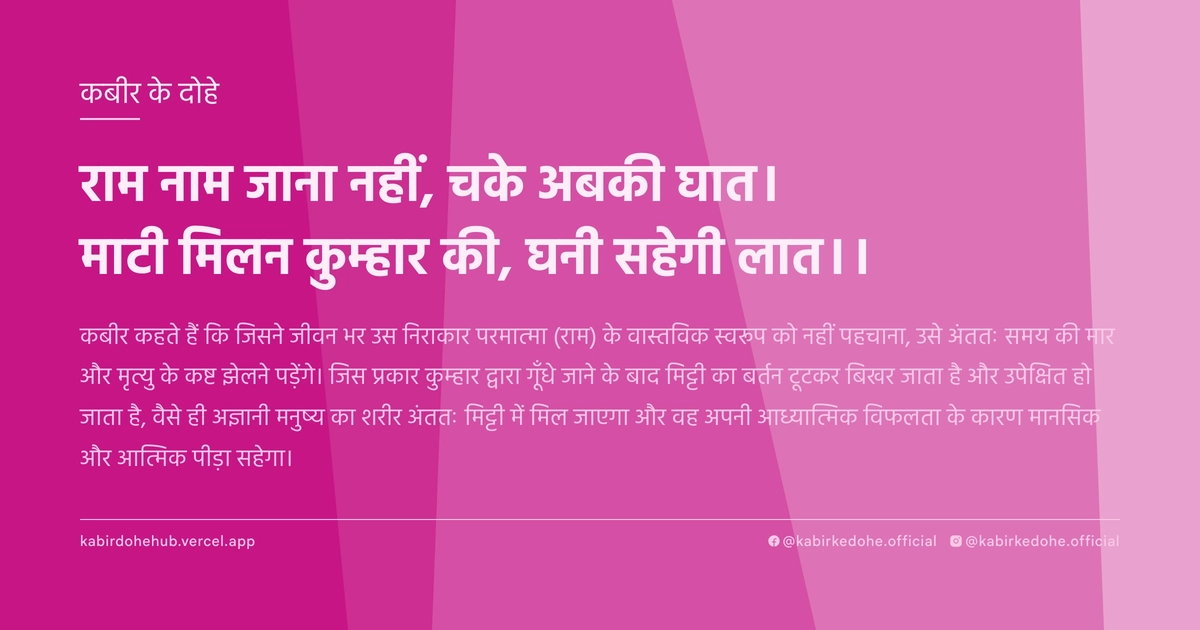
राम नाम जाना नहीं, चके अबकी घात।
माटी मिलन कुम्हार की, घनी सहेगी लात।।
Ram naam jaana nahi, chake abki ghaat. Maati milan kumhar ki, ghani sahegi laat.
इस पृष्ठ पर इस कबीर दोहे का अर्थ (meaning), हिंदी व्याख्या और अंग्रेज़ी अनुवाद, दार्शनिक विश्लेषण और व्यावहारिक जीवन सीख दी गई है। यह दोहा मृतुक्यता (Mortality) विषय से जुड़ा है — Kabir doha meaning and explanation in Hindi and English.
अर्थ (Meaning):
कबीर कहते हैं कि जिसने जीवन भर उस निराकार परमात्मा (राम) के वास्तविक स्वरूप को नहीं पहचाना, उसे अंततः समय की मार और मृत्यु के कष्ट झेलने पड़ेंगे। जिस प्रकार कुम्हार द्वारा गूँधे जाने के बाद मिट्टी का बर्तन टूटकर बिखर जाता है और उपेक्षित हो जाता है, वैसे ही अज्ञानी मनुष्य का शरीर अंततः मिट्टी में मिल जाएगा और वह अपनी आध्यात्मिक विफलता के कारण मानसिक और आत्मिक पीड़ा सहेगा।
Kabir asserts that one who fails to realize the true essence of the Formless Divine (Ram) during their lifetime will eventually face the inevitable strike of time and the agony of death. Just as clay, after being shaped and broken by a potter, returns to the earth and is trampled upon, the soul of an ignorant human, tethered to the physical body, will suffer the consequences of its spiritual negligence upon the dissolution of the flesh.
व्याख्या (Interpretation):
इस दोहे का शाब्दिक अर्थ मृत्यु की अनिवार्यता और आध्यात्मिक तैयारी की कमी की चेतावनी है। यहाँ 'राम' शब्द किसी व्यक्ति या मूर्ति के लिए नहीं, बल्कि उस सर्वव्यापी चेतना (ब्रह्म) के लिए प्रयुक्त हुआ है जो हर कण में व्याप्त है। कबीर एक गहरे रूपक का उपयोग करते हैं जहाँ शरीर को 'मिट्टी' और ईश्वर या समय को 'कुम्हार' माना गया है। यह निरगुण भक्ति का सार है, जहाँ बाहरी कर्मकांडों के बजाय आंतरिक बोध पर जोर दिया गया है। माया का प्रभाव मनुष्य को यह भुला देता है कि वह केवल एक नश्वर शरीर नहीं, बल्कि एक अविनाशी आत्मा है। जब यह भ्रम टूटता है, तो वह पीड़ा 'लात' या प्रहार के समान होती है। यह अद्वैत वेदांत के उस सत्य को दर्शाता है जहाँ अज्ञान (अविद्या) ही समस्त दुखों का मूल कारण है।
The literal meaning of this couplet serves as a stark warning regarding the inevitability of death and the lack of spiritual preparation. Here, 'Ram' does not refer to a mythological deity or an idol, but to the Omnipresent Consciousness (Brahman) that permeates every atom. Kabir employs a profound metaphor where the human body is likened to 'clay' and the Divine or Time is the 'potter'. This is the essence of Nirgun Bhakti, emphasizing internal realization over external rituals. The veil of Maya blinds the individual to the truth that they are not merely a perishable body, but an imperishable soul. When this illusion shatters, the resulting agony is likened to a 'kick' or a blow. This reflects the Advaita Vedanta truth that ignorance (Avidya) is the root cause of all suffering.
दार्शनिक विश्लेषण (Philosophical Analysis):
कबीर का यह दोहा उस युग की उपज है जब समाज बाहरी आडंबरों, जातिगत श्रेष्ठता और कठोर कर्मकांडों में जकड़ा हुआ था। कबीर ने इन सबको नकारते हुए 'सहज' मार्ग की बात की। उनका दर्शन सूफीवाद के 'फना' (अहंकार का विनाश) और वेदांत के 'अहं ब्रह्मास्मि' का एक अनूठा संगम है। वे चेतावनी देते हैं कि यदि मनुष्य केवल भौतिक संसार की दौड़ में लगा रहा, तो वह अपनी वास्तविक प्रकृति को भूल जाएगा।
यहाँ 'कुम्हार' का रूपक अत्यंत महत्वपूर्ण है। कुम्हार मिट्टी को आकार देता है, लेकिन अंततः वह मिट्टी ही रहती है। इसी प्रकार, प्रकृति हमें शरीर देती है, लेकिन यदि हम इस शरीर के भीतर छिपे परमात्मा को नहीं पहचानते, तो हम केवल भौतिकता के गुलाम बने रहते हैं। कबीर का प्रहार उन लोगों पर है जो धर्म को केवल मंदिर-मस्जिद जाने तक सीमित रखते हैं, जबकि वास्तविक धर्म आत्मा का परमात्मा से मिलन है।
मनोवैज्ञानिक स्तर पर, यह दोहा 'मृत्यु-भय' (Death Anxiety) को संबोधित करता है। कबीर कहते हैं कि मृत्यु का भय केवल उन्हें होता है जिन्होंने जीवन को व्यर्थ गँवाया है। जिसने 'राम नाम' (परम सत्य) को जान लिया, उसके लिए मृत्यु केवल एक वस्त्र बदलने जैसी प्रक्रिया है। यह अहंकार के विसर्जन की मांग करता है, क्योंकि अहंकार ही वह दीवार है जो हमें सत्य देखने से रोकती है।
सूफी परंपरा के अनुसार, यह 'इश्क-ए-हकीकी' (ईश्वर के प्रति प्रेम) की कमी का परिणाम है। जब तक मनुष्य अपनी व्यक्तिगत पहचान (नाफ़्स) को मिटाता नहीं, वह उस सार्वभौमिक सत्य का अनुभव नहीं कर सकता। कबीर यहाँ यह स्पष्ट करते हैं कि मोक्ष कोई बाहरी पुरस्कार नहीं, बल्कि स्वयं की पहचान का बोध है।
अंततः, यह विश्लेषण हमें बताता है कि कबीर का 'राम' सामाजिक सीमाओं से परे है। वह न तो हिंदू का है, न मुस्लिम का; वह उस शून्य का नाम है जहाँ सब कुछ विलीन हो जाता है। जो इस शून्य को नहीं पहचानता, वह संसार के द्वंद्वों और अंततः मृत्यु की पीड़ा में फँसा रहता है।
This couplet is a product of an era where society was shackled by external pomposity, caste superiority, and rigid ritualism. Kabir rejected these, advocating for the 'Sahaj' (natural/spontaneous) path. His philosophy is a unique confluence of the Sufi concept of 'Fana' (annihilation of the ego) and the Vedantic 'Aham Brahmasmi' (I am Brahman). He warns that if a human remains solely immersed in the material race, they will forget their true nature.
The metaphor of the 'potter' is crucial. The potter shapes the clay, but the clay remains clay. Similarly, nature provides us with a body, but if we fail to recognize the Divine dwelling within, we remain slaves to materiality. Kabir attacks those who limit religion to visiting temples or mosques, whereas true religion is the union of the soul with the Oversoul.
On a psychological level, this verse addresses 'Death Anxiety'. Kabir suggests that the fear of death only haunts those who have squandered their lives in ignorance. For one who has realized 'Ram Naam' (the Ultimate Truth), death is merely the process of changing clothes. It demands the dissolution of the ego, as the ego is the wall preventing us from seeing the Truth.
According to Sufi traditions, this is the result of a lack of 'Ishq-e-Haqiqi' (Divine Love). Until a human annihilates their individual identity (Nafs), they cannot experience the universal truth. Kabir clarifies that liberation is not an external reward but the realization of one's own essence.
Ultimately, this analysis reveals that Kabir's 'Ram' transcends social boundaries. He belongs neither to the Hindu nor the Muslim; he is the name of that Void (Shunya) where everything merges. He who fails to recognize this void remains trapped in the dualities of the world and, eventually, the agony of death.
मूल संदेश (Core Message):
- बाहरी दिखावा आध्यात्मिक शून्यता को नहीं भर सकता।
- मृत्यु का भय केवल अज्ञानी के लिए एक प्रहार है।
- परमात्मा किसी मूर्ति में नहीं, बल्कि शुद्ध चेतना में है।
- अहंकार का विसर्जन ही वास्तविक मोक्ष का द्वार है।
- जीवन का अंतिम सत्य शरीर का विनाश और आत्मा का मिलन है।
- External displays cannot fill spiritual emptiness.
- The fear of death is a blow felt only by the ignorant.
- The Divine resides not in idols, but in pure consciousness.
- The dissolution of ego is the only gateway to true liberation.
- The ultimate truth of life is the decay of the body and the union of the soul.
व्यावहारिक उदाहरण (Practical Example):
वाराणसी के एक पुराने घाट पर रहने वाले माधव नाम के एक वृद्ध व्यक्ति की कहानी है। माधव जीवन भर केवल परंपराओं का पालन करते रहे। उन्होंने हज़ारों गंगा स्नान किए, महंगे दान दिए और खुद को एक 'परम भक्त' माना, लेकिन उनके मन में अपने पड़ोसियों के प्रति घृणा और अहंकार हमेशा बना रहा। वे मानते थे कि केवल बाहरी अनुष्ठानों से उन्हें मोक्ष मिल जाएगा।
एक दिन उनकी मुलाकात एक साधारण से बुनकर से हुई, जो फटे पुराने कपड़े पहनता था लेकिन जिसकी आँखों में एक असीम शांति थी। उस बुनकर ने माधव से कहा, 'बाबा, आप गंगा में शरीर धो रहे हैं, लेकिन क्या आपने कभी अपने भीतर की मैल को धोया है?' माधव को यह बात चुभी, उन्होंने उसे अज्ञानी कहकर ठुकरा दिया।
समय बीतता गया और माधव गंभीर रूप से बीमार पड़ गए। जब मृत्यु का समय निकट आया, तो उन्हें एहसास हुआ कि उनके द्वारा किए गए सारे दिखावे और अनुष्ठान उनके काम नहीं आ रहे। उन्हें अपने जीवन की वह सारी कड़वाहट याद आने लगी जो उन्होंने दूसरों के प्रति रखी थी। वे घबरा गए और उन्हें महसूस हुआ कि वे आध्यात्मिक रूप से पूरी तरह खाली हैं।
तभी उन्हें उस बुनकर की बात याद आई। उन्हें समझ आया कि उन्होंने 'राम' को केवल एक नाम और एक मूर्ति समझा था, जबकि राम तो उस करुणा और प्रेम में थे जिसे उन्होंने जीवन भर नकारा। वे अब उस 'मिट्टी' की तरह महसूस कर रहे थे जिसे कुम्हार ने आकार तो दिया, लेकिन उसमें कोई प्राण नहीं फूँके गए।
इस बोध ने उन्हें एक तीव्र मानसिक पीड़ा दी, जैसे कोई प्रहार हुआ हो। लेकिन इसी पीड़ा ने उनके अहंकार को तोड़ दिया। उन्होंने अपनी अंतिम सांसों में अपने उन सभी शत्रुओं को क्षमा किया जिनसे वे नफरत करते थे।
उन्होंने महसूस किया कि असली 'राम नाम' का जाप माला फेरने में नहीं, बल्कि हृदय को शुद्ध करने में था। उन्होंने अपनी सारी संपत्ति उन लोगों में बाँट दी जिन्हें वे अब तक तुच्छ समझते थे।
माधव का यह रूपांतरण एक 'कबीर ट्विस्ट' था। उन्होंने मृत्यु के भय को स्वीकार किया और उसी स्वीकारोक्ति में उन्हें वह शांति मिली जो हज़ारों तीर्थों में नहीं मिली थी।
अंततः, माधव ने यह जान लिया कि शरीर तो मिट्टी में मिल ही जाना है, लेकिन जो प्रेम और सत्य वे पीछे छोड़कर जाएंगे, वही उनकी वास्तविक पहचान होगी। उन्होंने अपनी अंतिम घड़ी में एक मुस्कान के साथ अपनी आँखें मूँदीं, क्योंकि अब वे वास्तव में 'राम' को जान चुके थे।
This is the story of an elderly man named Madhav, who lived on one of the ancient ghats of Varanasi. Throughout his life, Madhav followed traditions blindly. He took thousands of dips in the Ganges, gave expensive donations, and considered himself a 'supreme devotee,' yet his heart remained filled with hatred and arrogance toward his neighbors. He believed that external rituals alone would grant him salvation.
One day, he encountered a simple weaver who wore tattered clothes but possessed an infinite peace in his eyes. The weaver asked Madhav, 'Baba, you are washing your body in the Ganges, but have you ever washed the filth within your soul?' Madhav felt insulted and dismissed the weaver as ignorant.
Time passed, and Madhav became gravely ill. As death approached, he realized that all his displays of piety and rituals were useless. He recalled all the bitterness he had harbored toward others. He grew terrified, realizing he was spiritually empty.
In that moment, the weaver's words echoed in his mind. He understood that he had treated 'Ram' merely as a name or an idol, whereas Ram resided in the compassion and love he had denied all his life. He felt like that 'clay' which the potter had shaped, but into which no breath of life had been breathed.
This realization brought a sharp mental agony, like a physical blow. However, this very pain shattered his ego. In his final hours, he forgave all those he had hated.
He understood that the true chanting of 'Ram Naam' was not in counting beads, but in purifying the heart. He distributed his remaining wealth among those he had previously considered inferior.
This transformation was the 'Kabir Twist.' By accepting the fear of death, he found a peace that thousands of pilgrimages had failed to provide.
Ultimately, Madhav realized that while the body must return to dust, the love and truth he left behind would be his true identity. He closed his eyes with a smile, for he had finally known 'Ram'.
अभ्यास मार्गदर्शन (Practice Guidance):
- प्रतिदिन 20 मिनट मौन बैठें और विचार करें कि यदि आज अंतिम दिन हो, तो क्या मेरा अहंकार मेरे साथ जाएगा या मेरा प्रेम?
- एक 'अहंकार डायरी' लिखें: दिन भर में कितनी बार मैंने खुद को दूसरों से श्रेष्ठ महसूस किया? उस भावना के मूल कारण को खोजें।
- व्यवहार परिवर्तन: किसी ऐसे व्यक्ति की निस्वार्थ सेवा करें जिसे समाज उपेक्षित करता हो, बिना किसी धार्मिक फल की इच्छा के।
- निदानात्मक चेकलिस्ट: क्या मैं अभी भी बाहरी प्रतीकों (कपड़ों, मालाओं, पदों) से अपनी पहचान जोड़ रहा हूँ? यदि हाँ, तो मैं अभी भी 'मिट्टी' के मोह में हूँ।
- Sit in silence for 20 minutes daily and contemplate: If today were my last day, would my ego accompany me, or would my love?
- Maintain an 'Ego Diary': How many times today did I feel superior to others? Trace the root cause of that feeling.
- Behavioral Change: Perform selfless service for someone marginalized by society, without any desire for religious merit.
- Diagnostic Checklist: Am I still attaching my identity to external symbols (clothes, beads, titles)? If yes, I am still trapped in the illusion of 'clay'.
चिंतन प्रश्न (Reflection Questions):
- मेरी वह कौन सी 'धार्मिक' पहचान है जो वास्तव में मेरे अहंकार को पोषण दे रही है?
- यदि मेरा सामाजिक पद और प्रतिष्ठा छीन ली जाए, तो मेरे भीतर क्या बचेगा?
- मैं दूसरों की मदद इसलिए करता हूँ क्योंकि मैं दयालु हूँ, या इसलिए ताकि मैं खुद को 'दाता' महसूस कर सकूँ?
- क्या मेरा आध्यात्मिक अभ्यास मुझे विनम्र बना रहा है या अधिक निर्णय लेने वाला (judgmental)?
- मृत्यु के समय मैं अपने साथ क्या ले जाना चाहूँगा—अपनी उपलब्धियाँ या अपनी करुणा?
- Which of my 'religious' identities is actually nourishing my ego?
- If my social status and prestige were stripped away, what would remain within me?
- Do I help others because I am compassionate, or because I want to feel like a 'benefactor'?
- Is my spiritual practice making me more humble or more judgmental?
- At the moment of death, what would I wish to take with me—my achievements or my compassion?