
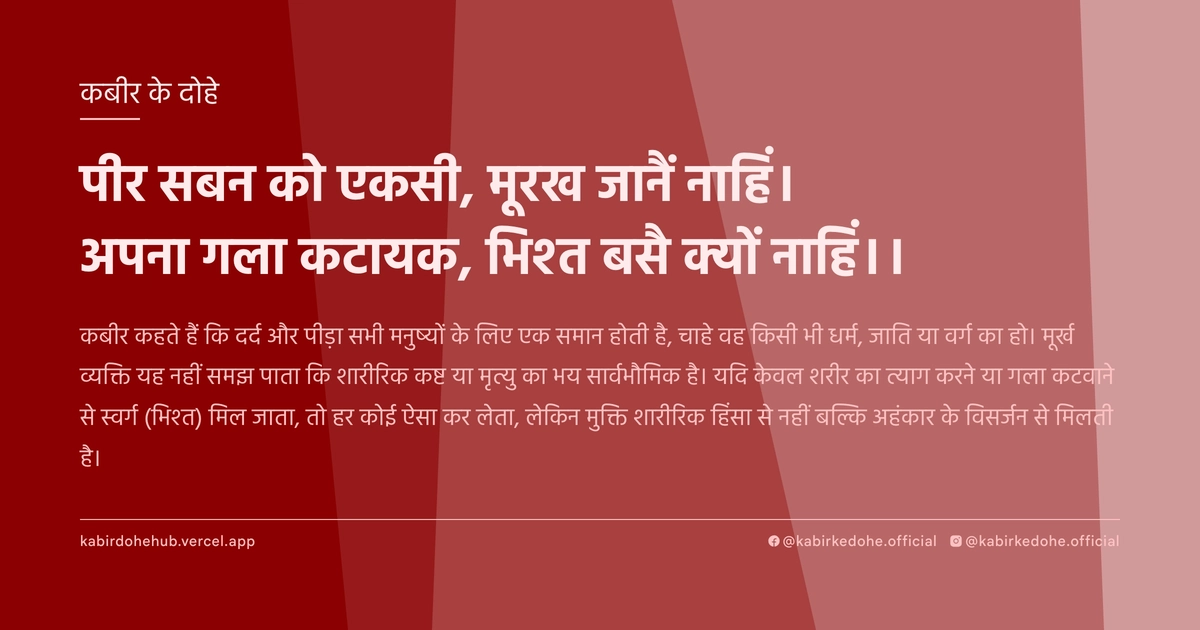
पीर सबन को एकसी, मूरख जानैं नाहिं।
अपना गला कटायक, भिश्त बसै क्यों नाहिं।।
Peer saban ko ekasi, moorakh jaanain naahin. Apna gala katayak, bhisht basai kyon naahin.
इस पृष्ठ पर इस कबीर दोहे का अर्थ (meaning), हिंदी व्याख्या और अंग्रेज़ी अनुवाद, दार्शनिक विश्लेषण और व्यावहारिक जीवन सीख दी गई है। यह दोहा हिंदू-मुस्लिम एकता (Hindu-muslim Unity) विषय से जुड़ा है — Kabir doha meaning and explanation in Hindi and English.
अर्थ (Meaning):
कबीर कहते हैं कि दर्द और पीड़ा सभी मनुष्यों के लिए एक समान होती है, चाहे वह किसी भी धर्म, जाति या वर्ग का हो। मूर्ख व्यक्ति यह नहीं समझ पाता कि शारीरिक कष्ट या मृत्यु का भय सार्वभौमिक है। यदि केवल शरीर का त्याग करने या गला कटवाने से स्वर्ग (भिश्त) मिल जाता, तो हर कोई ऐसा कर लेता, लेकिन मुक्ति शारीरिक हिंसा से नहीं बल्कि अहंकार के विसर्जन से मिलती है।
Kabir asserts that pain and suffering are universal experiences, identical for every human being regardless of their creed, caste, or social standing. The foolish fail to recognize this shared vulnerability. He ironically questions why, if the mere act of physical sacrifice or decapitation could grant entry into paradise (Bhisht), people would not simply do so, highlighting that spiritual liberation is not achieved through physical martyrdom but through the dissolution of the ego.
व्याख्या (Interpretation):
इस दोहे का शाब्दिक अर्थ शारीरिक पीड़ा की समानता है, परंतु इसका गहरा आध्यात्मिक संकेत 'अहंकार की मृत्यु' की ओर है। कबीर यहाँ 'गला कटाने' को एक रूपक के रूप में उपयोग कर रहे हैं, जो बाहरी कर्मकांडों और झूठे बलिदानों पर प्रहार है। निर्गुण भक्ति के संदर्भ में, यह संदेश देता है कि ईश्वर तक पहुँचने के लिए रक्त बहाने की आवश्यकता नहीं है, बल्कि 'मैं' रूपी अहंकार का विसर्जन आवश्यक है। माया हमें विश्वास दिलाती है कि बाहरी कष्टों से मोक्ष मिलेगा, जबकि अद्वैत वेदांत के अनुसार, आत्मा और ब्रह्म की एकता का अनुभव केवल तब होता है जब व्यक्ति अपनी सीमित पहचान को मिटा देता है। यहाँ विरोधाभास यह है कि जिसे हम मृत्यु समझते हैं, वह वास्तव में आध्यात्मिक जन्म है।
While the literal meaning addresses the universality of physical pain, the deeper metaphorical layer targets the 'death of the ego.' Kabir uses the imagery of 'cutting the throat' as a critique of superficial rituals and false martyrdom. In the context of Nirgun Bhakti, he posits that reaching the Divine requires no blood sacrifice, but rather the annihilation of the 'I-consciousness.' Maya deceives us into believing that external austerities or physical suffering lead to salvation, whereas Advaita Vedanta teaches that the realization of Atman-Brahman non-duality occurs only when the limited individual identity is dissolved. The central paradox is that what the world perceives as death is, in spiritual terms, the only true birth.
दार्शनिक विश्लेषण (Philosophical Analysis):
कबीर का यह दोहा उनके युग के धार्मिक कट्टरवाद और बाहरी आडंबरों के विरुद्ध एक सशक्त विद्रोह है। उस समय समाज में यह धारणा व्याप्त थी कि कठिन शारीरिक तपस्या या धार्मिक युद्धों में प्राण त्यागने से मोक्ष या स्वर्ग की प्राप्ति होती है। कबीर इस धारणा को पूरी तरह नकारते हुए कहते हैं कि पीड़ा का अनुभव सार्वभौमिक है और यह किसी विशेष धर्म की बपौती नहीं है। यह दृष्टिकोण सूफी मत के 'फना' (अस्तित्व का मिटना) और वेदांत के 'अहं ब्रह्मास्मि' के करीब है, जहाँ व्यक्ति अपनी पृथक पहचान को मिटाकर पूर्णता में विलीन हो जाता है।
वे यहाँ यह स्पष्ट करते हैं कि स्वर्ग (भिश्त) कोई भौगोलिक स्थान नहीं है, बल्कि चेतना की एक अवस्था है। जो लोग केवल बाहरी प्रतीकों और अनुष्ठानों में विश्वास करते हैं, वे वास्तव में 'मूर्ख' हैं क्योंकि वे कारण और प्रभाव के वास्तविक आध्यात्मिक नियम को नहीं समझते। कबीर के अनुसार, वास्तविक बलिदान शरीर का नहीं, बल्कि उस मानसिक संरचना का है जो हमें दूसरों से अलग करती है।
यह विश्लेषण हमें यह समझने में मदद करता है कि कबीर ने जाति और धर्म की दीवारों को इसलिए तोड़ा क्योंकि उन्होंने देखा कि दर्द की कोई भाषा नहीं होती; वह केवल मानवीय होती है। जब हम दूसरे के दर्द को अपना समझने लगते हैं, तब हम वास्तव में उस निर्गुण ब्रह्म के करीब होते हैं जो कण-कण में व्याप्त है।
मनोवैज्ञानिक स्तर पर, यह दोहा व्यक्ति को अपनी 'विक्टिम मानसिकता' (victim mentality) से बाहर निकलने और यह देखने के लिए प्रेरित करता है कि दुख का अनुभव साझा है। जब हम यह स्वीकार करते हैं कि हम सब एक ही पीड़ा के धागे से बंधे हैं, तो करुणा का जन्म होता है।
अंततः, कबीर यह संदेश देते हैं कि मोक्ष का मार्ग रक्तपात या शारीरिक हिंसा से नहीं, बल्कि आंतरिक मौन और अहंकार के पूर्ण समर्पण से प्रशस्त होता है। यह एक क्रांतिकारी विचार था जिसने मध्यकालीन भारत में धर्म के नाम पर होने वाले हिंसक दावों को चुनौती दी।
This couplet is a powerful rebellion against the religious bigotry and external ostentation of Kabir's era. During his time, there was a prevalent belief that rigorous physical penance or sacrificing one's life in religious wars guaranteed salvation or entry into paradise. Kabir completely dismantles this notion, asserting that the experience of pain is universal and not the monopoly of any specific religion or sect. This perspective aligns closely with the Sufi concept of 'Fana' (the annihilation of the self) and the Vedantic realization of 'Aham Brahmasmi,' where the individual dissolves their separate identity to merge with the Absolute.
He clarifies that paradise (Bhisht) is not a geographical destination but a state of consciousness. Those who cling to external symbols and rituals are deemed 'fools' because they fail to grasp the actual spiritual laws of cause and effect. According to Kabir, the true sacrifice is not of the flesh, but of the mental construct that creates the illusion of separation between 'self' and 'other.'
This analysis reveals why Kabir sought to demolish the walls of caste and creed; he recognized that pain has no language—it is purely human. When we perceive another's suffering as our own, we move closer to the Nirgun Brahman, the formless Divine that permeates every atom of existence.
On a psychological level, this verse encourages the individual to transcend a 'victim mentality' and recognize the shared nature of human suffering. The acceptance of this shared vulnerability is the seed from which genuine compassion grows.
Ultimately, Kabir posits that the path to liberation is paved not with bloodshed or physical violence, but through internal silence and the total surrender of the ego. This was a revolutionary idea that challenged the violent claims made in the name of religion in medieval India.
मूल संदेश (Core Message):
- शारीरिक कष्ट मोक्ष का मार्ग नहीं हैं।
- अहंकार का विसर्जन ही वास्तविक मृत्यु और पुनर्जन्म है।
- पीड़ा सार्वभौमिक है, इसलिए करुणा ही एकमात्र सत्य है।
- बाहरी कर्मकांड केवल भ्रम पैदा करते हैं, सत्य नहीं।
- स्वर्ग कोई स्थान नहीं, बल्कि अहंकार-मुक्त चेतना है।
- Physical suffering is not the gateway to liberation.
- The dissolution of ego is the only true death and rebirth.
- Pain is universal; therefore, compassion is the only ultimate truth.
- External rituals create illusions, not spiritual realization.
- Paradise is not a place, but a state of ego-less consciousness.
व्यावहारिक उदाहरण (Practical Example):
एक समय की बात है, वाराणसी के घाटों पर रहने वाला एक वृद्ध बुनकर था जिसका नाम माधव था। माधव अपनी पूरी जिंदगी केवल रेशमी धागों को बुनने और धर्म के नाम पर कठोर नियमों का पालन करने में बिता चुका था। वह मानता था कि यदि वह अपने शरीर को कष्ट देगा और कठोर उपवास रखेगा, तो उसे मृत्यु के बाद स्वर्ग मिलेगा। वह अक्सर दूसरों को उपदेश देता था कि मोक्ष केवल कठिन तपस्या से मिलता है।
एक दिन माधव की मुलाकात एक साधारण से सूफी दरवेश से हुई, जो शहर के किनारे एक पेड़ के नीचे बैठा था। दरवेश ने माधव की कठोरता को देखा और मुस्कुराते हुए पूछा, "माधव, तुम इस शरीर को इतना कष्ट क्यों देते हो? क्या तुम्हें लगता है कि ईश्वर को तुम्हारा दर्द पसंद है?"
माधव ने गर्व से उत्तर दिया, "मैं अपने शरीर को जला रहा हूँ ताकि मेरी आत्मा शुद्ध हो सके और मैं स्वर्ग जा सकूँ।"
दरवेश ने शांति से कहा, "मेरे मित्र, दर्द तो सबको एक जैसा ही होता है। चाहे वह राजा हो या रंक, जब सुई चुभती है तो खून सबका लाल ही होता है। यदि केवल शरीर को कष्ट देने से स्वर्ग मिलता, तो दुनिया के सारे पशु-पक्षी और बीमार लोग सबसे बड़े संत होते।"
माधव को यह बात अजीब लगी, लेकिन वह सोचने पर मजबूर हो गया। उसी शाम, माधव ने देखा कि एक छोटा बच्चा भूख से तड़प रहा था और उसके पास खाने को कुछ नहीं था। माधव के पास पर्याप्त भोजन था, लेकिन वह अपने 'तप' के कारण उपवास पर था।
अचानक उसे दरवेश की बात याद आई—"पीर सबन को एकसी"। उसे अहसास हुआ कि उसका उपवास केवल उसके अहंकार की तुष्टि कर रहा था, जबकि उस बच्चे का दर्द वास्तविक था। उसने महसूस किया कि वह जिसे 'पवित्रता' समझ रहा था, वह वास्तव में एक प्रकार का आध्यात्मिक अहंकार था।
माधव ने तुरंत अपना उपवास तोड़ा और उस बच्चे को भोजन कराया। उस क्षण, उसे जो शांति महसूस हुई, वह उसके वर्षों के कठोर तप से कहीं अधिक गहरी थी। उसे समझ आया कि शरीर को कष्ट देना आसान है, लेकिन अपने अहंकार को मारना सबसे कठिन और वास्तविक तप है।
उस दिन के बाद, माधव ने बाहरी दिखावे की तपस्या छोड़ दी। उसने अपना जीवन दूसरों की सेवा में लगा दिया। उसने सीखा कि स्वर्ग किसी दूसरी दुनिया में नहीं, बल्कि उस करुणा में है जो हम दूसरों के प्रति महसूस करते हैं।
माधव अब केवल कपड़े नहीं बुनता था, बल्कि वह लोगों के दिलों के बीच प्रेम के धागे बुनने लगा। उसकी आँखों में अब कठोरता नहीं, बल्कि एक ऐसी चमक थी जो केवल तब आती है जब कोई व्यक्ति अपने 'मैं' को मिटाकर 'हम' बन जाता है।
यह माधव का 'कबीर ट्विस्ट' था—जहाँ उसने शारीरिक पीड़ा के भ्रम को छोड़कर आत्मिक करुणा को अपनाया और वास्तव में मुक्त हुआ।
Once, in the ghats of Varanasi, lived an elderly weaver named Madhav. Madhav had spent his entire life weaving silk threads and adhering to rigid religious rules. He believed that by inflicting hardship on his body and observing severe fasts, he would secure a place in paradise after death. He often preached to others that salvation could only be attained through rigorous penance.
One day, Madhav encountered a simple Sufi dervish sitting beneath a tree on the outskirts of the city. The dervish observed Madhav's austerity and asked with a smile, "Madhav, why do you torture this body so? Do you believe that God delights in your pain?"
Madhav replied with pride, "I am burning my body so that my soul may be purified and I may reach heaven."
The dervish calmly replied, "My friend, pain is the same for everyone. Whether it is a king or a pauper, when a needle pricks, the blood is equally red. If mere physical suffering granted entry to paradise, then all the animals, birds, and the chronically ill would be the greatest saints."
Madhav found this strange, but it forced him to reflect. That evening, he saw a small child trembling with hunger, with nothing to eat. Madhav had plenty of food, but he was fasting as part of his 'penance.'
Suddenly, the dervish's words echoed in his mind—"Peer saban ko ekasi" (Pain is the same for all). He realized that his fasting was merely feeding his ego, while the child's pain was a raw, living reality. He understood that what he had mistaken for 'purity' was actually a form of spiritual arrogance.
Madhav immediately broke his fast and fed the child. In that moment, he felt a peace far deeper than anything he had experienced during his years of severe austerity. He realized that torturing the body is easy, but killing the ego is the most difficult and authentic penance.
From that day forward, Madhav abandoned the performative austerity of the exterior. He dedicated his life to the service of others. He learned that paradise is not in another world, but in the compassion we feel for others.
Madhav no longer just wove cloth; he began weaving threads of love between people's hearts. The hardness in his eyes was replaced by a radiance that only appears when a person ceases to be 'I' and becomes 'We.'
This was Madhav's 'Kabir Twist'—where he abandoned the illusion of physical suffering to embrace spiritual compassion and finally found true liberation.
अभ्यास मार्गदर्शन (Practice Guidance):
- दैनिक चिंतन: प्रतिदिन 10 मिनट मौन बैठें और विचार करें कि आपकी कौन सी आदतें या विचार आपको दूसरों से 'श्रेष्ठ' महसूस कराते हैं। उस श्रेष्ठता के भाव को पहचानें और उसे विसर्जित करें।
- आत्म-पूछताछ जर्नल: एक डायरी लिखें जिसमें उन क्षणों का वर्णन हो जब आपने किसी दूसरे के दुख को अपना समझा। विश्लेषण करें कि उस समय आपके अहंकार का क्या हुआ।
- व्यवहार परिवर्तन: सप्ताह में एक बार किसी ऐसे व्यक्ति की निस्वार्थ मदद करें जिससे आपका कोई वैचारिक या सामाजिक मतभेद हो। यह आपके 'अहंकार के गले' को काटने का अभ्यास होगा।
- डायग्नोस्टिक चेकलिस्ट: क्या आप अभी भी मानते हैं कि आपकी पूजा पद्धति दूसरों से बेहतर है? क्या आप दूसरों के दुख को देखकर उनके 'कर्मों' का न्याय करते हैं? यदि हाँ, तो आप अभी भी 'मूर्ख' की श्रेणी में हैं और अहंकार के वशीभूत हैं।
- Daily Contemplation: Sit in silence for 10 minutes daily and observe which habits or thoughts make you feel 'superior' to others. Identify that sense of superiority and consciously dissolve it.
- Self-Inquiry Journal: Maintain a diary documenting moments when you felt another's pain as your own. Analyze what happened to your ego during that experience of empathy.
- Behavioral Shift: Once a week, perform a selfless act of service for someone with whom you have a deep ideological or social conflict. Treat this as a practice of 'cutting the throat' of your ego.
- Diagnostic Checklist: Do you still believe your method of worship is superior to others? Do you judge others' suffering as a result of their 'karma' rather than feeling it? If yes, you are still operating in the realm of the 'fool' and are bound by ego.
चिंतन प्रश्न (Reflection Questions):
- क्या मेरी धार्मिक या आध्यात्मिक पहचान मुझे दूसरों से अलग और श्रेष्ठ महसूस कराती है?
- मैं अक्सर दूसरों के दुख को 'उनके भाग्य' के रूप में क्यों देखता हूँ, बजाय इसके कि मैं उसे अपना मानूँ?
- मेरे जीवन में ऐसा कौन सा 'मानसिक गला' (अहंकार) है जिसे मुझे काटना होगा ताकि मैं वास्तव में प्रेम कर सकूँ?
- क्या मैं वास्तव में आध्यात्मिक हूँ, या मैं केवल आध्यात्मिक दिखने का नाटक कर रहा हूँ?
- यदि मेरी सारी बाहरी पहचान (नाम, पद, धर्म) छीन ली जाए, तो मेरे भीतर क्या बचेगा?
- Does my religious or spiritual identity make me feel separate from or superior to others?
- Why do I often view others' suffering as 'their fate' instead of recognizing it as my own?
- What is the 'mental throat' (ego) in my life that must be severed for me to truly love unconditionally?
- Am I genuinely spiritual, or am I merely performing the act of being spiritual?
- If all my external identities—name, status, religion—were stripped away, what would remain within me?