
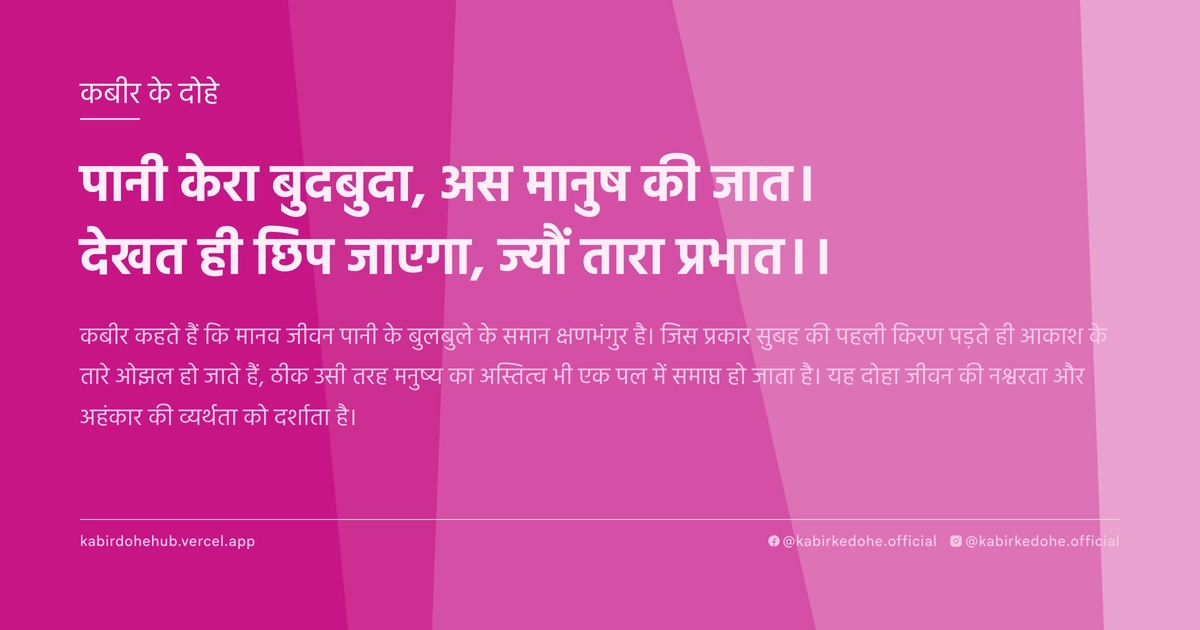
पानी केरा बुदबुदा, अस मानुष की जात।
देखत ही छिप जाएगा, ज्यौं तारा प्रभात।।
Paani kera budbuda, as manush ki jaat. Dekhat hi chhip jaayege, jyon tara prabhat.
इस पृष्ठ पर इस कबीर दोहे का अर्थ (meaning), हिंदी व्याख्या और अंग्रेज़ी अनुवाद, दार्शनिक विश्लेषण और व्यावहारिक जीवन सीख दी गई है। यह दोहा अनित्य (Impermanence) विषय से जुड़ा है — Kabir doha meaning and explanation in Hindi and English.
अर्थ (Meaning):
कबीर कहते हैं कि मानव जीवन पानी के बुलबुले के समान क्षणभंगुर है। जिस प्रकार सुबह की पहली किरण पड़ते ही आकाश के तारे ओझल हो जाते हैं, ठीक उसी तरह मनुष्य का अस्तित्व भी एक पल में समाप्त हो जाता है। यह दोहा जीवन की नश्वरता और अहंकार की व्यर्थता को दर्शाता है।
Kabir asserts that human existence is as ephemeral as a bubble on the surface of water. Just as the stars vanish the moment the morning light touches the sky, the human life disappears in an instant. This couplet serves as a stark reminder of the transience of physical existence and the futility of ego.
व्याख्या (Interpretation):
शाब्दिक अर्थ में, यह दोहा जीवन की अल्पता की तुलना बुलबुले और तारों से करता है। आध्यात्मिक स्तर पर, 'बुलबुला' माया के भ्रम का प्रतीक है—जो दिखता तो है, पर उसका अपना कोई स्थायी आधार नहीं है। यह निर्गुण भक्ति के उस सिद्धांत को पुष्ट करता है जहाँ शरीर को केवल एक माध्यम माना गया है, गंतव्य नहीं। अद्वैत वेदांत के अनुसार, जब तक हम स्वयं को शरीर (बुलबुला) मानते हैं, हम भय और दुख में रहते हैं, लेकिन जब हम स्वयं को उस 'पानी' (ब्रह्म) के रूप में पहचानते हैं जिससे बुलबुला बना है, तब मृत्यु का भय समाप्त हो जाता है। यह विरोधाभास है कि हम उस क्षणभंगुरता को पकड़ने की कोशिश करते हैं जो वास्तव में कभी थी ही नहीं।
Literally, the doha compares life's brevity to a bubble and the fading stars. Metaphorically, the 'bubble' represents the illusion of Maya—something that appears substantial but lacks a permanent essence. This aligns with Nirgun Bhakti, where the body is viewed as a mere vessel, not the destination. According to Advaita Vedanta, as long as we identify as the bubble (the individual ego), we remain trapped in fear and suffering; however, when we realize we are the 'water' (Brahman) from which the bubble emerged, the fear of death dissolves. It highlights the central paradox: humans spend their entire lives clinging to a transient identity that is destined to vanish.
दार्शनिक विश्लेषण (Philosophical Analysis):
कबीर का यह दर्शन उस युग की प्रतिक्रिया था जहाँ लोग बाहरी कर्मकांडों और सामाजिक प्रतिष्ठा में उलझे हुए थे। उन्होंने स्पष्ट किया कि जाति, धर्म और पद केवल बाहरी आवरण हैं, जो मृत्यु के समय बुलबुले की तरह फूट जाते हैं। यह दृष्टिकोण सूफी मत के 'फना' (अहंकार का विनाश) के करीब है, जहाँ साधक को अपनी व्यक्तिगत पहचान को मिटाकर ईश्वर में विलीन होना होता है।
यहाँ कबीर केवल निराशावाद नहीं सिखा रहे, बल्कि एक मनोवैज्ञानिक रूपांतरण की बात कर रहे हैं। जब मनुष्य को अपनी नश्वरता का पूर्ण बोध होता है, तो उसका 'मैं' (अहंकार) कम होने लगता है। यह अहंकार ही है जो मनुष्य को दूसरों से अलग करता है और संघर्ष पैदा करता है।
अद्वैत वेदांत के परिप्रेक्ष्य में, यह दोहा 'विवेक' (निराकरण) की प्रक्रिया है। यह सिखाता है कि जो परिवर्तनशील है, वह सत्य नहीं हो सकता। यदि जीवन एक बुलबुला है, तो सत्य वह तत्व है जो बुलबुले के फूटने के बाद भी शेष रहता है—अर्थात शुद्ध चेतना या आत्मा।
कबीर ने ritualism का विरोध किया क्योंकि मंदिर-मस्जिद की दीवारें उसी बुलबुले को सजाने की कोशिश हैं जो कल नष्ट हो जाएगा। उनके लिए वास्तविक भक्ति आंतरिक शुद्धि और सत्य के साक्षात्कार में थी, न कि बाहरी दिखावे में।
अंततः, यह विश्लेषण हमें इस निष्कर्ष पर ले जाता है कि जीवन की सार्थकता उसकी लंबाई में नहीं, बल्कि उसकी गहराई और उस बोध में है कि हम इस अनंत ब्रह्मांड का एक छोटा सा, क्षणिक हिस्सा हैं, फिर भी हम उसी अनंत का अंश हैं।
Kabir's philosophy was a direct response to an era consumed by external rituals and social hierarchies. He clarified that caste, religion, and status are merely outer shells—bubbles that burst at the moment of death. This perspective closely mirrors the Sufi concept of 'Fana' (annihilation of the self), where the seeker must dissolve their individual identity to merge with the Divine.
Crucially, Kabir is not preaching pessimism, but rather a psychological transformation. When a human fully realizes their own transience, the 'I' (the ego) begins to diminish. It is this very ego that creates separation and conflict between beings.
From the lens of Advaita Vedanta, this doha illustrates the process of 'Viveka' (discrimination). It teaches that whatever is subject to change cannot be the Ultimate Truth. If life is a bubble, then the Truth is the element that remains after the bubble bursts—the pure consciousness or Atman.
Kabir rejected ritualism because the walls of temples and mosques were seen as attempts to decorate a bubble that is destined to vanish. For him, true devotion lay in internal purification and the realization of Truth, rather than in performative piety.
Ultimately, this analysis leads to the conclusion that the meaning of life is not found in its duration, but in its depth and the awareness that while we are a fleeting part of this vast universe, we are simultaneously an essence of that very Infinity.
मूल संदेश (Core Message):
- अहंकार एक भ्रम है जो मृत्यु के समय स्वतः समाप्त हो जाता है।
- जीवन की नश्वरता को स्वीकार करना ही वास्तविक मुक्ति का मार्ग है।
- बाहरी पहचान को त्यागकर आंतरिक चेतना से जुड़ना आवश्यक है।
- प्रेम और करुणा ही एकमात्र स्थायी निवेश हैं।
- हम शरीर नहीं, बल्कि उस अनंत चेतना की एक क्षणिक अभिव्यक्ति हैं।
- Ego is a mirage that dissolves naturally at the moment of death.
- Accepting the transience of life is the only path to true liberation.
- It is essential to shed external identities and connect with inner consciousness.
- Love and compassion are the only permanent investments in this life.
- We are not the body, but a momentary expression of the infinite consciousness.
व्यावहारिक उदाहरण (Practical Example):
वाराणसी के एक पुराने घाट पर रामदीन नाम का एक वृद्ध नाविक रहता था। वह अपनी छोटी सी नाव और अपने इलाके के प्रभुत्व को लेकर बहुत अहंकारी था। वह अन्य नाविकों को नीचा दिखाता था और मानता था कि उसकी नाव और उसका अनुभव उसे दूसरों से श्रेष्ठ बनाते हैं।
एक शाम, रामदीन ने गंगा की लहरों पर एक छोटा सा बुलबुला देखा। वह बुलबुला सूरज की अंतिम किरणों में चमक रहा था, अत्यंत सुंदर और पूर्ण। रामदीन उसे बस देखता रहा, और अगले ही पल वह बुलबुला फूट गया और पानी में समा गया।
उसी रात, रामदीन ने एक सन्यासी को सुना जो कबीर का यही दोहा गा रहा था। अचानक, उसे महसूस हुआ कि उसका अहंकार, उसका घमंड और उसकी श्रेष्ठता की भावना भी उसी बुलबुले की तरह है।
उसने सोचा, "मैं जिस नाव और जिस नाम पर गर्व करता हूँ, वह तो बस एक क्षण का खेल है। मृत्यु आने पर मैं और मेरी नाव, दोनों ही इस धारा में विलीन हो जाएंगे।"
अगले दिन, रामदीन का व्यवहार पूरी तरह बदल गया। उसने उन नाविकों की मदद करना शुरू किया जिन्हें वह पहले तुच्छ समझता था।
उसने अपनी नाव का उपयोग केवल धन कमाने के लिए नहीं, बल्कि बीमारों और वृद्धों को मुफ्त में घाट तक पहुँचाने के लिए करना शुरू किया।
उसकी आँखों में अब क्रोध नहीं, बल्कि एक गहरी करुणा थी। वह समझ गया था कि जब सब कुछ मिट जाना है, तो केवल प्रेम और सेवा ही शेष रहती है।
गाँव के लोग हैरान थे कि जो रामदीन सबसे कठोर था, वह अब सबसे विनम्र हो गया था।
उसने अपनी संपत्ति का एक हिस्सा सामुदायिक रसोई के लिए दान कर दिया, क्योंकि उसे अब 'संग्रह' की व्यर्थता समझ आ गई थी।
रामदीन ने जीवन के अंतिम वर्षों में शांति पाई, क्योंकि उसने बुलबुले को पकड़ने की कोशिश छोड़ दी और स्वयं को उस अनंत धारा का हिस्सा मान लिया।
On an ancient ghat in Varanasi lived an elderly boatman named Ramdeen. He was deeply arrogant about his small boat and his dominance over the local waters. He frequently belittled other boatmen, believing his experience and possessions made him superior.
One evening, Ramdeen noticed a tiny bubble on the surface of the Ganges. The bubble shimmered in the last rays of the sun, looking exquisite and complete. Ramdeen watched it intently, and in the next heartbeat, the bubble burst and merged back into the water.
That night, Ramdeen overheard a wandering monk chanting this very doha of Kabir. Suddenly, it struck him that his arrogance, his pride, and his sense of superiority were exactly like that bubble.
He thought, "The boat and the reputation I pride myself on are but a momentary play. When death arrives, both I and my boat will dissolve into this current."
The next day, Ramdeen's behavior underwent a total transformation. He began helping the very boatmen he had previously looked down upon.
He started using his boat not just for profit, but to ferry the sick and elderly to the ghats free of charge.
There was no longer anger in his eyes, only a profound compassion. He realized that when everything is destined to vanish, only love and service remain.
The villagers were astonished that the harshest man among them had become the most humble.
He donated a portion of his savings to a community kitchen, having finally understood the futility of hoarding.
Ramdeen found peace in his final years because he stopped trying to clutch the bubble and instead accepted himself as a part of the infinite current.
अभ्यास मार्गदर्शन (Practice Guidance):
- दैनिक चिंतन: प्रतिदिन 10 मिनट मौन बैठें और विचार करें कि आपके जीवन की कौन सी उपलब्धियाँ स्थायी हैं और कौन सी बुलबुले की तरह क्षणभंगुर।
- आत्म-पूछताछ जर्नल: लिखें कि 'यदि आज मेरा अंतिम दिन हो, तो मुझे किस बात का पछतावा होगा?' इससे अहंकार की परतों को हटाने में मदद मिलेगी।
- व्यवहारिक परिवर्तन: जब भी क्रोध या ईर्ष्या महसूस हो, तो स्वयं को याद दिलाएं कि यह भावना और यह व्यक्ति दोनों ही क्षणभंगुर हैं।
- निदान चेकलिस्ट: क्या आप अभी भी अपनी पदवी या संपत्ति से अपनी पहचान जोड़ रहे हैं? यदि हाँ, तो आप 'बुलबुले' के भ्रम में जी रहे हैं।
- Daily Contemplation: Sit in silence for 10 minutes daily and reflect on which of your achievements are permanent and which are as ephemeral as a bubble.
- Self-Inquiry Journaling: Write a response to the prompt: "If today were my last day, what would I truly regret?" This helps peel away the layers of ego.
- Behavioral Shift: Whenever you feel anger or jealousy, remind yourself that both the emotion and the person triggering it are transient.
- Diagnostic Checklist: Are you still defining your identity through your title or possessions? If yes, you are living within the illusion of the 'bubble'.
चिंतन प्रश्न (Reflection Questions):
- आपकी वह कौन सी 'डिजिटल पहचान' या सामाजिक छवि है जिसे आप खोने से सबसे ज्यादा डरते हैं?
- यदि आपकी सारी उपाधियाँ और संपत्ति छीन ली जाए, तो आपके भीतर क्या शेष बचेगा?
- क्या आपका वर्तमान संघर्ष उस स्तर पर है जहाँ वह एक सौ साल बाद मायने रखेगा?
- आप अपनी नश्वरता को जानते हुए भी, किन चीजों को पकड़कर बैठे हैं?
- क्या आप दूसरों को उनके गुणों से देखते हैं या उनके द्वारा ओढ़े गए 'बुलबुलों' (पद/जाति) से?
- Which 'digital identity' or social image are you most terrified of losing?
- If all your titles and possessions were stripped away, what would remain within you?
- Is your current struggle at a scale that will matter a hundred years from now?
- Despite knowing your mortality, what are the things you are still desperately clinging to?
- Do you see others for their inherent essence, or through the 'bubbles' (status/caste) they wear?