
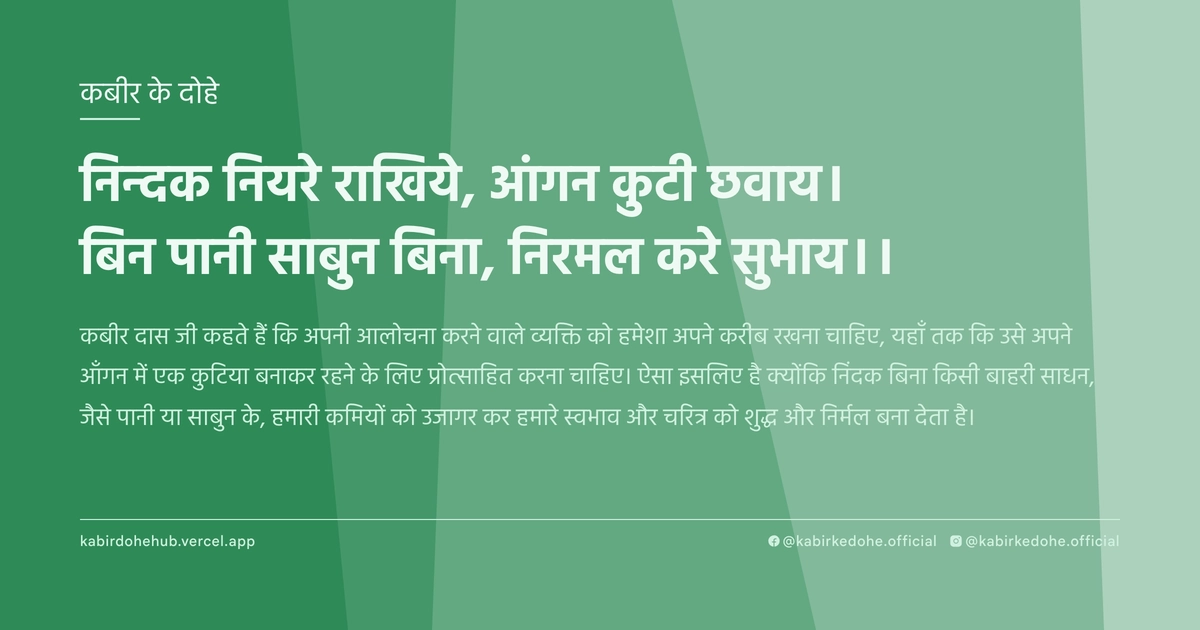
निन्दक नियरे राखिये, आंगन कुटी छवाय।
बिन पानी साबुन बिना, निरमल करे सुभाय।।
Nindak niyare rakhiye, aangan kuti chhavay. Bin paani sabun bina, nirmal kare subhay.
इस पृष्ठ पर इस कबीर दोहे का अर्थ (meaning), हिंदी व्याख्या और अंग्रेज़ी अनुवाद, दार्शनिक विश्लेषण और व्यावहारिक जीवन सीख दी गई है। यह दोहा विनम्रता (Humility) विषय से जुड़ा है — Kabir doha meaning and explanation in Hindi and English.
अर्थ (Meaning):
कबीर दास जी कहते हैं कि अपनी आलोचना करने वाले व्यक्ति को हमेशा अपने करीब रखना चाहिए, यहाँ तक कि उसे अपने आँगन में एक कुटिया बनाकर रहने के लिए प्रोत्साहित करना चाहिए। ऐसा इसलिए है क्योंकि निंदक बिना किसी बाहरी साधन, जैसे पानी या साबुन के, हमारी कमियों को उजागर कर हमारे स्वभाव और चरित्र को शुद्ध और निर्मल बना देता है।
Kabir suggests that one should keep their critics close, even providing them a shelter within one's own courtyard. The essence is that a critic serves as a spiritual cleanser who, without the need for physical soap or water, purifies the soul by highlighting its flaws, thereby guiding the individual toward a state of inner purity and humility.
व्याख्या (Interpretation):
यह दोहा बाहरी आलोचना को आंतरिक रूपांतरण के उपकरण के रूप में देखने का आह्वान है। शाब्दिक अर्थ में, यह निंदक को पास रखने की बात करता है, लेकिन रूपकात्मक रूप से यह 'अहंकार' के विसर्जन की प्रक्रिया है। निर्गुण भक्ति में, ईश्वर किसी मूर्ति में नहीं बल्कि शुद्ध चेतना में है, और अहंकार इस चेतना के बीच सबसे बड़ी बाधा है। जब कोई हमारी निंदा करता है, तो वह अनजाने में हमारे उस 'मिथ्या अहंकार' (Maya) पर प्रहार करता है जिसे हमने अपनी पहचान मान लिया है। यह प्रक्रिया आत्मा (Atman) को उसके वास्तविक स्वरूप की ओर ले जाती है, जहाँ द्वैत समाप्त हो जाता है और व्यक्ति यह समझता है कि प्रशंसा और निंदा दोनों ही बाहरी शोर हैं। यहाँ 'निर्मल' होने का अर्थ है उस अवस्था को प्राप्त करना जहाँ व्यक्ति बाहरी प्रशंसा का मोह और आलोचना का भय त्याग कर शून्य हो जाता है।
This couplet is a call to view external criticism as a tool for internal transformation. While literally advising to keep critics nearby, metaphorically it describes the process of dissolving the 'ego'. In Nirgun Bhakti, the Divine is not found in idols but in pure consciousness, and the ego is the primary veil obscuring this truth. When a critic points out our flaws, they inadvertently strike at the 'false ego' (Maya) that we have mistaken for our identity. This process aligns the Atman (soul) with Brahman (universal consciousness) by stripping away the layers of vanity. The term 'nirmal' (pure) refers to a state of being where one transcends the duality of praise and blame, reaching a void of stillness. The central paradox is that the person we most dislike—the critic—becomes the most valuable spiritual catalyst for our liberation.
दार्शनिक विश्लेषण (Philosophical Analysis):
कबीर का यह दर्शन उनके समय के कट्टरपंथी सामाजिक और धार्मिक ढांचे के विरुद्ध एक विद्रोह था। उन्होंने देखा कि लोग केवल अपनी प्रशंसा सुनने के अभ्यस्त थे, जो उन्हें आध्यात्मिक अंधता की ओर ले जाता था। यह दोहा केवल व्यवहार कुशलता नहीं, बल्कि अद्वैत वेदांत का व्यावहारिक अनुप्रयोग है। अद्वैत के अनुसार, जब तक 'मैं' (अहंकार) मौजूद है, तब तक सत्य का अनुभव असंभव है। निंदक वह दर्पण है जो हमें हमारा असली चेहरा दिखाता है, जिसे हम अक्सर अपनी उपलब्धियों के मुखौटे के पीछे छिपा देते हैं।
सूफी मत के 'फना' (अहंकार का विनाश) के सिद्धांत से यह गहराई से जुड़ा है। सूफीवाद में माना जाता है कि जब तक व्यक्ति अपनी हस्ती को मिटा नहीं देता, वह ईश्वर में विलीन नहीं हो सकता। निंदा की प्रक्रिया व्यक्ति को विनम्र बनाती है, और विनम्रता ही वह द्वार है जिससे होकर सत्य का प्रवेश होता है। कबीर यहाँ कर्मकांडों और बाहरी शुद्धि (जैसे स्नान या तीर्थयात्रा) का मजाक उड़ा रहे हैं, यह बताते हुए कि वास्तविक शुद्धि आंतरिक है और वह आलोचना के माध्यम से संभव है।
ऐतिहासिक रूप से, कबीर ने जाति और धर्म के बंधनों को तोड़ा क्योंकि उन्होंने पाया कि अहंकार हर वर्ग में समान है। चाहे वह एक पंडित हो या एक मुल्ला, प्रशंसा उन्हें अंधा करती है। इस दर्शन का उद्देश्य मनोवैज्ञानिक रूपांतरण है—भय और क्रोध को जिज्ञासा और कृतज्ञता में बदलना।
साधारण लोग इसे केवल 'सहनशीलता' के रूप में देखते हैं, लेकिन दार्शनिक स्तर पर यह 'साक्षी भाव' (Witness Consciousness) का अभ्यास है। जब आप अपनी निंदा सुनते हुए तटस्थ रहते हैं, तो आप अपने आप को अपने विचारों और भावनाओं से अलग कर लेते हैं।
अंततः, यह दोहा सिखाता है कि आध्यात्मिक प्रगति के लिए बाहरी संघर्ष की नहीं, बल्कि आंतरिक समर्पण की आवश्यकता है। निंदक को अपना गुरु मान लेना ही अहंकार की अंतिम पराजय और आत्मा की वास्तविक विजय है।
Kabir's philosophy here represents a rebellion against the rigid social and religious structures of his era, where individuals were conditioned to seek validation and praise, leading to spiritual blindness. This couplet is not merely a lesson in social etiquette but a practical application of Advaita Vedanta. According to Advaita, as long as the 'I' (ego) persists, the realization of the Absolute Truth remains impossible. The critic acts as a mirror, reflecting the raw reality that we often hide behind masks of achievement.
This aligns profoundly with the Sufi concept of 'Fana' (annihilation of the self). In Sufism, the ego must be extinguished before one can merge with the Divine. Criticism, when accepted with grace, fosters humility, which is the only gateway to truth. Kabir mocks the ritualistic obsession with external purity—such as ceremonial baths or pilgrimages—by asserting that true purification is internal and can be achieved through the catalyst of criticism.
Historically, Kabir dismantled caste and religious hierarchies because he recognized that ego is universal. Whether a Brahmin or a Mullah, the hunger for praise blinds all. The goal here is psychological transmutation: converting fear and anger into curiosity and gratitude.
Common literalists mistake this for mere 'tolerance,' but on a deeper level, it is the practice of 'Sakshi Bhava' (Witness Consciousness). By remaining neutral while being criticized, one detaches the self from the fluctuating emotions of the mind.
Ultimately, this teaching suggests that spiritual evolution requires internal surrender rather than external struggle. Accepting the critic as a spiritual guide marks the final defeat of the ego and the true victory of the soul.
मूल संदेश (Core Message):
- आलोचना वह दर्पण है जो हमें हमारा वास्तविक स्वरूप दिखाता है।
- अहंकार का विसर्जन ही आध्यात्मिक शुद्धि का एकमात्र मार्ग है।
- बाहरी प्रशंसा एक भ्रम है, जबकि आंतरिक सुधार एक शाश्वत सत्य है।
- शत्रुता को कृतज्ञता में बदलना ही वास्तविक मानसिक स्वतंत्रता है।
- बिना साबुन और पानी के, विनम्रता आत्मा को निर्मल बनाती है।
- सत्य कड़वा हो सकता है, लेकिन वह मुक्ति का द्वार खोलता है।
- Criticism is the mirror that reveals our authentic self.
- The dissolution of ego is the only path to spiritual purity.
- External praise is an illusion; internal growth is the eternal truth.
- Transforming enmity into gratitude is the ultimate mental liberation.
- Humility purifies the soul without the need for ritualistic cleansing.
- Truth may be bitter, but it opens the gateway to liberation.
व्यावहारिक उदाहरण (Practical Example):
वाराणसी के एक पुराने मोहल्ले में रामदीन नाम का एक बेहद कुशल लेकिन अहंकारी बुनकर रहता था। वह अपने द्वारा बनाए गए रेशमी कपड़ों को दुनिया में सबसे श्रेष्ठ मानता था और किसी की सलाह सुनना पसंद नहीं करता था। उसके पड़ोस में एक वृद्ध व्यक्ति रहता था, जिसे पूरा मोहल्ला 'कड़वा' कहता था क्योंकि वह हर किसी की गलतियाँ निकालता था।
वह वृद्ध अक्सर रामदीन की दुकान पर आता और उसके काम में कमियाँ निकालता। कभी वह कहता, "रंगों का चुनाव फीका है," तो कभी कहता, "बुनाई में वह गहराई नहीं जो पुराने उस्तादों में थी।"
शुरुआत में रामदीन को बहुत क्रोध आता था। वह मन ही मन सोचता कि यह बूढ़ा उसकी कला को समझ ही नहीं पा रहा है। वह वृद्ध से नफरत करने लगा और उसे अपने रास्ते से हटाना चाहता था।
एक दिन, रामदीन ने एक बड़े राजा के लिए वस्त्र तैयार किए। जब उसने वस्त्र पूरे किए, तो उसे लगा कि यह उसकी सर्वश्रेष्ठ कृति है। लेकिन जब वह वृद्ध वहाँ आया, तो उसने शांति से कहा, "किनारों पर धागे ढीले हैं, राजा की नज़रें सूक्ष्म होंगी, वह इसे तुच्छ समझेगा।"
रामदीन ने गुस्से में उसे भगाने की कोशिश की, लेकिन तभी उसे कबीर का यह दोहा याद आया। उसने पहली बार सोचा, "क्या यह व्यक्ति मेरा शत्रु है या मेरा शुभचिंतक?"
उसने पहली बार उस वृद्ध की बात मानकर किनारों को फिर से ठीक किया। जब राजा ने वस्त्र देखे, तो वह उनकी सूक्ष्मता और पूर्णता देखकर दंग रह गया और रामदीन को स्वर्ण मुद्राओं से पुरस्कृत किया।
रामदीन को अहसास हुआ कि यदि वह वृद्ध उसकी निंदा नहीं करता, तो वह अपनी गलती कभी नहीं देख पाता और उसकी प्रतिष्ठा धूमिल हो जाती।
उस दिन के बाद, रामदीन ने उस वृद्ध को अपना मार्गदर्शक मान लिया। उसने अपने अहंकार की कुटिया को ढहा दिया और निंदा को अमृत की तरह पीना शुरू किया।
उसका व्यवहार बदल गया; वह अब दूसरों की आलोचना पर क्रोधित नहीं होता था, बल्कि यह देखता था कि उसमें सुधार की क्या गुंजाइश है।
उसकी कला और भी निखर गई, लेकिन उससे भी बड़ा बदलाव उसके मन में आया—वह अब शांत, विनम्र और वास्तव में 'निर्मल' हो गया था।
In an ancient lane of Varanasi lived Ramdin, a highly skilled but arrogant weaver. He believed his silk fabrics were the finest in the world and refused to listen to anyone's advice. In his neighborhood lived an elderly man, whom everyone called 'The Bitter One' because he constantly pointed out people's flaws.
This old man would frequently visit Ramdin's shop and criticize his work. Sometimes he would say, "The colors are pale," or "The weave lacks the depth of the old masters."
Initially, Ramdin was consumed by rage. He believed the old man was ignorant of true art and began to hate him, wishing he would simply disappear from his sight.
One day, Ramdin prepared a garment for a powerful King. He felt it was his masterpiece. However, when the old man arrived, he calmly remarked, "The edges are loose; the King's eyes are keen, and he will find this work trivial."
Ramdin almost drove him away in anger, but in that moment, Kabir's couplet flashed across his mind. He wondered, "Is this man truly my enemy, or is he my unseen benefactor?"
For the first time, he heeded the criticism and meticulously refined the edges. When the King saw the garment, he was stunned by its perfection and rewarded Ramdin with gold coins.
Ramdin realized that had the old man not criticized him, he would have remained blind to his own error, and his reputation would have been tarnished.
From that day forward, Ramdin accepted the old man as his guide. He tore down the 'hut of ego' and began to drink criticism like nectar.
His behavior shifted; he no longer reacted with anger to criticism but instead looked for the seed of improvement within it.
His art reached new heights, but the greater transformation was internal—he became calm, humble, and truly 'nirmal' (pure).
अभ्यास मार्गदर्शन (Practice Guidance):
- प्रतिदिन 10 मिनट मौन बैठें और उन बातों का स्मरण करें जिनके लिए आपकी आलोचना की गई। क्रोध के बजाय, यह विश्लेषण करें कि क्या उसमें कोई सत्य था।
- एक 'निंदा जर्नल' बनाएँ। जब भी कोई आपकी बुराई करे, उसे लिखें और उसके सामने अपनी प्रतिक्रिया (क्रोध, दुख, बचाव) को नोट करें। फिर पूछें, "मेरा अहंकार यहाँ कहाँ चोटिल हुआ?"
- सचेत अभ्यास: अगले एक सप्ताह तक, जब कोई आपकी आलोचना करे, तो तुरंत प्रतिक्रिया देने के बजाय केवल "धन्यवाद" कहें और देखें कि यह आपके आंतरिक तनाव को कैसे कम करता है।
- निदान चेकलिस्ट: यदि आप आलोचना सुनकर बेचैन होते हैं, दूसरों को सही साबित करने की कोशिश करते हैं, या निंदक के प्रति द्वेष रखते हैं, तो समझें कि आपका अहंकार अभी भी सक्रिय है और शुद्धि की आवश्यकता है।
- Spend 10 minutes in daily silence, recalling instances where you were criticized. Instead of feeling anger, analyze whether there was a grain of truth in the critique.
- Maintain a 'Criticism Journal'. Whenever someone speaks ill of you, record the comment and your immediate reaction (anger, sadness, defensiveness). Then ask, "Where exactly was my ego wounded?"
- Conscious Practice: For the next week, when criticized, respond with a simple "Thank you" instead of defending yourself. Observe how this reduces your internal tension.
- Diagnostic Checklist: If you feel restless after criticism, feel a compulsive need to prove others wrong, or harbor resentment toward the critic, recognize that your ego is still dominant and requires purification.
चिंतन प्रश्न (Reflection Questions):
- क्या मैं वास्तव में सुधार चाहता हूँ, या मैं केवल दूसरों की नज़र में 'सही' दिखना चाहता हूँ?
- मेरे जीवन में वह कौन सा व्यक्ति है जिसे मैं 'शत्रु' मानता हूँ, और वह मेरी किस कमी को उजागर कर रहा है?
- जब मेरी प्रशंसा होती है, तो मेरा अहंकार कैसे फूलता है, और क्या यह मुझे सत्य से दूर ले जा रहा है?
- क्या मेरी डिजिटल पहचान (सोशल मीडिया) मेरे वास्तविक स्वरूप को छिपाने का एक मुखौटा बन गई है?
- यदि दुनिया मेरी सारी तारीफें बंद कर दे, तो मेरे भीतर क्या बचेगा?
- क्या मैं अपनी गलतियों को स्वीकार करने का साहस रखता हूँ, या मैं हमेशा परिस्थितियों को दोष देता हूँ?
- Do I truly desire improvement, or do I simply want to appear 'right' in the eyes of others?
- Who is the person I consider an 'enemy' in my life, and what specific flaw of mine are they mirroring?
- How does my ego swell during praise, and is this inflation distancing me from the Truth?
- Has my digital identity (social media) become a mask to hide my authentic, flawed self?
- If the world stopped praising me entirely, what would remain of my inner self?
- Do I possess the courage to own my mistakes, or do I habitually blame external circumstances?