
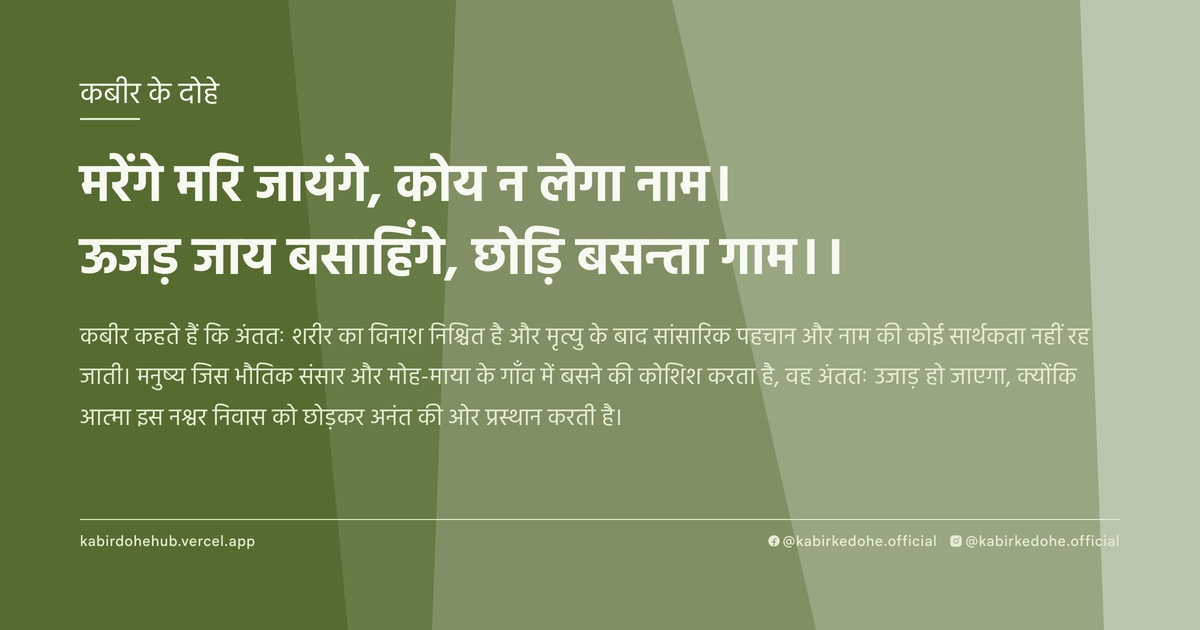
मरेंगे मरि जायंगे, कोय न लेगा नाम।
ऊजड़ जाय बसाहिंगे, छोड़ि बसन्ता गाम।।
Marenge mari jaayenge, koy na lega naam. Ujad jaay basahinge, chhod basanta gaam.
इस पृष्ठ पर इस कबीर दोहे का अर्थ (meaning), हिंदी व्याख्या और अंग्रेज़ी अनुवाद, दार्शनिक विश्लेषण और व्यावहारिक जीवन सीख दी गई है। यह दोहा मृतुक्यता (Mortality) विषय से जुड़ा है — Kabir doha meaning and explanation in Hindi and English.
अर्थ (Meaning):
कबीर कहते हैं कि अंततः शरीर का विनाश निश्चित है और मृत्यु के बाद सांसारिक पहचान और नाम की कोई सार्थकता नहीं रह जाती। मनुष्य जिस भौतिक संसार और मोह-माया के गाँव में बसने की कोशिश करता है, वह अंततः उजाड़ हो जाएगा, क्योंकि आत्मा इस नश्वर निवास को छोड़कर अनंत की ओर प्रस्थान करती है।
Kabir asserts that the dissolution of the physical body is inevitable, and upon death, worldly identity and fame lose all significance. The material world and the attachments we cultivate are like a temporary village; eventually, this dwelling will be deserted as the soul departs from the transient realm toward the eternal.
व्याख्या (Interpretation):
इस दोहे का शाब्दिक अर्थ मृत्यु की अपरिहार्यता है, लेकिन इसका गहरा आध्यात्मिक अर्थ 'अहंकार' के विसर्जन में निहित है। 'गाँव' यहाँ भौतिक शरीर और सामाजिक प्रतिष्ठा का प्रतीक है। कबीर निरगुण भक्ति के माध्यम से समझाते हैं कि जब तक मनुष्य स्वयं को इस नश्वर शरीर (माया) से जोड़कर रखता है, वह भ्रम में जीता है। अद्वैत वेदांत के अनुसार, आत्मा और ब्रह्म एक हैं, परंतु अज्ञानता के कारण हम इस अस्थायी 'गाँव' को अपना स्थायी घर मान लेते हैं। यहाँ विरोधाभास यह है कि जिस दिन हम इस मोह को 'उजाड़' देते हैं, उसी दिन हम वास्तविक अनंत घर में बसते हैं। यह शरीर केवल एक सराय है, जिसे अंततः खाली करना ही सत्य है।
Literally, the verse speaks of the inevitability of death, but its deeper spiritual essence lies in the dissolution of the 'ego'. The 'village' serves as a metaphor for the physical body and social status. Through Nirgun Bhakti, Kabir explains that as long as one identifies with the perishable body (Maya), they live in illusion. According to Advaita Vedanta, the Atman and Brahman are one, yet ignorance leads us to mistake this transient 'village' for a permanent home. The central paradox is that only when we allow this worldly attachment to be 'deserted' do we truly inhabit the eternal abode. The body is merely an inn, and vacating it is the ultimate truth.
दार्शनिक विश्लेषण (Philosophical Analysis):
कबीर का यह दर्शन उनके समय के कट्टर कर्मकांडों और बाहरी आडंबरों के विरुद्ध एक सशक्त प्रहार है। उन्होंने देखा कि लोग तीर्थों, मंदिरों और सामाजिक प्रतिष्ठा के निर्माण में अपना जीवन व्यतीत करते हैं, जबकि उनकी आंतरिक आत्मा उपेक्षित रहती है। यह दृष्टिकोण सूफी मत के 'फना' (अहंकार का विनाश) और अद्वैत वेदांत के 'माया' सिद्धांत से मेल खाता है, जहाँ संसार को एक स्वप्न माना गया है।
कबीर जाति और धर्म की सीमाओं को नकारते हुए यह तर्क देते हैं कि मृत्यु सबको समान कर देती है। जब 'नाम' (सामाजिक पहचान) मिट जाता है, तब केवल वह 'नाम' (परमात्मा का स्मरण) बचता है जो शाश्वत है। वे चेतावनी देते हैं कि भौतिक संपत्ति और संबंधों का संचय करना वैसा ही है जैसे किसी ऐसे घर को सजाना जो कल ढह जाएगा।
मनोवैज्ञानिक स्तर पर, यह दोहा मृत्यु-भय को स्वीकार करने और उसे रूपांतरण के अवसर में बदलने की बात करता है। जब व्यक्ति यह स्वीकार कर लेता है कि वह इस संसार में एक अजनबी है, तो उसका मोह कम होने लगता है और वह आंतरिक शांति की ओर बढ़ता है।
यहाँ 'ऊजड़ना' नकारात्मक नहीं, बल्कि सकारात्मक है। यह पुराने, सीमित व्यक्तित्व के विनाश का प्रतीक है ताकि एक व्यापक, सार्वभौमिक चेतना का जन्म हो सके। यह संकुचित 'मैं' से विस्तृत 'हम' और अंततः 'शून्य' की यात्रा है।
अंततः, कबीर यह स्पष्ट करते हैं कि मोक्ष किसी बाहरी स्थान पर जाने से नहीं, बल्कि इस भ्रम से जागने में है कि हम इस शरीर के स्वामी हैं। वास्तविक बसावट आत्मा का परमात्मा में विलीनीकरण है, न कि ईंट-पत्थरों के मकानों का निर्माण।
Kabir's philosophy is a powerful strike against the rigid rituals and external ostentations of his era. He observed people spending their lives building shrines, visiting pilgrimages, and accumulating social prestige, while their inner soul remained neglected. This perspective aligns with the Sufi concept of 'Fana' (annihilation of the ego) and the Advaita Vedanta theory of 'Maya', where the material world is viewed as a dream.
Rejecting the boundaries of caste and creed, Kabir argues that death is the ultimate equalizer. When the 'name' (social identity) vanishes, only the 'Name' (the eternal remembrance of the Divine) remains. He warns that accumulating material wealth and attachments is akin to decorating a house destined to collapse tomorrow.
On a psychological level, this verse encourages the acceptance of the fear of death, transforming it into an opportunity for spiritual evolution. Once an individual accepts their status as a stranger in this world, attachment diminishes, paving the way for inner peace.
In this context, 'desolation' or 'being deserted' is not negative but positive. It symbolizes the destruction of the old, limited personality to allow the birth of a broader, universal consciousness. It is a journey from the narrow 'I' to the expansive 'We', and ultimately to the 'Void'.
Finally, Kabir clarifies that liberation is not found by traveling to an external place, but by awakening from the illusion that we own this body. True habitation is the merging of the Atman into Brahman, not the construction of houses made of brick and stone.
मूल संदेश (Core Message):
- सांसारिक पहचान एक अस्थायी मुखौटा है जो अंततः गिर जाएगा।
- मोह का त्याग ही वास्तविक आध्यात्मिक स्वतंत्रता का एकमात्र मार्ग है।
- शरीर एक सराय है, इसे स्थायी घर समझने की भूल न करें।
- अहंकार का विसर्जन ही परमात्मा के साथ वास्तविक मिलन है।
- शाश्वत सत्य वह है जो मृत्यु के बाद भी शेष रहता है।
- Worldly identity is a temporary mask that will eventually fall.
- Renouncing attachment is the only path to true spiritual liberation.
- The body is a mere inn; do not mistake it for a permanent home.
- The dissolution of ego is the only true union with the Divine.
- Eternal truth is that which remains even after death.
व्यावहारिक उदाहरण (Practical Example):
वाराणसी के घाटों पर रहने वाले एक वृद्ध बुनकर, माधव, का जीवन इसी सत्य का साक्षी था। माधव ने अपना पूरा जीवन बेहतरीन रेशमी साड़ियाँ बुनने में लगाया। उसने शहर में सबसे बड़ा घर बनाया और समाज में अपनी एक विशिष्ट पहचान बनाई। उसे गर्व था कि उसका नाम पूरे शहर में सम्मान से लिया जाता है।
एक समय ऐसा आया जब माधव के परिवार के सदस्य विदेश चले गए और उसके पुराने मित्र एक-एक कर दुनिया छोड़ गए। अचानक उसे एहसास हुआ कि जिस 'नाम' और 'प्रतिष्ठा' के लिए उसने अपनी रातों की नींद उड़ाई, वह सब रेत की तरह फिसल रहा है। उसके आलीशान घर की दीवारें अब उसे काटने को दौड़ती थीं क्योंकि उनमें अब केवल सन्नाटा था।
एक शाम, वह गंगा के किनारे एक फकीर के पास बैठा। फकीर ने उसकी व्यथा सुनी और बस इतना कहा, 'माधव, तूने कपड़े तो बहुत सुंदर बुने, लेकिन अपनी आत्मा का वस्त्र पहनना भूल गया। तू जिस घर को अपना समझकर सजा रहा था, वह तो केवल एक पड़ाव था।'
यह शब्द माधव के लिए एक 'कबीर ट्विस्ट' की तरह थे। उसने महसूस किया कि वह अब तक एक ऐसे गाँव में बसने की कोशिश कर रहा था जो वास्तव में उजाड़ होने के लिए ही बना था। उसने अपनी सारी संपत्ति का त्याग कर गरीबों की सेवा में लगा दिया।
उसने अब रेशम के धागों से नहीं, बल्कि करुणा के धागों से लोगों के जीवन को जोड़ना शुरू किया। उसने देखा कि जब उसने अपनी 'पहचान' और 'अहंकार' को छोड़ा, तो उसे एक ऐसी शांति मिली जो उसके आलीशान बंगले में कभी नहीं थी।
उसकी दिनचर्या बदल गई। वह अब सुबह उठकर यह नहीं सोचता था कि आज कितने ऑर्डर मिलेंगे, बल्कि यह सोचता था कि आज वह कितने दुखी चेहरों पर मुस्कान ला सकता है।
उसका घर अब भौतिक रूप से छोटा हो गया था, लेकिन उसका हृदय ब्रह्मांड जितना विशाल हो गया था। उसने जान लिया था कि असली 'बसावट' बाहर नहीं, बल्कि भीतर है।
जब अंततः माधव की मृत्यु आई, तो उसके पास कोई भौतिक संपत्ति नहीं थी, लेकिन पूरा शहर उसकी करुणा के लिए रो रहा था। वह उस 'गाँव' को शांति से छोड़कर चला गया, क्योंकि उसने पहले ही उसे अपने भीतर से उजाड़ दिया था।
The life of Madhav, an elderly weaver living on the ghats of Varanasi, bore witness to this truth. Madhav spent his entire life weaving the finest silk sarees. He built the largest house in the city and carved out a distinct identity for himself. He took immense pride in the fact that his name was spoken with respect throughout the town.
There came a time when Madhav's family members moved abroad and his old friends passed away one by one. Suddenly, he realized that the 'name' and 'prestige' for which he had sacrificed his sleep were slipping away like sand. The walls of his luxurious house now felt suffocating because they held nothing but silence.
One evening, he sat beside a fakir on the banks of the Ganges. The fakir listened to his grief and simply said, 'Madhav, you wove beautiful clothes, but you forgot to wear the garment of your soul. The house you decorated thinking it was yours was merely a temporary stop.'
These words acted as a 'Kabir Twist' for Madhav. He realized he had been trying to settle in a village that was fundamentally designed to be deserted. He renounced his wealth and dedicated himself to the service of the poor.
He stopped weaving with silk threads and began weaving the lives of people with threads of compassion. He discovered that once he let go of his 'identity' and 'ego', he found a peace that was never present in his luxurious bungalow.
His routine changed. He no longer woke up wondering how many orders he would receive, but how many sorrowful faces he could bring a smile to.
His home became physically smaller, but his heart became as vast as the universe. He understood that true 'habitation' is not external, but internal.
When Madhav finally passed away, he possessed no material wealth, yet the entire city wept for his compassion. He left that 'village' in peace because he had already deserted it from within.
अभ्यास मार्गदर्शन (Practice Guidance):
- प्रतिदिन 20 मिनट मौन ध्यान करें, जहाँ आप अपनी सामाजिक पहचान (नाम, पद, रिश्ता) को एक पुराने कपड़े की तरह उतारकर फेंकने का मानसिक अभ्यास करें।
- एक 'अहंकार डायरी' लिखें: दिन भर में जब भी आपको अपनी प्रशंसा सुनकर गर्व महसूस हो या अपमान से क्रोध आए, उसे लिखें और विश्लेषण करें कि वह कौन सा 'मिथ्या गाँव' है जिसे आप बचाने की कोशिश कर रहे हैं।
- व्यवहार परिवर्तन: सप्ताह में एक बार किसी ऐसे व्यक्ति की निस्वार्थ सेवा करें जिससे आपका कोई संबंध न हो और जिसके सामने आपकी सामाजिक प्रतिष्ठा का कोई मूल्य न हो।
- निदान चेकलिस्ट: क्या मैं अपनी उपलब्धियों के खोने के विचार से डरता हूँ? क्या मेरी खुशी दूसरों की मान्यता पर निर्भर है? यदि हाँ, तो आप अभी भी उस 'नश्वर गाँव' में बसे हुए हैं।
- Practice 20 minutes of silent meditation daily, mentally visualizing yourself shedding your social identities (name, rank, relationships) like old, worn-out clothes.
- Maintain an 'Ego Journal': Whenever you feel pride from praise or anger from insult, record it and analyze which 'illusory village' you are trying to protect.
- Behavioral Shift: Once a week, perform selfless service for someone with whom you have no connection and for whom your social status holds no value.
- Diagnostic Checklist: Do I fear the thought of losing my achievements? Is my happiness dependent on external validation? If yes, you are still residing in that 'perishable village'.
चिंतन प्रश्न (Reflection Questions):
- यदि आज आपकी सारी उपलब्धियाँ और आपका नाम मिटा दिया जाए, तो आपके भीतर क्या बचेगा?
- आप अपनी डिजिटल पहचान (सोशल मीडिया) को संवारने में जितना समय लगाते हैं, क्या उतना ही समय अपनी आंतरिक शून्यता को समझने में देते हैं?
- क्या आपका 'परोपकार' वास्तव में निस्वार्थ है, या यह आपके 'नाम' को और अधिक चमकाने का एक सूक्ष्म तरीका है?
- आप किस ऐसे मानसिक 'गाँव' में बसे हुए हैं जिसे आप कभी छोड़ना नहीं चाहते, भले ही वह आपको दुखी कर रहा हो?
- मृत्यु का विचार आपको डराता है या आपको वर्तमान क्षण में अधिक गहराई से जीने के लिए प्रेरित करता है?
- If all your achievements and your name were erased today, what would remain within you?
- Do you spend as much time understanding your inner void as you do polishing your digital identity on social media?
- Is your 'philanthropy' truly selfless, or is it a subtle way to further polish your 'name'?
- In which mental 'village' are you residing that you refuse to leave, even though it brings you misery?
- Does the thought of death terrify you, or does it inspire you to live the present moment more deeply?