
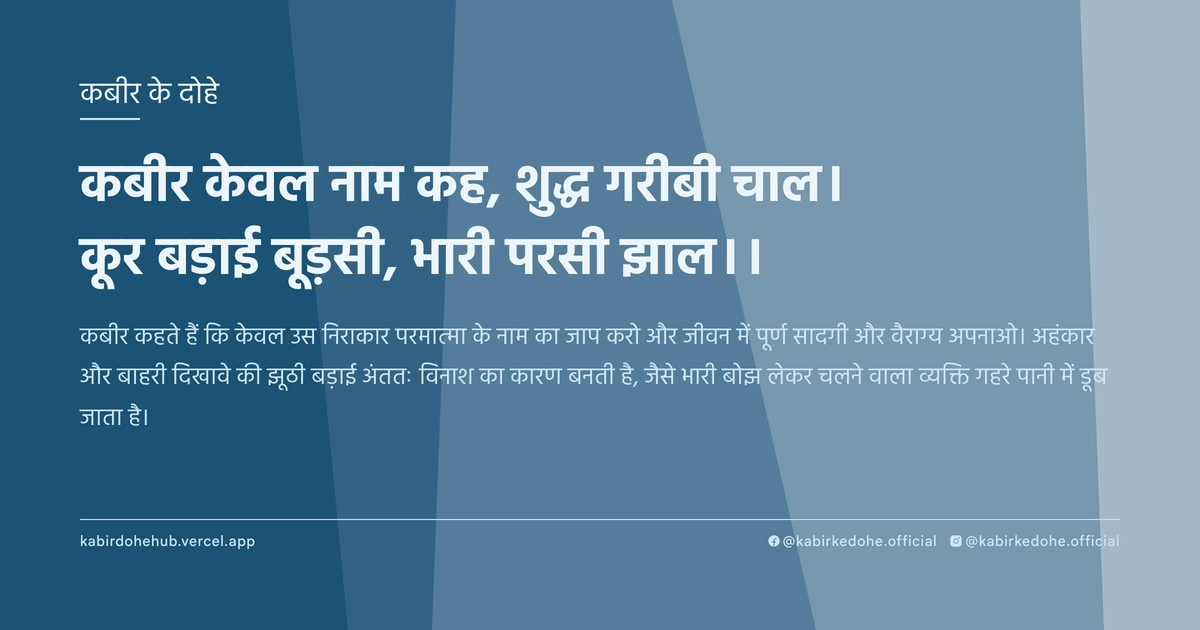
कबीर केवल नाम कह, शुद्ध गरीबी चाल।
कूर बड़ाई बूड़सी, भारी परसी झाल।।
Kabir keval naam kah, shuddh gareebi chaal. Koor badai boordsi, bhaari parsi jhaal.
इस पृष्ठ पर इस कबीर दोहे का अर्थ (meaning), हिंदी व्याख्या और अंग्रेज़ी अनुवाद, दार्शनिक विश्लेषण और व्यावहारिक जीवन सीख दी गई है। यह दोहा विनम्रता (Humility) विषय से जुड़ा है — Kabir doha meaning and explanation in Hindi and English.
अर्थ (Meaning):
कबीर कहते हैं कि केवल उस निराकार परमात्मा के नाम का जाप करो और जीवन में पूर्ण सादगी और वैराग्य अपनाओ। अहंकार और बाहरी दिखावे की झूठी बड़ाई अंततः विनाश का कारण बनती है, जैसे भारी बोझ लेकर चलने वाला व्यक्ति गहरे पानी में डूब जाता है।
Kabir advises focusing solely on the remembrance of the Divine Name and adopting a life of absolute simplicity and detachment. He warns that the burden of ego and the pursuit of worldly prestige will eventually lead to one's downfall, much like a person carrying heavy weights who sinks rapidly when crossing a river.
व्याख्या (Interpretation):
इस दोहे का शाब्दिक अर्थ है कि नाम स्मरण और गरीबी (सादगी) ही मोक्ष का मार्ग है। यहाँ 'गरीबी' का अर्थ आर्थिक अभाव नहीं, बल्कि 'अहंकार की रिक्तता' है। कबीर निरगुण भक्ति के माध्यम से समझाते हैं कि जब तक मनुष्य 'मैं' और 'मेरा' के बोझ से लदा है, वह माया के सागर को पार नहीं कर सकता। यह अद्वैत वेदांत के उस सिद्धांत को दर्शाता है जहाँ आत्मा का परमात्मा से मिलन तभी संभव है जब व्यक्तित्व का मिथ्या अहंकार विलीन हो जाए। 'झाल' या जाल यहाँ सांसारिक मोह-माया का प्रतीक है, जो केवल उन्हीं को पकड़ता है जो अपनी पहचान को बाहरी उपलब्धियों से जोड़ते हैं। अंततः, यह दोहा एक विरोधाभास प्रस्तुत करता है: जो स्वयं को शून्य कर लेता है, वही पूर्णता को प्राप्त करता है।
Literally, the verse suggests that chanting the Divine Name and embracing simplicity are the keys to liberation. Here, 'poverty' does not signify material lack, but rather the 'emptiness of ego.' Through the lens of Nirgun Bhakti, Kabir explains that as long as a human is burdened by 'I' and 'mine,' they cannot cross the ocean of Maya. This aligns with Advaita Vedanta, where the union of Atman and Brahman occurs only when the false identity of the ego dissolves. The 'jhaal' or net symbolizes worldly attachments that ensnare those who tie their identity to external achievements. Ultimately, the doha presents a spiritual paradox: only by becoming nothing (shunya) can one become everything (पूर्ण).
दार्शनिक विश्लेषण (Philosophical Analysis):
कबीर का यह दर्शन उस समय के सामाजिक और धार्मिक पाखंड के विरुद्ध एक सशक्त प्रहार था। उन्होंने देखा कि धर्म के नाम पर लोग केवल कर्मकांडों और बाहरी आडंबरों में लिप्त थे, जबकि आंतरिक शुद्धि की उपेक्षा की जा रही थी। कबीर ने 'नाम' को किसी विशिष्ट देवता के नाम के रूप में नहीं, बल्कि उस सार्वभौमिक चेतना (Universal Consciousness) के रूप में परिभाषित किया जो हर जीव में व्याप्त है।
यह दृष्टिकोण सूफीवाद के 'फना' (अहंकार का विनाश) के सिद्धांत से मेल खाता है, जहाँ साधक अपनी व्यक्तिगत इच्छाओं को ईश्वर की इच्छा में विलीन कर देता है। कबीर का तर्क है कि जाति, कुल और पद की बड़ाई केवल मानसिक बेड़ियाँ हैं। जब व्यक्ति स्वयं को 'गरीब' (विनम्र और शून्य) मानता है, तो वह वास्तव में आध्यात्मिक रूप से समृद्ध हो जाता है क्योंकि वह अब बाहरी प्रशंसा का गुलाम नहीं रहता।
अद्वैत वेदांत के संदर्भ में, यह दोहा माया के प्रभाव को कम करने की बात करता है। माया हमें यह विश्वास दिलाती है कि हमारी सामाजिक स्थिति और उपलब्धियाँ ही हमारी वास्तविक पहचान हैं। कबीर इस भ्रम को तोड़कर हमें उस शुद्ध चेतना की ओर ले जाते हैं जहाँ कोई भेद नहीं रहता।
मनोवैज्ञानिक स्तर पर, 'भारी परसी झाल' उस मानसिक तनाव और चिंता का वर्णन है जो उच्च सामाजिक स्थिति को बनाए रखने के दबाव से पैदा होती है। अहंकार का बोझ व्यक्ति को वर्तमान क्षण से दूर ले जाता है और उसे भयभीत रखता है।
अंततः, कबीर यह संदेश देते हैं कि मुक्ति किसी बाहरी तीर्थ या कठिन तपस्या से नहीं, बल्कि आंतरिक सरलता और निरंतर आत्म-स्मरण से प्राप्त होती है। यह मार्ग कठिन है क्योंकि यह मनुष्य से उसकी सबसे प्रिय वस्तु—उसका अहंकार—छीन लेता है।
Kabir's philosophy serves as a powerful critique of the social and religious hypocrisy of his era. He observed that people were immersed in rituals and outward displays of piety while neglecting inner purification. Kabir defines 'Naam' not as the name of a specific deity, but as the Universal Consciousness that permeates every living being.
This perspective mirrors the Sufi concept of 'Fana' (annihilation of the self), where the seeker dissolves their individual will into the Divine Will. Kabir argues that pride in caste, lineage, and rank are merely mental shackles. When a person considers themselves 'poor' (humble and empty), they become spiritually wealthy because they are no longer enslaved by external validation.
In the context of Advaita Vedanta, this doha addresses the reduction of Maya's influence. Maya convinces us that our social status and achievements constitute our true identity. Kabir shatters this illusion, guiding us toward a pure consciousness where all distinctions vanish.
Psychologically, the 'heavy net' describes the mental stress and anxiety born from the pressure to maintain a high social image. The burden of ego detaches the individual from the present moment and keeps them in a state of perpetual fear of loss.
Ultimately, Kabir teaches that liberation is not found in external pilgrimages or rigorous penance, but in inner simplicity and constant self-remembrance. This path is arduous because it demands the surrender of the most cherished human possession: the ego.
मूल संदेश (Core Message):
- अहंकार वह भारी बोझ है जो हमें आध्यात्मिक गहराई में डूबने से रोकता है।
- सच्ची समृद्धि बाहरी वैभव में नहीं, बल्कि आंतरिक शून्यता में निहित है।
- नाम का स्मरण केवल शब्दों का जाप नहीं, बल्कि अहंकार का विसर्जन है।
- सादगी ही वह नौका है जो हमें माया के सागर से पार ले जा सकती है।
- जब 'मैं' मिटता है, तभी 'वह' (परमात्मा) प्रकट होता है।
- Ego is the heavy burden that prevents us from diving into spiritual depths.
- True prosperity resides not in external luxury, but in inner emptiness.
- Remembrance of the Name is not mere chanting, but the dissolution of the ego.
- Simplicity is the only boat that can carry us across the ocean of Maya.
- Only when the 'I' vanishes does the 'Divine' manifest.
व्यावहारिक उदाहरण (Practical Example):
वाराणसी के एक पुराने घाट पर माधव नाम का एक वृद्ध बुनकर रहता था। माधव अपने काम में निपुण था, लेकिन उसकी ख्याति ने उसे अहंकारी बना दिया था। वह शहर के सबसे महंगे रेशमी वस्त्र बुनता था और खुद को अन्य बुनकरों से श्रेष्ठ मानता था। वह अक्सर अपनी कला का बखान करता और दूसरों को नीचा दिखाता, यह मानते हुए कि उसकी सामाजिक प्रतिष्ठा ही उसकी असली पूँजी है।
एक दिन, माधव की मुलाकात एक फकीर से हुई जो घाट की सीढ़ियों पर बैठा था। फकीर के पास न कोई घर था, न कोई धन, फिर भी उसके चेहरे पर एक असीम शांति थी। माधव ने गर्व से अपनी महंगी पोशाक दिखाते हुए पूछा, 'बाबा, आप इतनी गरीबी में कैसे खुश रह सकते हैं? देखिए मेरी समृद्धि!'
फकीर मुस्कुराया और बोला, 'बेटा, तुम रेशम के धागों से अपना शरीर ढंक रहे हो, लेकिन तुम्हारा अहंकार तुम्हें भीतर से नग्न कर रहा है। तुम जिस प्रतिष्ठा का बोझ ढो रहे हो, वह एक भारी जाल है। जिस दिन तुम इस 'मैं' को उतार फेंकोगे, उस दिन तुम वास्तव में हल्के हो जाओगे और तैर पाओगे।'
माधव को पहले तो यह बात समझ नहीं आई, लेकिन उस रात उसे एक भयानक सपना आया। उसने देखा कि वह एक गहरी नदी पार कर रहा है और उसके कंधों पर सोने के भारी बर्तनों और रेशमी कपड़ों का ढेर है। जैसे ही वह नदी के बीच पहुँचा, वह बोझ उसे नीचे खींचने लगा और वह डूबने लगा। वह जितना संघर्ष करता, बोझ उतना ही भारी होता गया।
घबराकर वह जागा और उसे फकीर की बात याद आई। उसने महसूस किया कि उसकी 'बड़ाई' वास्तव में उसका बोझ थी। उसने अपनी कला को अहंकार का साधन बनाना छोड़ दिया और उसे सेवा का माध्यम बनाया।
उसने अपने गाँव के गरीब बच्चों को मुफ्त में बुनाई सिखाना शुरू किया। अब वह खुद को 'सबसे बड़ा बुनकर' नहीं, बल्कि 'ईश्वर का एक छोटा सा सेवक' कहने लगा।
जैसे-जैसे उसका अहंकार कम हुआ, उसका मानसिक तनाव गायब हो गया। वह अब रात को चैन से सो पाता था और उसके काम में एक नई चमक आ गई क्योंकि अब वह प्रशंसा के लिए नहीं, बल्कि प्रेम के लिए बुनता था।
माधव ने पाया कि जब उसने अपनी पहचान की 'भारी झाल' को त्याग दिया, तो वह वास्तव में स्वतंत्र हो गया। उसकी सादगी ही उसकी सबसे बड़ी संपत्ति बन गई।
अंत में, माधव ने समझा कि वास्तविक समृद्धि बाहरी वैभव में नहीं, बल्कि आंतरिक रिक्तता और समर्पण में है। वह अब उस 'शुद्ध गरीबी' का अनुभव कर रहा था जिसकी बात कबीर ने की थी।
On an ancient ghat in Varanasi lived an elderly weaver named Madhav. Madhav was masterly in his craft, but his fame had made him arrogant. He wove the most expensive silk garments in the city and considered himself superior to all other weavers. He often boasted of his art and belittled others, believing his social prestige was his true capital.
One day, Madhav encountered a fakir sitting on the steps of the ghat. The fakir had no home, no money, yet his face radiated an infinite peace. Madhav, proudly showing off his expensive attire, asked, 'Baba, how can you be happy in such poverty? Look at my prosperity!'
The fakir smiled and replied, 'Son, you are covering your body with silk threads, but your ego is stripping you naked from within. The prestige you carry is a heavy net. The day you cast off this "I," you will truly become light and be able to float.'
Madhav didn't understand at first, but that night he had a terrifying dream. He saw himself crossing a deep river, carrying a heap of heavy golden vessels and silk clothes on his shoulders. As he reached the middle, the weight began to pull him down, and he started sinking. The more he struggled, the heavier the burden became.
He woke up gasping and remembered the fakir's words. He realized that his 'greatness' was actually his burden. He stopped using his art as a tool for ego and turned it into a medium of service.
He began teaching weaving for free to the poor children of his village. He no longer called himself the 'greatest weaver' but instead referred to himself as a 'small servant of the Divine.'
As his ego diminished, his mental stress vanished. He could finally sleep peacefully, and a new luster appeared in his work because he now wove out of love, not for praise.
Madhav discovered that when he discarded the 'heavy net' of his identity, he became truly free. His simplicity became his greatest asset.
In the end, Madhav understood that true prosperity lies not in external luxury, but in inner emptiness and surrender. He was now experiencing that 'pure poverty' spoken of by Kabir.
अभ्यास मार्गदर्शन (Practice Guidance):
- दैनिक अभ्यास: प्रतिदिन 20 मिनट मौन बैठें और अपने भीतर उठने वाले 'मैं' (अहंकार) के विचारों का निरीक्षण करें। जब भी कोई प्रशंसा मिले, मन ही मन कहें, 'यह गुण ईश्वर का है, मेरा नहीं'।
- आत्म-पूछताछ जर्नल: हर रात लिखें कि आज दिन भर में कितनी बार मैंने अपनी श्रेष्ठता सिद्ध करने की कोशिश की? उस समय मुझे कैसा महसूस हुआ और क्या वह वास्तव में आवश्यक था?
- व्यवहारिक परिवर्तन: सप्ताह में एक बार ऐसा कार्य करें जिसमें आपकी पहचान गुप्त रहे और आप बिना किसी श्रेय (credit) के किसी की मदद करें।
- डायग्नोस्टिक चेकलिस्ट: यदि आप दूसरों की सफलता से ईर्ष्या महसूस करते हैं, अपनी उपलब्धियों का बार-बार जिक्र करते हैं, या आलोचना सुनकर क्रोधित होते हैं, तो समझें कि आपका 'बोझ' अभी भी भारी है।
- Daily Practice: Sit in silence for 20 minutes daily and observe the thoughts of 'I' (ego) arising within. Whenever you receive praise, mentally whisper, 'This quality belongs to the Divine, not to me.'
- Self-Inquiry Journal: Every night, record: How many times today did I try to prove my superiority? How did I feel in those moments, and was it truly necessary?
- Behavioral Change: Once a week, perform an act of service where your identity remains anonymous and you help someone without seeking any credit.
- Diagnostic Checklist: If you feel envy toward others' success, frequently mention your own achievements, or react with anger to criticism, recognize that your 'burden' is still heavy.
चिंतन प्रश्न (Reflection Questions):
- यदि आज आपकी सारी पदवियाँ, धन और सामाजिक प्रतिष्ठा छीन ली जाए, तो आपके पास 'स्वयं' के रूप में क्या बचेगा?
- आप अपनी सार्वजनिक छवि (Public Image) को बनाए रखने के लिए मानसिक रूप से कितना बोझ ढो रहे हैं?
- क्या आपकी विनम्रता वास्तविक है, या यह केवल दूसरों से प्रशंसा पाने का एक सूक्ष्म तरीका है?
- आपके जीवन का वह कौन सा 'भारी जाल' है जिसे आप छोड़ने से डरते हैं, भले ही वह आपको डुबो रहा हो?
- क्या आप वास्तव में 'शून्य' होने का साहस रखते हैं, या आपकी पहचान केवल आपकी उपलब्धियों का योग है?
- If all your titles, wealth, and social prestige were stripped away today, what would remain of 'you'?
- How much mental burden are you carrying just to maintain your public image?
- Is your humility genuine, or is it merely a subtle way to elicit praise from others?
- What is that 'heavy net' in your life that you fear letting go of, even though it is drowning you?
- Do you truly have the courage to become 'zero,' or is your identity merely the sum of your achievements?