
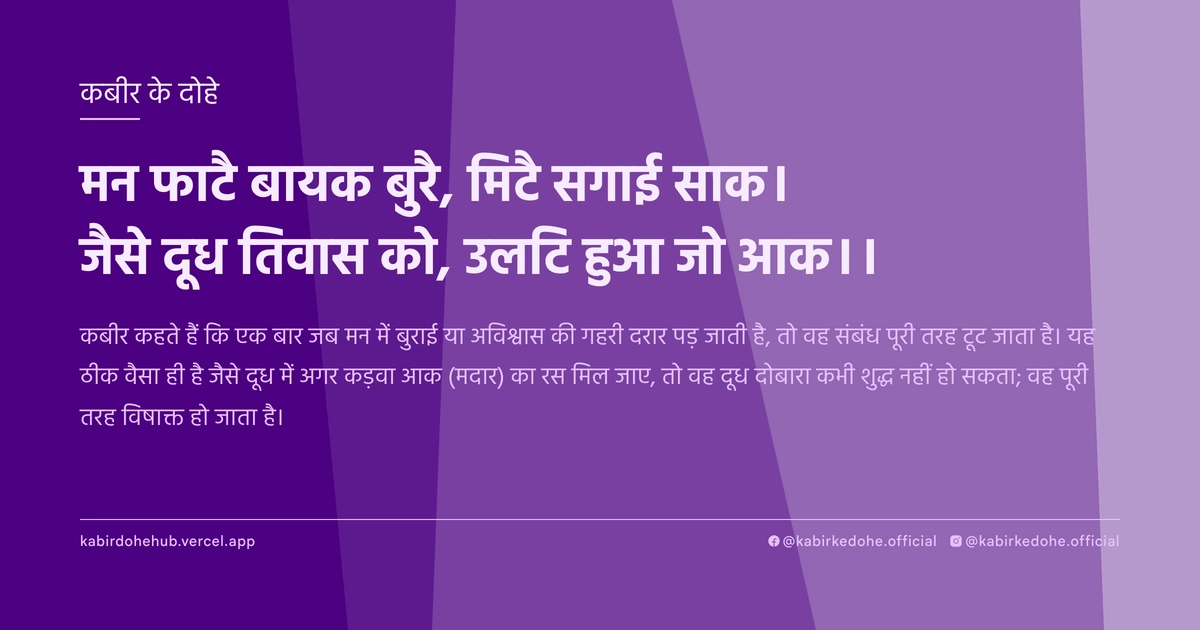
मन फाटै बायक बुरै, मिटै सगाई साक।
जैसे दूध तिवास को, उलटि हुआ जो आक।।
Man phatai baayak burai, mitai sagayi saak. Jaise doodh tivaas ko, ulati hua jo aak.
इस पृष्ठ पर इस कबीर दोहे का अर्थ (meaning), हिंदी व्याख्या और अंग्रेज़ी अनुवाद, दार्शनिक विश्लेषण और व्यावहारिक जीवन सीख दी गई है। यह दोहा अनित्य (Impermanence) विषय से जुड़ा है — Kabir doha meaning and explanation in Hindi and English.
अर्थ (Meaning):
कबीर कहते हैं कि एक बार जब मन में बुराई या अविश्वास की गहरी दरार पड़ जाती है, तो वह संबंध पूरी तरह टूट जाता है। यह ठीक वैसा ही है जैसे दूध में अगर कड़वा आक (मदार) का रस मिल जाए, तो वह दूध दोबारा कभी शुद्ध नहीं हो सकता; वह पूरी तरह विषाक्त हो जाता है।
Kabir asserts that once a deep rift of malice or distrust is created within a relationship, the bond is irrevocably severed. He compares this to milk into which the bitter sap of the Aak (Calotropis) plant has fallen; once contaminated, the milk can never return to its original purity and becomes entirely toxic.
व्याख्या (Interpretation):
यहाँ कबीर बाहरी संबंधों की नहीं, बल्कि आंतरिक विश्वास की बात कर रहे हैं। 'बायक बुरै' का अर्थ है वह सूक्ष्म अहंकार जो धीरे-धीरे रिश्तों को खोखला करता है। जब संदेह और द्वेष का बीज बोया जाता है, तो वह आत्मा के बीच के सेतु को नष्ट कर देता है। यह निरगुण भक्ति के उस सिद्धांत से जुड़ा है जहाँ माया (भ्रम) व्यक्ति को सत्य से दूर करती है। जैसे दूध और आक का मिलन विनाशकारी है, वैसे ही अहंकार और प्रेम का सह-अस्तित्व असंभव है। यह अद्वैत वेदांत की उस स्थिति को दर्शाता है जहाँ एक बार अज्ञानता (Avidya) हावी हो जाए, तो मूल एकता को पहचानना कठिन हो जाता है।
Kabir is not merely discussing external relationships but the internal state of trust. 'Bayak burai' refers to the subtle ego that gradually hollows out connections. When the seeds of suspicion and malice are sown, they destroy the bridge between souls. This aligns with the Nirgun Bhakti principle where Maya (illusion) separates the individual from the Truth. Just as the union of milk and Aak sap is catastrophic, the coexistence of ego and divine love is impossible. It reflects the Advaita Vedanta state where once ignorance (Avidya) dominates, recognizing the original non-duality becomes an arduous task.
दार्शनिक विश्लेषण (Philosophical Analysis):
कबीर का यह दोहा सामाजिक पाखंड और आंतरिक शुद्धि के बीच के संघर्ष को दर्शाता है। उनके युग में, लोग बाहरी कर्मकांडों (Rituals) में लीन थे, जबकि उनके हृदय द्वेष से भरे थे। कबीर यहाँ चेतावनी देते हैं कि बाहरी दिखावा उस कड़वाहट को नहीं मिटा सकता जो भीतर बैठ चुकी है।
यह दर्शन सूफीवाद के 'नफ्स' (अहंकार) के विनाश से मिलता-जुलता है। जब तक मनुष्य अपने भीतर के 'मैं' को नहीं मिटाता, वह ईश्वर या दूसरे मनुष्य के साथ वास्तविक एकात्मता महसूस नहीं कर सकता। कबीर का तर्क है कि विश्वास एक नाजुक धागे की तरह है; एक बार टूटने पर उसे जोड़ा तो जा सकता है, लेकिन वह पहले जैसा अटूट नहीं रहता।
अद्वैत वेदांत के परिप्रेक्ष्य में, यह दोहा 'चित्त' की शुद्धि पर जोर देता है। यदि चित्त में वासना और क्रोध का मिश्रण हो जाए, तो वह सत्य के प्रतिबिंब को धुंधला कर देता है। यह ठीक वैसा ही है जैसे गंदा पानी दर्पण की तरह काम नहीं कर सकता।
कबीर जाति और धर्म के भेदों को नकारते हुए कहते हैं कि असली विभाजन 'प्रेम' और 'घृणा' के बीच है। जो व्यक्ति स्वयं को श्रेष्ठ मानकर दूसरों को तुच्छ समझता है, वह अनजाने में अपने भीतर 'आक' का रस मिला रहा है, जिससे उसकी आध्यात्मिक यात्रा बाधित होती है।
अंततः, यह विश्लेषण हमें सिखाता है कि क्षमा केवल शब्दों से नहीं, बल्कि हृदय के पूर्ण रूपांतरण से आती है। यदि कड़वाहट की जड़ें गहरी हैं, तो केवल औपचारिक क्षमा पर्याप्त नहीं है; आत्मा का पूर्ण शोधन आवश्यक है ताकि वह पुनः उस 'दूध' जैसी पवित्रता को प्राप्त कर सके।
This couplet reflects the struggle between social hypocrisy and internal purification. In Kabir's era, people were immersed in external rituals while their hearts remained filled with malice. Kabir warns that outward displays cannot erase the bitterness that has settled within.
This philosophy mirrors the Sufi concept of the annihilation of the 'Nafs' (ego). Until a human eradicates the 'I', they cannot experience true oneness with the Divine or fellow humans. Kabir argues that trust is like a fragile thread; once broken, it may be mended, but it never regains its original unbreakable strength.
From the perspective of Advaita Vedanta, this verse emphasizes the purification of the 'Chitta' (consciousness). If the consciousness is mixed with lust and anger, it blurs the reflection of Truth. It is akin to how turbid water cannot function as a mirror.
Rejecting caste and religious divisions, Kabir posits that the real divide exists between 'Love' and 'Hate'. One who considers themselves superior while belittling others is unknowingly mixing 'Aak' sap into their own soul, thereby obstructing their spiritual ascent.
Ultimately, this analysis teaches us that forgiveness does not come from words alone, but from a total transformation of the heart. If the roots of bitterness are deep, formal apologies are insufficient; a complete spiritual alchemy is required to regain that original 'milk-like' purity.
मूल संदेश (Core Message):
- संदेह आत्मा के प्रेम को विषाक्त कर देता है।
- अहंकार और विश्वास एक साथ नहीं रह सकते।
- रिश्तों की पवित्रता को बनाए रखना उसे सुधारने से बेहतर है।
- आंतरिक कड़वाहट बाहरी कर्मकांडों से नहीं मिटती।
- सत्य की पहचान के लिए मन का दर्पण स्वच्छ होना चाहिए।
- क्षमा केवल शब्द नहीं, बल्कि हृदय का पूर्ण रूपांतरण है।
- Suspicion intoxicates the soul's capacity for love.
- Ego and trust cannot coexist in the same heart.
- Preserving the purity of a bond is better than attempting to repair it.
- Internal bitterness cannot be erased by external rituals.
- The mirror of the mind must be clean to perceive the Truth.
- Forgiveness is not a word, but a total transformation of the heart.
व्यावहारिक उदाहरण (Practical Example):
वाराणसी के एक पुराने मोहल्ले में माधव नाम का एक कुशल बुनकर रहता था। उसका अपने छोटे भाई, केशव, के साथ अटूट प्रेम था। दोनों मिलकर एक ही करघे पर काम करते थे और उनके बीच कभी कोई विवाद नहीं हुआ।
एक समय ऐसा आया जब मोहल्ले के कुछ ईर्ष्यालु लोगों ने माधव के मन में यह बात डाल दी कि केशव चुपके से उसके डिजाइनों की चोरी कर रहा है और उन्हें शहर के बड़े व्यापारियों को कम दाम में बेच रहा है। माधव ने शुरुआत में इसे नजरअंदाज किया, लेकिन धीरे-धीरे संदेह का जहर उसके मन में घुलने लगा।
एक दिन, माधव ने केशव को एक बाहरी व्यापारी के साथ बात करते देखा। बिना पूछे, माधव ने केशव पर चिल्लाकर आरोप लगाया और उसे घर से बाहर निकाल दिया। केशव ने बहुत कोशिश की कि वह अपनी ईमानदारी साबित करे, लेकिन माधव के मन में अब 'आक' का रस मिल चुका था।
केशव शहर चला गया और अपनी मेहनत से एक बड़ा नाम कमाया। सालों बाद, जब माधव बूढ़ा और बीमार हुआ, तो उसे पता चला कि जिस व्यापारी के साथ केशव बात कर रहा था, वह वास्तव में माधव के लिए एक बड़ा ऑर्डर लाने की कोशिश कर रहा था।
माधव टूट गया। उसने केशव को वापस बुलाया और उससे क्षमा मांगी। केशव वापस तो आ गया, लेकिन वह पुराना सहज प्रेम और विश्वास अब गायब था। उनके बीच अब औपचारिकता थी, लेकिन वह सहजता नहीं रही।
माधव ने महसूस किया कि संदेह ने उनके रिश्ते के उस पवित्र दूध को कड़वा कर दिया था। उसने कोशिश की कि वह फिर से वही रिश्ता जी सके, लेकिन वह दरार अब उसके व्यक्तित्व का हिस्सा बन चुकी थी।
उसने अपनी पूरी जिंदगी के बचे हुए दिन इस बात को समझने में बिताए कि कैसे एक छोटा सा संदेह पूरे जीवन की पूंजी को नष्ट कर सकता है। उसने अपनी कला को अब केवल ईश्वर को समर्पित कर दिया।
अंत में, माधव ने सीखा कि रिश्तों में 'सफाई' से ज्यादा 'सावधानी' जरूरी है। एक बार जब विश्वास की पवित्रता चली जाती है, तो दुनिया की कोई भी दौलत उसे वापस नहीं ला सकती।
In an old neighborhood of Varanasi lived a skilled weaver named Madhav. He shared an unbreakable bond of love with his younger brother, Keshav. They worked together on a single loom, and conflict was unknown to them.
There came a time when some envious neighbors planted a seed in Madhav's mind, suggesting that Keshav was secretly stealing his designs and selling them to big city merchants at lower prices. Initially, Madhav ignored it, but slowly, the poison of suspicion began to seep into his heart.
One day, Madhav saw Keshav talking to an outside trader. Without questioning, Madhav shouted accusations and cast Keshav out of the house. Keshav tried desperately to prove his honesty, but the 'Aak' sap had already contaminated Madhav's perception.
Keshav moved to the city and built a great reputation through hard work. Years later, when Madhav became old and ill, he discovered that the trader Keshav had been talking to was actually trying to secure a massive order for Madhav.
Madhav was devastated. He called Keshav back and begged for forgiveness. Keshav returned, but the effortless love and trust of their youth were gone. There was now formality between them, but the intuitive ease had vanished.
Madhav realized that suspicion had turned the pure milk of their relationship bitter. He tried to relive that old bond, but the rift had become a part of his very identity.
He spent the remaining years of his life understanding how a tiny seed of doubt can destroy a lifetime of emotional capital. He dedicated his art solely to the Divine from then on.
In the end, Madhav learned that in relationships, 'caution' is more vital than 'cleaning'. Once the purity of trust is gone, no amount of worldly wealth can restore it.
अभ्यास मार्गदर्शन (Practice Guidance):
- प्रतिदिन 15 मिनट मौन रहकर यह विचार करें कि क्या आपके मन में किसी के प्रति अनकहा द्वेष है।
- जब भी किसी के प्रति संदेह उत्पन्न हो, तो तुरंत स्वयं से पूछें: 'क्या यह सत्य है या मेरी धारणा?'
- एक डायरी लिखें जिसमें आप उन रिश्तों की सूची बनाएं जिन्हें आपने अहंकार के कारण खोया, और उनके प्रति मानसिक रूप से क्षमा मांगें।
- व्यवहार परिवर्तन: किसी की आलोचना करने से पहले उसके दृष्टिकोण को समझने के लिए तीन प्रश्न पूछें।
- डायग्नोस्टिक चेकलिस्ट: क्या आप किसी व्यक्ति के साथ होते हुए भी मानसिक रूप से उससे दूर महसूस करते हैं? क्या आप पुरानी गलतियों को बार-बार याद कर क्रोधित होते हैं? यदि हाँ, तो आपके भीतर 'आक' का प्रभाव है।
- Spend 15 minutes in daily silence contemplating whether there is any unspoken malice toward anyone in your heart.
- Whenever suspicion arises, immediately ask yourself: 'Is this a proven truth or merely my perception?'
- Maintain a journal listing relationships lost to ego, and mentally offer forgiveness and seek it from them.
- Behavioral Change: Before criticizing someone, ask three clarifying questions to truly understand their perspective.
- Diagnostic Checklist: Do you feel mentally distant even while physically present with someone? Do you repeatedly recall old mistakes with anger? If yes, the 'Aak' effect is active within you.
चिंतन प्रश्न (Reflection Questions):
- क्या आपका सार्वजनिक व्यक्तित्व आपके भीतर छिपी कड़वाहट को छिपाने का एक मुखौटा है?
- आप किन लोगों को 'अछूत' मानते हैं, और क्या यह आपकी अपनी मानसिक अशुद्धि का संकेत है?
- डिजिटल युग में, क्या आप दूसरों की छवि को बिना जाने उनके प्रति निर्णय ले रहे हैं?
- यदि आज आपका जीवन समाप्त हो जाए, तो कितने रिश्तों में 'आक' का जहर शेष रहेगा?
- क्या आप वास्तव में क्षमा करते हैं, या केवल अपनी श्रेष्ठता सिद्ध करने के लिए क्षमा का नाटक करते हैं?
- आपके भीतर का कौन सा 'अहंकार' आपको सत्य को स्वीकार करने से रोकता है?
- Is your public persona merely a mask hiding an internal bitterness?
- Whom do you consider 'untouchable' or inferior, and is this a sign of your own mental impurity?
- In the digital age, are you judging others based on curated images without knowing their truth?
- If your life ended today, how many relationships would still carry the poison of 'Aak'?
- Do you truly forgive, or do you simulate forgiveness to prove your own moral superiority?
- Which specific part of your ego prevents you from accepting the raw truth of your existence?