
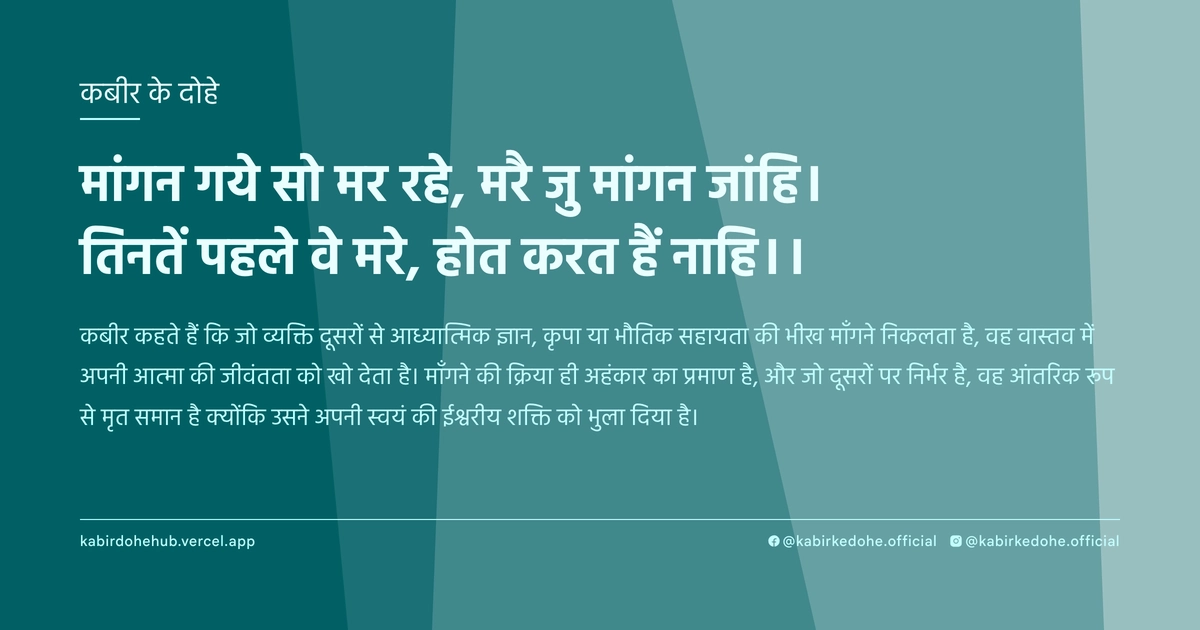
मांगन गये सो मर रहे, मरै जु मांगन जांहि।
तिनतें पहले वे मरे, होत करत हैं नाहि।।
Maangan gaye so mar rahe, marai ju maangan jaahin. Tinten pehle ve mare, hot karat hain naahi.
इस पृष्ठ पर इस कबीर दोहे का अर्थ (meaning), हिंदी व्याख्या और अंग्रेज़ी अनुवाद, दार्शनिक विश्लेषण और व्यावहारिक जीवन सीख दी गई है। यह दोहा संतोष (Contentment) विषय से जुड़ा है — Kabir doha meaning and explanation in Hindi and English.
अर्थ (Meaning):
कबीर कहते हैं कि जो व्यक्ति दूसरों से आध्यात्मिक ज्ञान, कृपा या भौतिक सहायता की भीख माँगने निकलता है, वह वास्तव में अपनी आत्मा की जीवंतता को खो देता है। माँगने की क्रिया ही अहंकार का प्रमाण है, और जो दूसरों पर निर्भर है, वह आंतरिक रूप से मृत समान है क्योंकि उसने अपनी स्वयं की ईश्वरीय शक्ति को भुला दिया है।
Kabir asserts that those who venture out to beg—whether for spiritual grace, knowledge, or material sustenance—are effectively killing their own spirit. The act of begging is a testament to a perceived lack, and he who depends on another is spiritually dead, having forgotten the innate divine power residing within their own soul.
व्याख्या (Interpretation):
शाब्दिक अर्थ यह है कि याचना करने वाला स्वयं को नष्ट कर लेता है। रूपकात्मक रूप से, 'माँगना' यहाँ उस मानसिक अवस्था को दर्शाता है जहाँ साधक सत्य को बाहर खोजता है। यह निर्गुण भक्ति का मूल सिद्धांत है कि परमात्मा कहीं बाहर नहीं, बल्कि अंतरात्मा में स्थित है। जब हम बाहर माँगते हैं, तो हम माया के भ्रम में पड़ जाते हैं कि हम अधूरे हैं। यह द्वैत (Duality) पैदा करता है—एक माँगने वाला और एक देने वाला। अद्वैत वेदांत के अनुसार, जब यह भेद मिट जाता है और साधक को अपनी पूर्णता का अनुभव होता है, तब माँगने की आवश्यकता समाप्त हो जाती है। यह विरोधाभास है कि हम जिसे पाने के लिए बाहर भटकते हैं, वह हमारी अपनी खोज की बाधा बन जाता है।
Literally, the seeker who begs destroys themselves. Metaphorically, 'begging' represents the psychological state of searching for Truth externally. This aligns with Nirgun Bhakti, emphasizing that the Divine is not an external entity but the innermost core of the self. When we beg, we succumb to the illusion of Maya, believing ourselves to be incomplete. This creates a duality—the beggar and the giver. According to Advaita Vedanta, when this distinction vanishes and the seeker realizes their inherent wholeness, the need to beg ceases. The central paradox is that the very act of seeking external validation or grace becomes the primary obstacle to realizing the internal Absolute.
दार्शनिक विश्लेषण (Philosophical Analysis):
कबीर का यह दोहा उनके युग के उस सामाजिक और धार्मिक परिवेश पर प्रहार है जहाँ गुरुओं, संतों और मंदिरों के बाहर लंबी कतारें लगी रहती थीं। उन्होंने देखा कि लोग मोक्ष के लिए भी 'भीख' माँग रहे थे, जो कि एक गहरे मानसिक दासता का प्रतीक था। कबीर यहाँ कर्मकांड और बाहरी निर्भरता का पूर्ण खंडन करते हैं।
दार्शनिक स्तर पर, यह सूफीवाद के 'फना' (अहंकार का विनाश) और अद्वैत वेदांत के 'अहं ब्रह्मास्मि' (मैं ही ब्रह्म हूँ) का संगम है। जब तक व्यक्ति यह मानता है कि उसे कुछ 'प्राप्त' करना है, तब तक वह अहंकार के वश में है, क्योंकि 'प्राप्ति' की इच्छा एक 'कर्ता' (Doer) की उपस्थिति मानती है।
निर्गुण परंपरा में, ईश्वर कोई व्यक्ति नहीं है जिसे मनाया जा सके या जिससे कुछ माँगा जा सके; वह एक चैतन्य ऊर्जा है। माँगने की क्रिया इस सत्य को नकारती है कि वह ऊर्जा पहले से ही हमारे भीतर प्रवाहित है। यह मनोवैज्ञानिक रूप से आत्मविश्वास और आत्म-निर्भरता का आह्वान है।
कबीर यह स्पष्ट करते हैं कि जो लोग केवल बाहरी अनुष्ठानों और दूसरों की कृपा पर निर्भर हैं, वे आध्यात्मिक रूप से मृत हैं क्योंकि उन्होंने अपनी चेतना का उपयोग करना बंद कर दिया है। वे केवल परछाइयों का पीछा कर रहे हैं।
अतः, यह दोहा केवल भौतिक गरीबी की बात नहीं करता, बल्कि 'आध्यात्मिक दरिद्रता' की बात करता है। वास्तविक मुक्ति तब आती है जब साधक यह समझ जाता है कि देने वाला और माँगने वाला एक ही है, और इस बोध के साथ याचना का अंत हो जाता है।
This couplet is a scathing critique of the socio-religious climate of Kabir's era, where masses queued before saints and temples, begging for salvation. Kabir identifies this as a form of deep psychological servitude, where even liberation is treated as a commodity to be requested.
Philosophically, this merges the Sufi concept of 'Fana' (annihilation of the ego) with the Advaita Vedanta realization of 'Aham Brahmasmi' (I am Brahman). As long as a seeker believes there is something to be 'attained,' they remain trapped in the ego, for the desire for attainment presupposes a separate 'doer' and a 'receiver.'
In the Nirgun tradition, the Divine is not a personified deity to be appeased or petitioned, but a formless consciousness. The act of begging denies the fundamental truth that this consciousness is already flowing within the individual. It is a call for psychological sovereignty and spiritual self-reliance.
Kabir emphasizes that those relying solely on external rituals or the grace of others are spiritually dead because they have ceased to engage their own awareness. They are chasing shadows while the light is within them.
Therefore, this verse does not merely address material poverty but 'spiritual indigence.' True liberation occurs when the seeker realizes that the giver and the beggar are one and the same, rendering the act of petitioning obsolete.
मूल संदेश (Core Message):
- बाहरी खोज आंतरिक शून्यता का प्रमाण है।
- याचना अहंकार का सूक्ष्म रूप है।
- पूर्णता कहीं बाहर से नहीं आती, वह भीतर से प्रकट होती है।
- निर्भरता आध्यात्मिक मृत्यु का कारण बनती है।
- स्वयं को जानना ही वास्तविक मोक्ष है।
- External searching is evidence of internal emptiness.
- Begging is a subtle manifestation of the ego.
- Wholeness is not acquired; it is revealed from within.
- Dependency leads to spiritual stagnation and death.
- Self-realization is the only true liberation.
व्यावहारिक उदाहरण (Practical Example):
वाराणसी के एक पुराने घाट पर माधव नाम का एक वृद्ध बुनकर रहता था। वह अपनी कला में निपुण था, लेकिन उसका मन हमेशा इस बात से दुखी रहता था कि उसके पास वह 'दिव्य ज्ञान' नहीं है जो बड़े-बड़े पंडों और विद्वानों के पास था। वह हर दिन शहर के सबसे प्रसिद्ध मंदिर जाता और वहां के मुख्य पुजारी से प्रार्थना करता कि उसे कोई ऐसा मंत्र या गुप्त विधि दी जाए जिससे उसे मोक्ष मिल सके।
माधव सालों तक पुजारी के चरणों में गिरता रहा, दान देता रहा और अपनी विनम्रता का प्रदर्शन करता रहा। वह पुजारी को अपना उद्धारक मानता था और खुद को एक तुच्छ याचक। उसकी पूरी दुनिया इस बात पर टिकी थी कि पुजारी उसे कब 'ज्ञान' का दान देगा।
एक दिन, माधव की मुलाकात एक घुमक्कड़ फकीर से हुई जिसने उसे इस दोहे के बारे में बताया। फकीर ने माधव से पूछा, 'तुम उस व्यक्ति से रोशनी माँग रहे हो जो खुद एक दीये के सामने खड़ा है, लेकिन तुम यह नहीं देख रहे कि तुम्हारे अपने हाथों में वह धागा है जिससे पूरा ब्रह्मांड बुना गया है।'
माधव को पहले तो यह बात समझ नहीं आई। लेकिन फकीर ने उसे चुनौती दी कि वह एक हफ्ते तक किसी से कुछ न माँगे—न ज्ञान, न आशीर्वाद, न सहायता। वह केवल अपने करघे (loom) पर ध्यान केंद्रित करे और यह देखे कि वह धागा कहाँ से आता है और कहाँ जाता है।
शुरुआत में माधव को बहुत बेचैनी हुई। उसे लगा कि बिना किसी गुरु के मार्गदर्शन के वह भटक जाएगा। लेकिन जैसे-जैसे दिन बीते, उसने गौर किया कि जब वह पूरी तन्मयता से बुनता था, तो वह 'मैं' और 'करघा' के बीच का अंतर भूल जाता था।
एक दोपहर, जब सूरज की किरणें उसके धागों से छनकर आ रही थीं, माधव को अचानक एक तीव्र अनुभव हुआ। उसने महसूस किया कि जिस शांति और पूर्णता को वह पुजारी से माँग रहा था, वह वास्तव में उस एकाग्रता और प्रेम में थी जो वह अपने काम में डाल रहा था।
उसे समझ आया कि उसकी 'याचना' ही उसकी सबसे बड़ी बाधा थी। जब तक वह खुद को 'अधूरा' मानकर माँग रहा था, वह उस पूर्णता को महसूस नहीं कर पा रहा था जो उसके भीतर पहले से मौजूद थी।
उस दिन माधव मंदिर जाना छोड़ दिया। उसने महसूस किया कि उसका करघा ही उसका मंदिर है और उसकी ईमानदारी ही उसकी प्रार्थना। वह अब एक याचक नहीं, बल्कि एक पूर्ण पुरुष बन चुका था।
On an ancient ghat in Varanasi lived an elderly weaver named Madhav. Though skilled in his craft, his heart was heavy with the belief that he lacked the 'divine knowledge' possessed by the great pundits and scholars. Every day, he visited the city's most renowned temple, pleading with the chief priest for a mantra or a secret ritual that would grant him liberation.
For years, Madhav prostrated before the priest, offering donations and performing acts of extreme humility. He viewed the priest as his savior and himself as a mere beggar. His entire existence revolved around the hope that the priest would one day 'bestow' knowledge upon him.
One day, Madhav encountered a wandering fakir who introduced him to this specific Doha. The fakir asked, 'You are asking for light from a man who stands before a lamp, yet you fail to see that in your own hands, you hold the thread from which the entire universe is woven.'
Madhav was initially confused. The fakir challenged him to spend one week asking for nothing—no knowledge, no blessings, no help. He was to focus solely on his loom and observe where the thread originated and where it vanished.
At first, Madhav felt immense anxiety. He feared that without a guide's direction, he would be lost. However, as the days passed, he noticed that when he wove with absolute absorption, the distinction between 'I' and the 'loom' began to dissolve.
One afternoon, as sunlight filtered through his threads, Madhav experienced a sudden, piercing realization. He felt that the peace and wholeness he had been begging from the priest were actually present in the concentration and love he poured into his work.
He understood that his 'begging' was his greatest obstacle. As long as he identified as 'incomplete' and sought a gift, he remained blind to the completeness already residing within him.
From that day, Madhav stopped visiting the temple. He realized his loom was his temple and his integrity was his prayer. He was no longer a beggar, but a complete man.
अभ्यास मार्गदर्शन (Practice Guidance):
- दैनिक आत्म-निरीक्षण: दिन के अंत में यह लिखें कि आज आपने कितनी बार बाहरी मान्यता, प्रशंसा या सहायता की 'भीख' माँगी।
- मौन साधना: प्रतिदिन 20 मिनट मौन बैठें और यह अनुभव करें कि आप बिना किसी बाहरी स्रोत के भी पूर्ण हैं।
- अहंकार विसर्जन: जब भी आप किसी से आध्यात्मिक मार्गदर्शन माँगें, तो पहले यह पूछें कि 'क्या मैं वास्तव में अधूरा हूँ या मैं केवल अपनी शक्ति को भूल गया हूँ?'
- निदान चेकलिस्ट: यदि आप बार-बार दूसरों की राय पर निर्भर हैं, तो आप 'याचक' की अवस्था में हैं। यदि आप अपने आंतरिक बोध पर विश्वास करते हैं, तो आप 'जागृत' अवस्था में हैं।
- Daily Self-Inquiry: At the end of each day, journal every instance where you 'begged' for external validation, praise, or assistance.
- Silence Practice: Sit in silence for 20 minutes daily, consciously experiencing your wholeness without needing any external source.
- Ego Dissolution: Whenever you feel the urge to seek spiritual guidance, first ask: 'Am I truly incomplete, or have I simply forgotten my own inherent power?'
- Diagnostic Checklist: If you consistently rely on others' opinions for your sense of worth, you are in the 'beggar' state. If you trust your internal intuition, you are in the 'awakened' state.
चिंतन प्रश्न (Reflection Questions):
- मेरे जीवन में वह कौन सा क्षेत्र है जहाँ मैं अभी भी दूसरों से 'अनुमोदन' की भीख माँग रहा हूँ?
- क्या मेरी आध्यात्मिक खोज वास्तव में सत्य की प्यास है, या केवल अपनी कमियों को भरने का एक प्रयास?
- यदि दुनिया से सभी गुरु और मार्गदर्शक गायब हो जाएं, तो क्या मेरे भीतर सत्य को खोजने की क्षमता शेष रहेगी?
- मैं अपनी डिजिटल पहचान (सोशल मीडिया) के माध्यम से किस प्रकार की 'मान्यता की भीख' माँगता हूँ?
- क्या मैं वास्तव में स्वतंत्र हूँ, या मैं केवल अपनी निर्भरता के नए और अधिक 'पवित्र' तरीके खोज रहा हूँ?
- In which area of my life am I still 'begging' for approval from others?
- Is my spiritual quest a genuine thirst for Truth, or merely an attempt to fill my perceived deficiencies?
- If all gurus and guides vanished from the world, would the capacity to find Truth remain within me?
- How do I seek 'validation-begging' through my digital identity and social media presence?
- Am I truly free, or am I simply finding new and more 'sacred' ways to remain dependent?