
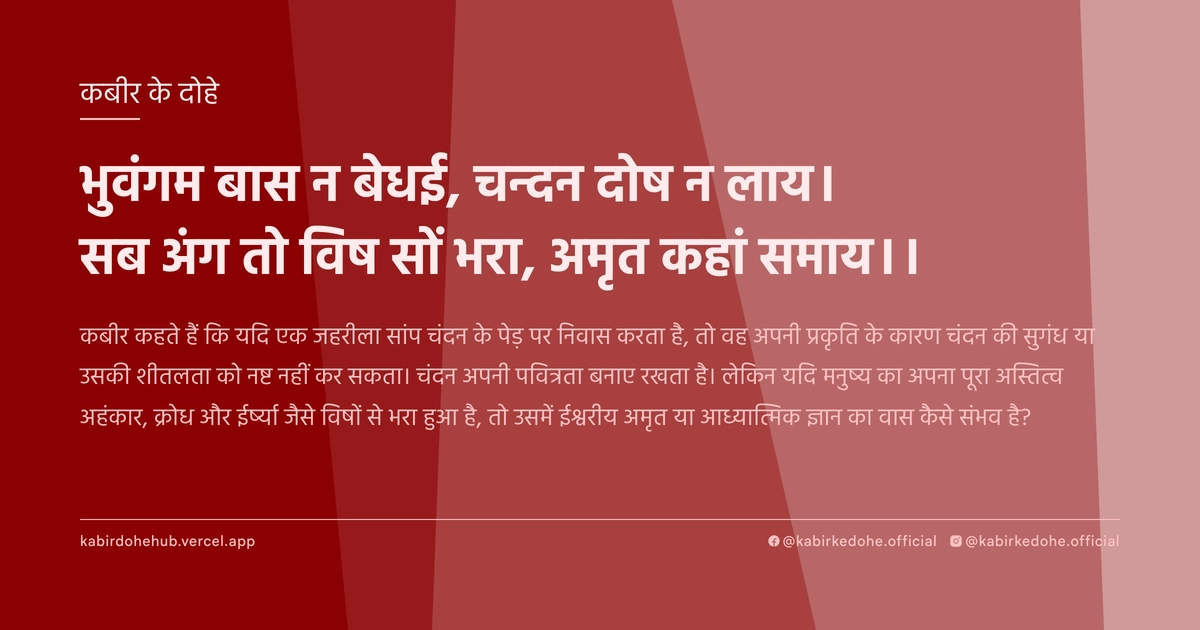
भुवंगम बास न बेधई, चन्दन दोष न लाय।
सब अंग तो विष सों भरा, अमृत कहां समाय।।
Bhuvangam baas na bedhai, chandan dosh na laay. Sab ang to vish son bhara, amrit kahan samaye.
इस पृष्ठ पर इस कबीर दोहे का अर्थ (meaning), हिंदी व्याख्या और अंग्रेज़ी अनुवाद, दार्शनिक विश्लेषण और व्यावहारिक जीवन सीख दी गई है। यह दोहा आत्मा और शरीर (Soul and Body) विषय से जुड़ा है — Kabir doha meaning and explanation in Hindi and English.
अर्थ (Meaning):
कबीर कहते हैं कि यदि एक जहरीला सांप चंदन के पेड़ पर निवास करता है, तो वह अपनी प्रकृति के कारण चंदन की सुगंध या उसकी शीतलता को नष्ट नहीं कर सकता। चंदन अपनी पवित्रता बनाए रखता है। लेकिन यदि मनुष्य का अपना पूरा अस्तित्व अहंकार, क्रोध और ईर्ष्या जैसे विषों से भरा हुआ है, तो उसमें ईश्वरीय अमृत या आध्यात्मिक ज्ञान का वास कैसे संभव है?
Kabir explains that even if a venomous serpent dwells within a sandalwood tree, the snake's poison cannot taint the inherent fragrance or purity of the wood. However, he warns that if a human being's entire existence is saturated with the poisons of ego, anger, and greed, there is no space left for the divine nectar of spiritual realization to reside.
व्याख्या (Interpretation):
इस दोहे में कबीर एक गहरे विरोधाभास का उपयोग करते हैं। चंदन और सांप का संबंध बाहरी प्रभाव बनाम आंतरिक स्वभाव के बीच के अंतर को दर्शाता है। चंदन बाहरी विष से अछूता रहता है क्योंकि उसकी प्रकृति पवित्र है। लेकिन मनुष्य की समस्या बाहरी नहीं, बल्कि आंतरिक है। जब मन 'माया' और 'अहंकार' के विष से पूरी तरह भर जाता है, तो वह एक ऐसे पात्र की तरह हो जाता है जिसमें कुछ और समाने की जगह नहीं बची। यहाँ 'अमृत' निर्गुण ब्रह्म की उस अवस्था को कहते हैं जहाँ द्वैत समाप्त हो जाता है। जब तक 'मैं' का विष मौजूद है, तब तक 'वह' का अमृत प्रवेश नहीं कर सकता। यह आत्मा और परमात्मा के बीच के अवरोध को स्पष्ट करता है।
In this couplet, Kabir employs a profound paradox to distinguish between external influence and internal nature. The relationship between the sandalwood and the serpent illustrates that an inherently pure entity remains untainted by external toxicity. However, the human predicament is internal. When the mind is saturated with the poisons of 'Maya' (illusion) and 'Ahamkara' (ego), it becomes a vessel so full of impurity that there is no room for the divine. The 'Amrit' (nectar) represents the state of Nirgun Brahman, where duality vanishes. As long as the poison of 'I-ness' persists, the nectar of 'Thou-ness' cannot enter. This highlights the central paradox: we seek the divine while clinging to the very poisons that repel it.
दार्शनिक विश्लेषण (Philosophical Analysis):
ऐतिहासिक रूप से, कबीर का समय धार्मिक कट्टरता और बाहरी कर्मकांडों का युग था। इस दोहे के माध्यम से वे यह संदेश देते हैं कि केवल पवित्र स्थानों पर जाने या धार्मिक प्रतीकों को धारण करने से शुद्धि नहीं होती। यदि हृदय में घृणा है, तो बाहरी तीर्थयात्रा व्यर्थ है। यह विचार अद्वैत वेदांत के करीब है, जहाँ अज्ञान (Avidya) को ही मुख्य बाधा माना गया है।
सूफी मत के 'फना' (अहंकार का विनाश) के सिद्धांत की तरह, कबीर यहाँ मानसिक शुद्धिकरण पर जोर देते हैं। वे बताते हैं कि ईश्वर किसी मंदिर या मस्जिद में नहीं, बल्कि उस हृदय में बसते हैं जो विषमुक्त है। कर्मकांडों का विरोध करते हुए वे कहते हैं कि असली 'तपस्या' अपने भीतर के क्रोध और लोभ को मिटाना है।
मनोवैज्ञानिक स्तर पर, यह दोहा संज्ञानात्मक विसंगति (cognitive dissonance) की बात करता है। हम अक्सर बाहरी दुनिया को दोष देते हैं, जबकि हमारा अपना आंतरिक ढांचा ही नकारात्मकता से भरा होता है। कबीर का तर्क है कि जब तक हम अपने 'छाया व्यक्तित्व' (shadow self) को स्वीकार कर उसे रूपांतरित नहीं करते, तब तक आध्यात्मिक उत्थान असंभव है।
यहाँ 'विष' केवल बुराई नहीं, बल्कि वह आसक्ति है जो हमें सत्य से अलग करती है। यह आसक्ति ही वह पर्दा है जो आत्मा को ब्रह्म से अलग दिखाता है। जब यह पर्दा हटता है, तब व्यक्ति को अनुभव होता है कि वह स्वयं ही वह अमृत था, जिसे वह बाहर खोज रहा था।
अंततः, यह दोहा एक चेतावनी है कि आध्यात्मिक पात्रता (eligibility) बाहरी दिखावे से नहीं, बल्कि आंतरिक रिक्तता (emptiness of ego) से आती है। जो स्वयं को शून्य कर लेता है, वही पूर्णता को प्राप्त करता है।
Historically, Kabir lived in an era of intense religious dogmatism and superficial ritualism. Through this doha, he asserts that visiting holy sites or adopting religious symbols provides no real purification if the heart remains filled with hatred. This aligns with Advaita Vedanta, which identifies 'Avidya' (ignorance) as the primary obstacle to liberation.
Similar to the Sufi concept of 'Fana' (the annihilation of the self), Kabir emphasizes internal alchemy. He argues that the Divine does not reside in temples or mosques, but in a heart cleansed of toxicity. By rejecting ritualism, he suggests that the true 'Tapasya' (austerity) is the eradication of internal anger and greed.
Psychologically, this verse addresses the concept of cognitive dissonance. Humans often blame external circumstances for their misery, while their internal architecture is saturated with negativity. Kabir posits that unless we acknowledge and transform our 'shadow self,' spiritual ascension remains an impossibility.
In this context, 'poison' is not merely evil, but the attachment (Moha) that separates the individual from the Absolute. This attachment acts as the veil that creates the illusion of separation between Atman and Brahman. Once this veil is lifted, the seeker realizes they were the very nectar they were searching for externally.
Ultimately, the doha serves as a warning that spiritual eligibility is not granted by outward displays of piety, but by the internal void created by the dissolution of the ego. Only he who becomes 'empty' of self can be 'filled' with the Infinite.
मूल संदेश (Core Message):
- बाहरी पवित्रता आंतरिक विष को नहीं छुपा सकती।
- अहंकार का अंत ही ईश्वरीय मिलन की पहली शर्त है।
- मनुष्य का स्वभाव ही उसके आध्यात्मिक स्तर को तय करता है।
- कर्मकांड केवल आवरण हैं; वास्तविक शुद्धि अंतर्मन की है।
- शून्य होने पर ही आप अनंत से भर सकते हैं।
- External purity cannot mask internal toxicity.
- The dissolution of ego is the primary condition for divine union.
- One's internal nature determines their spiritual altitude.
- Rituals are mere veils; true purification happens within.
- Only by becoming empty can you be filled with the Infinite.
व्यावहारिक उदाहरण (Practical Example):
वाराणसी के एक पुराने घाट पर माधव नाम का एक वृद्ध नाविक रहता था। माधव अपनी ईमानदारी के लिए जाना जाता था, लेकिन उसके भीतर एक गहरा घाव था—उसकी अपनी संतान ने उसे धोखा दिया था। इस धोखे ने उसके मन में पूरी दुनिया के प्रति एक कड़वाहट भर दी थी। वह हर आने वाले यात्री को शक की नजर से देखता और मन ही मन उन्हें कोसता रहता।
माधव का जीवन उस चंदन के पेड़ जैसा था जो बाहरी तौर पर शांत दिखता था, लेकिन उसके भीतर क्रोध का विष घुल चुका था। वह रोज़ मंदिर जाता, घंटों पूजा करता, लेकिन घर लौटते ही छोटी सी बात पर चिल्लाने लगता। उसे लगता था कि उसकी भक्ति उसे बचा लेगी, जबकि उसका मन नफरत से भरा था।
एक दिन उसकी नाव पर एक मौन साधु सवार हुए। साधु ने देखा कि माधव यात्रियों से बात करते समय अपनी आवाज़ में एक अजीब सी कड़वाहट रखता है। जब नाव किनारे लगी, तो साधु ने माधव को एक छोटा सा मिट्टी का पात्र दिया जो ऊपर तक गंदे काले पानी से भरा था।
साधु ने कहा, 'माधव, इस पात्र में एक बूंद शुद्ध शहद डालो।' माधव ने शहद डाला, लेकिन वह काले पानी में डूब गया और कोई असर नहीं हुआ। साधु मुस्कुराए और बोले, 'जब तक यह पात्र गंदे पानी से भरा है, शहद की मिठास इस पानी को नहीं बदल सकती। पहले गंदा पानी बाहर निकालो, फिर शहद डालो।'
माधव को अचानक कबीर का वह दोहा याद आया जो उसने बचपन में सुना था। उसे समझ आया कि उसकी पूजा 'शहद' की तरह थी, लेकिन उसका मन 'काले विषैले पानी' जैसा था। वह समझ गया कि वह बाहरी पूजा कर रहा था, जबकि उसके भीतर का विष उसे शांति से दूर रख रहा था।
उस दिन के बाद माधव ने पूजा से ज्यादा ध्यान अपने क्रोध पर देना शुरू किया। उसने यह अभ्यास किया कि जब भी किसी के प्रति घृणा जागे, वह उसे स्वीकार करे और धीरे-धीरे उसे क्षमा में बदले।
महीनों की मेहनत के बाद, माधव की कड़वाहट कम होने लगी। अब वह यात्रियों को केवल ग्राहक नहीं, बल्कि आत्मा का अंश मानने लगा। उसकी नाव अब केवल शरीर को पार नहीं कराती थी, बल्कि उसकी मुस्कान लोगों के मन को शांति देती थी।
उसने महसूस किया कि जब उसने अपने भीतर के 'विष' को खाली किया, तब जाकर उसके जीवन में ईश्वरीय 'अमृत' का वास हुआ। उसकी शांति अब बाहरी परिस्थितियों पर निर्भर नहीं थी, बल्कि उसके अपने रूपांतरित स्वभाव का परिणाम थी।
On an ancient ghat in Varanasi lived an elderly boatman named Madhav. Madhav was known for his honesty, but he carried a deep internal wound—his own children had betrayed him. This betrayal had filled his heart with a profound bitterness toward the entire world. He viewed every passenger with suspicion and silently cursed them.
Madhav's life was like a sandalwood tree that appeared calm on the outside, but inside, the poison of anger had seeped into every fiber. He visited the temple daily and prayed for hours, yet the moment he returned home, he would erupt in rage over the smallest things. He believed his rituals would save him, ignoring the hate saturating his mind.
One day, a silent monk boarded his boat. The monk noticed the subtle acidity in Madhav's voice while speaking to passengers. As the boat reached the shore, the monk handed Madhav a small clay pot filled to the brim with murky, black water.
The monk said, 'Madhav, pour a single drop of pure honey into this pot.' Madhav did so, but the honey vanished into the black water without changing its color or taste. The monk smiled and said, 'As long as this pot is full of filth, the honey cannot sweeten the water. First, empty the filth, then add the honey.'
Suddenly, Madhav recalled a doha by Kabir he had heard in childhood. He realized that his prayers were like the 'honey,' but his mind was the 'black poisonous water.' He understood that he was performing external worship while the internal poison kept him distant from true peace.
From that day on, Madhav focused more on his anger than on his rituals. He practiced a conscious awareness: whenever hatred arose, he would acknowledge it and slowly attempt to transmute it into forgiveness.
After months of disciplined effort, Madhav's bitterness began to fade. He stopped seeing passengers as mere customers and began seeing them as fragments of the Divine. His boat no longer just transported bodies across the river; his smile began to bring peace to people's souls.
He realized that only after he emptied the 'poison' from within did the divine 'nectar' find a place to reside. His peace was no longer dependent on external circumstances, but was the result of his own transformed nature.
अभ्यास मार्गदर्शन (Practice Guidance):
- दैनिक आत्म-निरीक्षण: प्रतिदिन 15 मिनट मौन बैठें और देखें कि मन में कौन सा 'विष' (क्रोध, ईर्ष्या, अहंकार) सबसे अधिक सक्रिय है। उसे बिना निर्णय के केवल देखें।
- क्षमा जर्नल: उन लोगों की सूची बनाएं जिनसे आपको घृणा है। उनके प्रति अपनी भावना को लिखें और फिर यह विचार करें कि वे भी माया के वशीभूत हैं।
- व्यवहार परिवर्तन: जब भी प्रतिक्रिया देने की तीव्र इच्छा हो, 10 सेकंड का विराम लें। पूछें—'क्या यह प्रतिक्रिया मेरे भीतर के विष को बढ़ा रही है या अमृत को?'
- निदान चेकलिस्ट: (1) क्या मैं दूसरों की गलती तुरंत पकड़ता हूँ? (2) क्या मेरी प्रार्थना के बाद भी मन अशांत रहता है? (3) क्या मैं अपनी धार्मिक पहचान का उपयोग श्रेष्ठता महसूस करने के लिए करता हूँ? यदि हाँ, तो विष अभी भी मौजूद है।
- Daily Self-Observation: Sit in silence for 15 minutes daily and observe which 'poison' (anger, jealousy, ego) is most active. Observe it without judgment.
- Forgiveness Journaling: List people you harbor resentment toward. Write your feelings, then contemplate that they too are trapped in the illusion of Maya.
- Behavioral Shift: Whenever a strong impulse to react arises, pause for 10 seconds. Ask yourself—'Is this reaction feeding the poison or the nectar within me?'
- Diagnostic Checklist: (1) Do I instinctively look for faults in others? (2) Does my mind remain turbulent despite religious rituals? (3) Do I use my spiritual identity to feel superior? If yes, the poison still persists.
चिंतन प्रश्न (Reflection Questions):
- क्या मैं अपनी धार्मिक या नैतिक छवि का उपयोग अपने भीतर के अंधेरे को छिपाने के लिए कर रहा हूँ?
- मेरे जीवन में वह कौन सा 'विष' है जिसे मैं 'सत्य' या 'सिद्धांत' का नाम देकर सही ठहराता हूँ?
- यदि आज मेरी सारी सामाजिक और पेशेवर पहचान छीन ली जाए, तो क्या मेरे भीतर कोई शांति शेष रहेगी?
- मैं दूसरों में जिन दोषों को देखता हूँ, क्या वे वास्तव में मेरे अपने ही प्रतिबिंब हैं?
- क्या मेरी भक्ति मुझे विनम्र बना रही है, या यह मेरे अहंकार को एक नया 'आध्यात्मिक' रूप दे रही है?
- Am I using my religious or moral image to camouflage the darkness within me?
- Which 'poison' in my life am I justifying by labeling it as 'truth' or 'principle'?
- If all my social and professional identities were stripped away today, would any peace remain within me?
- Are the flaws I perceive in others actually reflections of my own internal state?
- Is my devotion making me humble, or is it merely giving my ego a new 'spiritual' form?