
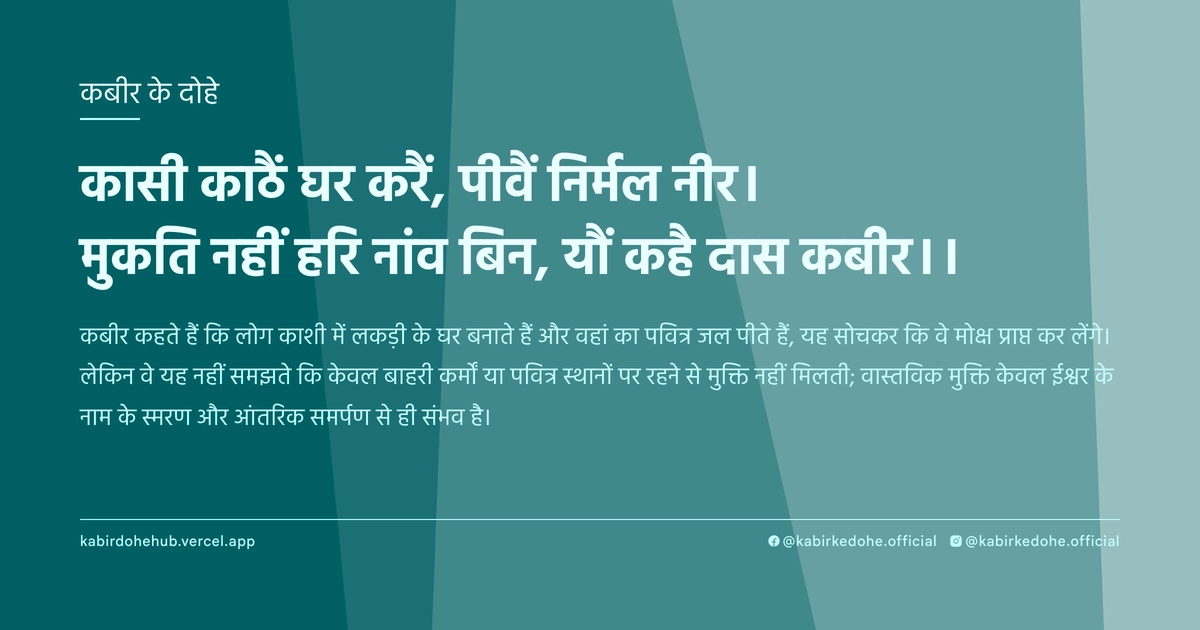
कासी काठैं घर करैं, पीवैं निर्मल नीर।
मुकति नहीं हरि नांव बिन, यौं कहै दास कबीर।।
Kasi kathen ghar karain, piven nirmal neer. Mukti nahin Hari naon bin, yaun kahai das Kabir.
इस पृष्ठ पर इस कबीर दोहे का अर्थ (meaning), हिंदी व्याख्या और अंग्रेज़ी अनुवाद, दार्शनिक विश्लेषण और व्यावहारिक जीवन सीख दी गई है। यह दोहा मुक्ति (Liberation) विषय से जुड़ा है — Kabir doha meaning and explanation in Hindi and English.
अर्थ (Meaning):
कबीर कहते हैं कि लोग काशी में लकड़ी के घर बनाते हैं और वहां का पवित्र जल पीते हैं, यह सोचकर कि वे मोक्ष प्राप्त कर लेंगे। लेकिन वे यह नहीं समझते कि केवल बाहरी कर्मों या पवित्र स्थानों पर रहने से मुक्ति नहीं मिलती; वास्तविक मुक्ति केवल ईश्वर के नाम के स्मरण और आंतरिक समर्पण से ही संभव है।
Kabir observes that people build temporary wooden shelters in Kashi and drink its pure waters, believing that the mere act of residing in a holy city guarantees salvation. However, he asserts that liberation is not a product of geography or ritual; it is attainable only through the remembrance of the Divine Name and true inner devotion.
व्याख्या (Interpretation):
यह दोहा बाहरी धार्मिकता और आंतरिक वास्तविकता के बीच के विरोधाभास को दर्शाता है। 'काठैं घर' (लकड़ी के घर) नश्वरता और सांसारिक मोह का प्रतीक हैं, जबकि 'निर्मल नीर' बाहरी शुद्धता को दर्शाता है। कबीर यहाँ निरगुण भक्ति का समर्थन करते हैं, जहाँ ईश्वर किसी विशेष शहर या मंदिर में नहीं, बल्कि साधक के हृदय में निवास करता है। यह अद्वैत वेदांत के उस सिद्धांत की ओर इशारा करता है जहाँ माया (भ्रम) मनुष्य को यह विश्वास दिलाती है कि मोक्ष किसी बाहरी क्रिया से मिल सकता है। वास्तविक मुक्ति 'हरि नांव' यानी उस सार्वभौमिक चेतना के साथ एकाकार होने में है, न कि तीर्थयात्राओं के संचय में।
This couplet highlights the paradox between external religiosity and internal realization. The "wooden houses" symbolize transience and the fragility of worldly attachments, while the "pure water" represents external purification. Kabir advocates for Nirgun Bhakti, where the Divine is not confined to a specific city or temple but resides within the seeker's heart. This aligns with Advaita Vedanta, suggesting that Maya (illusion) tricks the human mind into believing that liberation is a geographical or ritualistic achievement. True Mukti is found in the "Name of Hari"—the resonance of the Universal Consciousness—rather than the accumulation of pilgrimages.
दार्शनिक विश्लेषण (Philosophical Analysis):
कबीर का यह दोहा उनके युग के उस गहरे अंधविश्वास पर प्रहार करता है जहाँ काशी को मोक्ष का एकमात्र द्वार माना जाता था। वे कर्मकांडीय धर्म का पुरजोर विरोध करते हैं, क्योंकि उनका मानना था कि बाहरी आडंबर आत्मा की वास्तविक यात्रा में बाधा डालते हैं। यह दृष्टिकोण सूफी मत के 'फना' (अहंकार का विनाश) और वेदांत के 'अहं ब्रह्मास्मि' के करीब है, जहाँ व्यक्ति को अपनी पहचान बाहरी पहचानों से हटाकर परमात्मा में विलीन करनी होती है।
यहाँ 'हरि नांव' का अर्थ केवल शब्द का उच्चारण नहीं, बल्कि उस तत्व की निरंतर स्मृति है जो संपूर्ण सृष्टि में व्याप्त है। कबीर तर्क देते हैं कि यदि मन में अहंकार और अज्ञान है, तो गंगा का जल भी उसे शुद्ध नहीं कर सकता। यह मनोवैज्ञानिक रूपांतरण की मांग करता है, जहाँ साधक अपनी बाहरी पहचान (जाति, धर्म, स्थान) को त्यागकर आंतरिक सत्य की खोज करे।
ऐतिहासिक रूप से, कबीर ने उन लोगों को चुनौती दी जो धर्म को एक व्यापार या सामाजिक प्रतिष्ठा के रूप में देखते थे। उन्होंने यह स्थापित किया कि भक्ति का मार्ग लोकतांत्रिक है; यह एक बुनकर के लिए भी उतना ही खुला है जितना कि एक उच्च कुलीन पंडित के लिए।
अद्वैत दर्शन के अनुसार, आत्मा और ब्रह्म एक ही हैं। जब तक मनुष्य खुद को शरीर या स्थान (जैसे काशी) से जोड़ता है, वह द्वैत में रहता है। 'नांव' का स्मरण इस द्वैत को मिटाने की प्रक्रिया है, जिससे साधक यह अनुभव करता है कि वह स्वयं वह अनंत सत्य है जिसकी वह खोज कर रहा है।
अंततः, कबीर यह संदेश देते हैं कि मोक्ष कोई गंतव्य नहीं है जहाँ पहुँचा जाए, बल्कि एक अवस्था है जिसे भीतर जागृत किया जाए। बाहरी तीर्थ केवल मन को भ्रमित करते हैं, जबकि आंतरिक तीर्थ ही वास्तविक मुक्ति का मार्ग प्रशस्त करता है।
Kabir's couplet strikes at the heart of the deep-seated superstition of his era, where Kashi was viewed as the sole gateway to salvation. He vehemently opposes ritualistic religion, believing that external pomposity obstructs the soul's authentic journey. This perspective mirrors the Sufi concept of 'Fana' (annihilation of the ego) and the Vedantic 'Aham Brahmasmi,' where one must dissolve their identity into the Divine.
Here, the 'Name of Hari' does not signify a mere verbal chant, but the continuous remembrance of the element that permeates the entire cosmos. Kabir argues that if the mind is clouded by ego and ignorance, even the waters of the Ganges cannot purify it. This demands a psychological transformation where the seeker sheds external identities—caste, creed, or location—to seek the internal truth.
Historically, Kabir challenged those who treated religion as a business or a tool for social prestige. He established that the path of devotion is democratic; it is as open to a weaver as it is to a high-born priest.
According to Advaita philosophy, the Atman and Brahman are one. As long as a human identifies themselves with a body or a place (like Kashi), they remain in duality. The remembrance of the 'Name' is the process of erasing this duality, leading the seeker to realize they are the very Infinite Truth they seek.
Ultimately, Kabir conveys that liberation is not a destination to be reached, but a state of consciousness to be awakened within. External pilgrimages often mislead the mind, while the internal pilgrimage is the only true path to liberation.
मूल संदेश (Core Message):
- बाहरी तीर्थयात्राएं मन के भ्रम को बढ़ाती हैं।
- वास्तविक शुद्धता कर्मकांडों में नहीं, हृदय की सरलता में है।
- अहंकार का त्याग ही मोक्ष का एकमात्र द्वार है।
- ईश्वर किसी भौगोलिक स्थान में नहीं, बल्कि चेतना में है।
- नाम स्मरण का अर्थ है अस्तित्व के साथ पूर्ण एकाकार होना।
- External pilgrimages often amplify the illusions of the mind.
- True purity lies in simplicity of heart, not in rituals.
- The dissolution of ego is the only gateway to liberation.
- The Divine resides in consciousness, not in geography.
- Remembering the Name means becoming one with Existence.
व्यावहारिक उदाहरण (Practical Example):
वाराणसी के घाटों पर रहने वाले एक वृद्ध विधवा, जानकी, का जीवन केवल अनुष्ठानों के इर्द-गिर्द घूमता था। वह हर सुबह गंगा में स्नान करती, घंटों मंत्र जाप करती और यह मानती कि उसकी कठोर तपस्या उसे मृत्यु के बाद स्वर्ग ले जाएगी। उसका पूरा अस्तित्व इस विश्वास पर टिका था कि काशी की मिट्टी में बसने से उसके पाप धुल जाएंगे।
जानकी अपने आस-पास के लोगों के प्रति कठोर थी। वह उन लोगों को तुच्छ समझती थी जो पूजा-पाठ में समय नहीं बिताते थे। उसका अहंकार उसकी भक्ति के पीछे छिपा था; वह खुद को दूसरों से अधिक 'पवित्र' मानती थी।
एक दिन, उसकी मुलाकात एक साधारण से कुम्हार से हुई, जो घाट के किनारे मिट्टी के बर्तन बनाता था। वह कुम्हार शांत था, उसके चेहरे पर एक असीम शांति थी, जबकि वह कोई विशेष अनुष्ठान नहीं करता था।
जानकी ने उससे पूछा, "तुम दिन भर मिट्टी में सने रहते हो, क्या तुम्हें मोक्ष की चिंता नहीं है? तुम काशी में रहकर भी पूजा नहीं करते।"
कुम्हार ने मुस्कुराते हुए जवाब दिया, "माता, मैं मिट्टी को आकार देता हूँ, लेकिन मेरा मन उस निराकार को याद करता है। मेरे लिए यह मिट्टी, यह पानी और यह शहर सब एक ही परमात्मा का खेल हैं। मैं यहाँ घर नहीं बना रहा, मैं अपने भीतर के अहंकार को मिटा रहा हूँ।"
यह सुनकर जानकी स्तब्ध रह गई। उसे एहसास हुआ कि वह वर्षों से केवल 'लकड़ी के घर' (बाहरी प्रतीकों) को संवार रही थी, जबकि उसके भीतर का क्रोध और अहंकार अभी भी जीवित था।
उसने महसूस किया कि उसकी पवित्रता केवल बाहरी थी। उसने अपनी आँखें बंद कीं और पहली बार यह महसूस करने की कोशिश की कि ईश्वर किसी शहर में नहीं, बल्कि उसके अपने हृदय की धड़कन में है।
उस दिन के बाद, जानकी ने कठोर अनुष्ठानों के बजाय करुणा को अपना मार्ग बनाया। उसने गरीब बच्चों को पढ़ाना शुरू किया और दूसरों की सेवा में ही ईश्वर का नाम खोजने लगी।
उसका व्यवहार बदल गया। अब वह खुद को श्रेष्ठ नहीं मानती थी, बल्कि हर जीव में उसी 'हरि' को देखने लगी।
उसका मोक्ष अब मृत्यु के बाद की कोई घटना नहीं थी, बल्कि वर्तमान क्षण में जीने की एक जीवंत कला बन गया था।
Janaki, an elderly widow living on the ghats of Varanasi, spent her entire existence revolving around rituals. She bathed in the Ganges every morning, chanted mantras for hours, and believed that her rigorous penance would guarantee her a place in heaven after death. Her entire identity was anchored in the belief that residing in the soil of Kashi would wash away her sins.
Janaki was stern with those around her. She looked down upon people who did not spend their time in formal worship. Her ego was hidden behind her piety; she considered herself far more 'pure' than others.
One day, she encountered a simple potter who made clay vessels by the riverbank. The potter was profoundly calm, possessing a serenity that Janaki lacked, despite the fact that he performed no special rituals.
Janaki asked him, "You spend your days covered in mud; do you not worry about salvation? You live in Kashi, yet you do not worship."
The potter smiled and replied, "Mother, I shape the clay, but my mind remembers the Formless. For me, this mud, this water, and this city are all but a play of the one Divine. I am not building a house here; I am dismantling the house of ego within me."
Janaki was stunned. She realized that for years she had been polishing 'wooden houses' (external symbols), while the anger and pride within her remained untouched.
She recognized that her purity was merely superficial. Closing her eyes, she tried for the first time to feel that the Divine was not in a city, but in the very beat of her own heart.
After that day, Janaki replaced rigid rituals with compassion. She began teaching underprivileged children and sought the 'Name of Hari' through the service of others.
Her behavior transformed. She no longer viewed herself as superior but began to see the Divine in every living being.
Her liberation was no longer an event awaiting death, but a living art of existing in the present moment.
अभ्यास मार्गदर्शन (Practice Guidance):
- दैनिक चिंतन: प्रतिदिन 15 मिनट मौन बैठें और विचार करें कि आपके जीवन में कौन सी 'बाहरी रस्में' (जैसे सोशल मीडिया इमेज या सामाजिक प्रतिष्ठा) आपके वास्तविक आत्म-विकास में बाधा बन रही हैं।
- आत्म-पूछताछ जर्नल: लिखें कि आप किन चीजों को 'पवित्र' मानते हैं और क्या वे वास्तव में आपके व्यवहार में करुणा और प्रेम ला रही हैं, या केवल आपके अहंकार को संतुष्ट कर रही हैं।
- व्यवहार परिवर्तन: किसी ऐसे व्यक्ति की निस्वार्थ मदद करें जिसे आप सामान्यतः अनदेखा करते हैं, और इस क्रिया को ही 'हरि नांव' का वास्तविक स्मरण मानें।
- डायग्नोस्टिक चेकलिस्ट: क्या मैं अपनी धार्मिक पहचान का उपयोग दूसरों को नीचा दिखाने के लिए करता हूँ? क्या मैं शांति के लिए बाहरी स्थानों पर निर्भर हूँ? यदि हाँ, तो आप अभी भी 'काठैं घर' में हैं।
- Daily Contemplation: Sit in silence for 15 minutes daily and reflect on which 'external rituals' (such as social media image or social status) are hindering your authentic spiritual growth.
- Self-Inquiry Journal: Document the things you consider 'sacred' and analyze whether they actually bring compassion and love into your behavior, or merely satisfy your ego.
- Behavioral Shift: Perform a selfless act of service for someone you typically overlook, treating this action as the true remembrance of the 'Divine Name'.
- Diagnostic Checklist: Do I use my religious identity to feel superior to others? Am I dependent on external locations for peace? If yes, you are still residing in the 'wooden house'.
चिंतन प्रश्न (Reflection Questions):
- मेरे जीवन का 'काठैं घर' (वह अस्थायी पहचान या भ्रम) क्या है जिसे मैं स्थायी मानकर पकड़े हुए हूँ?
- क्या मेरी आध्यात्मिकता मुझे अधिक विनम्र बना रही है, या यह मेरे भीतर एक सूक्ष्म श्रेष्ठता बोध पैदा कर रही है?
- यदि मुझसे मेरी सभी धार्मिक और सामाजिक पहचानें छीन ली जाएं, तो मेरे भीतर क्या बचेगा?
- मैं बाहरी दुनिया में जिसे 'निर्मल' कहता हूँ, क्या वह मेरे आंतरिक विचारों की गंदगी को ढकने का एक तरीका है?
- क्या मैं मोक्ष को एक भविष्य की घटना मानकर वर्तमान की जीवंतता और प्रेम को नजरअंदाज कर रहा हूँ?
- What is the 'wooden house' (temporary identity or illusion) in my life that I am clinging to as if it were permanent?
- Is my spirituality making me more humble, or is it creating a subtle sense of superiority within me?
- If all my religious and social identities were stripped away, what would remain inside me?
- Is the 'purity' I seek in the external world merely a way to mask the turbulence of my internal thoughts?
- Am I treating liberation as a future event, thereby ignoring the vibrancy and love of the present moment?