
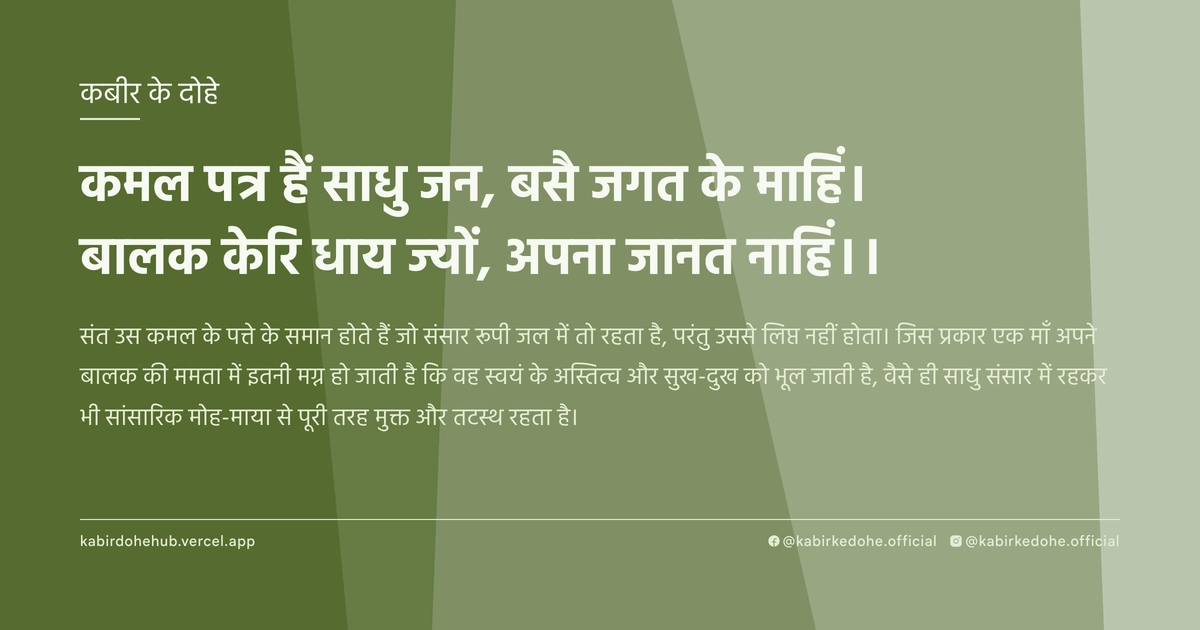
कमल पत्र हैं साधु जन, बसै जगत के माहिं।
बालक केरि धाय ज्यों, अपना जानत नाहिं।।
Kamal patra hain sadhu jan, basai jagat ke maahin. Baalak keri dhaay jyon, apna jaanat naahin.
इस पृष्ठ पर इस कबीर दोहे का अर्थ (meaning), हिंदी व्याख्या और अंग्रेज़ी अनुवाद, दार्शनिक विश्लेषण और व्यावहारिक जीवन सीख दी गई है। यह दोहा वैराग्य (Detachment) विषय से जुड़ा है — Kabir doha meaning and explanation in Hindi and English.
अर्थ (Meaning):
संत उस कमल के पत्ते के समान होते हैं जो संसार रूपी जल में तो रहता है, परंतु उससे लिप्त नहीं होता। जिस प्रकार एक माँ अपने बालक की ममता में इतनी मग्न हो जाती है कि वह स्वयं के अस्तित्व और सुख-दुख को भूल जाती है, वैसे ही साधु संसार में रहकर भी सांसारिक मोह-माया से पूरी तरह मुक्त और तटस्थ रहता है।
The realized soul is like a lotus leaf that dwells within the waters of the world yet remains untouched by them. Just as a mother, consumed by the selfless love for her child, forgets her own individual identity and personal needs, the seeker resides in the material realm while remaining entirely detached from its clinging attachments and illusions.
व्याख्या (Interpretation):
यहाँ 'कमल पत्र' निर्गुण भक्ति की उस अवस्था का प्रतीक है जहाँ साधक संसार में रहते हुए भी उससे अछूता रहता है। यह अद्वैत वेदांत के 'जीवन्मुक्त' की स्थिति है, जहाँ व्यक्ति माया के बीच रहकर भी उसके प्रभाव से मुक्त होता है। 'बालक केरि धाय' का रूपक उस गहन प्रेम और समर्पण को दर्शाता है जो अहंकार को मिटा देता है। जब साधु ईश्वर या मानवता के प्रेम में डूबता है, तो उसका 'मैं' (अहंकार) विलीन हो जाता है। यह विरोधाभास है कि वह संसार में है, पर संसार उसमें नहीं है। यह स्थिति द्वैत से अद्वैत की ओर संक्रमण है, जहाँ व्यक्तिगत पहचान सार्वभौमिक चेतना में विलीन हो जाती है।
The 'lotus leaf' symbolizes the state of Nirgun Bhakti where the seeker exists within the world but is not stained by it. This mirrors the Advaita Vedanta concept of 'Jivanmukti'—liberation while living—where one operates within Maya without being deceived by it. The metaphor of the mother's longing for her child represents a love so profound it annihilates the ego. When the seeker is immersed in the love of the Formless Divine or universal humanity, the 'I' (Ahamkara) dissolves. It is a spiritual paradox: the seeker is in the world, but the world is not in the seeker. This transition from duality to non-duality marks the point where personal identity merges into universal consciousness.
दार्शनिक विश्लेषण (Philosophical Analysis):
कबीर का यह दोहा मध्यकालीन भारत के उस सामाजिक-धार्मिक संघर्ष का प्रतिबिंब है जहाँ कर्मकांड और बाहरी आडंबरों की प्रधानता थी। कबीर ने यहाँ 'साधु' की परिभाषा को किसी विशेष वस्त्र या जाति से नहीं, बल्कि आंतरिक स्थिति से जोड़ा है। वे ritualism का खंडन करते हुए यह समझाते हैं कि पवित्रता किसी तीर्थ या मंदिर में नहीं, बल्कि मन की उस तटस्थता में है जो कमल के पत्ते जैसी है।
दार्शनिक स्तर पर, यह सूफी मत के 'फना' (अहंकार का विनाश) और वेदांत के 'माया' सिद्धांत का संगम है। सूफीवाद में प्रेमी अपने अस्तित्व को मिटाकर केवल प्रिय (ईश्वर) को देखता है, ठीक उसी तरह जैसे माँ बालक के प्रेम में स्वयं को भूल जाती है। कबीर यहाँ यह स्पष्ट करते हैं कि संसार का त्याग करना आवश्यक नहीं है, बल्कि संसार के प्रति अपनी आसक्ति का त्याग करना अनिवार्य है।
यह विश्लेषण हमें मनोवैज्ञानिक रूपांतरण की ओर ले जाता है। जब मनुष्य अपनी पहचान को केवल शरीर या सामाजिक पद तक सीमित रखता है, तो वह दुख का भागी बनता है। लेकिन जब वह स्वयं को उस विराट चेतना का हिस्सा मानता है, तो वह 'साक्षी भाव' (Witness Consciousness) में स्थित हो जाता है। यहाँ 'अहंकार' का विलोपन ही वास्तविक मुक्ति है।
कबीर की दृष्टि में, जाति और धर्म के बंधन कृत्रिम हैं। यदि एक व्यक्ति अपनी आंतरिक प्रकृति को जान ले, तो वह समाज के बीच रहकर भी एक आध्यात्मिक द्वीप की तरह शांत रह सकता है। यह 'सांसारिक विरक्ति' है, न कि 'सांसारिक पलायन'।
अंततः, यह दोहा हमें सिखाता है कि प्रेम ही वह एकमात्र सेतु है जो हमें अहंकार से मुक्त कर परमात्मा से जोड़ता है। बिना प्रेम के वैराग्य केवल शुष्कता है, लेकिन प्रेमपूर्ण वैराग्य ही वास्तविक साधना है।
This couplet reflects the socio-religious struggle of medieval India, where ritualism and external displays of piety dominated. Kabir redefines the 'Sadhu' not by attire, caste, or lineage, but by an internal state of being. By rejecting ritualism, he posits that purity does not reside in pilgrimages or temples, but in a mental detachment akin to the lotus leaf.
Philosophically, this is a confluence of the Sufi concept of 'Fana' (annihilation of the self) and the Vedantic theory of 'Maya'. In Sufism, the lover erases their existence to see only the Beloved; similarly, the mother in the metaphor forgets herself in the love of the child. Kabir clarifies that abandoning the world is unnecessary; what is essential is abandoning the attachment to the world.
This analysis leads us toward psychological transformation. When a human limits their identity to the body or social status, they become subject to suffering. However, by realizing oneself as part of the cosmic consciousness, one attains 'Sakshi Bhava' or Witness Consciousness. The dissolution of the ego is the only true liberation.
In Kabir's vision, the bonds of caste and religion are artificial constructs. If an individual realizes their true nature, they can remain as serene as a spiritual island while living amidst the chaos of society. This is 'worldly detachment,' not 'worldly escapism.'
Ultimately, the verse teaches that love is the only bridge that liberates us from the ego and connects us to the Divine. Asceticism without love is merely dryness, but detachment fueled by love is the highest form of spiritual practice.
मूल संदेश (Core Message):
- संसार में रहें, पर संसार को अपने भीतर न बसने दें।
- अहंकार का विसर्जन ही वास्तविक आध्यात्मिक उपलब्धि है।
- प्रेम जब निस्वार्थ होता है, तब वह मुक्ति का मार्ग बनता है।
- तटस्थता का अर्थ उदासीनता नहीं, बल्कि संतुलित जागरूकता है।
- आंतरिक शांति बाहरी परिस्थितियों की मोहताज नहीं होती।
- Live in the world, but do not let the world live in you.
- The dissolution of the ego is the only true spiritual achievement.
- Love, when selfless, becomes the gateway to liberation.
- Detachment is not indifference, but balanced awareness.
- Inner peace is never a hostage to external circumstances.
व्यावहारिक उदाहरण (Practical Example):
वाराणसी के घाटों पर रहने वाली एक वृद्ध विधवा, जानकी, का जीवन अत्यंत कठिन था। वह दूसरों के घरों में छोटे-मोटे काम करके अपना गुजारा करती थी। शहर के संपन्न लोग उसे उसकी गरीबी और उसकी सामाजिक स्थिति के कारण उपेक्षा की दृष्टि से देखते थे। जानकी के पास न तो कोई बड़ा मंदिर था और न ही कोई गुरु, लेकिन उसके भीतर एक असीम शांति थी।
एक दिन, शहर का एक अहंकारी व्यापारी, जो स्वयं को बहुत बड़ा दानवीर मानता था, जानकी के पास आया। उसने देखा कि जानकी एक घायल कुत्ते की सेवा कर रही थी और उसके दर्द को अपना मानकर उसकी आँखों में आँसू थे। व्यापारी ने उपहास करते हुए पूछा, 'तुम इतनी गरीब हो, फिर भी इस पशु पर इतना समय क्यों व्यर्थ कर रही हो? क्या तुम्हें अपने दुखों की चिंता नहीं?'
जानकी ने मंद मुस्कान के साथ उत्तर दिया, 'बेटा, जब मैं इस जीव के दर्द को देखती हूँ, तो मुझे अपना दर्द याद ही नहीं रहता। मैं तो बस इस प्रेम में खो गई हूँ।' व्यापारी चकित था कि जिस महिला के पास कुछ नहीं था, वह उससे कहीं अधिक समृद्ध और शांत दिख रही थी।
उस क्षण व्यापारी को कबीर की बात याद आई कि साधु कमल के पत्ते जैसा होता है। जानकी गरीबी के कीचड़ में थी, लेकिन उसका मन उस कीचड़ से लिप्त नहीं था। वह संसार के दुखों के बीच रहकर भी उनसे ऊपर उठ चुकी थी।
व्यापारी ने महसूस किया कि उसका अपना 'दान' केवल उसकी सामाजिक प्रतिष्ठा बढ़ाने का एक साधन था, जबकि जानकी की सेवा निस्वार्थ प्रेम थी। वह अपनी संपत्ति के मोह में इतना फँसा था कि वह वास्तव में कभी स्वतंत्र नहीं था।
जानकी का वह सरल व्यवहार व्यापारी के लिए एक बड़ा सबक बन गया। उसने देखा कि कैसे जानकी ने अपनी व्यक्तिगत पहचान और दुखों को मानवता के प्रति प्रेम में विलीन कर दिया था, ठीक वैसे ही जैसे माँ अपने बच्चे के लिए स्वयं को भूल जाती है।
धीरे-धीरे व्यापारी का हृदय बदलने लगा। उसने बाहरी दिखावे के दान को छोड़कर, वास्तव में लोगों के दुखों को समझने और उन्हें दूर करने का प्रयास शुरू किया। उसने सीखा कि असली शांति बाहरी परिस्थितियों को बदलने में नहीं, बल्कि आंतरिक दृष्टिकोण को बदलने में है।
अंततः, वह व्यापारी जो कभी दूसरों को छोटा समझता था, जानकी के चरणों में बैठकर जीवन का वास्तविक अर्थ सीखने लगा। वह समझ गया कि संसार में रहना अनिवार्य है, लेकिन संसार को अपने भीतर बसने देना एक बंधन है।
In the ghats of Varanasi lived an elderly widow named Janki, whose life was fraught with hardship. She survived by doing odd jobs in various households. The wealthy citizens of the city looked down upon her due to her poverty and social standing. Janki possessed no grand temple nor a renowned guru, yet she carried an immeasurable inner peace.
One day, an arrogant merchant, who prided himself on being a great philanthropist, approached Janki. He noticed her tending to a wounded stray dog, her eyes brimming with tears as if the animal's pain were her own. The merchant asked mockingly, 'You are so poor, yet you waste your time on this beast. Do you not worry about your own miseries?'
Janki replied with a gentle smile, 'My son, when I look at the pain of this creature, I simply forget my own. I am lost in this love.' The merchant was stunned; the woman who had nothing appeared far richer and more serene than he was.
In that moment, the merchant recalled the essence of Kabir's teaching: the sage is like a lotus leaf. Janki lived in the mud of poverty, but her mind was not stained by it. She dwelt within the world's suffering yet had risen above it.
The merchant realized that his 'charity' was merely a tool to enhance his social prestige, whereas Janki's service was an act of selfless love. He was so entangled in the attachment to his wealth that he had never truly been free.
Janki's simple demeanor became a profound lesson for the merchant. He saw how she had dissolved her personal identity and sorrows into a universal love for humanity, just as a mother forgets herself for her child.
Gradually, the merchant's heart began to transform. He abandoned the performative nature of his giving and started genuinely attempting to understand and alleviate the suffering of others. He learned that true peace lies not in changing external circumstances, but in shifting one's internal perspective.
Ultimately, the merchant, who once looked down upon others, began sitting at Janki's feet to learn the true meaning of life. He understood that while living in the world is inevitable, allowing the world to reside within one's heart is a shackle.
अभ्यास मार्गदर्शन (Practice Guidance):
- दैनिक साक्षी अभ्यास: दिन में तीन बार 10 मिनट के लिए शांत बैठें और अपने विचारों को ऐसे देखें जैसे आप किसी फिल्म को देख रहे हों, बिना किसी निर्णय के।
- अहंकार की पहचान: जब भी आपको क्रोध या गर्व महसूस हो, स्वयं से पूछें—'यह कौन है जो क्रोधित हो रहा है? क्या यह मेरा वास्तविक स्वरूप है या केवल एक सामाजिक मुखौटा?'
- निस्वार्थ सेवा (सेवा-साधना): सप्ताह में एक बार किसी ऐसे व्यक्ति की मदद करें जिससे आपको बदले में कुछ मिलने की कोई उम्मीद न हो, और इस प्रक्रिया में अपने 'दाता' होने के अहंकार को मिटाएं।
- डायग्नोस्टिक चेकलिस्ट: क्या मैं परिस्थितियों के बदलने पर विचलित होता हूँ? क्या मेरी खुशी दूसरों की प्रशंसा पर निर्भर है? यदि हाँ, तो मैं अभी भी कमल के पत्ते की तरह तटस्थ नहीं हूँ।
- Daily Witness Practice: Sit in silence for 10 minutes three times a day, observing your thoughts as if watching a movie, without judgment or attachment.
- Ego Identification: Whenever you feel anger or pride, ask yourself—'Who is the one feeling this? Is this my true nature or merely a social mask?'
- Selfless Service (Seva): Once a week, help someone from whom you expect absolutely nothing in return, consciously erasing the ego of being the 'giver'.
- Diagnostic Checklist: Do I become distressed when circumstances change? Is my happiness dependent on the praise of others? If yes, I am not yet detached like the lotus leaf.
चिंतन प्रश्न (Reflection Questions):
- मेरा वह कौन सा 'मुखौटा' है जिसे मैं दुनिया के सामने सबसे अधिक गर्व से पहनता हूँ?
- यदि मेरी सारी सामाजिक उपलब्धियाँ और पद छीन लिए जाएँ, तो क्या मेरे भीतर कुछ शेष बचेगा जिसे मैं 'मैं' कह सकूँ?
- मैं किन लोगों के प्रति प्रेम व्यक्त करता हूँ और किनके प्रति घृणा? क्या यह विभाजन मेरे अहंकार की उपज है?
- क्या मैं वास्तव में दूसरों की मदद करता हूँ, या मैं केवल अपनी 'अच्छाई' की छवि को पुष्ट कर रहा हूँ?
- मेरे जीवन का वह कौन सा क्षेत्र है जहाँ मैं अभी भी कमल के पत्ते की तरह तटस्थ होने के बजाय पूरी तरह लिप्त हूँ?
- Which 'mask' do I wear with the most pride in front of the world?
- If all my social achievements and titles were stripped away, would anything remain within me that I could call 'I'?
- Toward whom do I express love and toward whom hatred? Is this division a product of my ego?
- Do I truly help others, or am I merely reinforcing the image of my own 'goodness'?
- In which area of my life am I still completely entangled rather than remaining detached like the lotus leaf?