
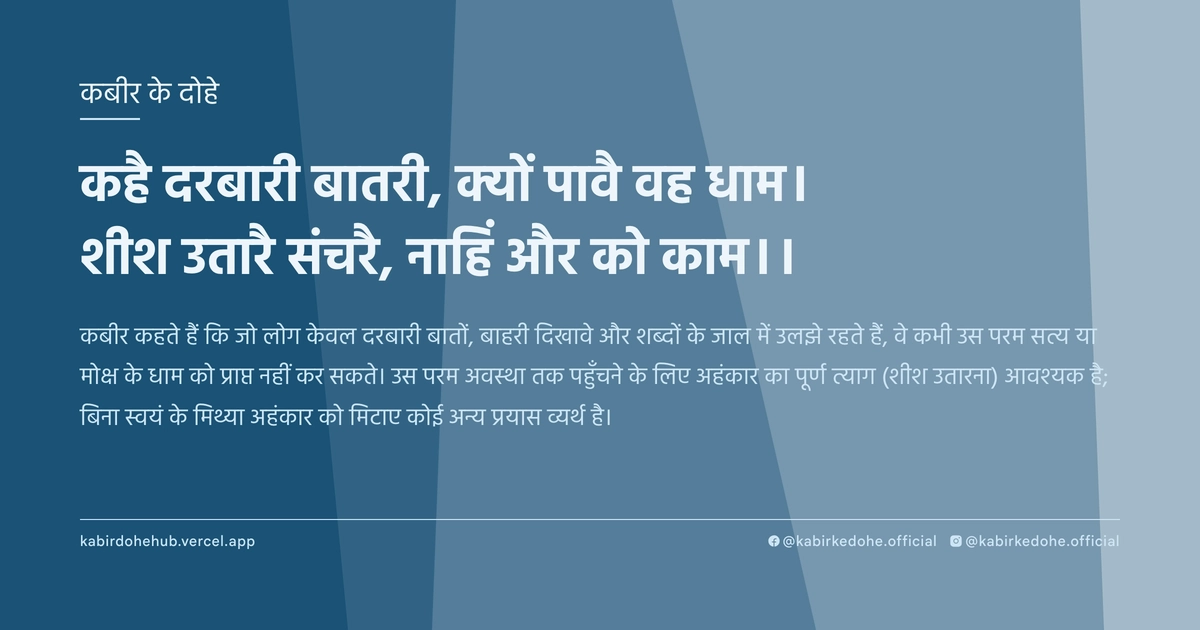
कहै दरबारी बातरी, क्यों पावै वह धाम।
शीश उतारै संचरै, नाहिं और को काम।।
Kahai darbari baatari, kyon pavai vah dhaam. Sheesh utarai sancharai, nahin aur ko kaam.
इस पृष्ठ पर इस कबीर दोहे का अर्थ (meaning), हिंदी व्याख्या और अंग्रेज़ी अनुवाद, दार्शनिक विश्लेषण और व्यावहारिक जीवन सीख दी गई है। यह दोहा प्रपत्ति (Surrender) विषय से जुड़ा है — Kabir doha meaning and explanation in Hindi and English.
अर्थ (Meaning):
कबीर कहते हैं कि जो लोग केवल दरबारी बातों, बाहरी दिखावे और शब्दों के जाल में उलझे रहते हैं, वे कभी उस परम सत्य या मोक्ष के धाम को प्राप्त नहीं कर सकते। उस परम अवस्था तक पहुँचने के लिए अहंकार का पूर्ण त्याग (शीश उतारना) आवश्यक है; बिना स्वयं के मिथ्या अहंकार को मिटाए कोई अन्य प्रयास व्यर्थ है।
Kabir asserts that those who dwell in the superficial rhetoric of the court—meaning the vanity of social status, intellectual pride, and external rituals—can never attain the ultimate abode of Truth. To reach that divine state, one must 'behead' the ego; the total annihilation of the false self is the only prerequisite for spiritual liberation.
व्याख्या (Interpretation):
यहाँ 'दरबारी बातरी' का अर्थ केवल राजदरबार नहीं, बल्कि वह सामाजिक और मानसिक मुखौटा है जिसे हम दुनिया के सामने पहनते हैं। कबीर एक गहरे विरोधाभास का उपयोग करते हैं: 'शीश उतारना' शारीरिक मृत्यु नहीं, बल्कि 'अहंकार की मृत्यु' है। यह निर्गुण भक्ति का सार है, जहाँ ईश्वर किसी मंदिर या मस्जिद में नहीं, बल्कि उस शून्य में मिलता है जहाँ 'मैं' समाप्त हो जाता है। जब तक साधक अपनी पहचान, पद और प्रतिष्ठा के मोह में रहता है, वह माया के बंधन में जकड़ा रहता है। अद्वैत वेदांत के अनुसार, जब तक द्वैत (मैं और वह) बना रहता है, तब तक सत्य ओझल रहता है। इस दोहे में 'धाम' वह अवस्था है जहाँ आत्मा और परमात्मा का मिलन होता है, जो केवल पूर्ण समर्पण और अहंकार शून्य होने पर ही संभव है।
The term 'darbari baatari' refers not merely to royal courts, but to the psychological masks and social validations we cling to. Kabir employs a visceral metaphor: 'beheading the head' signifies the symbolic death of the ego, not physical violence. This is the essence of Nirgun Bhakti, where the Divine is found not in external shrines, but in the void created when the 'I' vanishes. As long as the seeker is tethered to identity, status, and prestige, they remain imprisoned by Maya (illusion). In the light of Advaita Vedanta, as long as duality persists—the perceived separation between the self and the Absolute—Truth remains obscured. The 'abode' (dhaam) mentioned is the state of non-duality, achievable only through the total surrender of the individual persona.
दार्शनिक विश्लेषण (Philosophical Analysis):
कबीर का यह दोहा उनके युग के धार्मिक पाखंड और सामाजिक स्तरीकरण पर एक तीखा प्रहार है। उस समय, धर्म अक्सर बाहरी कर्मकांडों और विद्वता के प्रदर्शन तक सीमित था। कबीर ने इसे 'दरबारी बातरी' कहा, जो सत्य की खोज के बजाय सत्य के बारे में चर्चा करने की प्रवृत्ति को दर्शाता है। वे तर्क देते हैं कि आध्यात्मिक ज्ञान शब्दों का संग्रह नहीं, बल्कि एक अनुभव है।
दार्शनिक स्तर पर, यह सूफी मत के 'फना' (Fana) के सिद्धांत से मेल खाता है, जहाँ साधक ईश्वर में विलीन होने के लिए अपने अस्तित्व को मिटा देता है। जब तक 'अहं' जीवित है, तब तक वह एक पर्दे की तरह कार्य करता है जो आत्मा को ब्रह्म से अलग करता है। कबीर यहाँ यह स्पष्ट करते हैं कि ज्ञान का अहंकार सबसे बड़ा अवरोध है।
अद्वैत वेदांत के परिप्रेक्ष्य में, यह 'अविद्या' के विनाश की प्रक्रिया है। हम स्वयं को शरीर, नाम और पद मानते हैं, जो कि मिथ्या है। 'शीश उतारना' इसी मिथ्या पहचान के विसर्जन का आह्वान है। कबीर का मार्ग सरल है: यदि आप सत्य को पाना चाहते हैं, तो पहले उस 'पाने वाले' (अहंकार) को मिटा दें।
यह शिक्षण हमें बताता है कि भक्ति केवल माला जपने या तीर्थ यात्रा करने में नहीं है, बल्कि आंतरिक रूपांतरण में है। जो व्यक्ति अपनी श्रेष्ठता का दावा करता है, वह वास्तव में सत्य से सबसे दूर है। कबीर का विद्रोह केवल बाहरी व्यवस्था के खिलाफ नहीं, बल्कि मनुष्य के आंतरिक अहंकार के खिलाफ है।
अंततः, यह दोहा मनोवैज्ञानिक रूपांतरण की बात करता है। जब व्यक्ति अपनी सामाजिक पहचान के बोझ से मुक्त होता है, तब वह वास्तव में स्वतंत्र होता है। यह मुक्ति ही वह 'धाम' है जहाँ पहुँचकर मनुष्य को पता चलता है कि जिसे वह बाहर खोज रहा था, वह उसके भीतर ही था, बस अहंकार के पर्दे के पीछे।
This couplet is a searing critique of the religious hypocrisy and social stratification of Kabir's era. During his time, spirituality was often reduced to external rituals and the display of scholarly prowess. Kabir labels this 'darbari baatari'—the tendency to discuss Truth rather than experience it. He argues that spiritual realization is not an accumulation of words, but a profound ontological shift.
Philosophically, this aligns with the Sufi concept of 'Fana' (annihilation), where the seeker dissolves their individual existence to merge with the Divine. As long as the 'ego' survives, it acts as a veil separating the Atman from Brahman. Kabir emphasizes that the pride of knowledge is the most formidable obstacle to actual realization.
From the lens of Advaita Vedanta, this is the process of dismantling 'Avidya' (ignorance). We mistakenly identify ourselves with the body, name, and social rank—all of which are illusory. 'Beheading the head' is a call to dissolve this false identity. Kabir's logic is uncompromising: if you wish to find the Truth, you must first eliminate the 'finder' (the ego).
This teaching posits that devotion is not found in the mechanical repetition of mantras or pilgrimages, but in internal transmutation. The person who claims superiority is, paradoxically, the furthest from the Truth. Kabir's rebellion is not merely against external institutions, but against the internal tyranny of the self.
Ultimately, the verse addresses a psychological liberation. When an individual is freed from the burden of their social persona, they attain true freedom. This liberation is the 'abode' (dhaam), where the seeker discovers that the Divine was never an external destination, but the very essence of their being, hidden behind the veil of pride.
मूल संदेश (Core Message):
- शब्दों का आडंबर सत्य के मार्ग में सबसे बड़ी बाधा है।
- बौद्धिक अहंकार आध्यात्मिक अंधापन पैदा करता है।
- सत्य को पाने के लिए पहले 'पाने वाले' को मिटाना होगा।
- बाहरी पहचान का त्याग ही आंतरिक मिलन का द्वार है।
- विनम्रता केवल एक गुण नहीं, बल्कि सत्य की अनिवार्य शर्त है।
- शून्य होना ही पूर्णता की ओर पहला कदम है।
- The vanity of words is the greatest obstacle on the path to Truth.
- Intellectual pride creates a profound spiritual blindness.
- To attain the Truth, the 'attainer' must first be annihilated.
- Renouncing external identity is the gateway to internal union.
- Humility is not just a virtue, but a prerequisite for realization.
- Becoming zero is the first step toward becoming whole.
व्यावहारिक उदाहरण (Practical Example):
एक समय की बात है, वाराणसी के घाटों पर माधव नाम का एक अत्यंत विद्वान पंडित रहता था। माधव को वेदों और शास्त्रों का गहरा ज्ञान था और पूरे शहर में उसकी विद्वत्ता की चर्चा थी। वह घंटों तक धर्म और मोक्ष पर जटिल प्रवचन देता था, और लोग उसे श्रद्धा से सुनते थे। माधव को अपनी बौद्धिक क्षमता पर बहुत गर्व था; वह मानता था कि उसके ज्ञान के कारण वह ईश्वर के सबसे करीब है।
उसी घाट के पास एक बूढ़ा मल्लाह रहता था, जो अनपढ़ था लेकिन शांत और सरल स्वभाव का था। वह अक्सर माधव के प्रवचनों को दूर से सुनता था। एक दिन, मल्लाह ने माधव से एक सरल प्रश्न पूछा, "महाराज, यदि ज्ञान से मोक्ष मिलता है, तो आप इतने दुखी और क्रोधित क्यों दिखते हैं? क्या आपका ज्ञान आपके मन की शांति नहीं ला पाया?"
माधव को यह बात चुभी। उसने मल्लाह को डांटते हुए कहा, "मूर्ख! तू क्या जाने शास्त्रों की गहराई? तू केवल नाव चलाता है, मैं सत्य का मार्ग बताता हूँ।" माधव का अहंकार उसके शब्दों में झलक रहा था। वह अपनी विद्वत्ता के नशे में चूर था और मल्लाह को तुच्छ समझ रहा था।
कुछ दिनों बाद, माधव एक गहरे मानसिक संकट में घिर गया। उसके जीवन की व्यक्तिगत समस्याएँ उसके शास्त्रों के ज्ञान से हल नहीं हो रही थीं। वह जितना अधिक तर्क करता, उतना ही उलझता जाता। वह रात-रात भर जागकर ग्रंथों में उत्तर खोजता, लेकिन उसे केवल अपनी विफलता और क्रोध महसूस होता।
एक शाम, वह मल्लाह के पास गया और अपनी व्यथा सुनाई। मल्लाह ने मुस्कुराते हुए कहा, "पंडित जी, आप उस किनारे तक पहुँचने की कोशिश कर रहे हैं जहाँ आप पहले से ही खड़े हैं। बस आप अपनी इस 'विद्वान' वाली नाव को किनारे पर छोड़ने को तैयार नहीं हैं। जब तक आप यह मानेंगे कि आप सबसे श्रेष्ठ हैं, आप उस शांति को नहीं देख पाएंगे जो आपके ठीक सामने है।"
माधव को अचानक कबीर के शब्दों की याद आई—'शीश उतारना'। उसे समझ आया कि उसकी विद्वत्ता ही उसका सबसे बड़ा बोझ बन गई थी। वह 'दरबारी बातरी' (बौद्धिक अहंकार) में इतना उलझ गया था कि उसने सरल सत्य को अनदेखा कर दिया था।
उस क्षण माधव का अहंकार टूट गया। उसने अपनी श्रेष्ठता का मुखौटा उतार फेंका और पहली बार एक शिष्य की तरह मल्लाह की सरलता को स्वीकार किया। उसने महसूस किया कि ज्ञान वह नहीं जो दूसरों को नीचा दिखाने के काम आए, बल्कि वह है जो स्वयं को मिटा दे।
माधव ने अपनी जीवनशैली बदल दी। उसने प्रवचन देना बंद नहीं किया, लेकिन अब उसके शब्दों में अहंकार नहीं, बल्कि करुणा थी। वह अब खुद को सबसे बड़ा विद्वान नहीं, बल्कि एक अनंत सत्य का छोटा सा अंश मानने लगा।
उसका क्रोध शांत हो गया और उसके चेहरे पर एक वास्तविक चमक आ गई। उसने पाया कि जिस 'धाम' को वह शास्त्रों की जटिलताओं में खोज रहा था, वह वास्तव में अहंकार के विसर्जन के बाद मिलने वाली सहज शांति थी।
माधव की यह यात्रा एक महान विद्वान से एक विनम्र साधक बनने की यात्रा थी, जहाँ उसने सीखा कि सत्य तक पहुँचने का एकमात्र रास्ता स्वयं को शून्य करना है।
Once, on the ghats of Varanasi, lived a highly learned scholar named Madhav. Madhav possessed profound knowledge of the Vedas and Shastras, and his intellectual prowess was renowned throughout the city. He spent hours delivering complex discourses on religion and liberation, and people listened to him with immense reverence. Madhav was deeply proud of his intellect, believing that his knowledge placed him closest to the Divine.
Near the same ghat lived an elderly boatman, unlettered but possessed of a calm and simple nature. He often listened to Madhav's sermons from a distance. One day, the boatman asked Madhav a simple question: "Maharaj, if knowledge leads to liberation, why do you seem so distressed and angry? Has your knowledge not brought peace to your mind?"
Madhav felt insulted. He scolded the boatman, saying, "Fool! What do you know of the depths of the scriptures? You merely row a boat, while I point the way to Truth." Madhav's ego radiated through his words; he was intoxicated by his own scholarship and viewed the boatman as insignificant.
Some days later, Madhav found himself engulfed in a deep psychological crisis. The personal struggles of his life were not being resolved by his scriptural knowledge. The more he reasoned and argued, the more entangled he became. He spent sleepless nights searching for answers in texts, only to find failure and mounting anger.
One evening, he approached the boatman and shared his agony. The boatman smiled and said, "Pandit ji, you are trying to reach a shore where you are already standing. You are simply unwilling to leave your 'scholar's boat' behind on the bank. As long as you believe you are the superior one, you will never see the peace that is right in front of you."
In that moment, Madhav recalled the essence of Kabir's words—'beheading the head.' He realized that his intellect had become his heaviest burden. He was so lost in 'darbari baatari' (intellectual vanity) that he had ignored the simple truth.
Madhav's ego shattered. He cast aside the mask of superiority and, for the first time, accepted the boatman's simplicity with the heart of a disciple. He understood that true knowledge is not that which is used to belittle others, but that which annihilates the self.
Madhav transformed his life. He did not stop teaching, but his words were no longer laced with pride; they were infused with compassion. He ceased seeing himself as the greatest scholar and began viewing himself as a tiny fragment of an infinite Truth.
His anger subsided, and a genuine radiance appeared on his face. He discovered that the 'abode' he had been seeking through the complexities of scriptures was actually the effortless peace found after the dissolution of the ego.
Madhav's journey was a transition from a great scholar to a humble seeker, where he learned that the only path to Truth is to become zero.
This transformation showed that the 'beheading' Kabir spoke of is the only way to cross the river of illusion.
अभ्यास मार्गदर्शन (Practice Guidance):
- दैनिक आत्म-निरीक्षण: प्रतिदिन 15 मिनट मौन बैठें और उन क्षणों को पहचानें जब आपने अपनी श्रेष्ठता सिद्ध करने के लिए शब्दों का सहारा लिया।
- अहंकार का विसर्जन: दिन में कम से कम एक बार किसी ऐसे व्यक्ति से कुछ सीखने का प्रयास करें जिसे समाज 'अशिक्षित' या 'छोटा' मानता है।
- जर्नलिंग प्रॉम्प्ट: लिखें—"यदि मेरी सारी उपाधियाँ, पद और उपलब्धियाँ छीन ली जाएँ, तो वास्तव में मैं कौन हूँ?"
- व्यवहारिक परिवर्तन: जब भी किसी बहस में जीतने की तीव्र इच्छा हो, तो रुकें और स्वयं से पूछें, "क्या मैं सत्य जीतना चाहता हूँ या अपना अहंकार?"
- डायग्नोस्टिक चेकलिस्ट: यदि आप दूसरों की आलोचना से विचलित होते हैं या प्रशंसा से अत्यधिक उत्साहित होते हैं, तो यह संकेत है कि आपका 'शीश' (अहंकार) अभी भी बरकरार है।
- Daily Self-Observation: Spend 15 minutes in silence daily, identifying moments where you used words merely to establish your superiority over others.
- Dissolving the Ego: At least once a day, consciously try to learn something from someone whom society deems 'uneducated' or 'insignificant.'
- Journaling Prompt: Write—"If all my titles, positions, and achievements were stripped away, who would I actually be?"
- Behavioral Shift: Whenever you feel an intense urge to win an argument, pause and ask yourself, "Am I trying to establish the Truth, or am I feeding my ego?"
- Diagnostic Checklist: If you find yourself deeply disturbed by criticism or excessively elated by praise, it is a sign that your 'head' (ego) is still intact.
चिंतन प्रश्न (Reflection Questions):
- मेरे जीवन का वह कौन सा 'मुखौटा' है जिसे मैं सबसे अधिक सहेज कर रखता हूँ?
- क्या मेरी धार्मिक या आध्यात्मिक बातें वास्तव में मेरे व्यवहार में झलकती हैं, या वे केवल 'दरबारी बातरी' हैं?
- जब मैं किसी की मदद करता हूँ, तो क्या मैं वास्तव में निस्वार्थ होता हूँ, या मैं अपनी 'दाता' वाली छवि का आनंद ले रहा होता हूँ?
- मेरे भीतर का वह कौन सा हिस्सा है जो कभी हार स्वीकार नहीं करता, और वह मुझे सत्य से कैसे दूर रख रहा है?
- क्या मैं अपनी डिजिटल पहचान (सोशल मीडिया इमेज) को ही अपनी वास्तविक पहचान समझने की भूल कर रहा हूँ?
- यदि मुझे अपनी पूरी पहचान खोनी पड़े, तो क्या मैं उस शून्यता में शांति पा सकूँगा?
- Which 'mask' in my life do I cling to most desperately?
- Do my religious or spiritual discourses actually reflect in my behavior, or are they merely 'courtly rhetoric'?
- When I help someone, am I truly selfless, or am I enjoying the image of being a 'benefactor'?
- Which part of me refuses to ever admit defeat, and how is that keeping me away from the Truth?
- Am I making the mistake of confusing my digital identity (social media image) with my actual self?
- If I were forced to lose my entire identity, would I be able to find peace in that void?