
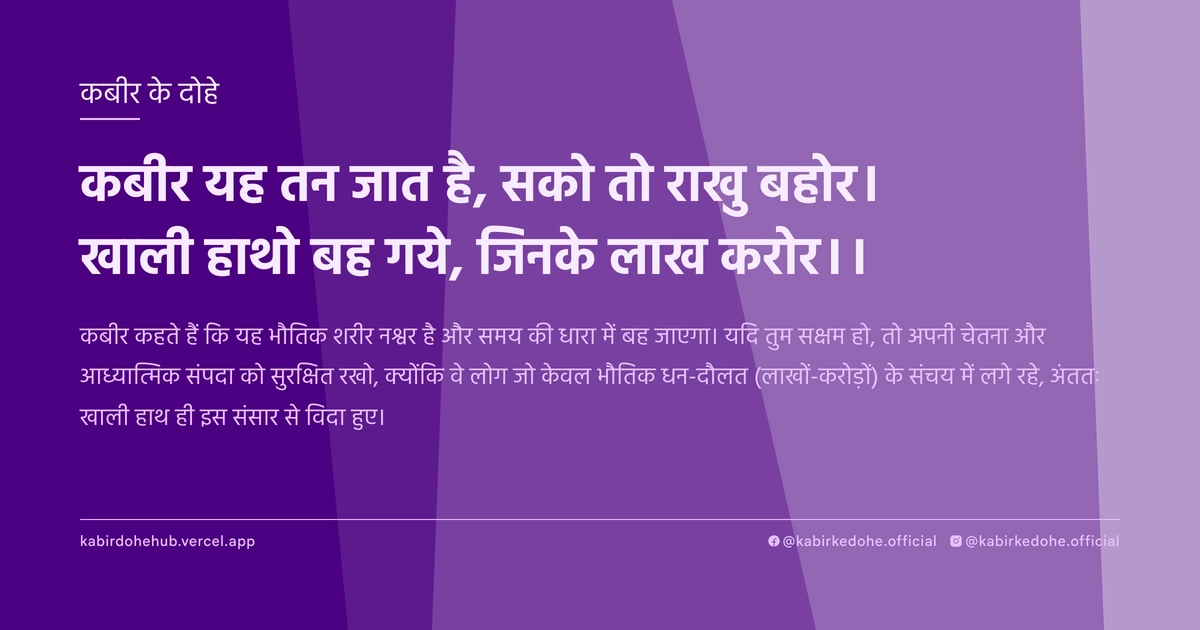
कबीर यह तन जात है, सको तो राखु बहोर।
खाली हाथो बह गये, जिनके लाख करोर।।
Kabir yeh tan jaat hai, sako to rakhu bahor. Khali hatho bah gaye, jinke lakh karor.
इस पृष्ठ पर इस कबीर दोहे का अर्थ (meaning), हिंदी व्याख्या और अंग्रेज़ी अनुवाद, दार्शनिक विश्लेषण और व्यावहारिक जीवन सीख दी गई है। यह दोहा मृतुक्यता (Mortality) विषय से जुड़ा है — Kabir doha meaning and explanation in Hindi and English.
अर्थ (Meaning):
कबीर कहते हैं कि यह भौतिक शरीर नश्वर है और समय की धारा में बह जाएगा। यदि तुम सक्षम हो, तो अपनी चेतना और आध्यात्मिक संपदा को सुरक्षित रखो, क्योंकि वे लोग जो केवल भौतिक धन-दौलत (लाखों-करोड़ों) के संचय में लगे रहे, अंततः खाली हाथ ही इस संसार से विदा हुए।
Kabir asserts that the physical body is transient and destined to dissolve in the flow of time. He urges the seeker to preserve their spiritual essence and consciousness, for those who spent their lives accumulating vast material wealth—millions and billions—eventually departed from this world empty-handed.
व्याख्या (Interpretation):
इस दोहे का शाब्दिक अर्थ शरीर की मृत्यु और धन की व्यर्थता है। गहरे स्तर पर, 'तन' केवल मांस और हड्डियों का ढांचा नहीं, बल्कि उस अहंकार (Ego) का प्रतीक है जिसे हम अपनी पहचान मानते हैं। 'बह जाना' माया के उस प्रवाह को दर्शाता है जहाँ व्यक्ति अपनी वास्तविक आत्मा (Atman) को भूलकर बाहरी दुनिया के भ्रम में खो जाता है। निर्गुण भक्ति के अनुसार, ईश्वर किसी मूर्ति या बाहरी कर्मकांड में नहीं, बल्कि अंतरात्मा की शुद्धि में है। यहाँ विरोधाभास यह है कि जिसे हम 'संग्रह' (Accumulation) समझते हैं, वह वास्तव में हमारी आध्यात्मिक रिक्तता को बढ़ाता है। जब व्यक्ति यह समझ जाता है कि केवल प्रेम और ज्ञान ही शाश्वत हैं, तब वह द्वैत (Duality) से मुक्त होकर अद्वैत (Non-duality) की स्थिति में पहुँचता है, जहाँ वह स्वयं को ब्रह्म के समान अनुभव करता है।
Literally, the verse speaks of bodily decay and the futility of wealth. Metaphorically, the 'body' represents the ego-construct we mistake for our identity. 'Flowing away' symbolizes the current of Maya, where the individual loses sight of the Atman while chasing ephemeral shadows. In Nirgun Bhakti, the Divine is not found in idols but in the purification of the inner self. The central paradox lies in the nature of accumulation: the more one gathers materialistically, the more spiritual void is created. Once the seeker realizes that only love and gnosis are eternal, they transcend duality, merging into the Advaita state where the distinction between the self and the Absolute vanishes.
दार्शनिक विश्लेषण (Philosophical Analysis):
कबीर का यह दोहा उस युग की प्रतिक्रिया है जहाँ धर्म और समाज बाहरी आडंबरों, जातिगत श्रेष्ठता और कर्मकांडों में जकड़ा हुआ था। कबीर ने स्पष्ट किया कि मोक्ष किसी विशेष जाति में जन्म लेने या महंगे अनुष्ठान करने से नहीं, बल्कि आंतरिक रूपांतरण से मिलता है। यह विचार अद्वैत वेदांत के करीब है, जहाँ शरीर को 'मिथ्या' और आत्मा को 'सत्य' माना गया है।
सूफी मत के 'फना' (अहंकार का विनाश) के सिद्धांत के साथ इसका गहरा संबंध है। जब तक 'मैं' और 'मेरा' का भाव रहता है, तब तक मनुष्य सत्य से दूर रहता है। कबीर यहाँ भौतिक धन की निंदा नहीं कर रहे, बल्कि उस आसक्ति (Attachment) की चेतावनी दे रहे हैं जो मनुष्य को उसकी वास्तविक प्रकृति से अलग करती है।
मनोवैज्ञानिक स्तर पर, यह दोहा 'मृत्यु जागरूकता' (Memento Mori) का आह्वान है। जब मनुष्य अपनी नश्वरता को स्वीकार करता है, तो उसका अहंकार टूटने लगता है। यह टूटन ही वह द्वार है जिससे वह अपनी सीमित पहचान से निकलकर सार्वभौमिक चेतना में प्रवेश करता है।
कबीर का दृष्टिकोण यह है कि वास्तविक 'पूंजी' वह है जो मृत्यु के बाद भी साथ रहे—अर्थात वह करुणा, सत्य और प्रेम जो हमने दूसरों में निवेश किया है। यह भौतिकवाद के विरुद्ध एक आध्यात्मिक विद्रोह है, जो सिखाता है कि संचय नहीं, बल्कि विसर्जन (Letting go) ही मुक्ति का मार्ग है।
अंततः, यह दोहा हमें याद दिलाता है कि जीवन एक यात्रा है, गंतव्य नहीं। यदि हम केवल गंतव्य (धन, पद, प्रतिष्ठा) की चिंता करेंगे, तो हम यात्रा के वास्तविक आनंद और उद्देश्य को खो देंगे। वास्तविक उपलब्धि वह है जब व्यक्ति शून्य हो जाता है, क्योंकि शून्य में ही पूर्णता का वास होता है।
This couplet is a visceral reaction to an era steeped in ritualism, caste hierarchy, and external piety. Kabir dismantles the notion that liberation is achieved through birthright or expensive ceremonies, asserting instead that salvation is a product of internal alchemy. This aligns closely with Advaita Vedanta, which classifies the physical body as 'Mithya' (illusory) and the Atman as the only 'Satya' (Truth).
There is a profound resonance here with the Sufi concept of 'Fana'—the annihilation of the ego. As long as the notions of 'I' and 'Mine' persist, the seeker remains veiled from the Divine. Kabir is not condemning wealth itself, but the attachment (Raga) to it, which acts as a psychic barrier between the soul and its source.
Psychologically, the verse serves as a 'Memento Mori.' By confronting the inevitability of death, the practitioner triggers a collapse of the ego-structure. This collapse is not a tragedy but a liberation, as it allows the individual to transition from a limited, fragmented identity to a universal consciousness.
Kabir posits that the only true 'capital' is that which survives the grave: the compassion, truth, and love invested in others. It is a spiritual rebellion against materialism, teaching that the path to liberation lies not in accumulation, but in the art of letting go (Vairagya).
Ultimately, the teaching suggests that life is a process of unlearning. If one focuses solely on the destination (wealth, status, fame), they miss the essence of the journey. True achievement is found in becoming 'Shunya' (Zero), for it is only in the void of the ego that the fullness of the Absolute can reside.
मूल संदेश (Core Message):
- शरीर नश्वर है, केवल चेतना शाश्वत है।
- भौतिक संचय आध्यात्मिक रिक्तता को बढ़ाता है।
- सच्ची संपत्ति करुणा और आत्म-ज्ञान है।
- अहंकार का विसर्जन ही वास्तविक प्राप्ति है।
- मृत्यु का बोध जीवन को सार्थक बनाता है।
- The body is transient; only consciousness is eternal.
- Material accumulation amplifies spiritual emptiness.
- True wealth resides in compassion and self-realization.
- The dissolution of ego is the only real gain.
- Awareness of death renders life meaningful.
व्यावहारिक उदाहरण (Practical Example):
वाराणसी के एक पुराने घाट पर रामदीन नाम का एक वृद्ध नाविक रहता था। उसने अपना पूरा जीवन गंगा की लहरों के बीच बिताया और अपनी मेहनत से काफी धन अर्जित किया। उसने अपने लिए एक बड़ा घर बनाया और शहर के सबसे महंगे कपड़ों और गहनों का संग्रह किया। वह अपनी संपत्ति पर बहुत गर्व करता था और अन्य नाविकों को तुच्छ समझता था।
एक दिन, उसकी मुलाकात एक फकीर से हुई जो घाट की सीढ़ियों पर बैठा था। फकीर ने रामदीन की चमकती सोने की अंगूठियों को देखा और मुस्कुराते हुए कहा, 'रामदीन, तुम इस नाव को तो किनारे लगा लेते हो, लेकिन क्या तुमने अपनी आत्मा की नाव को किनारे लगाने की तैयारी की है?'
रामदीन को पहले तो यह बात मजाक लगी। उसने अपनी तिजोरी की ओर इशारा करते हुए कहा, 'मेरे पास इतना धन है कि मेरी सात पीढ़ियाँ राज करेंगी।' फकीर ने शांति से उत्तर दिया, 'धन वह वस्त्र है जो तुम उतारकर जाओगे, लेकिन तुम्हारा स्वभाव वह सुगंध है जो तुम्हारे जाने के बाद भी यहाँ रहेगी।'
कुछ समय बाद, रामदीन को एक गंभीर बीमारी ने घेर लिया। धीरे-धीरे उसकी शारीरिक शक्ति क्षीण होने लगी। उसने देखा कि जिन लोगों को वह अपना मित्र समझता था, वे उसकी संपत्ति के बंटवारे की योजना बनाने लगे, जबकि वह अभी जीवित था। उसे एहसास हुआ कि उसकी तिजोरी की चाबियाँ अब उसके किसी काम की नहीं थीं।
मृत्यु के करीब पहुँचकर, रामदीन को कबीर के शब्दों की याद आई। उसे समझ आया कि उसने जीवन भर 'संग्रह' तो किया, लेकिन 'साधना' नहीं की। उसने महसूस किया कि उसकी असली संपत्ति वह अहंकार था जिसने उसे दूसरों से अलग कर दिया था।
अंतिम दिनों में, रामदीन ने अपना सारा अहंकार त्याग दिया। उसने अपने धन का उपयोग उन गरीब बच्चों की शिक्षा के लिए किया जो घाटों पर भटकते थे। उसने अपनी विलासिता का त्याग कर सादगी को अपनाया।
जब वह अंततः विदा हुआ, तो उसके पास कोई सोने की अंगूठी नहीं थी, लेकिन उसके चेहरे पर एक ऐसी शांति थी जो उसने अपने सबसे अमीर दिनों में कभी महसूस नहीं की थी।
पूरे शहर के लोग उसकी संपत्ति के लिए नहीं, बल्कि उसकी उस करुणा के लिए रो रहे थे जो उसने अंतिम समय में बिखेरी थी। रामदीन अब खाली हाथ नहीं था; वह प्रेम की उस अनंत पूंजी के साथ गया था जिसे समय की धारा बहा नहीं सकती।
On the ancient ghats of Varanasi lived an elderly boatman named Ramdeen. He had spent his entire life navigating the currents of the Ganges and had amassed considerable wealth through his toil. He built a sprawling house and collected the finest silks and jewelry, priding himself on his riches and looking down upon his fellow boatmen.
One day, he encountered a wandering dervish sitting on the stone steps. The dervish noticed Ramdeen's glittering gold rings and smiled, asking, 'Ramdeen, you know how to moor your boat to the shore, but have you prepared the boat of your soul for its final docking?'
Ramdeen initially found the question absurd. Pointing toward his heavy iron safe, he boasted, 'I have enough wealth to ensure seven generations of my family live like royalty.' The dervish replied calmly, 'Wealth is a garment you must eventually strip off; but your character is the fragrance that remains after you are gone.'
Some time later, a severe illness struck Ramdeen. His physical strength withered. He watched with horror as the people he called friends began plotting the division of his assets while he was still breathing. He realized that the keys to his safe were now useless instruments.
Nearing the end, the essence of Kabir's wisdom dawned upon him. He realized he had spent a lifetime in 'accumulation' but had neglected 'cultivation.' He saw that his true possession had been the ego that isolated him from humanity.
In his final days, Ramdeen surrendered his pride. He diverted his wealth toward the education of the orphaned children who wandered the ghats. He traded his luxury for a profound, stripped-down simplicity.
When he finally departed, he wore no gold rings, yet his face bore a serenity he had never known during his wealthiest years.
The townspeople wept not for the loss of his money, but for the compassion he had radiated in his final hours. Ramdeen was no longer empty-handed; he departed with the infinite capital of love, which no current of time can wash away.
अभ्यास मार्गदर्शन (Practice Guidance):
- प्रतिदिन 15 मिनट 'शवासन' में लेटकर यह चिंतन करें कि यह शरीर मिट्टी का है और एक दिन मिट्टी में मिल जाएगा। इस बोध को भय के रूप में नहीं, बल्कि मुक्ति के रूप में स्वीकार करें।
- एक 'अनासक्ति डायरी' (Detachment Journal) बनाएँ। हर सप्ताह एक ऐसी भौतिक वस्तु की पहचान करें जिससे आप बहुत अधिक जुड़े हैं, और सचेत रूप से उसके प्रति अपनी निर्भरता को कम करने का प्रयास करें।
- व्यवहार परिवर्तन: महीने में एक बार अपनी किसी प्रिय वस्तु का दान करें, यह महसूस करते हुए कि आप उस वस्तु के स्वामी नहीं, बल्कि केवल एक अस्थायी संरक्षक हैं।
- निदान चेकलिस्ट: क्या आप किसी वस्तु के खोने पर अत्यधिक क्रोधित होते हैं? क्या आपकी खुशी आपकी भौतिक उपलब्धियों पर टिकी है? यदि हाँ, तो आप अभी भी 'संग्रह' के भ्रम में हैं।
- Spend 15 minutes daily in 'Shavasana' (Corpse Pose), contemplating the transience of the body. Accept this mortality not as a source of fear, but as a gateway to spiritual liberation.
- Maintain a 'Detachment Journal.' Each week, identify one material possession you are overly attached to and consciously practice reducing your emotional dependence on it.
- Behavioral Shift: Once a month, donate a cherished possession, meditating on the fact that you are not the owner of the object, but merely its temporary custodian.
- Diagnostic Checklist: Do you feel intense distress when a material object is lost? Is your sense of self-worth tied to your acquisitions? If yes, you are still operating under the illusion of accumulation.
चिंतन प्रश्न (Reflection Questions):
- यदि आज आपकी सारी भौतिक उपलब्धियाँ छीन ली जाएँ, तो आपकी पहचान का क्या बचेगा?
- आप अपनी छवि (Image) को बनाए रखने के लिए मानसिक रूप से कितना 'संग्रह' कर रहे हैं?
- क्या आपका दान वास्तव में त्याग है, या यह केवल आपकी सामाजिक प्रतिष्ठा बढ़ाने का एक तरीका है?
- आपकी कौन सी ऐसी 'अदृश्य संपत्ति' है जिसे मृत्यु भी आपसे नहीं छीन सकती?
- क्या आप अपनी आत्मा की शांति से अधिक अपनी तिजोरी की सुरक्षा को प्राथमिकता देते हैं?
- If all your material achievements were stripped away today, what would remain of your identity?
- How much 'accumulation' are you performing mentally just to maintain your public image?
- Is your act of giving a true sacrifice, or is it merely a tool to enhance your social status?
- What 'invisible wealth' do you possess that even death cannot seize?
- Do you prioritize the security of your vault over the tranquility of your soul?