
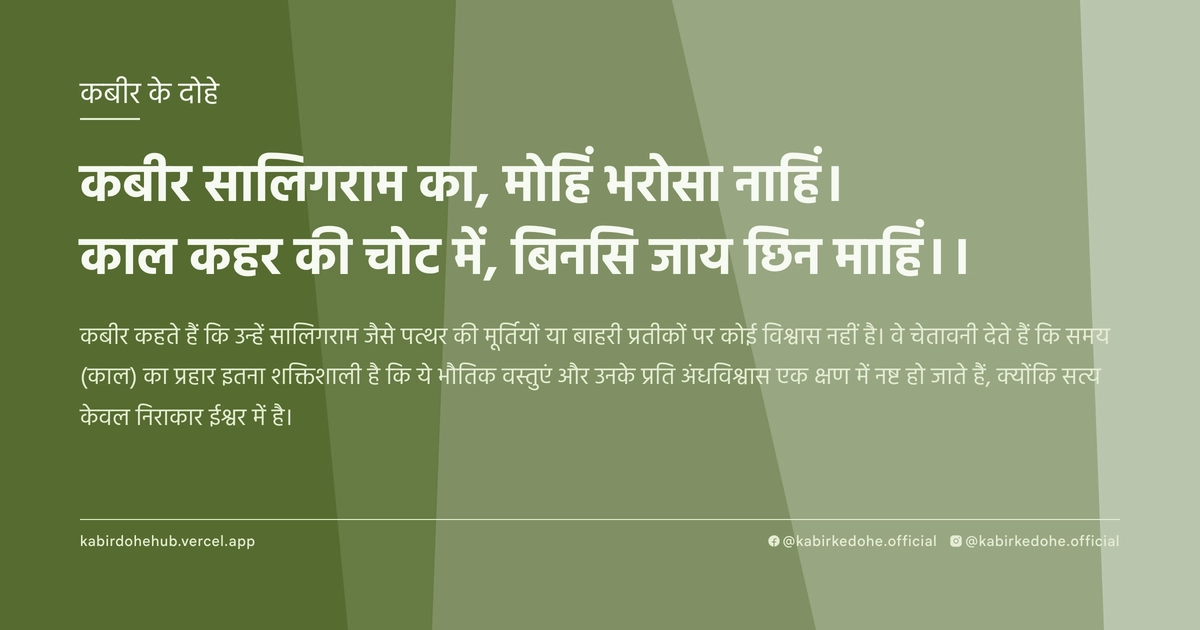
कबीर सालिगराम का, मोहिं भरोसा नाहिं।
काल कहर की चोट में, बिनसि जाय छिन माहिं।।
Kabir saligram ka, mohin bharosa naahin. Kaal kahar ki chot me, binsi jaaye chhin maahin.
इस पृष्ठ पर इस कबीर दोहे का अर्थ (meaning), हिंदी व्याख्या और अंग्रेज़ी अनुवाद, दार्शनिक विश्लेषण और व्यावहारिक जीवन सीख दी गई है। यह दोहा अनित्य (Impermanence) विषय से जुड़ा है — Kabir doha meaning and explanation in Hindi and English.
अर्थ (Meaning):
कबीर कहते हैं कि उन्हें सालिगराम जैसे पत्थर की मूर्तियों या बाहरी प्रतीकों पर कोई विश्वास नहीं है। वे चेतावनी देते हैं कि समय (काल) का प्रहार इतना शक्तिशाली है कि ये भौतिक वस्तुएं और उनके प्रति अंधविश्वास एक क्षण में नष्ट हो जाते हैं, क्योंकि सत्य केवल निराकार ईश्वर में है।
Kabir asserts that he places no faith in the Saligram or any external stone idols. He warns that the devastating blow of Time (Kaal) is so absolute that these physical manifestations and the delusions attached to them vanish in an instant, for ultimate truth resides only in the Formless Divine.
व्याख्या (Interpretation):
शाब्दिक अर्थ यह है कि पत्थर की मूर्ति समय के साथ नष्ट हो सकती है। लेकिन गहरा आध्यात्मिक अर्थ यह है कि मनुष्य अक्सर 'माया' के भौतिक रूपों को सत्य मानकर उनसे चिपक जाता है। कबीर यहाँ 'निर्गुण भक्ति' का आह्वान कर रहे हैं, जहाँ ईश्वर किसी आकार या पत्थर में सीमित नहीं है, बल्कि वह आत्मा और परमात्मा की अद्वैत एकता है। सालिगराम यहाँ केवल एक पत्थर नहीं, बल्कि उस मानसिक जड़ता का प्रतीक है जो हमें वास्तविक आत्म-साक्षात्कार से रोकती है। जब काल (मृत्यु या परिवर्तन) आता है, तो केवल वह सत्य बचता है जो समय से परे है। यह विरोधाभास है कि हम नश्वर वस्तुओं में अमरता खोजते हैं।
Literally, the verse suggests that a stone idol can be destroyed by time. Metaphorically, it critiques the human tendency to cling to 'Maya' (illusion) and external forms as conduits to the divine. Kabir invokes 'Nirgun Bhakti' (devotion to the formless), arguing that the Divine is not confined to a stone but is the non-dual reality of Atman and Brahman. The Saligram symbolizes the mental rigidity and ritualistic blindness that obstruct true self-realization. When 'Kaal' (Time/Death) strikes, only that which is timeless remains. It highlights the central paradox: humans seek eternity in the most perishable of objects.
दार्शनिक विश्लेषण (Philosophical Analysis):
कबीर का यह दोहा उनके युग के कट्टरपंथी कर्मकांडों और मूर्तिपूजा के प्रति एक तीखा प्रहार है। 15वीं शताब्दी के भारत में, जहाँ धर्म बाहरी प्रतीकों और जातिगत श्रेष्ठता में सिमट गया था, कबीर ने 'सहज' मार्ग का प्रस्ताव दिया। वे तर्क देते हैं कि यदि ईश्वर सर्वव्यापी है, तो उसे एक विशिष्ट पत्थर या मंदिर में सीमित करना उसकी अनंतता का अपमान है।
यह विचार अद्वैत वेदांत के करीब है, जहाँ 'ब्रह्म' सत्य है और जगत मिथ्या। कबीर का 'काल' केवल समय नहीं, बल्कि वह परिवर्तनशील शक्ति है जो हर भौतिक संरचना को ध्वस्त करती है। वे सिखाते हैं कि जब तक साधक बाहरी प्रतीकों पर निर्भर है, वह वास्तव में आंतरिक शून्य या 'शून्य' का अनुभव नहीं कर सकता।
सूफी मत के 'फना' (अहंकार का विनाश) के समान, कबीर चाहते हैं कि मनुष्य अपनी पहचान को बाहरी धार्मिक लेबल से हटाकर आंतरिक प्रकाश की ओर ले जाए। वे स्पष्ट करते हैं कि पत्थर की पूजा करना मानसिक आलस्य है, क्योंकि यह व्यक्ति को कठिन आंतरिक अनुशासन और आत्म-विश्लेषण से बचाता है।
कबीर का विरोध मूर्तिपूजा से अधिक उस 'अहंकार' से है जो यह दावा करता है कि 'मेरा' प्रतीक या 'मेरा' मंदिर दूसरों से श्रेष्ठ है। वे सामाजिक समरसता की बात करते हैं जहाँ ईश्वर तक पहुँचने के लिए किसी मध्यस्थ या भौतिक वस्तु की आवश्यकता नहीं होती।
अंततः, यह विश्लेषण हमें यह समझने पर मजबूर करता है कि वास्तविक भक्ति वह नहीं है जो किसी वस्तु की रक्षा करे, बल्कि वह है जो स्वयं को ईश्वर के चरणों में समर्पित कर दे, जिससे 'मैं' और 'तू' का भेद मिट जाए।
This couplet is a sharp critique of the rigid ritualism and idol worship prevalent during Kabir's era. In 15th-century India, where religion had shrunk into external symbols and caste hierarchies, Kabir proposed the path of 'Sahaja' (spontaneity/natural state). He argues that if the Divine is omnipresent, confining it to a specific stone or temple is an insult to its infinity.
This perspective aligns closely with Advaita Vedanta, where 'Brahman' is the only truth and the world is 'Maya'. Kabir's concept of 'Kaal' is not merely chronological time, but the transformative force that dismantles every physical structure. He teaches that as long as a seeker relies on external symbols, they cannot experience the internal void or 'Shunya'.
Similar to the Sufi concept of 'Fana' (annihilation of the ego), Kabir urges the individual to shift their identity from external religious labels to the inner light. He clarifies that idol worship can be a form of mental laziness, as it allows the practitioner to avoid the rigorous discipline of inner alchemy and self-inquiry.
Kabir's opposition is directed less at the object itself and more at the 'ego' that claims 'my' symbol or 'my' temple is superior to others. He advocates for a social harmony where reaching the Divine requires no intermediary or material object.
Ultimately, this analysis compels us to realize that true devotion is not about protecting an object, but about surrendering the self to the Divine, thereby erasing the duality between the seeker and the Sought.
मूल संदेश (Core Message):
- बाहरी प्रतीकों का मोह आध्यात्मिक प्रगति में सबसे बड़ी बाधा है।
- सत्य वह है जो समय की मार से अप्रभावित रहे।
- ईश्वर किसी पत्थर में नहीं, बल्कि चेतना के शुद्धतम रूप में है।
- नश्वरता को स्वीकार करना ही वास्तविक मुक्ति का पहला कदम है।
- आंतरिक मौन ही परमात्मा से मिलन का एकमात्र वास्तविक सेतु है।
- Attachment to external symbols is the greatest obstacle to spiritual progress.
- Truth is that which remains unaffected by the ravages of time.
- The Divine resides not in stone, but in the purest form of consciousness.
- Accepting impermanence is the first step toward true liberation.
- Inner silence is the only authentic bridge to union with the Divine.
व्यावहारिक उदाहरण (Practical Example):
एक समय की बात है, वाराणसी के घाटों पर रामदीन नाम का एक वृद्ध बुनकर रहता था। रामदीन ने अपना पूरा जीवन एक विशेष पत्थर की मूर्ति की सेवा में बिता दिया था, यह मानकर कि उसकी सारी खुशियाँ और सुरक्षा उसी पत्थर में निहित हैं। वह दिन भर उस मूर्ति को सजाता, उसके सामने घंटों प्रार्थना करता और यह विश्वास करता था कि जब तक वह मूर्ति उसके पास है, उसका परिवार सुरक्षित रहेगा।
एक वर्ष शहर में भीषण बाढ़ आई। गंगा का जलस्तर इतनी तेजी से बढ़ा कि रामदीन का छोटा सा घर पानी में डूब गया। अफरा-तफरी के बीच, रामदीन ने अपनी जान की परवाह न करते हुए उस भारी पत्थर की मूर्ति को बचाने की कोशिश की। लेकिन पानी का वेग इतना तीव्र था कि मूर्ति उसके हाथों से फिसल गई और गहरे मलबे में कहीं खो गई।
रामदीन टूट गया। उसे लगा कि उसका ईश्वर उसे छोड़कर चला गया और अब उसका जीवन अर्थहीन है। वह कई दिनों तक गहरे अवसाद में रहा, यह सोचकर कि जिस 'सुरक्षा' पर उसने भरोसा किया था, वह एक क्षण में नष्ट हो गई।
तभी उसकी मुलाकात एक घुमक्कड़ साधु से हुई, जिसने रामदीन की व्यथा सुनी। साधु ने मुस्कुराते हुए कहा, 'रामदीन, क्या तूने कभी सोचा कि जिस पत्थर को तू ईश्वर मान रहा था, वह तो केवल मिट्टी का एक रूप था? क्या वह पत्थर तुझे डूबने से बचा पाया? या वह पत्थर तुझे शांति दे पाया?'
रामदीन ने चुपचाप सिर हिलाया। साधु ने आगे कहा, 'असली ईश्वर वह नहीं है जो पानी में बह जाए, बल्कि वह है जो तेरे भीतर सांस ले रहा है। तूने पत्थर पर भरोसा किया, इसलिए तू दुखी है। यदि तू उस निराकार शक्ति पर भरोसा करता जो हर कण में है, तो तू इस आपदा में भी स्थिर रहता।'
यह बात रामदीन के हृदय में बिजली की तरह कौंधी। उसे समझ आया कि उसने अपना पूरा जीवन एक भ्रम (माया) के पीछे बिताया। उसने महसूस किया कि उसकी भक्ति वास्तव में ईश्वर के प्रति नहीं, बल्कि एक वस्तु के प्रति मोह थी।
रामदीन ने अपनी आँखों के आँसू पोंछे और पहली बार अपनी आँखें बंद कर अपने भीतर के मौन को सुनने की कोशिश की। उसने पाया कि वह शांति, जो वह पत्थर में खोज रहा था, वास्तव में उसके अपने हृदय की गहराई में मौजूद थी।
उस दिन के बाद, रामदीन ने फिर कभी किसी मूर्ति की तलाश नहीं की। उसने अपने काम को ही पूजा बना लिया और हर इंसान में उसी निराकार ईश्वर को देखने लगा। उसकी मुस्कान अब बाहरी वस्तुओं पर निर्भर नहीं थी, बल्कि आंतरिक संतोष से उपजी थी।
Once, on the ghats of Varanasi, lived an elderly weaver named Ramdeen. Ramdeen had spent his entire life serving a specific stone idol, believing that all his happiness and security resided within that stone. He spent his days decorating the idol, praying for hours, and believing that as long as the idol was with him, his family would remain safe.
One year, a devastating flood hit the city. The waters of the Ganges rose so rapidly that Ramdeen's small hut was submerged. In the chaos, Ramdeen risked his own life trying to save the heavy stone idol. However, the current was too strong; the idol slipped from his hands and vanished into the deep debris.
Ramdeen was shattered. He felt his God had abandoned him and that his life had become meaningless. For days, he sank into a deep depression, believing that the 'security' he relied upon had been destroyed in a single moment.
Then, he encountered a wandering monk who heard his grief. The monk smiled and asked, 'Ramdeen, did you ever consider that the stone you called God was merely a form of earth? Did that stone save you from drowning? Did it grant you true peace?'
Ramdeen nodded silently. The monk continued, 'The real Divine is not that which can be washed away by water, but that which breathes within you. You trusted a stone, and thus you are grieving. Had you trusted the Formless Power that exists in every atom, you would have remained steady even in this disaster.'
These words struck Ramdeen like a bolt of lightning. He realized he had spent his entire life chasing an illusion (Maya). He understood that his devotion was not actually toward God, but an attachment to an object.
Ramdeen wiped his tears and, for the first time, closed his eyes to listen to the silence within. He discovered that the peace he sought in the stone actually existed in the depths of his own heart.
After that day, Ramdeen never searched for an idol again. He turned his weaving into worship and began to see the Formless Divine in every human being. His smile no longer depended on external objects but sprang from an internal state of contentment.
अभ्यास मार्गदर्शन (Practice Guidance):
- प्रतिदिन 20 मिनट 'शून्य ध्यान' का अभ्यास करें, जहाँ आप किसी भी छवि, मंत्र या विचार का सहारा न लें, केवल अपनी श्वास के साक्षी बनें।
- एक 'मोह-डायरी' लिखें: उन भौतिक वस्तुओं की सूची बनाएं जिनसे आप भावनात्मक रूप से इतने जुड़े हैं कि उनके खोने का विचार आपको विचलित करता है। फिर विचार करें कि क्या वे वास्तव में स्थायी हैं।
- व्यवहार परिवर्तन: किसी भी धार्मिक अनुष्ठान को करते समय स्वयं से पूछें, 'क्या मैं इस क्रिया के माध्यम से ईश्वर को खोज रहा हूँ, या मैं केवल एक परंपरा का पालन कर रहा हूँ?'
- निदान चेकलिस्ट: यदि आप किसी वस्तु के खोने पर अत्यधिक क्रोध या शोक महसूस करते हैं, तो यह संकेत है कि आप अभी भी 'सालिग्राम' (बाहरी प्रतीकों) के मोह में हैं। यदि आप परिवर्तन को सहज स्वीकार करते हैं, तो आप निराकार की ओर बढ़ रहे हैं।
- Practice 20 minutes of 'Shunya Meditation' daily, where you rely on no image, mantra, or thought, acting only as a witness to your breath.
- Keep an 'Attachment Journal': List the material objects you are so emotionally tied to that the thought of losing them disturbs you. Then, contemplate whether they are truly permanent.
- Behavioral Shift: While performing any religious ritual, ask yourself, 'Am I seeking the Divine through this act, or am I merely following a tradition?'
- Diagnostic Checklist: If you feel excessive anger or grief upon losing an object, it is a sign that you are still under the spell of the 'Saligram' (external symbols). If you accept change with equanimity, you are moving toward the Formless.
चिंतन प्रश्न (Reflection Questions):
- मेरे जीवन में वह कौन सा 'सालिग्राम' (वस्तु, पद या रिश्ता) है जिसे मैं अपनी पहचान मान बैठा हूँ?
- यदि कल मेरी सारी भौतिक उपलब्धियाँ नष्ट हो जाएं, तो मेरे भीतर क्या बचेगा?
- क्या मेरी धार्मिक आस्था मुझे स्वतंत्र बना रही है, या यह मुझे नए बंधनों में जकड़ रही है?
- मैं अपनी डिजिटल पहचान (सोशल मीडिया इमेज) को कितना सच मानता हूँ, और वह 'काल' के प्रहार से कितनी सुरक्षित है?
- क्या मैं ईश्वर को खोजने के लिए बाहर देख रहा हूँ क्योंकि मैं अपने भीतर के शून्य से डरता हूँ?
- मेरे जीवन का कौन सा हिस्सा केवल दिखावे के लिए है और कौन सा वास्तव में सत्य है?
- What is the 'Saligram' (object, status, or relationship) in my life that I have mistaken for my identity?
- If all my material achievements were destroyed tomorrow, what would remain within me?
- Is my religious faith making me free, or is it binding me in new chains of ritual?
- How much truth do I attribute to my digital identity, and how secure is it against the blow of 'Kaal'?
- Am I looking for the Divine externally because I am afraid of the void within me?
- Which part of my life is merely a performance for others, and which part is authentically true?