
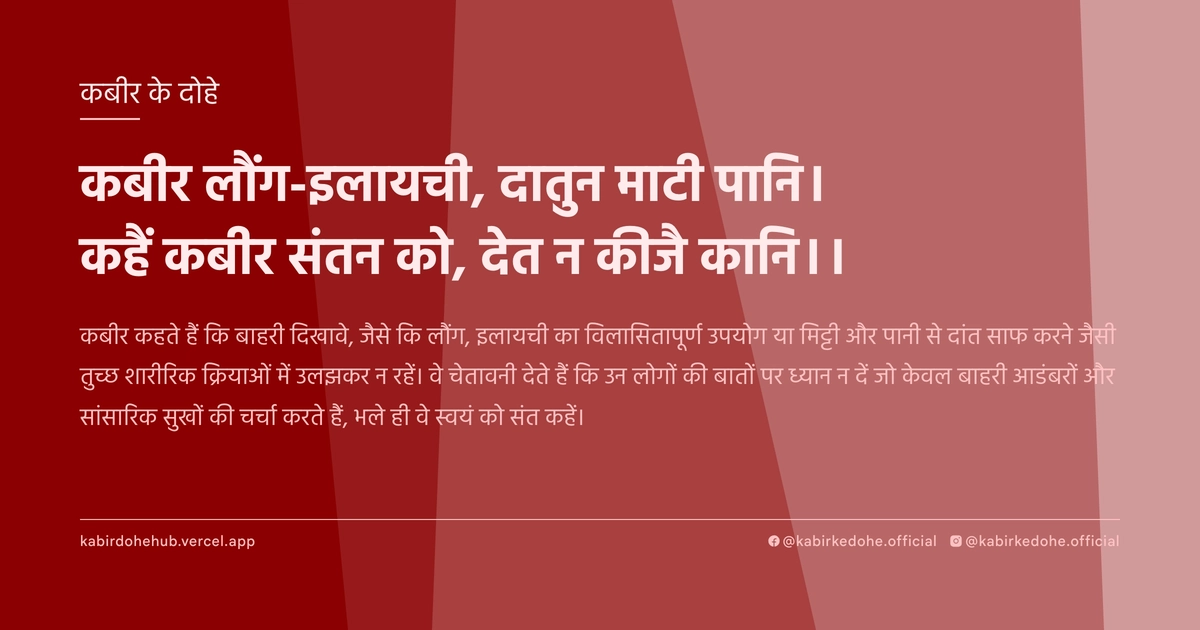
कबीर लौंग-इलायची, दातुन माटी पानि।
कहैं कबीर संतन को, देत न कीजै कानि।।
Kabir laung-ilaichi, datun maati paani. Kahen Kabir santan ko, det na keeje kaani.
इस पृष्ठ पर इस कबीर दोहे का अर्थ (meaning), हिंदी व्याख्या और अंग्रेज़ी अनुवाद, दार्शनिक विश्लेषण और व्यावहारिक जीवन सीख दी गई है। यह दोहा सादगी (Simple Living) विषय से जुड़ा है — Kabir doha meaning and explanation in Hindi and English.
अर्थ (Meaning):
कबीर कहते हैं कि बाहरी दिखावे, जैसे कि लौंग, इलायची का विलासितापूर्ण उपयोग या मिट्टी और पानी से दांत साफ करने जैसी तुच्छ शारीरिक क्रियाओं में उलझकर न रहें। वे चेतावनी देते हैं कि उन लोगों की बातों पर ध्यान न दें जो केवल बाहरी आडंबरों और सांसारिक सुखों की चर्चा करते हैं, भले ही वे स्वयं को संत कहें।
Kabir asserts that one should not be preoccupied with superficial luxuries like cloves and cardamom, nor with mundane physical rituals like cleaning teeth with soil and water. He warns against lending an ear to those who masquerade as saints but dwell only on external formalities and worldly comforts, urging the seeker to look beyond the facade.
व्याख्या (Interpretation):
यह दोहा बाहरी आडंबर और आंतरिक सत्य के बीच के द्वंद्व को दर्शाता है। लौंग और इलायची यहाँ विलासिता और इंद्रिय सुखों के प्रतीक हैं, जबकि दातुन और माटी साधारण शारीरिक स्वच्छता को दर्शाते हैं। कबीर का संकेत है कि जब कोई 'संत' केवल इन भौतिक विवरणों या कर्मकांडों की बात करता है, तो वह वास्तव में सत्य से दूर है। यह निर्गुण भक्ति का मार्ग है जहाँ ईश्वर किसी विशेष वस्तु या क्रिया में नहीं, बल्कि चेतना के भीतर है। माया यहाँ उन सूक्ष्म आकर्षणों के रूप में है जो हमें यह विश्वास दिलाते हैं कि बाहरी शुद्धता ही आध्यात्मिक शुद्धता है। अंततः, यह आत्मा और ब्रह्म की एकता का संदेश है, जहाँ अहंकार का विसर्जन ही एकमात्र वास्तविक साधना है।
This couplet illuminates the conflict between external ostentation and internal truth. Cloves and cardamom symbolize luxury and sensory gratifications, while the act of cleaning teeth with soil represents mundane physical rituals. Kabir suggests that when a 'saint' focuses solely on these material details or ritualistic purities, they are drifting away from the ultimate truth. This aligns with Nirgun Bhakti, where the Divine is not found in specific objects or acts, but within pure consciousness. Maya manifests here as the subtle illusion that external cleanliness or ritualistic adherence equates to spiritual purity. Ultimately, it emphasizes the non-duality of Atman and Brahman, asserting that the dissolution of the ego is the only authentic spiritual practice.
दार्शनिक विश्लेषण (Philosophical Analysis):
कबीर का काल सामाजिक और धार्मिक संक्रमण का समय था, जहाँ धर्म अक्सर बाहरी प्रतीकों, जैसे कि विशेष वस्त्रों, मालाओं और कठोर उपवासों में सिमट गया था। कबीर ने इस 'पाखंड' का कड़ा विरोध किया। उनका दर्शन अद्वैत वेदांत से प्रेरित है, जो मानता है कि सत्य एक है और वह किसी भी मानवीय श्रेणी या बाहरी लक्षण से परे है। वे तर्क देते हैं कि यदि कोई व्यक्ति स्वयं को संत कहता है लेकिन उसकी चर्चा केवल भौतिक सुखों या तुच्छ नियमों पर केंद्रित है, तो वह केवल एक 'मुखौटा' है।
सूफीवाद के प्रभाव में, कबीर 'इश्क-ए-हकीकी' (ईश्वरीय प्रेम) की बात करते हैं, जो किसी भी औपचारिक ढांचे से ऊपर है। उनके लिए, ईश्वर को पाने का मार्ग हृदय की शुद्धता है, न कि जीभ का स्वाद या शरीर की बाहरी सफाई। वे जाति और वर्ग के भेदभाव को नकारते हुए यह स्पष्ट करते हैं कि आध्यात्मिक पात्रता किसी कुल या बाहरी आचरण से नहीं, बल्कि आंतरिक सत्य की खोज से आती है।
मनोवैज्ञानिक स्तर पर, कबीर यहाँ 'पहचान के भ्रम' पर प्रहार कर रहे हैं। मनुष्य अक्सर अपनी पहचान बाहरी वस्तुओं या सामाजिक उपाधियों (जैसे 'संत') से जोड़ लेता है। जब हम किसी की उपाधि को देखकर उसकी बातों को सत्य मान लेते हैं, तो हम अपनी विवेक शक्ति खो देते हैं। कबीर हमें 'साक्षी भाव' में आने के लिए प्रेरित करते हैं ताकि हम शब्दों के पीछे छिपे शून्य को पहचान सकें।
यह दोहा इस गलतफहमी को दूर करता है कि आध्यात्मिकता का अर्थ जीवन से पलायन या केवल कठोर नियमों का पालन करना है। वास्तव में, आध्यात्मिकता वह जागरूकता है जो हमें यह बताती है कि सत्य किसी भी 'वस्तु' में नहीं है। वे हमें चेतावनी देते हैं कि हम उन गुरुओं के पीछे न भागें जो केवल बाहरी अनुशासन सिखाते हैं लेकिन आंतरिक रूपांतरण के बारे में मौन रहते हैं।
अंततः, कबीर का संदेश यह है कि सत्य का अनुभव मौन और अंतर्मुखता में होता है। जब हम बाहरी शोर—चाहे वह विलासिता का हो या कर्मकांड का—को शांत कर देते हैं, तभी हम उस निर्गुण ब्रह्म का साक्षात्कार कर सकते हैं जो सर्वव्यापी है और किसी भी भौतिक सीमा से मुक्त है।
Kabir lived during a period of profound social and religious transition, where faith had largely devolved into external symbols, such as specific attire, prayer beads, and rigorous fasting. Kabir vehemently opposed this 'hypocrisy.' His philosophy is deeply rooted in Advaita Vedanta, which posits that Truth is one and transcends all human categories or external attributes. He argues that if a person claims to be a saint but their discourse centers only on material pleasures or trivial regulations, they are merely wearing a mask.
Influenced by Sufism, Kabir speaks of 'Ishq-e-Haqiqi' (Divine Love), which exists above any formal structure. For him, the path to the Divine is through the purity of the heart, not the taste of the tongue or the external cleansing of the body. By rejecting caste and class distinctions, he clarifies that spiritual eligibility is not derived from lineage or outward conduct, but from the internal quest for Truth.
On a psychological level, Kabir is attacking the 'illusion of identity.' Humans often tether their identity to external objects or social titles (such as 'saint'). When we accept someone's words as truth simply because of their title, we surrender our faculty of discernment. Kabir urges us to enter the state of 'Sakshi' (the Witness) to recognize the void hidden behind the words.
This couplet corrects the misconception that spirituality means escaping from life or adhering strictly to rigid rules. In reality, spirituality is the awareness that tells us Truth does not reside in any 'object.' He warns us not to follow gurus who teach only external discipline while remaining silent about internal transformation.
Ultimately, Kabir's message is that the experience of Truth occurs in silence and introversion. When we quiet the external noise—whether it be the noise of luxury or the noise of ritual—only then can we realize the Nirgun Brahman, who is omnipresent and free from all material limitations.
मूल संदेश (Core Message):
- बाहरी चमक अक्सर आंतरिक रिक्तता को छिपाने का साधन होती है।
- सच्चा ज्ञान शब्दों में नहीं, बल्कि अनुभव और मौन में है।
- कर्मकांड केवल शरीर को शुद्ध करते हैं, आत्मा को नहीं।
- अहंकार को मिटाकर ही निर्गुण ब्रह्म का साक्षात्कार संभव है।
- सत्य किसी विशेष विधि या वस्तु का मोहताज नहीं होता।
- External brilliance is often a tool to hide internal emptiness.
- True wisdom resides not in words, but in experience and silence.
- Rituals may purify the body, but they cannot purify the soul.
- Realization of the Nirgun Brahman is possible only after the ego is dissolved.
- Truth is not dependent on any specific method or material object.
व्यावहारिक उदाहरण (Practical Example):
एक समय की बात है, वाराणसी के घाटों पर रहने वाला एक वृद्ध बुनकर था जिसका नाम माधव था। माधव अपनी सादगी के लिए जाना जाता था, लेकिन वह हमेशा एक ऐसे गुरु की तलाश में रहता था जो उसे मोक्ष का मार्ग दिखा सके।
एक दिन, शहर में एक प्रसिद्ध 'महात्मा' आए। उनके पास रेशमी वस्त्र थे, वे सुगंधित चंदन लगाते थे और उनके साथ कई सेवक थे जो उन्हें कीमती फल और मेवे खिलाते थे। उनके प्रवचनों में बड़ी भीड़ जुटती थी।
माधव भी उस महात्मा के पास गया। उसने देखा कि महात्मा जी घंटों तक इस बात पर चर्चा करते थे कि सुबह स्नान कैसे करना चाहिए, कौन से मंत्रों का उच्चारण किस दिशा में करना चाहिए और किस प्रकार के शुद्ध भोजन से मन शांत होता है।
माधव ने गौर किया कि महात्मा जी की बातें बहुत सुंदर थीं, लेकिन उनमें केवल बाहरी नियमों का विवरण था। वे इस बात पर जोर देते थे कि केवल विशिष्ट अनुष्ठानों को करने वाला ही ईश्वर तक पहुँच सकता है।
एक शाम, माधव ने महात्मा जी से पूछा, 'महाराज, यदि कोई व्यक्ति गरीब है और उसके पास ये सब साधन नहीं हैं, तो क्या वह ईश्वर को नहीं पा सकता?'
महात्मा जी ने उपहास करते हुए कहा, 'बिना शुद्धता और विधि-विधान के भक्ति संभव नहीं है। पहले अपने शरीर और परिवेश को शुद्ध करो, फिर सत्य की बात करना।'
माधव निराश होकर लौटा, लेकिन तभी उसकी मुलाकात एक साधारण से फकीर से हुई जो एक पेड़ के नीचे चुपचाप बैठा था। उस फकीर के पास न तो रेशमी वस्त्र थे और न ही कोई सुगंधित इत्र।
फकीर ने माधव की उदासी देखी और मुस्कुराते हुए कहा, 'बेटा, जो केवल बर्तन की सफाई की बात करता है, वह कभी उस अमृत को नहीं चख सकता जो बर्तन के भीतर है। बाहरी चमक केवल आँखों को लुभाती है, आत्मा को नहीं।'
माधव को अचानक कबीर का वह दोहा याद आया। उसे समझ आया कि वह अब तक केवल 'लौंग-इलायची' और 'दातुन-माटी' जैसी बाहरी बातों में उलझा हुआ था।
उस दिन माधव ने बाहरी गुरुओं की तलाश छोड़ दी और अपने भीतर के मौन में डूब गया। उसने महसूस किया कि उसकी अपनी बुनाई की सादगी और ईमानदारी ही उसकी सबसे बड़ी प्रार्थना थी। उसका जीवन बदल गया; वह अब दिखावे से मुक्त होकर वास्तविक शांति का अनुभव करने लगा।
Once, on the ghats of Varanasi, lived an elderly weaver named Madhav. Madhav was known for his simplicity, but he spent his years searching for a guru who could show him the path to liberation.
One day, a renowned 'Mahatma' arrived in the city. He wore shimmering silk robes, applied fragrant sandalwood paste, and was attended by servants who fed him precious fruits and nuts. Huge crowds gathered for his discourses.
Madhav approached the Mahatma. He observed that the Mahatma spent hours discussing the exact manner of morning ablutions, which mantras should be chanted in which direction, and what specific pure foods would calm the mind.
Madhav noticed that while the Mahatma's words were elegant, they contained only descriptions of external rules. He emphasized that only those who followed specific rituals could reach God.
One evening, Madhav asked, 'Maharaj, if a person is poor and lacks these means, can they not find God?'
The Mahatma replied with a sneer, 'Devotion is impossible without purity and ritual. First, purify your body and surroundings, then speak of Truth.'
Madhav returned home disappointed, but then he encountered a simple fakir sitting silently under a tree. This fakir had neither silk robes nor fragrant perfumes.
Seeing Madhav's sadness, the fakir smiled and said, 'Son, he who speaks only of cleaning the pot will never taste the nectar within. External brilliance only lures the eyes, not the soul.'
Suddenly, Madhav recalled Kabir's couplet. He realized that he had been entangled in the 'cloves and cardamom' and the 'soil and water' of external appearances.
That day, Madhav ceased his search for external gurus and dove into the silence within. He realized that the simplicity and honesty of his own weaving were his greatest prayers.
His life transformed; freed from the burden of ostentation, he began to experience a genuine, abiding peace that no ritual could ever provide.
अभ्यास मार्गदर्शन (Practice Guidance):
- दैनिक अवलोकन: दिन भर में उन क्षणों को पहचानें जब आप किसी व्यक्ति के निर्णय केवल उनके कपड़ों, पद या बोलने के तरीके के आधार पर कर रहे हैं।
- मौन साधना: प्रतिदिन 20 मिनट पूर्ण मौन में बैठें। बाहरी शोर (विचारों और इच्छाओं) को केवल देखें, उनमें उलझें नहीं।
- आत्म-पूछताछ जर्नल: लिखें कि 'मेरे जीवन में वे कौन से बाहरी आडंबर हैं जिन्हें मैं अपनी आध्यात्मिक प्रगति मान बैठा हूँ?'
- नैदानिक चेकलिस्ट: यदि आप किसी की प्रशंसा केवल उसकी बाहरी चमक के कारण कर रहे हैं, या यदि आप अपनी शांति को बाहरी परिस्थितियों पर निर्भर पाते हैं, तो आप अभी भी 'लौंग-इलायची' के भ्रम में हैं।
- Daily Observation: Identify moments throughout the day when you judge a person based solely on their attire, status, or manner of speaking.
- Silence Practice: Sit in complete silence for 20 minutes daily. Observe the external noise (thoughts and desires) without becoming entangled in them.
- Self-Inquiry Journal: Write down: 'What are the external pretenses in my life that I have mistaken for spiritual progress?'
- Diagnostic Checklist: If you admire someone only for their outward brilliance, or if you find your peace dependent on external conditions, you are still under the illusion of 'cloves and cardamom'.
चिंतन प्रश्न (Reflection Questions):
- मैं अपनी सार्वजनिक छवि को बनाए रखने के लिए कौन से 'आध्यात्मिक मुखौटे' पहनता हूँ?
- क्या मेरी श्रद्धा किसी व्यक्ति के ज्ञान पर है या उसकी प्रभावशाली प्रस्तुति पर?
- यदि मुझसे मेरी सभी उपाधियाँ और भौतिक सुख छीन लिए जाएँ, तो मेरे पास क्या बचेगा?
- मैं कितनी बार सत्य को केवल इसलिए स्वीकार कर लेता हूँ क्योंकि वह एक 'प्रतिष्ठित' व्यक्ति के मुख से निकला है?
- मेरे भीतर का वह कौन सा हिस्सा है जो अभी भी बाहरी मान्यता और प्रशंसा का भूखा है?
- What 'spiritual masks' do I wear to maintain my public image?
- Is my faith placed in a person's actual wisdom or in their impressive presentation?
- If all my titles and material comforts were stripped away, what would remain of me?
- How often do I accept a truth simply because it comes from a 'reputable' person?
- Which part of me is still hungry for external validation and praise?