
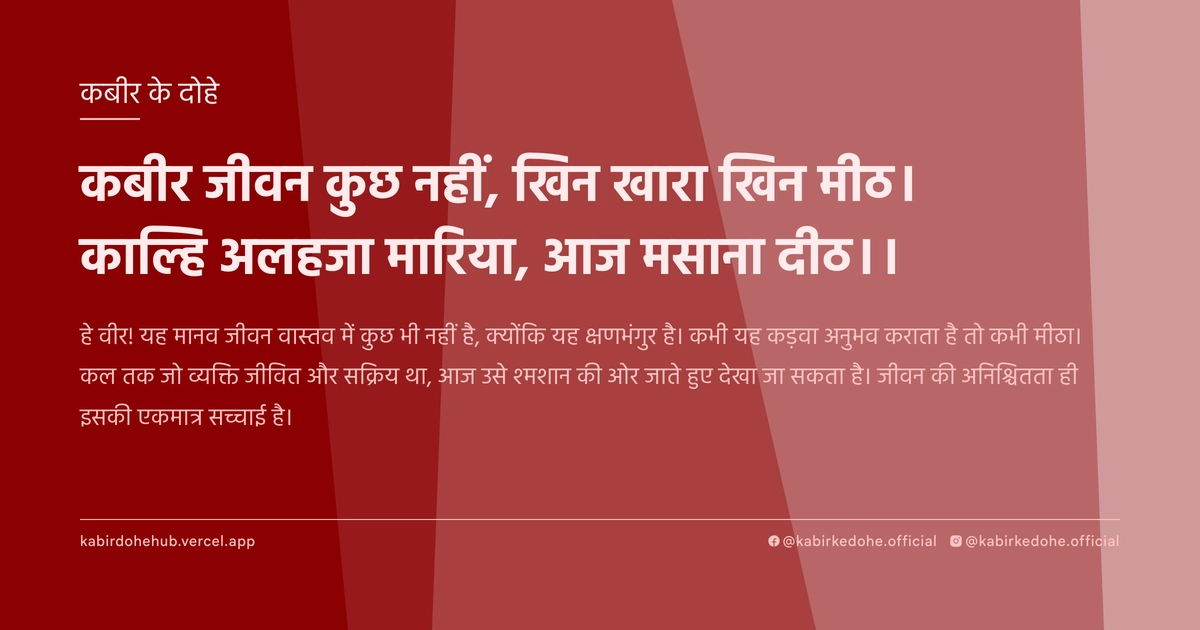
कबीर जीवन कुछ नहीं, खिन खारा खिन मीठ।
काल्हि अलहजा मारिया, आज मसाना दीठ।।
Kabir jeevan kuch nahi, khin khara khin meeth. Kaalhi alhaja maariya, aaj masana deeth.
इस पृष्ठ पर इस कबीर दोहे का अर्थ (meaning), हिंदी व्याख्या और अंग्रेज़ी अनुवाद, दार्शनिक विश्लेषण और व्यावहारिक जीवन सीख दी गई है। यह दोहा अनित्य (Impermanence) विषय से जुड़ा है — Kabir doha meaning and explanation in Hindi and English.
अर्थ (Meaning):
हे वीर! यह मानव जीवन वास्तव में कुछ भी नहीं है, क्योंकि यह क्षणभंगुर है। कभी यह कड़वा अनुभव कराता है तो कभी मीठा। कल तक जो व्यक्ति जीवित और सक्रिय था, आज उसे श्मशान की ओर जाते हुए देखा जा सकता है। जीवन की अनिश्चितता ही इसकी एकमात्र सच्चाई है।
O Brave Soul! This human life is essentially nothing, for it is fleeting and unstable. At one moment it tastes of bitterness, and the next, of sweetness. One who was vibrant and alive yesterday is seen today heading toward the cremation ground. The absolute uncertainty of existence is the only enduring truth.
व्याख्या (Interpretation):
कबीर यहाँ जीवन की नश्वरता का चित्रण कर रहे हैं। 'खारा' और 'मीठा' केवल स्वाद नहीं, बल्कि सुख और दुख के द्वंद्व हैं। यह दोहा हमें बताता है कि संसार माया का एक खेल है जहाँ स्थिरता एक भ्रम है। जब हम यह समझते हैं कि शरीर केवल एक अस्थाई वस्त्र है, तब हम 'अहंकार' से मुक्त होकर उस 'निर्गुण ब्रह्म' की ओर बढ़ते हैं जो समय और मृत्यु से परे है। यह अद्वैत वेदांत के उस सत्य की पुष्टि करता है जहाँ केवल आत्मा शाश्वत है और शरीर नश्वर।
Kabir depicts the transience of human existence. 'Bitter' and 'Sweet' are not merely tastes, but the duality of pleasure and pain. This verse suggests that the world is a play of Maya, where stability is an illusion. When we realize the body is but a temporary garment, we transcend the ego and move toward the 'Nirgun Brahman'—the formless absolute beyond time and death. It affirms the Advaita Vedanta truth: only the Atman is eternal, while the physical form is ephemeral.
दार्शनिक विश्लेषण (Philosophical Analysis):
कबीर का यह दोहा मध्यकालीन भारत के सामाजिक और धार्मिक परिवेश में एक क्रांतिकारी प्रहार था, जहाँ लोग कर्मकांडों और बाहरी दिखावे में उलझे थे। कबीर ने ritualism का विरोध करते हुए यह समझाया कि मोक्ष किसी मंदिर या मस्जिद में नहीं, बल्कि मृत्यु की वास्तविकता को स्वीकार करने में है।
दार्शनिक स्तर पर, यह सूफीवाद के 'फना' (अहंकार का विनाश) और वेदांत के 'माया' सिद्धांत का संगम है। कबीर तर्क देते हैं कि यदि जीवन इतना अस्थिर है, तो उस पर आधारित अहंकार कैसे स्थायी हो सकता है? यह बोध व्यक्ति को भौतिक आसक्तियों से मुक्त करता है।
यहाँ 'बीर' शब्द का प्रयोग केवल शारीरिक वीरता के लिए नहीं, बल्कि आध्यात्मिक साहस के लिए किया गया है। सत्य को स्वीकार करने के लिए जिस साहस की आवश्यकता होती है, वही वास्तविक वीरता है।
यह दोहा मनोवैज्ञानिक रूप से 'मृत्यु-चिंतन' (Memento Mori) की वकालत करता है। जब मनुष्य अपनी मृत्यु को सामने देखता है, तो उसके भीतर के छोटे-छोटे विवाद, ईर्ष्या और लोभ स्वतः समाप्त हो जाते हैं।
अंततः, कबीर हमें यह सिखाते हैं कि जीवन की कड़वाहट और मिठास दोनों ही समान हैं क्योंकि दोनों ही क्षणभंगुर हैं। केवल वह 'शून्य' या 'परमात्मा' ही सत्य है जो इन द्वंद्वों से ऊपर है।
This couplet was a revolutionary strike within the socio-religious landscape of medieval India, where people were entangled in rituals and outward displays of piety. Rejecting ritualism, Kabir explains that liberation is found not in temples or mosques, but in the stark acceptance of mortality.
Philosophically, this is a confluence of the Sufi concept of 'Fana' (annihilation of the ego) and the Vedantic theory of 'Maya'. Kabir argues that if life is so unstable, how can the ego built upon it be permanent? This realization detaches the seeker from material attachments.
The term 'Beer' (Brave) is used not for physical prowess, but for spiritual courage. The bravery required to face the truth of one's own demise is the only true valor.
Psychologically, the verse advocates for 'death-contemplation' (Memento Mori). When a human confronts their inevitable end, petty disputes, jealousies, and greeds naturally dissolve.
Ultimately, Kabir teaches that both the bitterness and sweetness of life are identical in their transience. Only the 'Shunya' or the Formless Absolute remains true, transcending all dualities.
मूल संदेश (Core Message):
- अहंकार एक भ्रम है क्योंकि आधार ही अस्थिर है।
- सुख और दुख एक ही सिक्के के दो पहलू हैं।
- मृत्यु का बोध ही वास्तविक जीवन की शुरुआत है।
- बाहरी उपलब्धियां श्मशान की दहलीज पर समाप्त हो जाती हैं।
- शाश्वत सत्य केवल निर्गुण ब्रह्म का अनुभव है।
- Ego is a delusion because its foundation is unstable.
- Joy and sorrow are but two sides of the same coin.
- The awareness of death is the true beginning of life.
- External achievements vanish at the threshold of the pyre.
- The only eternal truth is the experience of the Formless Absolute.
व्यावहारिक उदाहरण (Practical Example):
वाराणसी के एक पुराने घाट पर रामदीन नाम का एक वृद्ध बुनकर रहता था। वह अपने काम में इतना निपुण था कि पूरे शहर में उसके कपड़ों की मांग थी। लेकिन रामदीन का स्वभाव अत्यंत क्रोधी था; वह अपने सहायकों पर चिल्लाता और छोटी-छोटी बातों पर झगड़ा करता था।
वह मानता था कि उसकी कला उसे समाज में एक विशेष स्थान देती है, और इसी अहंकार में वह दूसरों को तुच्छ समझता था। उसके लिए जीवन केवल लाभ और प्रतिष्ठा का खेल था।
एक दिन, रामदीन ने देखा कि उसका सबसे पुराना मित्र, जो उससे भी अधिक कुशल बुनकर था, अचानक एक गंभीर बीमारी के कारण चल बसा। वह मित्र कल तक हंस रहा था, और आज उसका शरीर अग्नि को समर्पित किया जा रहा था।
रामदीन उस दृश्य को देखकर स्तब्ध रह गया। उसे कबीर का यह दोहा याद आया कि जीवन 'खिन खारा खिन मीठ' है। उसे एहसास हुआ कि जिस प्रतिष्ठा के लिए वह दूसरों का अपमान कर रहा था, वह प्रतिष्ठा श्मशान की राख में विलीन हो जाएगी।
उस रात रामदीन सो नहीं सका। उसने सोचा कि यदि कल उसकी बारी हो, तो क्या वह अपने सहायकों के गुस्से और नफरत को साथ ले जाएगा? क्या उसकी कला उसे मृत्यु के भय से बचा पाएगी?
अगली सुबह, रामदीन एक बदला हुआ इंसान था। उसने अपने सहायकों को बुलाया, उनसे माफी मांगी और उन्हें अपने व्यापार में हिस्सेदारी देने का वादा किया।
उसने महसूस किया कि क्रोध और अहंकार केवल उस 'कड़वाहट' को बढ़ाते हैं जिसे वह जीवन भर ढो रहा था। उसने अपनी कला को अब अहंकार का साधन नहीं, बल्कि सेवा का माध्यम बनाया।
रामदीन के जीवन में अब एक अजीब सी शांति थी। वह अब भी बुनता था, लेकिन अब उसके धागों में केवल रेशम नहीं, बल्कि करुणा और विनम्रता भी गुंथी हुई थी।
On an ancient ghat in Varanasi lived an elderly weaver named Ramdeen. He was so skilled in his craft that his fabrics were demanded throughout the city. However, Ramdeen was temperamentally volatile; he screamed at his assistants and fought over trivial matters.
He believed his artistry granted him a superior social status, and in this ego, he looked down upon others. For him, life was merely a game of profit and prestige.
One day, Ramdeen witnessed the sudden passing of his oldest friend, an even more skilled weaver, due to a severe illness. This friend had been laughing and vibrant just yesterday, and today his body was being committed to the fire.
Ramdeen stood stunned by the sight. He recalled Kabir's words that life is 'bitter one moment, sweet the next.' He realized that the prestige for which he insulted others would eventually dissolve into the ashes of the cremation ground.
Ramdeen could not sleep that night. He wondered: if tomorrow were his turn, would he carry the anger and hatred of his assistants with him? Would his art shield him from the terror of death?
The next morning, Ramdeen was a changed man. He summoned his assistants, apologized sincerely, and promised them a partnership in his business.
He felt that anger and ego only amplified the 'bitterness' he had been carrying throughout his life. He transformed his art from a tool of ego into a medium of service.
There was now a strange, profound peace in Ramdeen's life. He continued to weave, but now his threads held not just silk, but compassion and humility.
अभ्यास मार्गदर्शन (Practice Guidance):
- प्रतिदिन 15 मिनट मौन रहकर इस विचार पर मनन करें कि यह शरीर एक किराए का घर है जिसे एक दिन खाली करना होगा।
- एक 'नश्वरता जर्नल' (Mortality Journal) बनाएँ, जिसमें लिखें कि यदि आज आपका अंतिम दिन होता, तो आप किन बातों के लिए क्षमा मांगते और किन चीजों को छोड़ देते।
- व्यवहार परिवर्तन: जब भी क्रोध आए, स्वयं से पूछें—'क्या यह विवाद मृत्यु के क्षण में मायने रखेगा?'
- डायग्नोस्टिक चेकलिस्ट: क्या आप अभी भी भविष्य की योजनाएं बनाते समय यह भूल जाते हैं कि वर्तमान क्षण ही एकमात्र सत्य है? क्या आप अपनी उपलब्धियों को अपनी स्थायी पहचान मान रहे हैं?
- Spend 15 minutes daily in silence, contemplating the thought that this body is a rented house that must be vacated one day.
- Maintain a 'Mortality Journal,' recording what you would ask forgiveness for and what you would let go of if today were your final day.
- Behavioral Shift: Whenever anger arises, ask yourself—'Will this dispute matter at the moment of my death?'
- Diagnostic Checklist: Do you still forget that the present moment is the only truth while planning for the future? Are you mistaking your achievements for your permanent identity?
चिंतन प्रश्न (Reflection Questions):
- यदि आपकी सारी सामाजिक पहचान (पद, पैसा, रिश्ता) छीन ली जाए, तो आप वास्तव में कौन हैं?
- आप अपने जीवन के किन 'मीठे' क्षणों को पकड़कर रखने की कोशिश कर रहे हैं, जो वास्तव में आपको आगे बढ़ने से रोक रहे हैं?
- क्या आपका डिजिटल व्यक्तित्व (Social Media Ego) आपकी आंतरिक शून्यता को छिपाने का एक प्रयास है?
- आप मृत्यु से डरते हैं या उस सत्य से जो मृत्यु आपके सामने उजागर करेगी?
- क्या आप वास्तव में दूसरों के प्रति दयालु हैं, या आपकी दयालुता आपकी अपनी छवि को बेहतर बनाने का एक तरीका है?
- If all your social identities (rank, wealth, relationships) were stripped away, who are you actually?
- Which 'sweet' moments of your life are you trying to cling to, which are actually preventing you from evolving?
- Is your digital persona (Social Media Ego) an attempt to mask your internal void?
- Do you fear death, or do you fear the truth that death will expose about you?
- Are you truly compassionate toward others, or is your kindness a way to polish your own image?