
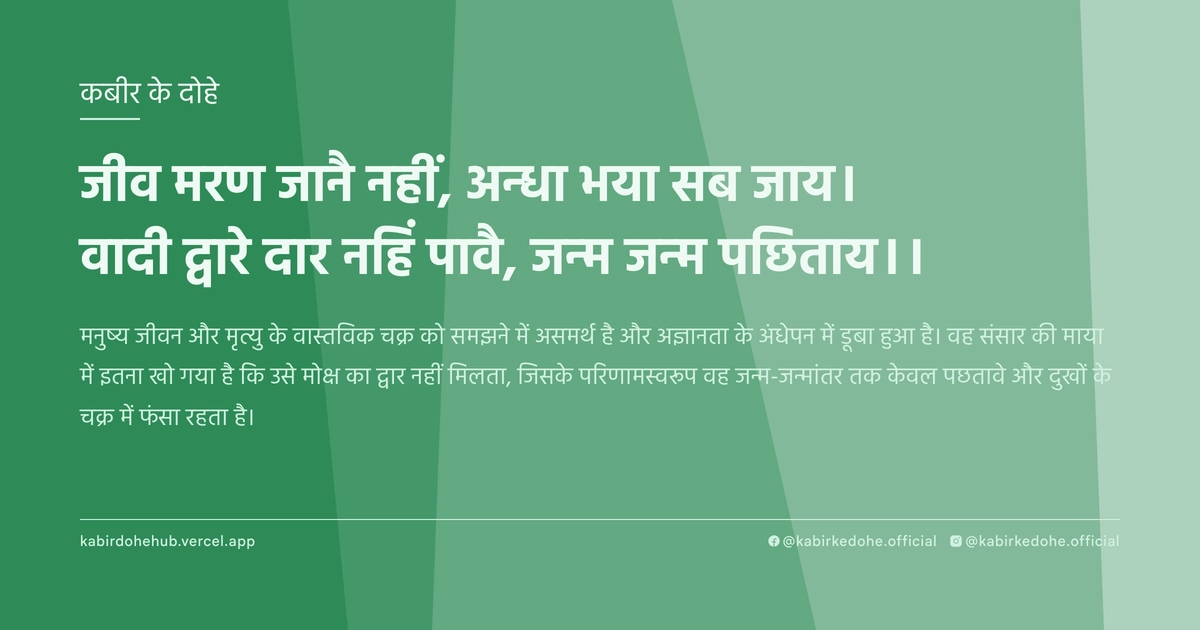
जीव मरण जानै नहीं, अन्धा भया सब जाय।
वादी द्वारे दार नहिं पावै, जन्म जन्म पछिताय।।
Jeev maran jaanai nahi, andha bhaya sab jaaye. Vaadi dwaare daar nahin paavai, janm janm pachitaye.
इस पृष्ठ पर इस कबीर दोहे का अर्थ (meaning), हिंदी व्याख्या और अंग्रेज़ी अनुवाद, दार्शनिक विश्लेषण और व्यावहारिक जीवन सीख दी गई है। यह दोहा मृतुक्यता (Mortality) विषय से जुड़ा है — Kabir doha meaning and explanation in Hindi and English.
अर्थ (Meaning):
मनुष्य जीवन और मृत्यु के वास्तविक चक्र को समझने में असमर्थ है और अज्ञानता के अंधेपन में डूबा हुआ है। वह संसार की माया में इतना खो गया है कि उसे मोक्ष का द्वार नहीं मिलता, जिसके परिणामस्वरूप वह जन्म-जन्मांतर तक केवल पछतावे और दुखों के चक्र में फंसा रहता है।
The human soul remains ignorant of the true nature of life and death, blinded by the illusions of the material world. Lost in this spiritual darkness, the individual fails to find the gateway to liberation, leading to a cycle of endless births and deaths characterized by profound regret and suffering.
व्याख्या (Interpretation):
इस दोहे में कबीर 'अंधेपन' का प्रयोग शारीरिक दृष्टि के लिए नहीं, बल्कि आध्यात्मिक अज्ञान (Avidya) के लिए करते हैं। जीव का यह मानना कि यह भौतिक शरीर ही उसकी अंतिम पहचान है, उसे सत्य से दूर ले जाता है। 'वादी द्वारे' उस परम सत्य या मोक्ष के द्वार का प्रतीक है जिसे केवल आत्म-साक्षात्कार के माध्यम से ही पाया जा सकता है। जब तक अहंकार और माया का पर्दा रहता है, तब तक आत्मा अपने वास्तविक स्वरूप (ब्रह्म) को नहीं पहचान पाती। यह स्थिति एक ऐसे व्यक्ति की तरह है जो घर के सामने खड़ा है लेकिन दरवाजे को देख नहीं पा रहा। अंततः, यह अज्ञानता ही पुनर्जन्म के अंतहीन चक्र का कारण बनती है, जहाँ आत्मा केवल अपनी चूक पर विलाप करती है।
In this couplet, Kabir uses 'blindness' not as a physical ailment, but as a metaphor for spiritual ignorance (Avidya). The delusion that the physical body constitutes the entirety of one's identity alienates the soul from its source. The 'gateway' represents the threshold of liberation (Moksha), accessible only through the realization of the Self. As long as the veil of Maya and the ego persists, the Atman remains unable to recognize its non-duality with Brahman. It is akin to a traveler standing directly before their destination yet unable to perceive the door. Consequently, this blindness fuels the relentless cycle of Samsara, where the soul spends countless incarnations in a state of existential regret.
दार्शनिक विश्लेषण (Philosophical Analysis):
कबीर का यह दृष्टिकोण निर्गुण भक्ति और अद्वैत वेदांत के गहरे समन्वय को दर्शाता है। यहाँ 'अंधा' होना माया के प्रभाव को इंगित करता है, जो सत्य को ढक लेती है। कबीर उस समय के सामाजिक और धार्मिक वातावरण पर प्रहार कर रहे थे जहाँ लोग केवल बाहरी कर्मकांडों और तीर्थों में मोक्ष खोज रहे थे, जबकि वास्तविक ज्ञान भीतर था।
अद्वैत वेदांत के अनुसार, जीव और ईश्वर अलग नहीं हैं, लेकिन अज्ञानता के कारण वे स्वयं को अलग मानते हैं। कबीर इस अलगाव को ही 'अंधापन' कहते हैं। जब तक व्यक्ति यह नहीं समझता कि वह शरीर नहीं बल्कि शुद्ध चेतना है, वह संसार के द्वंद्वों में फंसा रहेगा।
सूफीवाद के 'फना' (अहंकार का विनाश) के सिद्धांत की तरह, कबीर भी यहाँ अहंकार के विसर्जन की बात कर रहे हैं। जब तक 'मैं' (ego) जीवित है, तब तक सत्य का द्वार बंद रहता है। यह मनोवैज्ञानिक रूपांतरण की मांग करता है जहाँ व्यक्ति अपनी बाहरी पहचान को त्यागकर आंतरिक शून्य में उतरता है।
कबीर का विरोध केवल धर्म से नहीं, बल्कि उस जड़ता से था जो मनुष्य को सोचने और अनुभव करने से रोकती है। वे कहते हैं कि शास्त्र पढ़ने से कोई ज्ञानी नहीं होता, बल्कि जीवन और मृत्यु के सत्य का अनुभव करने से होता है।
अंततः, यह विश्लेषण स्पष्ट करता है कि पछतावा केवल समय की बर्बादी नहीं है, बल्कि यह उस आत्मा की पुकार है जो अपनी वास्तविकता को पहचानना चाहती है लेकिन जिसे उसकी अपनी ही निर्मित माया ने भ्रमित कर रखा है।
Kabir’s perspective reflects a profound synthesis of Nirgun Bhakti and Advaita Vedanta. The state of being 'blind' signifies the influence of Maya, the cosmic illusion that obscures the ultimate reality. Kabir critiques the socio-religious climate of his era, where seekers pursued liberation through superficial rituals and pilgrimages, ignoring the internal sanctuary of the soul.
According to Advaita Vedanta, the individual soul (Atman) and the universal consciousness (Brahman) are non-dual; however, ignorance (Avidya) creates the illusion of separation. Kabir defines this perceived separation as blindness. Until one realizes they are not the transient body but the eternal consciousness, they remain entangled in the dualities of existence.
Parallel to the Sufi concept of 'Fana' (the annihilation of the self), Kabir emphasizes the dissolution of the ego. As long as the 'I' persists, the gateway to truth remains locked. This necessitates a psychological transformation where the seeker transcends external identity to merge with the primordial silence.
Kabir’s rebellion was not merely against organized religion, but against the intellectual stagnation that prevented genuine experiential knowledge. He asserts that scholarly erudition is meaningless if it does not lead to an understanding of the cycle of birth and death.
Ultimately, this analysis reveals that the 'regret' mentioned is not mere sorrow, but the existential longing of a soul that senses its divine origin yet remains trapped by the very illusions it has meticulously constructed.
मूल संदेश (Core Message):
- अज्ञानता ही सबसे बड़ा बंधन है, जो हमें स्वयं से अलग करता है।
- बाहरी कर्मकांड आंतरिक अंधकार को मिटाने में असमर्थ हैं।
- सत्य का द्वार केवल अहंकार के विसर्जन से खुलता है।
- जीवन और मृत्यु का बोध ही वास्तविक ज्ञान की शुरुआत है।
- आत्मा का मिलन तभी संभव है जब माया का पर्दा गिर जाए।
- Ignorance is the ultimate shackle that alienates the soul from its source.
- External rituals are powerless against the depths of internal darkness.
- The gateway to Truth opens only through the dissolution of the ego.
- Realizing the cycle of life and death is the dawn of true wisdom.
- Union with the Divine is possible only when the veil of Maya falls.
व्यावहारिक उदाहरण (Practical Example):
एक समय की बात है, बनारस के घाटों पर रहने वाली एक वृद्ध विधवा, जानकी, थी। जानकी ने अपना पूरा जीवन केवल पूजा-पाठ, कठिन उपवास और अन्य लोगों को यह बताने में बिता दिया कि मोक्ष कैसे प्राप्त किया जाता है। वह हर दिन घंटों मंदिर में बिताती और दूसरों को उनके पापों के बारे में चेतावनी देती, लेकिन उसके मन में अपने परिवार के प्रति गहरी कड़वाहट और समाज के प्रति अहंकार था।
वह मानती थी कि उसकी धार्मिकता उसे स्वर्ग ले जाएगी। वह अक्सर कहती, 'मैं तो शुद्ध हूँ, बाकी सब अंधे हैं।' लेकिन रात को उसे भयानक बेचैनी होती और वह अपने जीवन के खालीपन से डरती थी।
एक दिन उसकी मुलाकात एक साधारण बुनकर से हुई, जो कबीर के विचारों का अनुयायी था। उस बुनकर ने जानकी से कहा, 'माँ, आप मंदिर के द्वार तो देख रही हैं, लेकिन अपने भीतर के अंधेरे को नहीं। आप दूसरों को रास्ता दिखा रही हैं, पर क्या आपने कभी अपनी आँखों की पट्टी उतारी है?'
जानकी को पहले तो यह बात बुरी लगी, लेकिन फिर उसने सोचा कि यदि वह इतनी शुद्ध है, तो उसके मन में शांति क्यों नहीं है? उसने महसूस किया कि उसकी सारी धार्मिकता केवल एक मुखौटा थी ताकि वह अपने भीतर के अकेलेपन और क्रोध को छिपा सके।
उसने महसूस किया कि वह 'अंधी' थी—यह सोचकर कि बाहरी क्रियाएं उसे ईश्वर से जोड़ देंगी, जबकि उसने अपने भीतर के प्रेम और करुणा को पूरी तरह मार दिया था।
उसने अपनी सारी बाहरी दिखावट छोड़ दी और मौन रहकर आत्म-निरीक्षण करना शुरू किया। उसने उन लोगों को क्षमा करना शुरू किया जिनसे वह नफरत करती थी।
धीरे-धीरे, उसके चेहरे की कठोरता कम होने लगी। उसने पाया कि असली 'द्वार' मंदिर की दीवारों में नहीं, बल्कि हृदय की सरलता और क्षमा में था।
अंत में, जानकी ने जाना कि वह वर्षों तक केवल एक भ्रम का पीछा कर रही थी। अब वह पछताती नहीं थी, बल्कि उस सत्य के प्रति कृतज्ञ थी जिसने उसे उसके अपने ही बनाए अंधेरे से बाहर निकाला।
In the ancient alleys of Varanasi lived an elderly widow named Janaki. Janaki had spent her entire existence immersed in rigorous rituals, strict fasting, and instructing others on the path to salvation. She spent hours at the temples daily, warning others of their sins, yet her heart harbored deep bitterness toward her family and a subtle arrogance toward society.
She believed her religious piety was a guaranteed ticket to heaven. She often remarked, 'I am pure; all others are blind.' However, in the silence of the night, she was plagued by an inexplicable restlessness and a terrifying sense of inner void.
One day, she encountered a humble weaver, a follower of Kabir’s philosophy. The weaver looked at her and said, 'Mother, you see the temple gates clearly, but you are blind to the darkness within. You show the way to others, but have you ever removed the blindfold from your own eyes?'
Initially, Janaki was offended, but the question lingered. She wondered why, despite her purity, she lacked peace. She realized her religiosity was merely a mask to hide her profound loneliness and simmering rage.
She understood she was 'blind'—believing that external performances could bridge the gap to the Divine, while she had systematically extinguished love and compassion within herself.
She abandoned the performative aspects of her faith and embraced a period of deep, silent introspection. She began the arduous process of forgiving those she had spent decades hating.
Gradually, the rigidity of her countenance softened. She discovered that the true 'gateway' was not found in the stone walls of a temple, but in the simplicity and forgiveness of the heart.
In the end, Janaki realized she had spent a lifetime chasing a mirage. She no longer lived in regret, but in gratitude for the truth that had finally led her out of the darkness of her own making.
अभ्यास मार्गदर्शन (Practice Guidance):
- दैनिक आत्म-निरीक्षण: प्रतिदिन 20 मिनट मौन बैठें और विचार करें कि आपकी कौन सी मान्यताएं केवल सामाजिक दबाव या अहंकार का परिणाम हैं।
- अहंकार की पहचान: जब भी आप किसी को 'गलत' या 'अज्ञानी' समझें, तो रुकें और पूछें, 'क्या मैं अपनी धारणाओं के अंधेपन में हूँ?'
- साक्षी भाव का अभ्यास: अपने विचारों और भावनाओं को एक तीसरे व्यक्ति की तरह देखें, यह महसूस करते हुए कि आप शरीर या मन नहीं, बल्कि केवल एक दृष्टा हैं।
- डायग्नोस्टिक चेकलिस्ट: यदि आप अभी भी दूसरों को बदलने की कोशिश कर रहे हैं, बाहरी पहचान से अपनी कीमत आंक रहे हैं, या मृत्यु के विचार से भयभीत हैं, तो आप अभी भी 'अंधेपन' की स्थिति में हैं।
- Daily Self-Inquiry: Spend 20 minutes in silence daily, questioning which of your beliefs are merely products of social conditioning or egoic pride.
- Identifying the Ego: Whenever you judge someone as 'wrong' or 'ignorant,' pause and ask, 'Am I currently blinded by my own preconceptions?'
- Practice of the Witness: Observe your thoughts and emotions as a third-party observer, realizing you are not the body or the mind, but the witnessing consciousness.
- Diagnostic Checklist: You are still in the state of 'blindness' if you are obsessed with changing others, derive your worth from external labels, or live in visceral fear of death.
चिंतन प्रश्न (Reflection Questions):
- मेरी वह कौन सी 'धार्मिक' या 'नैतिक' मान्यता है जो वास्तव में मेरे अहंकार को पोषण दे रही है?
- यदि आज मेरी सारी सामाजिक पहचान (पद, प्रतिष्ठा, रिश्ता) छीन ली जाए, तो मेरे पास क्या बचेगा?
- मैं किन लोगों को 'अंधा' मानता हूँ, और क्या यह निर्णय मेरी अपनी आंतरिक असुरक्षा का प्रतिबिंब है?
- क्या मेरा आध्यात्मिक प्रयास सत्य को जानने के लिए है, या केवल अपनी श्रेष्ठता सिद्ध करने के लिए?
- मृत्यु का विचार मुझे भयभीत करता है या मुझे वर्तमान क्षण में अधिक जागरूक बनाता है?
- Which of my 'religious' or 'moral' beliefs are actually serving as fuel for my ego?
- If all my social identities—status, titles, relationships—were stripped away today, what would remain of me?
- Who do I label as 'blind,' and is this judgment merely a reflection of my own internal insecurities?
- Is my spiritual pursuit a genuine quest for Truth, or a subtle attempt to establish my superiority over others?
- Does the thought of death evoke fear in me, or does it make me more acutely aware of the present moment?