
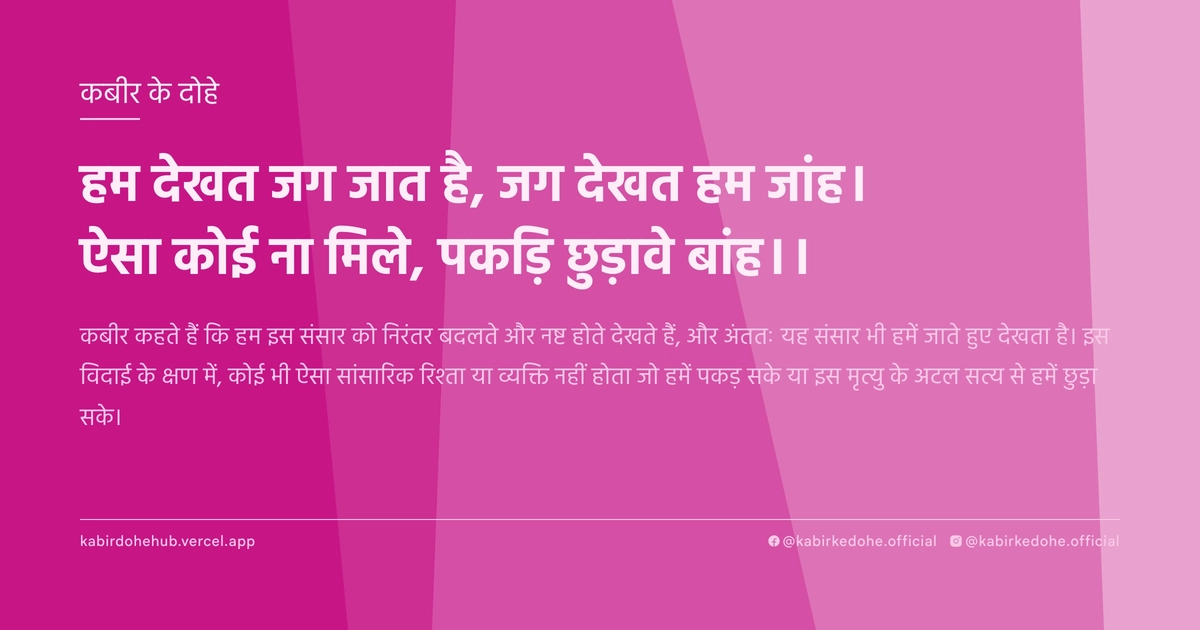
हम देखत जग जात है, जग देखत हम जांह।
ऐसा कोई ना मिले, पकड़ि छुड़ावे बांह।।
Hum dekhat jag jaat hai, jag dekhat hum jaanh. Aisa koi na mile, pakadi chhudave baanh.
इस पृष्ठ पर इस कबीर दोहे का अर्थ (meaning), हिंदी व्याख्या और अंग्रेज़ी अनुवाद, दार्शनिक विश्लेषण और व्यावहारिक जीवन सीख दी गई है। यह दोहा मृतुक्यता (Mortality) विषय से जुड़ा है — Kabir doha meaning and explanation in Hindi and English.
अर्थ (Meaning):
कबीर कहते हैं कि हम इस संसार को निरंतर बदलते और नष्ट होते देखते हैं, और अंततः यह संसार भी हमें जाते हुए देखता है। इस विदाई के क्षण में, कोई भी ऐसा सांसारिक रिश्ता या व्यक्ति नहीं होता जो हमें पकड़ सके या इस मृत्यु के अटल सत्य से हमें छुड़ा सके।
Kabir observes that we witness the world passing away, and in turn, the world witnesses our own departure. In that final moment of transition, there is no earthly bond, no hand, and no mortal entity capable of holding us back or liberating us from the inevitable grip of death.
व्याख्या (Interpretation):
शाब्दिक अर्थ यह है कि जन्म और मृत्यु एक चक्र है जहाँ सब कुछ क्षणभंगुर है। रूपक के स्तर पर, 'जग' केवल बाहरी दुनिया नहीं, बल्कि हमारी अपनी आसक्तियाँ और अहंकार हैं। कबीर यहाँ निर्गुण भक्ति के उस सत्य को उजागर कर रहे हैं जहाँ आत्मा (Atman) को यह समझना होता है कि वह इस मायावी संसार से अलग है। जब व्यक्ति यह अनुभव करता है कि वह केवल एक दर्शक है, तब वह द्वैत (Duality) से मुक्त होकर अद्वैत (Non-duality) की ओर बढ़ता है। 'बांह पकड़ना' सांसारिक मोह का प्रतीक है, जो अंततः व्यर्थ सिद्ध होता है। यह विरोधाभास है कि हम जिसे अपना कहते हैं, वही हमें सबसे अधिक अकेला छोड़ देता है।
Literally, the verse speaks of the cyclical nature of birth and death where everything is ephemeral. Metaphorically, 'the world' represents not just the external environment, but our own attachments and the ego. Kabir highlights the truth of Nirgun Bhakti, where the soul (Atman) must realize its distinctness from the illusory Maya. When one perceives themselves as a mere witness, they transition from duality to the non-dual state of Advaita. 'Holding the arm' symbolizes worldly attachments, which ultimately prove futile. The central paradox lies in the fact that the very things we claim as 'ours' are the first to abandon us in the final transition.
दार्शनिक विश्लेषण (Philosophical Analysis):
कबीर का यह दोहा उस कालखंड की उपज है जब समाज कर्मकांडों और बाहरी आडंबरों में उलझा था। उन्होंने स्पष्ट किया कि न तो तीर्थयात्रा और न ही जातिगत श्रेष्ठता मृत्यु के समय सहायक होती है। यह विचार सूफीवाद के 'फना' (अहंकार का विनाश) और वेदांत के 'माया' सिद्धांत से गहराई से जुड़ा है। कबीर तर्क देते हैं कि मनुष्य का दुख इस भ्रम में है कि वह इस नश्वर संसार का स्वामी है।
दार्शनिक रूप से, यहाँ 'साक्षी भाव' (Witness Consciousness) पर जोर दिया गया है। जब हम कहते हैं 'हम देखत जग जात है', तो हम स्वयं को शरीर से अलग एक चेतना के रूप में स्थापित कर रहे हैं। यह मनोवैज्ञानिक रूपांतरण है जहाँ व्यक्ति अपनी पहचान को सामाजिक पद और पारिवारिक संबंधों से हटाकर सार्वभौमिक सत्य से जोड़ता है।
अद्वैत वेदांत के अनुसार, आत्मा और ब्रह्म एक हैं। संसार की नश्वरता का बोध ही वह कुंजी है जो बंधन से मुक्ति दिलाती है। कबीर यहाँ चेतावनी देते हैं कि यदि हम केवल बाहरी संबंधों पर भरोसा करेंगे, तो अंत समय में हम स्वयं को अत्यंत अकेला पाएंगे।
सूफी परंपरा की तरह, कबीर यहाँ विरह और वैराग्य की बात करते हैं। यह वैराग्य संसार को छोड़ने का नहीं, बल्कि संसार के प्रति अपनी आसक्ति को छोड़ने का है। जब 'मैं' और 'मेरा' का भाव समाप्त हो जाता है, तब मृत्यु भयमुक्त हो जाती है।
अंततः, यह दोहा हमें यह सिखाता है कि केवल आंतरिक आध्यात्मिक साधना ही वह एकमात्र सहारा है जो मृत्यु के पार ले जा सकती है। बाहरी दुनिया की कोई भी शक्ति, चाहे वह कितनी भी शक्तिशाली क्यों न हो, आत्मा की अंतिम यात्रा में साथ नहीं चलती।
This couplet emerges from an era where society was deeply entrenched in ritualism and caste hierarchies. Kabir asserts that neither pilgrimages nor caste superiority provide solace at the moment of death. This perspective aligns closely with the Sufi concept of 'Fana' (annihilation of the ego) and the Vedantic doctrine of 'Maya' (illusion). Kabir argues that human suffering stems from the delusion of ownership over a transient world.
Philosophically, the emphasis is on 'Sakshi Bhava' or Witness Consciousness. By stating 'we see the world passing,' the poet establishes the self as a consciousness distinct from the physical body. This is a psychological transformation where identity shifts from social status and familial ties to a universal truth.
According to Advaita Vedanta, the Atman and Brahman are one. The realization of the world's impermanence is the key that unlocks the chains of bondage. Kabir warns that relying solely on external relationships leads to profound loneliness in the final hour.
Similar to Sufi traditions, Kabir speaks of longing and detachment. This detachment is not about physically abandoning the world, but about relinquishing emotional clinging. When the notions of 'I' and 'Mine' dissolve, death ceases to be a source of terror.
Ultimately, the verse teaches that only internal spiritual practice is the sole companion during the transition of death. No external power, regardless of its magnitude, accompanies the soul on its final journey.
मूल संदेश (Core Message):
- संसार की नश्वरता को स्वीकार करना ही वास्तविक स्वतंत्रता है।
- बाहरी संबंधों का मोह अंततः अकेलेपन और दुख का कारण बनता है।
- आत्मा का एकमात्र स्थायी साथी उसका अपना आंतरिक बोध है।
- मृत्यु अंत नहीं, बल्कि झूठी पहचान के विसर्जन की प्रक्रिया है।
- निर्गुण परमात्मा के साथ एकाकार होना ही एकमात्र शाश्वत सत्य है।
- Accepting the impermanence of the world is the gateway to true freedom.
- Clinging to external bonds inevitably leads to loneliness and suffering.
- The soul's only permanent companion is its own internal awakening.
- Death is not an end, but the process of dissolving a false identity.
- Merging with the Formless Divine is the only eternal and absolute truth.
व्यावहारिक उदाहरण (Practical Example):
वाराणसी के एक पुराने घाट पर रहने वाले एक वृद्ध विधवा, जानकी, का जीवन इसी सत्य का प्रमाण था। उन्होंने अपना पूरा जीवन अपने पुत्र और पोते-पोतियों की सेवा में समर्पित कर दिया था।
जानकी का मानना था कि उनका परिवार ही उनका स्वर्ग है और वे अपनी पूरी खुशी उनके इर्द-गिर्द बुनती थीं।
समय बीता और उनके पुत्र ने व्यापार के सिलसिले में विदेश जाना शुरू किया, जहाँ धीरे-धीरे जानकी की यादें धुंधली होने लगीं।
एक समय ऐसा आया जब जानकी गंभीर रूप से बीमार पड़ गईं और बिस्तर पर पड़ी रहीं।
उन्होंने देखा कि जिन बच्चों को उन्होंने पाल-पोसकर बड़ा किया, वे अब केवल फोन कॉल के जरिए हाल-चाल पूछते थे।
अस्पताल के सफेद कमरे में, जब उन्होंने अपने चारों ओर देखा, तो उन्हें एहसास हुआ कि उनके पास केवल उनकी अपनी सांसें और उनकी यादें थीं।
तभी उन्हें कबीर का यह दोहा याद आया कि दुनिया हमें जाते हुए देखती है, पर कोई हाथ पकड़कर साथ नहीं चलता।
इस बोध ने जानकी के भीतर एक गहरा बदलाव लाया; उन्होंने शिकायत करना छोड़ दिया और अपने भीतर के मौन में शांति खोजने लगीं।
उन्होंने महसूस किया कि जिस प्रेम को वे बाहर खोज रही थीं, वह वास्तव में उनके अपने भीतर की ईश्वरीय उपस्थिति थी।
अंत समय में, जानकी के चेहरे पर एक अलौकिक मुस्कान थी, क्योंकि उन्होंने अब बाहरी सहारे की उम्मीद छोड़ दी थी और स्वयं को उस निराकार परमात्मा को सौंप दिया था।
Janaki, an elderly widow living on an ancient ghat in Varanasi, embodied this truth through her life's trajectory. She had dedicated her entire existence to the service of her son and grandchildren.
Janaki believed her family was her heaven, and she wove every thread of her happiness around their needs.
As years passed, her son moved abroad for business, and gradually, Janaki's presence in his daily life became a fading memory.
A time came when Janaki fell gravely ill and became bedridden, unable to move.
She observed that the children she had nurtured now only checked on her through sporadic, distant phone calls.
In the sterile white room of the hospital, she realized that she possessed nothing but her own breath and her memories.
It was then that Kabir's words resonated within her: the world watches us depart, but no hand can hold us back from the void.
This realization triggered a profound shift; she ceased her complaints and began seeking peace within her own inner silence.
She understood that the love she had been searching for externally was actually the divine presence residing within her own heart.
In her final moments, a transcendental smile graced Janaki's face, for she had relinquished the hope of external support and surrendered herself to the Formless Divine.
अभ्यास मार्गदर्शन (Practice Guidance):
- प्रतिदिन 20 मिनट 'साक्षी ध्यान' का अभ्यास करें, जहाँ आप अपने विचारों और भावनाओं को बिना किसी निर्णय के केवल एक दर्शक की तरह देखें।
- एक डायरी लिखें जिसमें आप उन चीजों की सूची बनाएं जिनसे आप अत्यधिक जुड़े हुए हैं, और फिर विचार करें कि यदि वे कल न हों, तो आपकी आत्मा की वास्तविकता क्या होगी।
- व्यवहार में बदलाव: जब भी आप किसी वस्तु या व्यक्ति के प्रति अत्यधिक मोह महसूस करें, तो स्वयं से पूछें, "क्या यह स्थायी है?"
- निदान चेकलिस्ट: यदि आप दूसरों की स्वीकृति पर अपनी खुशी निर्भर पाते हैं या मृत्यु के विचार से अत्यधिक भयभीत हैं, तो इसका अर्थ है कि आप अभी भी 'माया' के प्रभाव में हैं।
- Practice 'Witness Meditation' for 20 minutes daily, observing your thoughts and emotions as a detached spectator without judgment.
- Maintain a journal listing the things and people you are most attached to, then contemplate what remains of your essence if they were gone tomorrow.
- Behavioral Shift: Whenever you feel an intense clinging to a person or object, ask yourself, "Is this permanent?"
- Diagnostic Checklist: If your happiness depends on external validation or if the thought of death triggers intense anxiety, you are still operating under the influence of 'Maya'.
चिंतन प्रश्न (Reflection Questions):
- यदि आज आपकी सामाजिक पहचान (नाम, पद, रिश्ता) छीन ली जाए, तो आपके भीतर क्या बचेगा?
- आप अपनी डिजिटल पहचान (सोशल मीडिया) को कितना वास्तविक मानते हैं, और क्या यह आपकी मृत्यु के समय कोई अर्थ रखेगी?
- क्या आपका प्रेम वास्तव में दूसरे के लिए है, या वह आपकी अपनी असुरक्षाओं को भरने का एक साधन है?
- आप किस डर से अपनी आंतरिक शांति को बाहरी वस्तुओं के साथ विनिमय कर रहे हैं?
- क्या आप वास्तव में अकेले रहने से डरते हैं, या आप स्वयं के साथ होने की अक्षमता से डरते हैं?
- If your social identity (name, title, relationship) were stripped away today, what would remain within you?
- To what extent do you perceive your digital identity as real, and will it hold any meaning at the moment of your passing?
- Is your love truly for the other, or is it a tool to fill the voids of your own insecurities?
- What fear drives you to exchange your inner peace for the acquisition of external objects?
- Are you truly afraid of being alone, or are you afraid of your inability to be with yourself?