
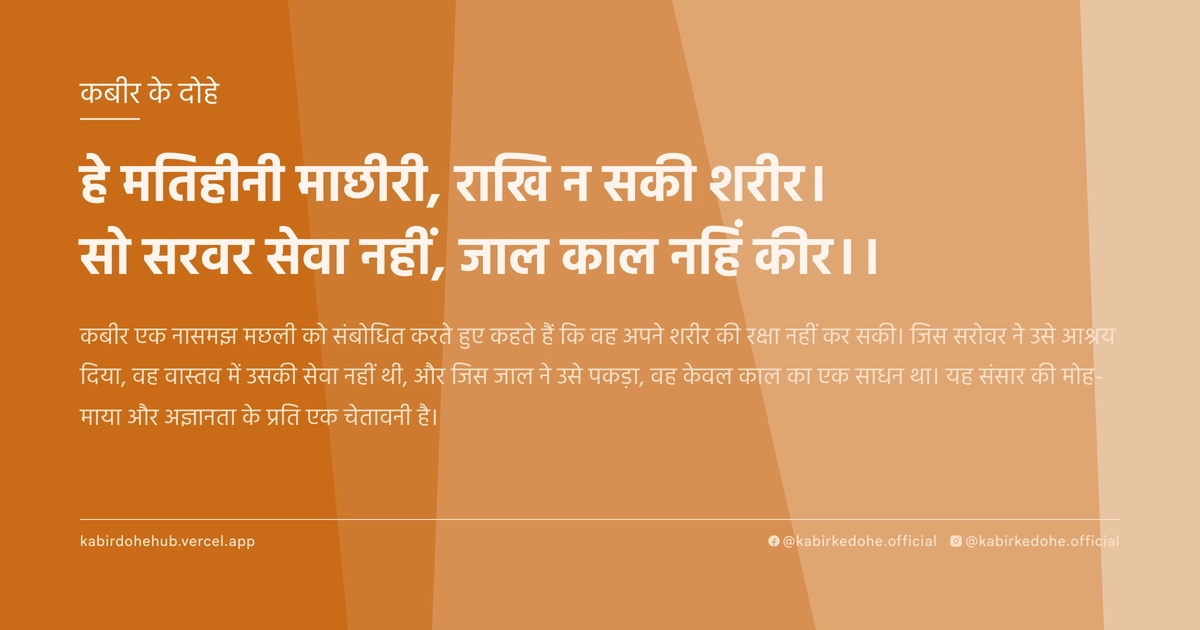
हे मतिहीनी माछीरी, राखि न सकी शरीर।
सो सरवर सेवा नहीं, जाल काल नहिं कीर।।
He matihini machhiri, raakh na saki shareer. So sarvar seva nahi, jaal kaal nahin keer.
इस पृष्ठ पर इस कबीर दोहे का अर्थ (meaning), हिंदी व्याख्या और अंग्रेज़ी अनुवाद, दार्शनिक विश्लेषण और व्यावहारिक जीवन सीख दी गई है। यह दोहा मृतुक्यता (Mortality) विषय से जुड़ा है — Kabir doha meaning and explanation in Hindi and English.
अर्थ (Meaning):
कबीर एक नासमझ मछली को संबोधित करते हुए कहते हैं कि वह अपने शरीर की रक्षा नहीं कर सकी। जिस सरोवर ने उसे आश्रय दिया, वह वास्तव में उसकी सेवा नहीं थी, और जिस जाल ने उसे पकड़ा, वह केवल काल का एक साधन था। यह संसार की मोह-माया और अज्ञानता के प्रति एक चेतावनी है।
Kabir addresses an ignorant fish that failed to protect its own existence. He explains that the lake providing shelter was not truly serving the fish, and the net that captured it was merely the instrument of time and death. It is a stark warning against the delusions of worldly security and the blindness of the soul.
व्याख्या (Interpretation):
शाब्दिक रूप से, यह एक मछली के पकड़े जाने का वर्णन है, लेकिन आध्यात्मिक स्तर पर 'मछली' वह जीवात्मा है जो माया के सागर में भटक रही है। 'मतिहीनी' (बुद्धिहीन) होना अज्ञानता का प्रतीक है, जहाँ आत्मा यह मान लेती है कि भौतिक सुख और सांसारिक सुरक्षा स्थायी हैं। सरोवर उस संसार का प्रतीक है जो हमें सुख का भ्रम देता है, लेकिन वास्तव में हमें बंधन में रखता है। 'जाल' वह कर्म और समय का चक्र है जो अंततः आत्मा को मृत्यु और पुनर्जन्म के दुष्चक्र में फँसा लेता है। यह दोहा निर्गुण भक्ति के उस सिद्धांत को रेखांकित करता है जहाँ आत्मा को यह समझना होता है कि बाहरी दुनिया एक छलावा है और केवल आंतरिक परमात्मा का बोध ही वास्तविक मुक्ति का मार्ग है। यहाँ द्वैत का अंत और अद्वैत की खोज ही एकमात्र समाधान है।
Literally, this describes a fish being caught, but metaphorically, the 'fish' represents the human soul wandering in the ocean of Maya. Being 'matihini' (ignorant) symbolizes the spiritual blindness where the soul mistakes material comforts for permanent security. The 'lake' represents the world that offers a facade of safety while keeping the soul tethered to illusion. The 'net' is the cycle of Karma and Time (Kaal) that inevitably traps the unaware. This Doha underscores the Nirgun Bhakti principle that the external world is a mirage, and only the realization of the formless Divine within leads to liberation. It highlights the central paradox: we seek safety in the very environment that ensures our downfall, emphasizing the need to transcend duality and embrace the non-dual reality of Atman-Brahman.
दार्शनिक विश्लेषण (Philosophical Analysis):
कबीर का यह दोहा उस समय के सामाजिक और धार्मिक परिवेश में रचा गया था जब लोग बाहरी कर्मकांडों और तीर्थयात्राओं को ही मोक्ष का साधन मानते थे। कबीर ने इस अंधानुकरण का कड़ा विरोध किया। वे बताते हैं कि जिस प्रकार मछली सरोवर को अपना मित्र मानती है, उसी प्रकार मनुष्य अपने सामाजिक पद, धन और रिश्तों को अपनी सुरक्षा कवच मानता है। यह 'माया' का सूक्ष्म जाल है।
अद्वैत वेदांत के दृष्टिकोण से, यह दोहा अविद्या (अज्ञान) पर प्रहार करता है। जब तक जीव स्वयं को शरीर मानता है, वह काल के जाल में फँसा रहता है। जैसे ही वह यह अनुभव करता है कि वह शरीर नहीं बल्कि शुद्ध चेतना है, जाल का अस्तित्व समाप्त हो जाता है। कबीर यहाँ यह समझा रहे हैं कि संसार की कोई भी वस्तु 'सेवा' नहीं कर रही, बल्कि वह केवल एक अस्थायी पड़ाव है।
सूफी मत के 'फना' के सिद्धांत से जोड़कर देखें तो, जब तक 'मैं' (अहंकार) जीवित है, तब तक हम काल के जाल में हैं। अहंकार का विनाश ही वह एकमात्र तरीका है जिससे आत्मा इस मायावी सरोवर से मुक्त हो सकती है। कबीर का तर्क है कि बाहरी भक्ति या दिखावा केवल जाल को और मजबूत करता है।
ऐतिहासिक रूप से, कबीर ने जाति और धर्म के भेदों को नकारते हुए यह संदेश दिया कि मृत्यु और समय सबके लिए समान हैं। चाहे कोई पंडित हो या जुलाहा, यदि वह अज्ञान में है, तो वह उसी मछली की तरह है जो अपनी नियति को नहीं पहचानती। यह मनोवैज्ञानिक रूपांतरण की मांग करता है—भय से मुक्ति और सत्य की स्वीकृति।
अंततः, यह दोहा हमें सिखाता है कि वास्तविक सुरक्षा बाहरी परिस्थितियों में नहीं, बल्कि आंतरिक जागरूकता में है। जो व्यक्ति अपनी अंतरात्मा के साथ एकाकार हो जाता है, उसके लिए काल का जाल अर्थहीन हो जाता है क्योंकि वह समय के पार (कालातीत) सत्य को पा लेता है।
This Doha was composed during an era of rigid ritualism and caste hierarchies, where salvation was sought through external pilgrimages and ceremonies. Kabir vehemently rejected these superficialities. He posits that just as a fish perceives the lake as a sanctuary, humans perceive social status, wealth, and relationships as their security blankets. This is the subtle web of 'Maya'.
From the perspective of Advaita Vedanta, this verse attacks 'Avidya' (ignorance). As long as the individual identifies with the physical body, they remain trapped in the net of Time (Kaal). The moment the soul realizes it is not the body but pure consciousness, the net ceases to exist. Kabir argues that no worldly object is truly 'serving' the soul; they are merely temporary stations of illusion.
Connecting this to the Sufi concept of 'Fana' (annihilation), the 'I' or ego is the primary tether to the net. The annihilation of the ego is the only path to escape the illusory lake. Kabir suggests that external piety or performative religion only strengthens the net of attachment.
Historically, Kabir dismantled caste and religious barriers by asserting that death and time are the great equalizers. Whether a priest or a weaver, anyone steeped in ignorance is like the fish unaware of its fate. This demands a psychological transformation—moving from the fear of death to the realization of eternal truth.
Ultimately, the Doha teaches that true security is not found in external circumstances but in internal awakening. One who merges with the inner self becomes timeless, rendering the net of Kaal irrelevant, as they have accessed the truth that exists beyond the linear constraints of time.
मूल संदेश (Core Message):
- बाहरी सुरक्षा एक भ्रम है जो आत्मा को सुला देता है।
- अज्ञानता ही वह जाल है जो हमें बंधन में रखता है।
- संसार का मोह एक ऐसा सरोवर है जो अंततः धोखा देता है।
- मृत्यु का भय केवल उन्हें होता है जो शरीर को ही सत्य मानते हैं।
- जागरूकता ही वह एकमात्र कुंजी है जो काल के जाल को काट सकती है।
- स्वयं को जानना ही वास्तविक मुक्ति और सुरक्षा है।
- External security is a delusion that puts the soul to sleep.
- Ignorance is the very net that keeps us in bondage.
- Worldly attachment is a lake that eventually betrays the swimmer.
- Fear of death belongs only to those who mistake the body for truth.
- Awareness is the only key capable of cutting through the net of Time.
- Self-realization is the only true security and ultimate liberation.
व्यावहारिक उदाहरण (Practical Example):
एक समय की बात है, वाराणसी के घाटों पर रहने वाला एक वृद्ध बुनकर था जिसका नाम माधव था। माधव अपनी कला में निपुण था और उसे विश्वास था कि उसके द्वारा बनाए गए रेशमी वस्त्र उसे समाज में सम्मान और बुढ़ापे में सुरक्षा देंगे। वह दिन-रात केवल धन संचय और अपनी प्रतिष्ठा बढ़ाने में लगा रहता था।
माधव का मानना था कि उसका बड़ा घर और संचित स्वर्ण उसे जीवन के हर संकट से बचा लेंगे। वह इसे अपनी 'सेवा' और 'सुरक्षा' समझता था। वह अक्सर अपने बेटों को समझाता कि दुनिया में केवल संपत्ति ही असली सहारा है, बाकी सब व्यर्थ है।
एक दिन शहर में भीषण अकाल पड़ा और उसके बाद एक महामारी फैली। माधव ने देखा कि उसके पास धन तो बहुत था, लेकिन वह धन न तो उसे स्वास्थ्य दे सका और न ही उसके प्रियजनों को मृत्यु से बचा सका। उसके रेशमी वस्त्र अब उसके शरीर की ढीली पड़ती त्वचा को ढकने के काम आ रहे थे, लेकिन उसकी आत्मा भयभीत थी।
वह अपने बिस्तर पर पड़ा हुआ था, चारों ओर उसकी संपत्ति बिखरी थी, लेकिन वह महसूस कर रहा था कि वह एक ऐसे जाल में फँसा है जिससे निकलना नामुमकिन है। उसे याद आया कि उसने जीवन भर जिस 'सरोवर' (संपत्ति और प्रतिष्ठा) को अपनी सुरक्षा माना, वह वास्तव में उसे सत्य से दूर ले जाने वाला भ्रम था।
तभी उसके पास एक फकीर आया, जिसने माधव की आँखों में देखा और बस इतना कहा, 'तूने जाल को ही अपना घर मान लिया, माधव।' यह शब्द माधव के लिए एक बिजली की तरह थे। उसे समझ आया कि उसने अपनी पूरी ऊर्जा उस चीज़ को बचाने में लगा दी जो अंततः नष्ट होने वाली थी।
माधव ने महसूस किया कि उसकी 'मति' (बुद्धि) कितनी क्षीण थी। उसने जिस सामाजिक प्रतिष्ठा को अपनी ढाल बनाया था, वह वास्तव में काल का वह जाल था जिसने उसे वास्तविक आध्यात्मिक खोज से वंचित रखा।
उसने अपने अंतिम दिनों में अपनी सारी संपत्ति गरीबों में बाँट दी और केवल अपनी सांसों के साथ उस निराकार परमात्मा का ध्यान करने लगा। उसने पाया कि जब उसने पकड़ने की इच्छा छोड़ दी, तब वह वास्तव में मुक्त हो गया।
उसका डर समाप्त हो गया। उसने अनुभव किया कि शरीर तो एक वस्त्र की तरह है जिसे एक दिन उतारना ही है, लेकिन वह चेतना जो इस शरीर को चला रही थी, वह कभी मरती नहीं।
माधव की यह रूपांतरण यात्रा यह दर्शाती है कि जब हम भौतिक सुरक्षा के भ्रम को तोड़ते हैं, तभी हम उस सत्य को देख पाते हैं जो समय और मृत्यु से परे है।
उसकी मृत्यु एक शांत मुस्कान के साथ हुई, क्योंकि अब वह मछली नहीं था जो जाल में फँसी हो, बल्कि वह स्वयं वह सागर बन चुका था जिसमें सारी मछलियाँ विलीन हो जाती हैं।
Once in the ghats of Varanasi, there lived an elderly weaver named Madhav. Madhav was a master of his craft and believed that the exquisite silk garments he produced would guarantee him social prestige and security in his old age. He spent his days and nights obsessively accumulating wealth and enhancing his reputation.
Madhav believed that his large house and hoarded gold would protect him from every crisis of life. He viewed this accumulation as his 'service' and 'security'. He often lectured his sons that in this world, only property is a reliable support, and everything else is vanity.
One day, a severe famine struck the city, followed by a devastating plague. Madhav observed that while he possessed immense wealth, that gold could neither restore his health nor save his loved ones from death. His silk robes now merely covered his frail, aging skin, but his soul was consumed by terror.
Lying on his bed, surrounded by his riches, he felt trapped in a net from which there was no escape. He realized that the 'lake' (wealth and prestige) he had trusted as his sanctuary was actually a delusion that had kept him away from the ultimate truth.
Just then, a wandering dervish visited him, looked into Madhav's eyes, and simply said, 'You mistook the net for your home, Madhav.' These words struck Madhav like a bolt of lightning. He understood that he had spent his entire energy preserving that which was destined to perish.
Madhav realized how 'matihini' (ignorant) he had been. The social prestige he used as a shield was, in reality, the net of Time (Kaal) that had blinded him to the necessity of spiritual pursuit.
In his final days, he distributed all his wealth among the poor and began to meditate on the Formless Divine with every breath. He discovered that once he let go of the desire to possess, he became truly free.
His fear vanished. He experienced that the body is like a garment to be discarded, but the consciousness animating the body is immortal.
Madhav's journey of transformation illustrates that only when we shatter the illusion of material security can we perceive the truth that exists beyond time and death.
He passed away with a serene smile, for he was no longer the fish trapped in a net, but had become the very ocean into which all fish eventually dissolve.
अभ्यास मार्गदर्शन (Practice Guidance):
- दैनिक चिंतन: प्रतिदिन 15 मिनट मौन बैठें और विचार करें कि आपकी कौन सी भौतिक उपलब्धियाँ आपको 'सुरक्षित' महसूस कराती हैं और क्या वे वास्तव में स्थायी हैं।
- आत्म-पूछताछ जर्नल: लिखें—'यदि आज मेरा सामाजिक पद और संपत्ति छीन ली जाए, तो मेरी पहचान क्या रह जाएगी?' इस शून्य का सामना करें।
- व्यवहार परिवर्तन: सप्ताह में एक बार ऐसी वस्तु का त्याग करें जिससे आप अत्यधिक जुड़ाव महसूस करते हैं, ताकि आप 'पकड़ने' की आदत को तोड़ सकें।
- निदान चेकलिस्ट: क्या आप संकट आने पर घबरा जाते हैं? क्या आप अपनी पहचान अपनी उपलब्धियों से जोड़ते हैं? यदि हाँ, तो आप अभी भी 'माया के सरोवर' के भ्रम में हैं।
- Daily Contemplation: Sit in silence for 15 minutes daily and reflect on which material achievements make you feel 'secure' and whether they are truly permanent.
- Self-Inquiry Journal: Write—'If my social status and wealth were stripped away today, what would remain of my identity?' Confront this void.
- Behavioral Shift: Once a week, consciously let go of an object or a desire you are overly attached to, in order to break the habit of 'clinging'.
- Diagnostic Checklist: Do you panic during crises? Do you tie your identity to your achievements? If yes, you are still under the illusion of the 'Lake of Maya'.
चिंतन प्रश्न (Reflection Questions):
- आपकी वह कौन सी 'डिजिटल पहचान' या सामाजिक छवि है जिसे आप खोने से सबसे ज्यादा डरते हैं?
- क्या आप वास्तव में स्वतंत्र हैं, या आपकी स्वतंत्रता केवल आपके द्वारा चुने गए एक बड़े जाल के भीतर है?
- आपकी कौन सी मान्यताएं आपको यह विश्वास दिलाती हैं कि आप दूसरों से श्रेष्ठ हैं, और यह श्रेष्ठता आपको सत्य से कैसे दूर कर रही है?
- यदि आप इस समय अपने जीवन के सभी 'सुरक्षा कवचों' को हटा दें, तो आपके भीतर क्या बचेगा?
- क्या आप अपनी शांति बाहरी परिस्थितियों पर निर्भर रखते हैं, या वह आपके भीतर से उपजती है?
- आप किस 'सरोवर' में तैर रहे हैं जिसे आप गलती से अपना घर समझ बैठे हैं?
- What is that 'digital identity' or social image you are most terrified of losing?
- Are you truly free, or is your freedom merely contained within a larger net of your own choosing?
- Which of your beliefs convince you that you are superior to others, and how is this superiority distancing you from the truth?
- If you were to strip away all your 'security blankets' right now, what would remain within you?
- Do you depend on external circumstances for your peace, or does it arise from within?
- In which 'lake' are you swimming that you have mistakenly identified as your home?