
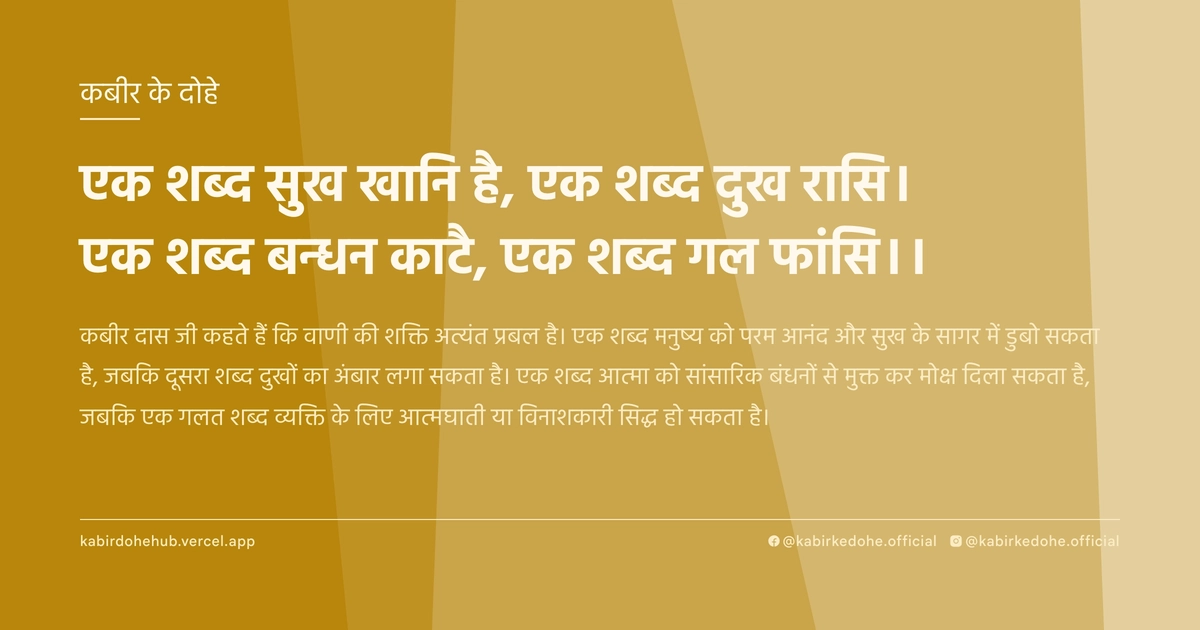
एक शब्द सुख खानि है, एक शब्द दुख रासि।
एक शब्द बन्धन काटै, एक शब्द गल फांसि।।
Ek shabd sukh khani hai, ek shabd dukh rasi. Ek shabd bandhan kaate, ek shabd gal phansi.
इस पृष्ठ पर इस कबीर दोहे का अर्थ (meaning), हिंदी व्याख्या और अंग्रेज़ी अनुवाद, दार्शनिक विश्लेषण और व्यावहारिक जीवन सीख दी गई है। यह दोहा सत्य (Truth) विषय से जुड़ा है — Kabir doha meaning and explanation in Hindi and English.
अर्थ (Meaning):
कबीर दास जी कहते हैं कि वाणी की शक्ति अत्यंत प्रबल है। एक शब्द मनुष्य को परम आनंद और सुख के सागर में डुबो सकता है, जबकि दूसरा शब्द दुखों का अंबार लगा सकता है। एक शब्द आत्मा को सांसारिक बंधनों से मुक्त कर मोक्ष दिला सकता है, जबकि एक गलत शब्द व्यक्ति के लिए आत्मघाती या विनाशकारी सिद्ध हो सकता है।
Kabir emphasizes the immense power of the spoken word. One word can be a mine of eternal bliss and joy, while another can be a mountain of sorrow. A single word of truth or divine remembrance can sever the shackles of worldly bondage, whereas a word born of ego or malice can act as a noose around one's own neck, leading to spiritual downfall.
व्याख्या (Interpretation):
यहाँ 'शब्द' का अर्थ केवल बाहरी ध्वनि नहीं, बल्कि आंतरिक चेतना और संकल्प है। शाब्दिक अर्थ में यह वाणी के प्रभाव की बात करता है, परंतु आध्यात्मिक स्तर पर यह 'शब्द' या 'नाद' की ओर संकेत है जो निर्गुण भक्ति का आधार है। जब शब्द अहंकार से प्रेरित होता है, तो वह माया के जाल को और मजबूत करता है, जिससे जीव जन्म-मरण के बंधन में फँस जाता है। इसके विपरीत, जब शब्द सत्य (Sathya) और परमात्मा के साथ एकाकार होता है, तो वह अद्वैत वेदांत के उस सत्य को प्रकट करता है जहाँ आत्मा और ब्रह्म एक हैं। यह विरोधाभास दर्शाता है कि हमारी अभिव्यक्ति ही हमारा स्वर्ग या नर्क निर्धारित करती है। यह शब्द ही है जो या तो हमें अपनी सीमित पहचान (अहंकार) में कैद करता है या हमें उस अनंत शून्य में विलीन कर देता है जहाँ कोई द्वैत नहीं बचता।
Here, 'Shabd' refers not merely to vocal sound, but to the internal vibration of consciousness and intention. Literally, it addresses the impact of speech, but metaphorically, it points toward the 'Anahad Naad' (unstruck sound) central to Nirgun Bhakti. When a word is driven by the ego, it reinforces the veil of Maya, trapping the soul in the cycle of samsara. Conversely, when the word aligns with Truth (Sathya) and the Divine, it manifests the non-duality of Advaita Vedanta, where the Atman and Brahman are one. This paradox highlights that our expression is the primary architect of our spiritual destiny. The word is either the chain that binds us to a fragmented identity or the sword that cuts through illusion to reveal the infinite void. It is the bridge between the mundane noise of the world and the sacred silence of the Absolute.
दार्शनिक विश्लेषण (Philosophical Analysis):
कबीर का यह दोहा उस युग की उपज है जहाँ धर्म केवल कर्मकांडों और बाहरी आडंबरों में सिमट गया था। कबीर ने पंडितों और मुल्लाओं की उस शब्दावली को चुनौती दी जो केवल शास्त्र ज्ञान पर आधारित थी, लेकिन जीवन में अनुपस्थित थी। उनका दर्शन 'शब्द' को एक उपकरण के रूप में देखता है—यदि यह सत्य पर आधारित है, तो यह मुक्ति का मार्ग है; यदि यह पाखंड पर आधारित है, तो यह बंधन है।
अद्वैत वेदांत के परिप्रेक्ष्य में, कबीर यह समझा रहे हैं कि भाषा अक्सर सत्य को छिपाने का माध्यम बन जाती है। जब हम 'मैं' और 'मेरा' कहते हैं, तो हम द्वैत पैदा करते हैं, जो दुख की राशि है। लेकिन जब शब्द 'सोहम' (वह मैं हूँ) की अवस्था में पहुँचता है, तो वह बंधन काट देता है। यह सूफी मत के 'ज़िक्र' (दिव्य स्मरण) के समान है, जहाँ एक शब्द का निरंतर जाप हृदय को शुद्ध करता है और ईश्वर से मिलाता है।
मनोवैज्ञानिक स्तर पर, यह दोहा 'संकेत' और 'प्रतिक्रिया' के सिद्धांत को दर्शाता है। हमारा अहंकार शब्दों के माध्यम से दूसरों को नियंत्रित करने की कोशिश करता है, जिससे संघर्ष और दुख पैदा होता है। कबीर का सुझाव है कि शब्दों का चयन केवल व्याकरणिक नहीं, बल्कि आध्यात्मिक होना चाहिए। अहंकार का विलोपन ही वह बिंदु है जहाँ शब्द समाप्त होते हैं और मौन शुरू होता है।
कबीर ने जाति और धर्म के भेदभाव को नकारते हुए यह स्पष्ट किया कि मोक्ष किसी विशेष भाषा या मंत्र में नहीं, बल्कि उस 'शब्द' में है जो हृदय की गहराई से निकलता है। ritualism (कर्मकांड) केवल बाहरी दिखावा है, जबकि आंतरिक रूपांतरण ही वास्तविक 'शब्द' है।
अंततः, यह दोहा हमें चेतावनी देता है कि हमारी वाणी ही हमारा दर्पण है। यदि हम क्रोध और घृणा के शब्द बोलते हैं, तो हम स्वयं के गले में फाँसी का फंदा कस रहे होते हैं। यदि हम प्रेम और करुणा के शब्द चुनते हैं, तो हम स्वयं को और दूसरों को मुक्त कर रहे होते हैं। यह पूर्णतः व्यक्तिगत जिम्मेदारी का दर्शन है।
This couplet emerges from an era where religion had devolved into rigid ritualism and external displays of piety. Kabir challenged the scholarly vocabulary of the Pandits and Mullahs, which was rooted in textual knowledge but absent in lived experience. His philosophy views the 'word' as a tool—if rooted in Truth, it is a vehicle for liberation; if rooted in hypocrisy, it becomes a shackle.
From the lens of Advaita Vedanta, Kabir illustrates how language often becomes a veil that obscures the Absolute. When we use words like 'I' and 'Mine,' we create duality, which is the 'mountain of sorrow.' However, when the word evolves into the realization of 'Soham' (I am That), it severs the bonds of ignorance. This mirrors the Sufi practice of 'Zikr' (divine remembrance), where the repetitive invocation of a sacred word purifies the heart and aligns the seeker with the Beloved.
Psychologically, the Doha addresses the principle of intention and reaction. The ego attempts to dominate others through words, triggering conflict and suffering. Kabir suggests that the choice of words should not be merely grammatical but spiritual. The annihilation of the ego is the precise point where words cease and the profound silence of the Absolute begins.
By rejecting caste and creed, Kabir clarifies that liberation does not reside in a specific language or a complex mantra, but in the 'word' that emanates from the depths of a sincere heart. Ritualism is merely a facade; internal transformation is the only authentic 'word.'
Ultimately, this teaching warns us that our speech is our spiritual mirror. Words of anger and hatred are self-imposed nooses, tightening the grip of karma. Words of love and compassion are the blades that cut through the illusions of separation. It is a philosophy of absolute personal accountability for one's vibrational impact on the universe.
मूल संदेश (Core Message):
- अहंकार से उपजे शब्द आत्मा को माया के बंधन में जकड़ लेते हैं।
- सत्य और प्रेम की वाणी ही वास्तविक आध्यात्मिक मुक्ति का द्वार है।
- वाणी केवल संचार नहीं, बल्कि हमारी चेतना का जीवंत प्रतिबिंब है।
- शब्दों का संयम ही मानसिक शांति और आंतरिक स्थिरता की पहली सीढ़ी है।
- जब शब्द मौन में विलीन होते हैं, तब ब्रह्म का साक्षात्कार होता है।
- Words born of ego bind the soul to the illusions of Maya.
- Speech rooted in Truth and Love is the only gateway to liberation.
- Our words are not mere communication, but living reflections of our consciousness.
- Restraint of speech is the first step toward mental peace and stability.
- When words dissolve into silence, the realization of the Absolute begins.
व्यावहारिक उदाहरण (Practical Example):
वाराणसी के एक पुराने मोहल्ले में माधव नाम का एक वृद्ध बुनकर रहता था। माधव अपनी कला में निपुण था, लेकिन उसका स्वभाव अत्यंत कठोर था। वह अपने परिवार, शिष्यों और यहाँ तक कि अपने ग्राहकों के साथ भी कड़वे शब्दों का प्रयोग करता था। उसका मानना था कि उसकी श्रेष्ठता उसके काम में है, इसलिए वह दूसरों को नीचा दिखाने में संकोच नहीं करता था। उसके शब्द अक्सर दूसरों के लिए 'दुख की राशि' बन जाते थे, जिससे उसके घर में तनाव और समाज में उसकी छवि एक अहंकारी व्यक्ति की बन गई थी।
एक दिन, माधव की मुलाकात एक घुमंतू साधु से हुई जो उसके पास एक फटा हुआ कपड़ा सिलवाने आया था। माधव ने उसे देखते ही उसके फटे कपड़ों का मजाक उड़ाया और उसे 'भिखारी' कहकर पुकारा। साधु शांत रहे और मुस्कुराते हुए बोले, 'माधव, तुम रेशम के धागों से सुंदर वस्त्र तो बुन लेते हो, लेकिन अपनी वाणी से अपने ही जीवन का गला घोंट रहे हो। याद रखना, जो शब्द तुम दूसरों के लिए फाँसी का फंदा बनाते हो, वे अंततः तुम्हारे अपने ही गले में कसेंगे।'
माधव को पहले तो यह बात चुभी, लेकिन उस रात उसे नींद नहीं आई। उसने महसूस किया कि उसकी कला की प्रशंसा तो सब करते हैं, लेकिन उसकी उपस्थिति से लोग दूर भागते हैं। उसने सोचा कि क्या उसकी श्रेष्ठता वास्तव में उसे सुख दे रही है? उसे अहसास हुआ कि उसके कड़वे शब्द वास्तव में उसके अपने आंतरिक डर और असुरक्षा का प्रतिबिंब थे।
अगले दिन से माधव ने एक प्रयोग शुरू किया। उसने तय किया कि वह किसी को भी कुछ ऐसा नहीं कहेगा जिससे उसे ठेस पहुँचे। जब भी उसे क्रोध आता, वह एक पल के लिए रुकता और सोचता कि क्या यह शब्द उसे बंधन में बाँध रहा है या मुक्त कर रहा है।
शुरुआत में यह बहुत कठिन था। उसके पुराने स्वभाव ने उसे बार-बार उकसाया। लेकिन धीरे-धीरे, उसने पाया कि जब वह विनम्रता से बात करता है, तो लोग उसके प्रति अधिक सम्मान और प्रेम दिखाने लगे। उसके घर का वातावरण बदलने लगा। उसके बच्चे, जो पहले उससे डरते थे, अब उसके पास बैठकर अपनी बातें साझा करने लगे।
एक बार एक ग्राहक ने उसकी एक गलती के कारण उस पर बहुत चिल्लाया। पुराने माधव ने पलटकर उसे अपमानित किया होता, लेकिन नए माधव ने शांति से कहा, 'क्षमा करें, मुझसे त्रुटि हुई, मैं इसे अभी सुधार देता हूँ।' ग्राहक अचानक शांत हो गया और उसकी विनम्रता से इतना प्रभावित हुआ कि उसने माधव को एक बड़ा ऑर्डर दे दिया।
माधव ने अनुभव किया कि 'एक शब्द' वास्तव में जीवन बदल सकता है। उसकी वाणी अब केवल सूचना का माध्यम नहीं, बल्कि उपचार का साधन बन गई थी। उसने पाया कि जब उसने दूसरों के प्रति करुणा के शब्द चुने, तो उसके भीतर का मानसिक बोझ हल्का हो गया।
वर्षों बाद, माधव केवल एक कुशल बुनकर के रूप में नहीं, बल्कि एक आध्यात्मिक मार्गदर्शक के रूप में जाना जाने लगा। उसने सीखा कि बाहरी रेशम से अधिक मूल्यवान आंतरिक वाणी की शुद्धि है। उसने अपने अहंकार के बंधन को काट दिया था और अब वह वास्तव में 'सुख की खान' में निवास कर रहा था।
In a narrow alley of ancient Varanasi lived Madhav, an elderly weaver of extraordinary skill. While his fabrics were masterpieces, his temperament was caustic. Madhav spoke with a sharp tongue to his family, his apprentices, and his clients. He believed his professional superiority granted him the right to belittle others. His words became a 'mountain of sorrow' for those around him, leaving his home tense and his reputation that of an arrogant man.
One day, a wandering monk arrived at his loom to have a tattered cloth mended. Upon seeing the monk's rags, Madhav mocked him, calling him a 'worthless beggar.' The monk remained serene and replied with a smile, 'Madhav, you weave beautiful garments with silk threads, but with your words, you are strangling your own life. Remember, the words you turn into nooses for others will eventually tighten around your own neck.'
Initially, Madhav felt insulted, but the words haunted him throughout the night. He realized that while the world praised his art, they shunned his presence. He questioned whether his perceived superiority was bringing him any actual peace. He recognized that his bitterness was merely a reflection of his own internal fears and insecurities.
The following day, Madhav began an experiment. He vowed not to utter a single word that could cause pain. Whenever anger surged, he would pause and ask himself: 'Is this word binding me or liberating me?'
It was an arduous beginning. His ingrained habits pushed him toward hostility. However, he noticed that as he adopted humility, people responded with genuine respect and affection. The atmosphere in his home shifted; his children, who once feared him, began to share their hearts with him.
Once, a client screamed at him over a minor flaw in a weave. The old Madhav would have retaliated with venom, but the new Madhav calmly said, 'Please forgive me; I made a mistake. I shall rectify it immediately.' The client was stunned into silence by this humility and, moved by the gesture, awarded Madhav a massive contract.
Madhav experienced firsthand how 'one word' could alter the trajectory of a life. His speech was no longer just a means of communication, but a tool for healing. He discovered that by choosing words of compassion, the heavy psychological burden he had carried for decades began to lift.
Years later, Madhav was known not just as a master weaver, but as a spiritual guide. He learned that the purity of one's speech is far more valuable than the finest silk. He had severed the bonds of his ego and finally found himself residing in the 'mine of eternal bliss.'
अभ्यास मार्गदर्शन (Practice Guidance):
- दैनिक मौन अभ्यास: प्रतिदिन 30 मिनट पूर्ण मौन का पालन करें। यह आपको शब्दों के प्रति सचेत करेगा और आपको यह समझने में मदद करेगा कि विचार कैसे शब्दों में बदलते हैं।
- वाणी का आत्म-निरीक्षण: सोने से पहले एक डायरी में लिखें कि आज आपने कौन से शब्द बोले। विश्लेषण करें कि किन शब्दों ने दूसरों को दुख पहुँचाया (बंधन) और किन शब्दों ने शांति प्रदान की (मुक्ति)।
- सचेत प्रतिक्रिया (Pause Technique): जब भी क्रोध या उत्तेजना महसूस हो, बोलने से पहले तीन गहरी साँसें लें। स्वयं से पूछें: 'क्या यह शब्द मेरे अहंकार को संतुष्ट कर रहा है या सत्य को प्रकट कर रहा है?'
- निदानात्मक चेकलिस्ट (Diagnostic Checklist): क्या आपके रिश्तों में तनाव है? क्या आप अक्सर दूसरों को सही साबित करने की कोशिश करते हैं? क्या आपकी बातचीत में व्यंग्य अधिक है? यदि हाँ, तो आप 'दुख की राशि' और 'बंधन' के शब्दों का उपयोग कर रहे हैं।
- Daily Silence Practice: Observe complete silence for 30 minutes daily. This cultivates awareness of the transition from thought to speech and reduces impulsive reactions.
- Speech Self-Inquiry: Keep a nightly journal of the words you spoke. Analyze which words created friction (bondage) and which fostered peace (liberation).
- The Pause Technique: Whenever anger or agitation arises, take three deep breaths before speaking. Ask yourself: 'Is this word serving my ego or revealing the Truth?'
- Diagnostic Checklist: Are your relationships strained? Do you feel a compulsive need to prove others wrong? Is your speech laced with sarcasm? If yes, you are currently operating within the 'mountain of sorrow' and the 'noose of bondage.'
चिंतन प्रश्न (Reflection Questions):
- क्या मेरी वाणी दूसरों को ऊपर उठाने के लिए है, या अपनी श्रेष्ठता सिद्ध करने के लिए?
- मेरे डिजिटल व्यक्तित्व (सोशल मीडिया) के शब्द मेरी वास्तविक आंतरिक शांति के साथ कितने मेल खाते हैं?
- मैं उन शब्दों का उपयोग कैसे करता हूँ जब मैं अकेला होता हूँ और स्वयं से बात करता हूँ?
- क्या मैं शब्दों के माध्यम से सत्य को खोज रहा हूँ, या सत्य को अपनी सुविधा के अनुसार मोड़ने की कोशिश कर रहा हूँ?
- मेरे जीवन में वह कौन सा एक 'शब्द' या विचार है जो मेरे लिए सबसे बड़ा बंधन बन गया है?
- यदि आज मेरे शब्द समाप्त हो जाएँ, तो मेरी आत्मा दुनिया को क्या संदेश देगी?
- Is my speech intended to uplift others, or to validate my own perceived superiority?
- How closely do the words of my digital persona align with my actual internal state of peace?
- What is the nature of the words I use when I am alone and speaking to myself?
- Am I using words to seek the Truth, or to bend the Truth to fit my convenience?
- Which single 'word' or belief in my life has become the heaviest chain of bondage?
- If my words were to vanish today, what message would my soul convey to the world?