
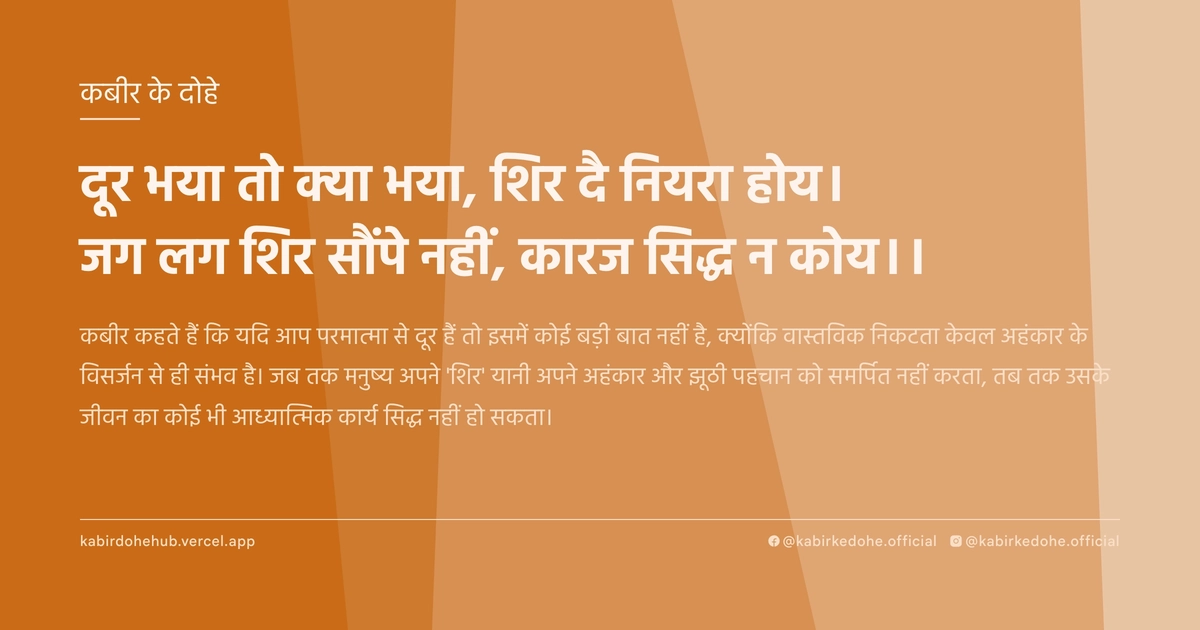
दूर भया तो क्या भया, शिर दै नियरा होय।
जग लग शिर सौंपे नहीं, कारज सिद्ध न कोय।।
Door bhaya to kya bhaya, shir dai niyara hoye. Jag lag shir saupne nahi, kaaraj siddh na koy.
इस पृष्ठ पर इस कबीर दोहे का अर्थ (meaning), हिंदी व्याख्या और अंग्रेज़ी अनुवाद, दार्शनिक विश्लेषण और व्यावहारिक जीवन सीख दी गई है। यह दोहा प्रपत्ति (Surrender) विषय से जुड़ा है — Kabir doha meaning and explanation in Hindi and English.
अर्थ (Meaning):
कबीर कहते हैं कि यदि आप परमात्मा से दूर हैं तो इसमें कोई बड़ी बात नहीं है, क्योंकि वास्तविक निकटता केवल अहंकार के विसर्जन से ही संभव है। जब तक मनुष्य अपने 'शिर' यानी अपने अहंकार और झूठी पहचान को समर्पित नहीं करता, तब तक उसके जीवन का कोई भी आध्यात्मिक कार्य सिद्ध नहीं हो सकता।
Kabir asserts that being distant from the Divine is a common state, but true proximity is only achieved through the surrender of the ego. Until a person is willing to offer their 'head'—symbolizing the prideful intellect and the false sense of self—no spiritual endeavor or life's purpose can reach its ultimate fruition.
व्याख्या (Interpretation):
इस दोहे का शाब्दिक अर्थ है कि दूरी भौतिक नहीं, बल्कि मानसिक है। 'शिर' यहाँ केवल शरीर के अंग का प्रतीक नहीं है, बल्कि यह उस अहंकार (Ahamkara) का प्रतिनिधित्व करता है जो व्यक्ति को उसकी वास्तविक प्रकृति से अलग करता है। निर्गुण भक्ति के अनुसार, ईश्वर बाहर नहीं बल्कि भीतर है, परंतु माया का पर्दा और 'मैं' की भावना उसे ओझल कर देती है। जब साधक अपने अहंकार को पूरी तरह समर्पित कर देता है, तो वह अद्वैत स्थिति में पहुँच जाता है जहाँ भक्त और भगवान एक हो जाते हैं। यह विरोधाभास है कि जिसे हम खोने से डरते हैं (अपना अस्तित्व/अहंकार), वही वास्तव में वह बाधा है जिसे हटाकर हम पूर्णता प्राप्त कर सकते हैं।
The literal meaning suggests that distance is not physical but psychological. The 'head' (shir) here is not a bodily organ but a metaphor for the ego (Ahamkara) that separates the individual from their true essence. According to Nirgun Bhakti, the Divine is not external but internal, yet the veil of Maya and the sense of 'I' obscure this truth. When the seeker completely surrenders their ego, they enter the state of Advaita, where the devotee and the Divine merge into one. It is a profound paradox: that which we fear losing—our perceived identity—is the very obstacle that must be removed to achieve spiritual wholeness.
दार्शनिक विश्लेषण (Philosophical Analysis):
कबीर का यह दर्शन मध्यकालीन भारत के उस दौर का है जब धर्म केवल कर्मकांडों और बाहरी आडंबरों तक सीमित था। उन्होंने स्पष्ट किया कि तीर्थयात्रा या माला जपने से ईश्वर नहीं मिलता, बल्कि आंतरिक रूपांतरण से मिलता है। यह विचार अद्वैत वेदांत के 'अहं ब्रह्मास्मि' के करीब है, जहाँ व्यक्तिगत आत्मा (Atman) और सार्वभौमिक चेतना (Brahman) के बीच का अंतर केवल अज्ञानता के कारण है।
सूफी मत के 'फना' (Fana) के सिद्धांत के साथ इसका गहरा संबंध है, जहाँ साधक अपनी व्यक्तिगत इच्छाओं और पहचान को ईश्वर की इच्छा में विलीन कर देता है। कबीर यहाँ यह तर्क दे रहे हैं कि जब तक 'मैं' जीवित है, तब तक 'वह' (परमात्मा) प्रकट नहीं हो सकता। अहंकार वह पर्दा है जो सत्य को ढकता है।
सामाजिक स्तर पर, कबीर ने जाति और वर्ग के अहंकार पर प्रहार किया। उन्होंने सिखाया कि ईश्वर के सामने न कोई ब्राह्मण है और न कोई शूद्र; केवल वह व्यक्ति स्वीकार्य है जिसने अपने अहंकार का त्याग कर दिया है। यह एक क्रांतिकारी विचार था जिसने धर्म को मंदिर-मस्जिद से निकालकर मनुष्य के हृदय में स्थापित किया।
मनोवैज्ञानिक रूप से, यह दोहा पहचान के विखंडन की बात करता है। हम अपनी उपाधियों, संपत्ति और ज्ञान को ही अपनी पहचान मान लेते हैं। कबीर इसे 'झूठा सिर' कहते हैं। जब यह पहचान टूटती है, तभी वास्तविक चेतना का उदय होता है।
अंततः, यह संदेश देता है कि आध्यात्मिक सिद्धि के लिए 'समर्पण' अनिवार्य है। समर्पण का अर्थ हार मानना नहीं, बल्कि उस सीमित बुद्धि को छोड़ना है जो हमें ब्रह्मांड की अनंतता से अलग करती है। बिना इस विसर्जन के, कोई भी साधना केवल एक मानसिक व्यायाम बनकर रह जाती है।
Kabir's philosophy emerged during a medieval Indian era where religion was largely confined to rituals and external displays. He clarified that the Divine is not found through pilgrimages or the mechanical repetition of beads, but through internal transformation. This thought aligns closely with the Advaita Vedanta concept of 'Aham Brahmasmi,' where the distinction between the individual soul (Atman) and universal consciousness (Brahman) exists only due to ignorance.
There is a deep connection here with the Sufi concept of 'Fana' (annihilation), where the seeker dissolves their personal desires and identity into the will of the Divine. Kabir argues that as long as the 'I' persists, the 'He' (the Divine) cannot manifest. The ego is the veil that obscures the Truth.
On a social level, Kabir attacked the ego associated with caste and class. He taught that before the Divine, there is neither Brahmin nor Shudra; only the one who has relinquished their ego is acceptable. This was a revolutionary idea that shifted religion from temples and mosques into the human heart.
Psychologically, this couplet speaks of the fragmentation of identity. We mistake our titles, possessions, and knowledge for our true self. Kabir refers to this as the 'false head.' Only when this identity shatters does true consciousness awaken.
Ultimately, the message is that 'surrender' is mandatory for spiritual attainment. Surrender does not mean defeat, but rather letting go of the limited intellect that separates us from the infinity of the universe. Without this dissolution, any spiritual practice remains a mere mental exercise.
मूल संदेश (Core Message):
- अहंकार ही आत्मा और परमात्मा के बीच की एकमात्र दीवार है।
- सच्ची उपलब्धि बाहरी सफलता नहीं, बल्कि आंतरिक विसर्जन है।
- जब 'मैं' मिटता है, तभी 'सत्य' प्रकट होता है।
- समर्पण कमजोरी नहीं, बल्कि सर्वोच्च मानसिक शक्ति है।
- बिना विनम्रता के कोई भी आध्यात्मिक यात्रा पूर्ण नहीं होती।
- The ego is the only wall standing between the soul and the Divine.
- True achievement is not external success, but internal dissolution.
- Only when the 'I' vanishes does the 'Truth' manifest.
- Surrender is not weakness, but the highest form of mental strength.
- No spiritual journey is complete without the practice of humility.
व्यावहारिक उदाहरण (Practical Example):
एक समय की बात है, वाराणसी के घाटों पर रामदीन नाम का एक अत्यंत कुशल मूर्तिकार रहता था। उसकी मूर्तियों की ख्याति दूर-दूर तक थी, और वह अपनी कला पर बहुत गर्व करता था। वह मानता था कि उसकी उंगलियों में वह जादू है जो पत्थर में जान फूंक देता है। वह अक्सर अन्य कलाकारों को तुच्छ समझता और अपनी श्रेष्ठता का बखान करता।
एक दिन, एक वृद्ध संन्यासी उसके पास आए और उन्होंने रामदीन से एक ऐसी मूर्ति बनाने का अनुरोध किया जिसमें 'परम शांति' झलकती हो। रामदीन ने आत्मविश्वास के साथ काम शुरू किया। उसने अपनी पूरी तकनीक, ज्ञान और बारीकियों का उपयोग किया। मूर्ति बाहरी रूप से अत्यंत सुंदर थी, लेकिन संन्यासी ने उसे देखकर सिर हिला दिया और कहा, "इसमें तुम्हारी कला तो है, पर शांति नहीं है। क्योंकि तुमने इसे अपनी श्रेष्ठता दिखाने के लिए बनाया है, समर्पण के लिए नहीं।"
रामदीन को यह बात चुभी। उसने क्रोध में आकर कहा, "मुझसे बेहतर कलाकार इस नगर में कोई नहीं है!"
संन्यासी ने मुस्कुराते हुए कहा, "यही तुम्हारा वह 'शिर' है जिसे तुम उतारने को तैयार नहीं हो। जब तक तुम यह नहीं मानोगे कि तुम केवल एक माध्यम हो और कलाकार वह परमात्मा है, तब तक तुम्हारी कृति में आत्मा नहीं आएगी।"
रामदीन ने कई दिनों तक इस बात पर विचार किया। उसे महसूस हुआ कि उसकी कला अब उसकी साधना नहीं, बल्कि उसका अहंकार बन चुकी थी। वह अपनी प्रशंसा का गुलाम हो गया था।
एक रात, उसने अपनी सबसे प्रिय और महंगी मूर्ति को, जिसे वह अपनी सबसे बड़ी उपलब्धि मानता था, चुपचाप नदी में प्रवाहित कर दिया। उसने अपनी सारी उपलब्धियों के गर्व को त्याग दिया और स्वयं को उस अनंत शक्ति के चरणों में समर्पित कर दिया।
अगले कुछ महीनों तक उसने बिना किसी प्रशंसा की इच्छा के, केवल सेवा भाव से मूर्तियाँ बनाईं। उसने अपनी 'मैं' को पूरी तरह मिटा दिया।
जब उसने अगली मूर्ति पूरी की, तो उसमें एक ऐसी अलौकिक शांति थी कि जो भी उसे देखता, उसकी आँखों में आँसू आ जाते। संन्यासी वापस आए और बोले, "अब तुमने अपना सिर सौंप दिया है, इसलिए तुम्हारी कृति सिद्ध हुई है।"
रामदीन अब एक प्रसिद्ध मूर्तिकार नहीं रहा था, वह एक समर्पित साधक बन गया था। उसकी कला अब उसकी पहचान नहीं, बल्कि उसकी प्रार्थना बन गई थी।
Once, on the ghats of Varanasi, lived a highly skilled sculptor named Ramdeen. His sculptures were famous far and wide, and he took immense pride in his craft. He believed that his fingers possessed a magic that could breathe life into stone. He often looked down upon other artists and boasted of his superiority.
One day, an elderly monk visited him and requested Ramdeen to create a sculpture that radiated 'Supreme Peace.' Ramdeen began the work with confidence. He employed all his techniques, knowledge, and intricate detailing. The statue was externally stunning, but the monk shook his head and said, "Your skill is here, but peace is absent. Because you created this to showcase your superiority, not out of surrender."
Ramdeen was stung by this. He replied angrily, "There is no artist better than me in this city!"
The monk smiled and said, "This is the 'head' you are unwilling to surrender. Until you realize that you are merely a medium and the true Artist is the Divine, your work will lack a soul."
Ramdeen pondered this for many days. He realized that his art was no longer his spiritual practice, but had become his ego. He had become a slave to his own praise.
One night, he quietly immersed his most prized and expensive sculpture—the one he considered his greatest achievement—into the river. He relinquished the pride of all his accomplishments and surrendered himself to that infinite power.
For the next few months, he created sculptures without any desire for praise, acting only in the spirit of service. He completely erased the 'I' from his process.
When he finished the next sculpture, it possessed such a divine tranquility that anyone who saw it was moved to tears. The monk returned and said, "Now that you have surrendered your head, your work has reached fruition."
Ramdeen was no longer just a famous sculptor; he had become a devoted seeker. His art was no longer his identity, but his prayer.
अभ्यास मार्गदर्शन (Practice Guidance):
- प्रतिदिन 20 मिनट मौन ध्यान करें, जहाँ आप अपने विचारों को केवल एक दर्शक की तरह देखें और उनमें अपनी पहचान न जोड़ें।
- एक 'अहंकार डायरी' बनाएँ: दिन भर में जब भी आपको महसूस हो कि आप अपनी श्रेष्ठता सिद्ध करने की कोशिश कर रहे हैं, उसे लिखें और विश्लेषण करें कि वह कौन सा डर था जिसने आपको ऐसा करने पर मजबूर किया।
- सेवा का अभ्यास: सप्ताह में एक बार ऐसा कार्य करें जिसके लिए आपको कोई श्रेय न मिले और जिसके बारे में किसी को पता न चले।
- निदान चेकलिस्ट: क्या मैं दूसरों की सलाह पर क्रोधित होता हूँ? क्या मैं अपनी उपलब्धियों का श्रेय केवल स्वयं को देता हूँ? क्या मैं दूसरों को छोटा महसूस कराता हूँ? यदि हाँ, तो 'शिर' अभी भी ऊपर है।
- Practice 20 minutes of silent meditation daily, observing your thoughts as a witness without attaching your identity to them.
- Maintain an 'Ego Journal': Whenever you feel the urge to prove your superiority during the day, record it and analyze the underlying fear that drove that need.
- Practice selfless service: Once a week, perform an act of kindness where you receive no credit and no one knows you were the doer.
- Diagnostic Checklist: Do I get angry at others' suggestions? Do I attribute all my success solely to myself? Do I make others feel inferior? If yes, the 'head' is still held high.
चिंतन प्रश्न (Reflection Questions):
- मेरे जीवन की वह कौन सी उपलब्धि है जिसे मैं अपनी पहचान का आधार मानता हूँ, और यदि वह छीन ली जाए, तो मैं कौन रहूँगा?
- क्या मेरा 'आध्यात्मिक ज्ञान' या 'धार्मिकता' मेरे लिए एक नया और सूक्ष्म अहंकार बन गया है?
- मैं दूसरों की मदद करते समय वास्तव में उनकी मदद करना चाहता हूँ, या अपनी 'दाता' वाली छवि को पुष्ट करना चाहता हूँ?
- मेरे भीतर का वह कौन सा हिस्सा है जो कभी झुकने को तैयार नहीं होता, और वह किस डर से प्रेरित है?
- क्या मैं वास्तव में ईश्वर या सत्य की खोज कर रहा हूँ, या मैं केवल अपनी इच्छाओं की पूर्ति के लिए एक दैवीय माध्यम ढूँढ रहा हूँ?
- Which achievement in my life do I use as the foundation of my identity, and who would I be if it were taken away?
- Has my 'spiritual knowledge' or 'religiousness' become a new, more subtle form of ego?
- When I help others, do I truly wish to aid them, or am I merely reinforcing my image as a 'benefactor'?
- Which part of me refuses to bow, and what fear is driving that resistance?
- Am I truly seeking God or Truth, or am I merely looking for a divine medium to fulfill my personal desires?