
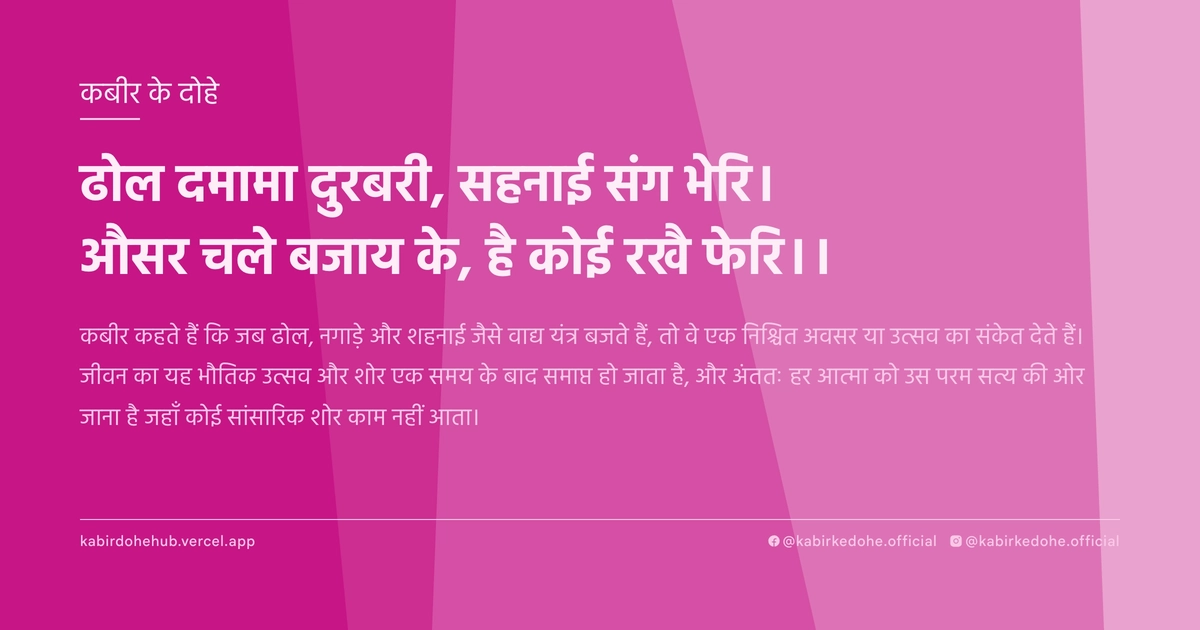
ढोल दमामा दुरबरी, सहनाई संग भेरि।
औसर चले बजाय के, है कोई रखै फेरि।।
Dhol damama durbari, shehnai sang bheri. Ausar chale bajay ke, hai koi rakhai pheri.
इस पृष्ठ पर इस कबीर दोहे का अर्थ (meaning), हिंदी व्याख्या और अंग्रेज़ी अनुवाद, दार्शनिक विश्लेषण और व्यावहारिक जीवन सीख दी गई है। यह दोहा मृतुक्यता (Mortality) विषय से जुड़ा है — Kabir doha meaning and explanation in Hindi and English.
अर्थ (Meaning):
कबीर कहते हैं कि जब ढोल, नगाड़े और शहनाई जैसे वाद्य यंत्र बजते हैं, तो वे एक निश्चित अवसर या उत्सव का संकेत देते हैं। जीवन का यह भौतिक उत्सव और शोर एक समय के बाद समाप्त हो जाता है, और अंततः हर आत्मा को उस परम सत्य की ओर जाना है जहाँ कोई सांसारिक शोर काम नहीं आता।
Kabir observes that the sounding of drums, kettledrums, and shehnais signifies a specific occasion or celebration. He warns that the festive noise of worldly existence is temporary; when the final moment of departure arrives, no earthly instrument or ritual can delay the inevitable journey toward the Ultimate Truth.
व्याख्या (Interpretation):
शाब्दिक रूप से यह दोहा उत्सव के शोर का वर्णन करता है, लेकिन रूपक के तौर पर 'ढोल-दमामा' संसार के मोह, अहंकार और सामाजिक प्रतिष्ठा के प्रतीक हैं। कबीर यहाँ 'निरगुण भक्ति' के परिप्रेक्ष्य से समझाते हैं कि मनुष्य माया के शोर में इतना खो जाता है कि वह अपनी अंतरात्मा की शांत पुकार नहीं सुन पाता। यह द्वैतवाद का चरम है जहाँ व्यक्ति स्वयं को शरीर और पद से जोड़ लेता है, जबकि 'अद्वैत वेदांत' के अनुसार वह शुद्ध चेतना है। जब मृत्यु का समय आता है, तब यह सारा बाहरी आडंबर व्यर्थ हो जाता है। यह विरोधाभास है कि जिस शोर को हम जीवन समझते हैं, वह वास्तव में हमारी आध्यात्मिक नींद का कारण है। अंततः, केवल वह सत्य बचता है जो मौन है और निराकार है।
Literally, the verse describes the clamor of celebration, but metaphorically, the 'drums and shehnais' symbolize worldly attachments, ego, and social prestige. From the lens of Nirgun Bhakti, Kabir suggests that humans are so immersed in the noise of Maya (illusion) that they fail to hear the silent call of the soul. This represents the peak of duality, where the individual identifies with the physical body and status, ignoring the Advaita Vedanta truth of being pure consciousness. When the final hour strikes, all external pomp becomes irrelevant. The central paradox is that the noise we mistake for 'living' is actually the veil preventing our spiritual awakening. Ultimately, only that which is silent and formless remains.
दार्शनिक विश्लेषण (Philosophical Analysis):
कबीर का यह दोहा उनके समय के सामाजिक और धार्मिक पाखंड पर एक गहरा प्रहार है। 15वीं शताब्दी में, धर्म केवल बाहरी कर्मकांडों, बड़े उत्सवों और जातिगत श्रेष्ठता के प्रदर्शन तक सीमित हो गया था। कबीर ने इस 'शोर' को आध्यात्मिक अज्ञानता का प्रतीक माना। उन्होंने तर्क दिया कि ईश्वर किसी मंदिर, मस्जिद या उत्सव के शोर में नहीं, बल्कि हृदय की गहराई में स्थित है।
दार्शनिक रूप से, यह सूफी मत के 'फना' (अहंकार का विनाश) और वेदांत के 'माया' सिद्धांत का संगम है। कबीर समझाते हैं कि सामाजिक प्रतिष्ठा और भौतिक सुख केवल एक क्षणिक भ्रम हैं। जब व्यक्ति स्वयं को 'मैं' और 'मेरा' के घेरे में देखता है, तो वह सत्य से दूर हो जाता है। यह अहंकार ही वह 'ढोल' है जो लगातार बजता रहता है और आत्मा को विचलित करता है।
कबीर का विरोध केवल संगीत या उत्सव से नहीं था, बल्कि उस मानसिकता से था जो बाहरी दिखावे को आंतरिक शुद्धि से ऊपर रखती थी। उन्होंने जाति व्यवस्था और कर्मकांडों को इसलिए नकारा क्योंकि वे आत्मा की एकता के मार्ग में बाधा थे। उनके लिए, वास्तविक प्रार्थना वह है जो मौन में की जाए, जहाँ कोई 'दमामा' या 'भेरि' न हो।
मनोवैज्ञानिक स्तर पर, यह दोहा हमें 'संवेदी अधिभार' (sensory overload) के प्रति सचेत करता है। हम बाहरी दुनिया की प्रशंसा और आलोचना के शोर में इतने व्यस्त रहते हैं कि हम अपनी आंतरिक शून्यता को नहीं देख पाते। कबीर इस शोर को शांत करने का आह्वान करते हैं ताकि हम उस 'अनहद नाद' (ब्रह्मांडीय ध्वनि) को सुन सकें जो केवल मौन में सुनाई देती है।
अंततः, यह शिक्षण हमें यह समझने के लिए प्रेरित करता है कि जीवन का वास्तविक उद्देश्य बाहरी उत्सवों को संचित करना नहीं, बल्कि उस शाश्वत शांति को प्राप्त करना है जो मृत्यु के बाद भी बनी रहती है। यह भौतिकता से आध्यात्मिकता की ओर एक निर्णायक संक्रमण है, जहाँ व्यक्ति अपनी क्षणभंगुर पहचान को त्यागकर सार्वभौमिक सत्य में विलीन हो जाता है।
This doha is a profound critique of the social and religious hypocrisy of Kabir's era. In the 15th century, religion had largely devolved into external rituals, lavish celebrations, and displays of caste superiority. Kabir identifies this 'noise' as a symbol of spiritual ignorance, arguing that the Divine resides not in the clamor of temples or mosques, but in the depths of the heart.
Philosophically, this is a confluence of the Sufi concept of 'Fana' (annihilation of the ego) and the Vedantic doctrine of 'Maya'. Kabir posits that social prestige and material pleasures are mere transient illusions. When an individual perceives themselves through the lens of 'I' and 'Mine', they distance themselves from the Absolute Truth. The ego is the 'drum' that beats incessantly, distracting the soul from its source.
Kabir's opposition was not to music or celebration itself, but to the mindset that prioritized external display over internal purification. He rejected caste hierarchies and ritualism because they acted as barriers to the realization of the soul's unity. For him, true prayer is that which occurs in silence, devoid of the 'damama' or 'bheri'.
On a psychological level, the verse warns against 'sensory overload'. We are so preoccupied with the noise of worldly praise and criticism that we fail to acknowledge our internal void. Kabir calls for the silencing of this external noise to perceive the 'Anhad Naad' (the unstruck cosmic sound), which is audible only in profound stillness.
Ultimately, this teaching urges us to understand that the purpose of life is not to accumulate earthly celebrations, but to attain that eternal peace that persists beyond death. It is a decisive transition from the material to the spiritual, where the individual sheds their ephemeral identity to merge with the universal truth.
मूल संदेश (Core Message):
- बाहरी प्रशंसा एक क्षणभंगुर शोर है, जो अंततः शांत हो जाता है।
- अहंकार का ढोल हमें हमारी वास्तविक आत्मा की ध्वनि से दूर करता है।
- सच्ची आध्यात्मिक प्रगति मौन की गहराई में निहित है।
- मृत्यु वह अंतिम सत्य है जो सभी सांसारिक आडंबरों को समाप्त कर देता है।
- आंतरिक शांति ही एकमात्र स्थायी उत्सव है जिसे हम साथ ले जा सकते हैं।
- External praise is a transient noise that inevitably fades into silence.
- The drum of ego drowns out the authentic voice of the soul.
- True spiritual progress is rooted in the depths of profound stillness.
- Death is the ultimate truth that dissolves all worldly pretenses.
- Inner peace is the only eternal celebration we can carry forward.
व्यावहारिक उदाहरण (Practical Example):
वाराणसी के एक पुराने घाट पर माधव नाम का एक वृद्ध बुनकर रहता था। माधव अपनी पूरी जिंदगी बेहतरीन रेशमी वस्त्र बुनने में बिताла, और शहर के सबसे अमीर व्यापारियों के लिए कपड़े बनाता था। उसके घर में हमेशा चहल-पहल रहती थी, लोग उसकी कला की प्रशंसा करते थे और वह इस सामाजिक सम्मान के 'शोर' में बहुत खुश था। उसे लगता था कि उसकी पहचान उसके हुनर और उसकी प्रसिद्धि से है।
एक समय आया जब माधव बहुत बीमार पड़ गया। उसके पास अब न तो वह ऊर्जा थी कि वह करघे पर बैठ सके और न ही वह शोर जो कभी उसके घर के आसपास रहता था। जो लोग उसकी प्रशंसा करते थे, वे धीरे-धीरे गायब होने लगे। उसके कमरे में अब केवल सन्नाटा था। इस सन्नाटे ने उसे डरा दिया, क्योंकि उसने कभी मौन का सामना नहीं किया था।
एक दिन, एक फकीर उसके पास आया। फकीर ने माधव के कमरे में पसरे सन्नाटे को देखा और मुस्कुराते हुए कहा, 'माधव, अब तक तुम दुनिया के ढोल सुन रहे थे, अब समय है कि तुम अपने भीतर की शहनाई सुनो।' माधव ने पूछा, 'यह कैसा संगीत है जो सुनाई नहीं देता?'
फकीर ने समझाया कि जब तक वह बाहरी प्रशंसा के शोर में डूबा था, वह केवल एक 'बुनकर' था, लेकिन इस मौन में वह वास्तव में 'स्वयं' हो सकता है। माधव ने महसूस किया कि उसकी पूरी जिंदगी एक उत्सव की तरह थी, लेकिन वह उत्सव उसके अपने लिए नहीं, बल्कि दूसरों को दिखाने के लिए था।
उसने अपनी आँखें बंद कीं और पहली बार उस सन्नाटे को सुनना शुरू किया। उसने पाया कि जिस सन्नाटे से वह डर रहा था, वही वास्तव में सबसे गहरा संगीत था। उसने महसूस किया कि उसकी रेशमी साड़ियाँ और उसकी प्रसिद्धि केवल 'दमामा' थे, जो समय के साथ शांत हो गए।
माधव ने अपनी बची हुई ऊर्जा उन लोगों की मदद करने में लगाई जिन्हें समाज ने भुला दिया था, बिना किसी प्रशंसा की इच्छा के। उसने पाया कि जब वह दूसरों के लिए बिना किसी शोर के काम करता है, तो उसे एक ऐसी शांति मिलती है जो उसने अपनी सबसे महंगी साड़ियों में भी नहीं पाई थी।
उसकी पहचान अब 'प्रसिद्ध बुनकर' से बदलकर 'एक शांत आत्मा' की हो गई। उसने समझ लिया कि जीवन का असली उत्सव बाहरी शोर में नहीं, बल्कि आंतरिक संतोष में है।
जब माधव की मृत्यु हुई, तो उसके पास कोई बड़ा उत्सव नहीं था, कोई ढोल-नगाड़े नहीं थे, लेकिन उसके चेहरे पर एक ऐसी मुस्कान थी जो केवल वही व्यक्ति पा सकता है जिसने जीवन के शोर को पार कर लिया हो।
On an ancient ghat in Varanasi lived an elderly weaver named Madhav. Madhav spent his entire life weaving the finest silk garments, catering to the wealthiest merchants of the city. His home was always bustling with activity; people praised his artistry, and he took great pride in the 'noise' of this social recognition. He believed his identity was defined by his skill and fame.
Eventually, Madhav fell gravely ill. He no longer had the strength to sit at his loom, and the noise that once surrounded his home vanished. The people who had showered him with praise slowly disappeared. His room was now filled with an oppressive silence. This silence terrified him, for he had never encountered true stillness before.
One day, a wandering fakir visited him. Seeing the silence enveloping the room, the fakir smiled and said, 'Madhav, until now you were listening to the drums of the world; now is the time to hear the shehnai within you.' Madhav asked, 'What music is this that cannot be heard?'
The fakir explained that as long as he was immersed in the noise of external praise, he was merely a 'weaver,' but in this silence, he could truly become 'Himself.' Madhav realized that his entire life had been like a festival, but a festival staged for others, not for his own soul.
He closed his eyes and began to listen to the silence for the first time. He discovered that the stillness he had feared was actually the deepest form of music. He realized that his silk sarees and his fame were merely 'damamas'—drums that inevitably fall silent with time.
Madhav spent his remaining days helping those forgotten by society, without any desire for recognition. He found that when he served others without the noise of ego, he experienced a peace that he had never found in his most expensive fabrics.
His identity shifted from being a 'famous weaver' to a 'silent soul.' He understood that the true celebration of life lies not in external clamor, but in internal contentment.
When Madhav finally passed away, there were no grand celebrations or drums, but there was a smile on his face—a smile only attainable by one who has transcended the noise of existence.
अभ्यास मार्गदर्शन (Practice Guidance):
- दैनिक मौन अभ्यास: प्रतिदिन 20 मिनट पूर्ण सन्नाटे में बैठें। बाहरी शोर को सुनने के बजाय, अपने भीतर उठने वाले विचारों के शोर को केवल एक साक्षी (witness) की तरह देखें।
- अहंकार का विश्लेषण: एक जर्नल रखें और उन क्षणों को लिखें जब आपने प्रशंसा पाने के लिए कोई कार्य किया। पूछें—'यदि कोई यह नहीं देख रहा होता, तो क्या मैं फिर भी यह करता?'
- सादा जीवन, उच्च विचार: सप्ताह में एक दिन सभी सामाजिक विलासिता और दिखावे से दूर रहें। केवल न्यूनतम आवश्यकताओं का उपयोग करें ताकि आप भौतिक शोर के प्रति अपनी निर्भरता को पहचान सकें।
- निदान चेकलिस्ट: क्या मैं अपनी पहचान अपने पद, संपत्ति या प्रशंसा से जोड़ता हूँ? क्या मैं अकेलेपन या सन्नाटे से डरता हूँ? क्या मैं दूसरों की राय को अपनी आंतरिक शांति से अधिक महत्व देता हूँ? यदि हाँ, तो आप अभी भी 'दमामा' के शोर में हैं।
- Daily Silence Practice: Sit in complete stillness for 20 minutes daily. Instead of listening to external noise, observe the noise of your own thoughts as a detached witness.
- Ego Analysis: Maintain a journal and record moments where you acted specifically to gain praise. Ask yourself—'Would I have done this if no one were watching?'
- Simple Living: Dedicate one day a week to abstain from all social luxuries and displays of status. Use only minimal necessities to recognize your dependence on material noise.
- Diagnostic Checklist: Do I link my identity to my title, wealth, or praise? Do I fear loneliness or silence? Do I value others' opinions more than my internal peace? If yes, you are still trapped in the 'damama' of the world.
चिंतन प्रश्न (Reflection Questions):
- यदि आज आपकी सारी सामाजिक उपलब्धियाँ और पद छीन लिए जाएँ, तो आपके पास 'स्वयं' के रूप में क्या बचेगा?
- आप अपनी छवि को बनाए रखने के लिए प्रतिदिन कितना मानसिक शोर पैदा करते हैं?
- क्या आपका 'डिजिटल व्यक्तित्व' (Social Media Ego) आपके वास्तविक अस्तित्व को ढक रहा है?
- आप सन्नाटे से क्यों डरते हैं? वह कौन सा सच है जो मौन होने पर सामने आता है?
- क्या आप वास्तव में स्वतंत्र हैं, या आप दूसरों की प्रशंसा के अदृश्य धागों से बंधे एक कठपुतली हैं?
- If all your social achievements and titles were stripped away today, what would remain of 'You'?
- How much mental noise do you generate daily just to maintain your public image?
- Is your 'digital persona' overshadowing your authentic existence?
- Why do you fear silence? What is the truth that emerges when the noise stops?
- Are you truly free, or are you a puppet dancing to the invisible strings of others' approval?