
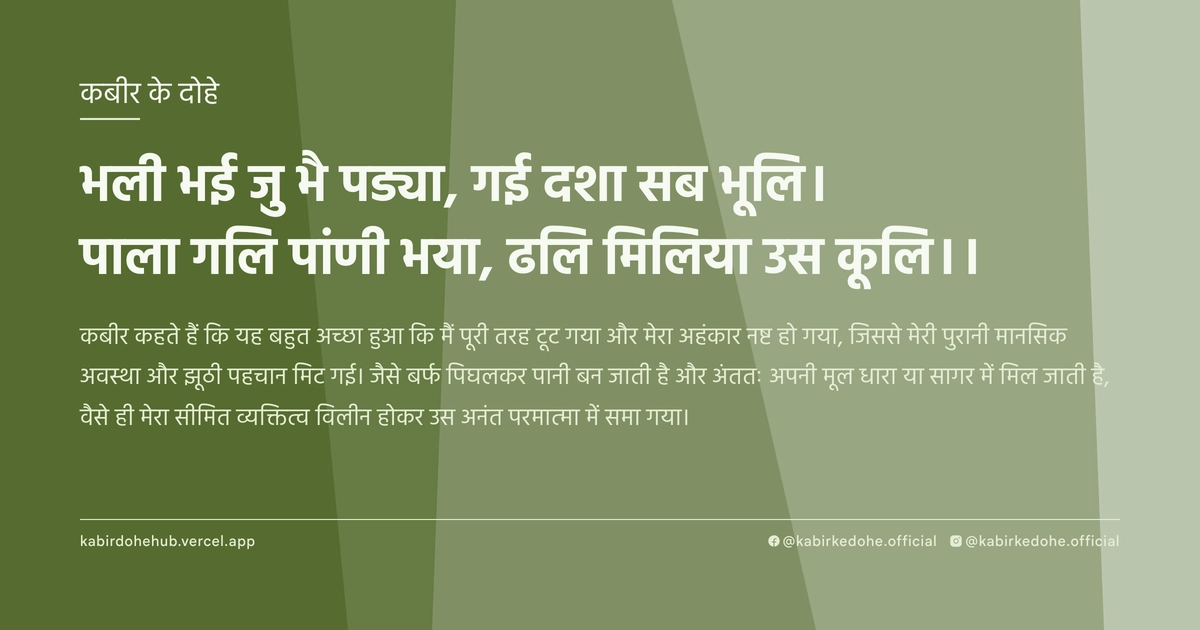
भली भई जु भै पड्या, गई दशा सब भूलि।
पाला गलि पांणी भया, ढलि मिलिया उस कूलि।।
Bhali bhai ju bhai padya, gai dasha sab bhuli. Pala gali paani bhaya, dhali miliya us kooli.
इस पृष्ठ पर इस कबीर दोहे का अर्थ (meaning), हिंदी व्याख्या और अंग्रेज़ी अनुवाद, दार्शनिक विश्लेषण और व्यावहारिक जीवन सीख दी गई है। यह दोहा मुक्ति (Liberation) विषय से जुड़ा है — Kabir doha meaning and explanation in Hindi and English.
अर्थ (Meaning):
कबीर कहते हैं कि यह बहुत अच्छा हुआ कि मैं पूरी तरह टूट गया और मेरा अहंकार नष्ट हो गया, जिससे मेरी पुरानी मानसिक अवस्था और झूठी पहचान मिट गई। जैसे बर्फ पिघलकर पानी बन जाती है और अंततः अपनी मूल धारा या सागर में मिल जाती है, वैसे ही मेरा सीमित व्यक्तित्व विलीन होकर उस अनंत परमात्मा में समा गया।
Kabir proclaims that it was a blessing to be utterly broken, for in that collapse, the false state of the ego and all previous delusions vanished. Just as ice melts into water and eventually flows back to merge with its original source, the limited individual identity dissolved to unite with the Infinite Divine.
व्याख्या (Interpretation):
यहाँ 'पड़ना' या टूटना भौतिक पतन नहीं, बल्कि अहंकार का आध्यात्मिक विखंडन है। कबीर इस विरोधाभास को दर्शाते हैं कि पूर्णता प्राप्त करने के लिए पहले पूर्णतः नष्ट होना आवश्यक है। 'पाला' (बर्फ) जड़ता और अहंकार का प्रतीक है, जो आत्मा को अलग-थलग रखता है। जब ज्ञान की अग्नि या प्रेम की तपन आती है, तो यह जड़ता पिघलती है और 'पानी' (चेतना) बन जाती है। यह प्रक्रिया अद्वैत वेदांत के उस सत्य को उजागर करती है जहाँ आत्मा (Atman) यह अनुभव करती है कि वह कभी ब्रह्म (Brahman) से अलग थी ही नहीं, केवल माया के कारण वह स्वयं को एक अलग 'ठोस' इकाई मान रही थी। अंततः, वह विलीन होकर उस मूल स्रोत में मिल जाती है जहाँ द्वैत समाप्त हो जाता है।
Here, 'falling' or breaking does not signify physical failure, but the spiritual fragmentation of the ego. Kabir presents the paradox that total annihilation is the prerequisite for total realization. 'Paala' (ice) symbolizes the rigidity of the ego and the illusion of separation that keeps the soul isolated. When the fire of knowledge or the warmth of divine love arrives, this rigidity melts into 'water' (pure consciousness). This process illuminates the truth of Advaita Vedanta, where the Atman realizes it was never separate from Brahman; it merely perceived itself as a distinct, 'solid' entity due to Maya. Ultimately, the individual stream merges into the primordial ocean, where all duality ceases to exist.
दार्शनिक विश्लेषण (Philosophical Analysis):
यह दोहा कबीर की निर्गुण भक्ति का सार है, जहाँ ईश्वर किसी मूर्ति या मंदिर में नहीं, बल्कि स्वयं के भीतर अहंकार के विसर्जन में पाया जाता है। कबीर का समय सामाजिक और धार्मिक कट्टरता का था, जहाँ लोग बाहरी कर्मकांडों और जातिगत श्रेष्ठता में फंसे थे। वे तर्क देते हैं कि जब तक मनुष्य अपनी 'दशा' यानी अपनी सामाजिक पहचान और अहंकार को पकड़े रहता है, वह सत्य से दूर रहता है।
दार्शनिक स्तर पर, यह सूफी मत के 'फना' (Fana) के सिद्धांत से मेल खाता है, जिसका अर्थ है स्वयं का विनाश ताकि ईश्वर का अस्तित्व प्रकट हो सके। यह केवल मानसिक शांति की बात नहीं है, बल्कि एक अस्तित्वगत परिवर्तन है। कबीर यहाँ यह स्पष्ट करते हैं कि मोक्ष कोई बाहरी उपलब्धि नहीं है, बल्कि एक आंतरिक 'पिघलने' की प्रक्रिया है।
अद्वैत वेदांत के अनुसार, अज्ञान (Avidya) हमें यह विश्वास दिलाता है कि हम शरीर और मन हैं। यह विश्वास बर्फ की तरह कठोर होता है। जब यह अज्ञान नष्ट होता है, तो हम अपनी वास्तविक प्रकृति—जो कि शुद्ध चेतना है—को पहचानते हैं। कबीर इस जटिल दर्शन को एक सरल प्राकृतिक उपमा (बर्फ और पानी) के माध्यम से समझाते हैं।
वे ritualism का विरोध करते हुए यह बताते हैं कि तीर्थयात्रा या व्रत तब तक व्यर्थ हैं जब तक हृदय का अहंकार पिघलकर प्रेम में न बदल जाए। उनके लिए 'भलाई' वही है जो मनुष्य को उसकी सीमित पहचान से मुक्त कर दे।
अंततः, यह विश्लेषण हमें सिखाता है कि जिसे हम जीवन की त्रासदी या विफलता (टूटना) समझते हैं, वह वास्तव में आध्यात्मिक जागृति का द्वार हो सकता है। जब हम अपनी योजनाओं और अहंकार के ढहने पर विलाप करने के बजाय उसे स्वीकार करते हैं, तब हम उस अनंत प्रवाह का हिस्सा बन जाते हैं।
This couplet encapsulates the essence of Kabir's Nirgun Bhakti, where the Divine is found not in idols or temples, but in the dissolution of the ego within oneself. Kabir lived in an era of intense social and religious rigidity, where people were trapped in external rituals and caste superiority. He argues that as long as a human clings to their 'dasha'—their social identity and ego—they remain estranged from the Truth.
Philosophically, this aligns with the Sufi concept of 'Fana' (annihilation), the process of dying to the self so that the Divine may manifest. This is not merely about mental peace, but an existential transformation. Kabir clarifies that liberation is not an external achievement but an internal process of 'melting.'
According to Advaita Vedanta, ignorance (Avidya) leads us to believe we are the body and mind. This belief is as rigid as ice. When this ignorance is destroyed, we recognize our true nature—pure consciousness. Kabir simplifies this complex philosophy using a natural metaphor of ice and water.
He rejects ritualism, suggesting that pilgrimages and fasts are futile unless the hardness of the heart melts into love. For him, true 'goodness' is that which liberates a person from their limited, conditioned identity.
Ultimately, this analysis teaches us that what we perceive as life's tragedy or failure (breaking down) is actually the gateway to spiritual awakening. When we stop mourning the collapse of our plans and ego and instead embrace it, we become part of the infinite flow.
मूल संदेश (Core Message):
- अहंकार का विनाश ही वास्तविक आध्यात्मिक जन्म है।
- टूटना अंत नहीं, बल्कि अनंत में विलीन होने का मार्ग है।
- जड़ता को पिघलाकर प्रेम की तरलता में बदलना ही साधना है।
- जब 'मैं' मिटता है, तभी 'वह' प्रकट होता है।
- परमात्मा से मिलन के लिए स्वयं का शून्य होना अनिवार्य है।
- The annihilation of ego is the true spiritual birth.
- Breaking down is not the end, but the path to merging with the Infinite.
- Sadhana is the process of melting rigidity into the fluidity of love.
- Only when the 'I' vanishes does the 'Divine' manifest.
- Becoming zero is the prerequisite for uniting with the Absolute.
व्यावहारिक उदाहरण (Practical Example):
वाराणसी के एक पुराने घाट पर माधव नाम का एक अत्यंत अभिमानी मूर्तिकार रहता था। वह अपनी कला में इतना निपुण था कि उसे लगता था कि उसके बिना शहर की कोई भी मूर्ति पूर्ण नहीं होगी। वह अन्य कलाकारों को तुच्छ समझता था और अपनी श्रेष्ठता के मद में चूर था।
एक समय ऐसा आया जब एक भीषण प्राकृतिक आपदा और बीमारी ने उसके परिवार और उसकी कार्यशाला को नष्ट कर दिया। उसकी सारी बेशकीमती मूर्तियाँ टूट गईं और वह स्वयं दर-दर भटकने लगा। उसकी सामाजिक प्रतिष्ठा, उसका अहंकार और उसका 'मूर्तिकार' होने का गर्व सब मिट्टी में मिल गया।
शुरुआत में माधव इस विनाश पर विलाप करता रहा। वह ईश्वर को कोसता रहा कि उसने उसकी कला और पहचान छीन ली। वह गहरे अवसाद में डूब गया और उसे लगा कि उसका जीवन समाप्त हो गया है।
एक दिन, एक साधारण साधु ने उसे देखा और कहा, "माधव, तू उस पत्थर के लिए रो रहा है जो टूट गया, लेकिन देख कि तेरे भीतर का वह पत्थर भी टूट गया है जिसने तुझे दूसरों से अलग कर रखा था।"
यह बात माधव के हृदय में गहरे तक उतर गई। उसने महसूस किया कि जब तक वह 'महान मूर्तिकार' था, वह केवल अपनी प्रशंसा देख रहा था। अब जब वह 'कुछ नहीं' रह गया था, तो वह पहली बार दूसरों का दर्द महसूस कर पा रहा था।
उसने देखा कि उसके पास अब खोने के लिए कुछ नहीं था, इसलिए वह अब वास्तव में स्वतंत्र था। उसने अपनी बची हुई ऊर्जा का उपयोग उन गरीब बच्चों को कला सिखाने में किया जो कभी उसकी छाया तक नहीं आ सकते थे।
उसने पाया कि जब उसका अहंकार (बर्फ) पिघला, तो उसके भीतर करुणा का एक झरना (पानी) बहने लगा। वह अब केवल एक कलाकार नहीं था, बल्कि वह स्वयं उस कला का हिस्सा बन गया था जिसे वह अब तक केवल पत्थर में खोज रहा था।
माधव की यह 'पतन' की अवस्था वास्तव में उसकी सबसे बड़ी उपलब्धि बन गई। वह अब उस अनंत शांति का अनुभव करता था जो उसे उसकी सफलता के शिखर पर कभी नहीं मिली थी।
उसने सीखा कि टूटना वास्तव में जुड़ने की शुरुआत है। वह अब घाट की भीड़ में एक गुमनाम व्यक्ति था, लेकिन उसके भीतर एक ब्रह्मांडीय पूर्णता थी।
उसका जीवन अब एक ऐसी धारा बन गया था जो बिना किसी अवरोध के उस परम सत्य की ओर बह रही थी, ठीक वैसे ही जैसे कबीर ने अपनी पंक्तियों में वर्णन किया है।
On an ancient ghat in Varanasi lived a sculptor named Madhav, possessed by immense pride. He was so skilled in his craft that he believed no idol in the city could be complete without his touch. He looked down upon other artists, blinded by the intoxication of his own superiority.
Time came when a severe natural disaster and a plague destroyed his family and his workshop. All his priceless sculptures were shattered, and he was reduced to wandering from door to door. His social prestige, his ego, and his pride of being a 'master sculptor' all turned to dust.
Initially, Madhav wailed over this destruction. He cursed God for stripping away his art and identity. He sank into a deep depression, believing his life had come to an end.
One day, a simple monk saw him and said, "Madhav, you weep for the stone that broke, but look—the stone within you, which kept you separate from others, has also broken."
These words pierced Madhav's heart. He realized that as long as he was the 'Great Sculptor,' he saw only his own praise. Now that he had become 'nothing,' he could feel the pain of others for the first time.
He discovered that since he had nothing left to lose, he was finally free. He used his remaining energy to teach art to poor children who could never have stood in his shadow before.
He found that as his ego (the ice) melted, a stream of compassion (the water) began to flow within him. He was no longer just an artist; he became a part of the very art he had previously sought only in stone.
Madhav's state of 'collapse' became his greatest achievement. He now experienced an infinite peace that had eluded him even at the peak of his success.
He learned that breaking is actually the beginning of uniting. He was now an anonymous man in the crowds of the ghat, yet he carried a cosmic wholeness within.
His life became a current flowing without obstruction toward the ultimate truth, exactly as Kabir described in his verses.
अभ्यास मार्गदर्शन (Practice Guidance):
- प्रतिदिन 20 मिनट मौन ध्यान करें, जहाँ आप अपनी सभी सामाजिक पहचानों (नाम, पद, रिश्ता) को मानसिक रूप से त्याग दें और केवल एक 'साक्षी' बनकर रहें।
- एक 'अहंकार डायरी' बनाएँ: दिन भर में जब भी आपको अपनी श्रेष्ठता का अनुभव हो या किसी पर निर्णय लेने की इच्छा हो, उसे लिखें और विश्लेषण करें कि वह कौन सा 'बर्फ का टुकड़ा' है जो पिघलने की प्रतीक्षा कर रहा है।
- स्वयं से प्रश्न करें: "यदि मेरी सारी उपलब्धियाँ और पहचान आज छीन ली जाएँ, तो मेरा वास्तविक स्वरूप क्या बचेगा?"
- निदान चेकलिस्ट: क्या मैं अपनी गलतियों पर रक्षात्मक (defensive) होता हूँ? क्या मैं दूसरों की सफलता से ईर्ष्या करता हूँ? यदि हाँ, तो इसका अर्थ है कि मेरा 'पाला' (अहंकार) अभी भी कठोर है।
- Practice 20 minutes of silent meditation daily, mentally shedding all social identities (name, rank, relationship) and remaining solely as a 'witness'.
- Maintain an 'Ego Diary': Whenever you feel a sense of superiority or an urge to judge others during the day, record it and analyze which 'piece of ice' is waiting to melt.
- Ask yourself: "If all my achievements and identities were stripped away today, what would remain of my true essence?"
- Diagnostic Checklist: Do I become defensive when my mistakes are pointed out? Do I feel envy at others' success? If yes, it indicates that my 'ice' (ego) is still rigid.
चिंतन प्रश्न (Reflection Questions):
- मेरी कौन सी ऐसी पहचान है जिसे खोने के विचार मात्र से मुझे डर लगता है?
- क्या मैं वास्तव में विनम्र हूँ, या मेरी विनम्रता भी मेरी एक निर्मित छवि (image) है?
- मेरे जीवन के सबसे कठिन दौर ने मेरे अहंकार के कौन से हिस्से को तोड़ा, और उससे मुझे क्या लाभ हुआ?
- मैं अपनी डिजिटल पहचान (social media ego) को अपने वास्तविक स्वरूप से कितना अलग मानता हूँ?
- क्या मैं दूसरों के दुख में वास्तव में उनके साथ हूँ, या मैं केवल अपनी श्रेष्ठता सिद्ध करने के लिए सहानुभूति दिखा रहा हूँ?
- Which identity of mine causes me the most fear at the mere thought of losing it?
- Am I truly humble, or is my humility merely a constructed image I present to the world?
- Which part of my ego was shattered during my hardest life phase, and how did that benefit me?
- How much do I differentiate my digital identity (social media ego) from my authentic self?
- In the suffering of others, am I truly with them, or am I merely displaying empathy to validate my own superiority?