
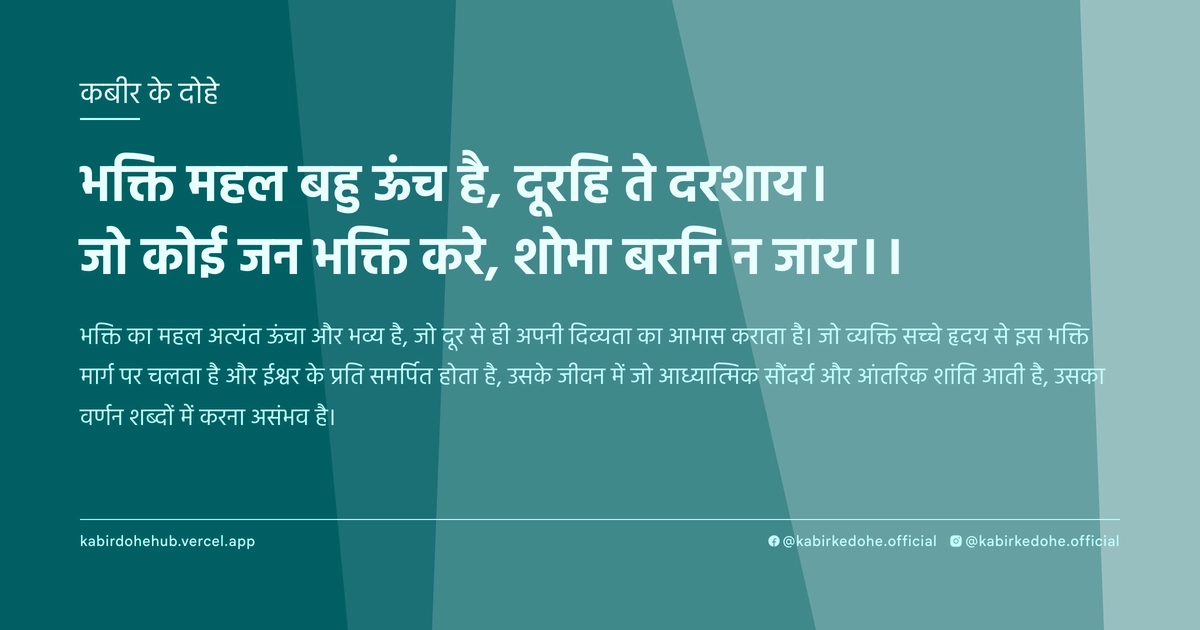
भक्ति महल बहु ऊंच है, दूरहि ते दरशाय।
जो कोई जन भक्ति करे, शोभा बरनि न जाय।।
Bhakti mahal bahu oonch hai, doorhi te darshay. Jo koi jan bhakti kare, shobha barni na jaaye.
इस पृष्ठ पर इस कबीर दोहे का अर्थ (meaning), हिंदी व्याख्या और अंग्रेज़ी अनुवाद, दार्शनिक विश्लेषण और व्यावहारिक जीवन सीख दी गई है। यह दोहा भक्ति (Bhakti) विषय से जुड़ा है — Kabir doha meaning and explanation in Hindi and English.
अर्थ (Meaning):
भक्ति का महल अत्यंत ऊंचा और भव्य है, जो दूर से ही अपनी दिव्यता का आभास कराता है। जो व्यक्ति सच्चे हृदय से इस भक्ति मार्ग पर चलता है और ईश्वर के प्रति समर्पित होता है, उसके जीवन में जो आध्यात्मिक सौंदर्य और आंतरिक शांति आती है, उसका वर्णन शब्दों में करना असंभव है।
The palace of devotion is immensely high and grand, visible and radiating its divine presence even from a distance. Whoever genuinely engages in this path of devotion and surrenders to the Divine attains an inner radiance and spiritual grace that transcends all linguistic descriptions and human expression.
व्याख्या (Interpretation):
शाब्दिक रूप से, कबीर भक्ति की तुलना एक विशाल महल से कर रहे हैं। रूपकात्मक स्तर पर, यह 'महल' उस उच्च चेतना की स्थिति है जहाँ आत्मा और परमात्मा का मिलन होता है। यह निरगुण भक्ति का संकेत है, जहाँ ईश्वर किसी मूर्ति में नहीं बल्कि हृदय की गहराई में स्थित है। माया के पर्दे जब हटते हैं, तब यह दिव्य महल दिखाई देता है। यहाँ 'ऊँचाई' अहंकार के विनाश और चेतना के उत्थान का प्रतीक है। यह अद्वैत वेदांत के उस सत्य को दर्शाता है जहाँ जीव अपनी पृथकता को त्यागकर पूर्णता में विलीन हो जाता है। अंततः, यह विरोधाभास है कि जो सबसे सरल मार्ग (प्रेम) है, वह सबसे उच्चतम गंतव्य तक ले जाता है।
Literally, Kabir compares devotion to a towering palace. Metaphorically, this 'palace' represents the state of elevated consciousness where the Atman merges with the Brahman. It points toward Nirgun Bhakti, suggesting that the Divine resides not in idols but within the depths of the heart. The visibility of the palace from afar signifies that the longing for truth is the first step toward realization. The 'height' symbolizes the transcendence of the ego and the ascent of spiritual awareness. This aligns with Advaita Vedanta, where the illusion of duality is dissolved into non-dual oneness. It presents the central paradox: the simplest path of unconditional love leads to the most complex and sublime spiritual destination.
दार्शनिक विश्लेषण (Philosophical Analysis):
कबीर का यह दोहा उस कालखंड का है जब भारतीय समाज कर्मकांडों और बाहरी आडंबरों में जकड़ा हुआ था। उन्होंने मंदिर-मस्जिद के विवादों से ऊपर उठकर 'हृदय के मंदिर' की बात की। यह दर्शन सूफीवाद के 'इश्क-ए-हकीकी' (ईश्वरीय प्रेम) और भक्ति आंदोलन के सहज मार्ग का संगम है। कबीर का तर्क है कि ईश्वर तक पहुँचने के लिए किसी पुरोहित या मध्यस्थ की आवश्यकता नहीं है, बल्कि केवल शुद्ध प्रेम और समर्पण पर्याप्त है।
दार्शनिक रूप से, यह 'अहं' के विसर्जन की प्रक्रिया है। जब तक मनुष्य अपनी सामाजिक पहचान, जाति या पद के अहंकार में रहता है, वह इस महल की ऊँचाई को नहीं देख पाता। जैसे ही 'मैं' मिटता है, 'वह' प्रकट होता है। यह शून्य की अवस्था है जहाँ भक्त और भगवान एक हो जाते हैं।
यहाँ 'शोभा' का अर्थ भौतिक सुंदरता नहीं, बल्कि वह आंतरिक प्रकाश है जो आत्म-साक्षात्कार के बाद प्रस्फुटित होता है। यह वह स्थिति है जिसे 'सच्चिदानंद' कहा गया है—सत्य, चित्त और आनंद का मिलन। कबीर यहाँ यह स्पष्ट करते हैं कि भक्ति कोई बोझिल कार्य नहीं, बल्कि एक आनंदमयी यात्रा है।
वेदांत के परिप्रेक्ष्य में, यह महल 'माया' के पार जाने का मार्ग है। माया हमें भ्रमित करती है कि हम अलग हैं, लेकिन भक्ति हमें याद दिलाती है कि हम उसी अनंत सत्ता का हिस्सा हैं। यह द्वैत से अद्वैत की ओर संक्रमण है।
अंततः, कबीर यह संदेश देते हैं कि आध्यात्मिक उपलब्धि किसी विशेष वर्ग या धर्म के लिए आरक्षित नहीं है। चाहे वह एक बुनकर हो या कोई राजा, जो प्रेम की भाषा बोलता है, वह इस दिव्य महल का निवासी बन सकता है। यह सामाजिक समानता का एक गहरा आध्यात्मिक आधार प्रस्तुत करता है।
Kabir’s couplet emerges from an era dominated by rigid ritualism and external religious displays. He transcends the conflict between temple and mosque by proposing the 'temple of the heart.' This philosophy is a synthesis of Sufism’s 'Ishq-e-Haqiqi' (Divine Love) and the Sahaja path of the Bhakti movement. Kabir argues that no priest or intermediary is required to reach the Divine; pure love and total surrender are sufficient.
Philosophically, this is the process of the annihilation of the ego. As long as a human remains trapped in the ego of social identity, caste, or status, the height of this divine palace remains invisible. The moment the 'I' vanishes, the 'He' manifests. This is the state of Shunya (void), where the devotee and the Divine become one.
The 'beauty' or 'grace' mentioned here is not physical but the inner radiance that blooms after self-realization. This is the state of 'Satchidananda'—the union of Truth, Consciousness, and Bliss. Kabir emphasizes that devotion is not a burdensome chore but a joyful journey of homecoming.
From the perspective of Advaita Vedanta, this palace represents the path beyond 'Maya' (illusion). Maya deceives us into believing we are separate entities, but Bhakti reminds us that we are fragments of the same infinite reality. It is the transition from duality to non-duality.
Ultimately, Kabir asserts that spiritual attainment is not reserved for a specific class or religion. Whether a weaver or a king, anyone who speaks the language of love can inhabit this divine palace. This provides a profound spiritual foundation for social equality and universal brotherhood.
मूल संदेश (Core Message):
- बाहरी आडंबर केवल भ्रम हैं, वास्तविक मंदिर हृदय के भीतर है।
- अहंकार का विसर्जन ही आध्यात्मिक ऊँचाई तक पहुँचने की एकमात्र सीढ़ी है।
- निस्वार्थ प्रेम वह कुंजी है जो दिव्य महल के द्वार खोलती है।
- आंतरिक शांति किसी बाहरी उपलब्धि से नहीं, बल्कि आत्म-समर्पण से आती है।
- जब 'मैं' मिटता है, तब ब्रह्मांडीय चेतना की अनंत शोभा प्रकट होती है।
- External rituals are mere illusions; the true temple resides within the heart.
- The dissolution of ego is the only ladder to reach spiritual heights.
- Selfless love is the key that unlocks the doors of the divine palace.
- Inner peace stems from total surrender, not from external achievements.
- When the 'I' vanishes, the infinite radiance of universal consciousness manifests.
व्यावहारिक उदाहरण (Practical Example):
वाराणसी के एक पुराने घाट पर रहने वाली एक वृद्ध विधवा, जानकी, का जीवन अत्यंत एकाकी था। वह प्रतिदिन घंटों मंदिर में पूजा करती, लेकिन उसके मन में हमेशा यह शिकायत रहती कि ईश्वर उसकी पुकार नहीं सुन रहे। वह दूसरों की तुलना में खुद को कमतर और दुखी मानती थी।
एक दिन उसने एक फकीर को देखा जो बिना किसी माला या मंत्र के, बस एक गहरी मुस्कान के साथ चुपचाप बैठा था। जानकी ने उससे पूछा, 'मैं इतनी पूजा करती हूँ, फिर भी शांति क्यों नहीं मिलती?' फकीर ने बस इतना कहा, 'तुम महल के बाहर खड़ी होकर चिल्ला रही हो, जबकि दरवाजा तुम्हारे भीतर है।'
जानकी को पहले यह बात समझ नहीं आई। लेकिन उसने धीरे-धीरे बाहरी दिखावे और 'सही तरीके' से पूजा करने की चिंता छोड़ दी। उसने अपनी सेवा को ही पूजा बनाना शुरू किया। वह घाट पर आने वाले भूखे पशुओं को रोटी देने लगी और उदास यात्रियों से प्रेमपूर्वक बात करने लगी।
उसने महसूस किया कि जब वह दूसरों के दुख में अपना दुख भूल जाती है, तो उसे एक अजीब सी शांति महसूस होती है। वह अब मंदिर जाने के लिए विवश नहीं थी, क्योंकि उसे अपने भीतर ही एक मंदिर महसूस होने लगा था।
उसकी शिकायतें खत्म हो गईं और उसके चेहरे पर एक ऐसी चमक आ गई जिसे देखकर लोग उससे पूछने लगे कि उसने कौन सा नया मंत्र सीखा है। जानकी बस मुस्कुरा देती।
उसने पाया कि भक्ति का 'महल' कहीं बाहर नहीं, बल्कि उसके निस्वार्थ प्रेम और करुणा में था। उसकी आंतरिक शांति अब उसकी बाहरी परिस्थितियों पर निर्भर नहीं थी।
वह अब मृत्यु के भय से मुक्त थी और जीवन के हर क्षण को उत्सव की तरह जीने लगी। उसने जान लिया कि असली शोभा बाहरी वस्त्रों में नहीं, बल्कि आत्मा की पवित्रता में है।
यह जानकी का रूपांतरण था—एक ऐसी विधवा जो पहले खुद को अभिशप्त मानती थी, अब वह पूरे घाट के लिए शांति और प्रेम का स्रोत बन गई थी।
Janaki, an elderly widow living on an ancient ghat in Varanasi, led a deeply lonely life. She spent hours daily in temple rituals, yet her heart was filled with a constant grievance that the Divine was ignoring her pleas. She viewed herself as inferior and miserable compared to others.
One day, she encountered a wandering dervish who sat in profound silence, wearing nothing but a serene smile, without any beads or mantras. Janaki asked, 'I pray so much, yet why do I find no peace?' The dervish simply replied, 'You are screaming outside the palace walls, while the door is inside you.'
Janaki didn't understand at first. However, she gradually stopped worrying about the 'correct' way to pray or the external displays of piety. She began to transform her service into her worship. She started feeding hungry animals on the ghats and speaking with genuine love to distressed travelers.
She realized that whenever she forgot her own sorrow by absorbing the pain of others, a strange, deep peace enveloped her. She no longer felt compelled to go to the temple because she began to feel a temple manifesting within herself.
Her complaints vanished, and a radiance appeared on her face that led people to ask what new mantra she had mastered. Janaki would only smile in response.
She discovered that the 'palace' of devotion was not in some distant heaven, but in her own selfless love and compassion. Her inner peace was no longer dependent on her external circumstances.
She became free from the fear of death and began to live every moment as a celebration. She understood that true grace lies not in external attire, but in the purity of the soul.
This was Janaki's transformation—a woman who once saw herself as cursed became a source of peace and love for the entire community on the ghats.
अभ्यास मार्गदर्शन (Practice Guidance):
- प्रतिदिन 20 मिनट मौन ध्यान करें, जहाँ आप किसी देवता की छवि के बजाय केवल अपने भीतर की श्वास और प्रेम की अनुभूति करें।
- स्व-अन्वेषण पत्रिका (Journaling): लिखें कि दिन भर में किन क्षणों में आपका अहंकार (Ego) हावी रहा और कैसे आप उसे 'समर्पण' में बदल सकते थे।
- व्यवहार परिवर्तन: दिन में कम से कम एक ऐसा कार्य करें जो पूरी तरह निस्वार्थ हो और जिसके बदले में आप किसी प्रशंसा या फल की इच्छा न रखें।
- निदान चेकलिस्ट: क्या आप अभी भी ईश्वर को बाहरी स्थानों या अनुष्ठानों में खोज रहे हैं? क्या आपकी शांति दूसरों के व्यवहार पर निर्भर है? यदि हाँ, तो आप अभी भी महल के बाहर हैं।
- Practice 20 minutes of silent meditation daily, focusing not on an image of a deity, but on the feeling of breath and love within you.
- Self-Inquiry Journaling: Document moments during the day when your ego dominated and reflect on how that energy could have been transformed into 'surrender'.
- Behavioral Shift: Perform at least one act of absolute selflessness daily, without any desire for recognition, reward, or spiritual merit.
- Diagnostic Checklist: Are you still seeking the Divine in external locations or rituals? Is your peace dependent on others' behavior? If yes, you are still standing outside the palace.
चिंतन प्रश्न (Reflection Questions):
- क्या मेरी धार्मिक पहचान मुझे दूसरों से जोड़ती है या मुझे श्रेष्ठता का भ्रम देकर अलग करती है?
- यदि मुझसे मेरे सभी पद, रिश्ते और सामाजिक प्रतिष्ठा छीन लिए जाएँ, तो मेरे भीतर क्या बचेगा?
- मैं अपनी 'आध्यात्मिक प्रगति' का प्रदर्शन दूसरों के सामने कितना करता हूँ, और यह मेरे अहंकार को कैसे पोषित करता है?
- क्या मैं वास्तव में प्रेम करता हूँ, या मैं केवल उस प्रेम के बदले में शांति और सुरक्षा की तलाश कर रहा हूँ?
- मेरे जीवन का वह कौन सा हिस्सा है जहाँ मैं अभी भी 'महल के बाहर' खड़ा होकर शिकायत कर रहा हूँ?
- Does my religious identity connect me to others, or does it isolate me by creating an illusion of superiority?
- If all my titles, relationships, and social statuses were stripped away, what would remain within me?
- How much do I perform my 'spiritual progress' for others to see, and how does this feed my ego?
- Do I truly love, or am I merely seeking peace and security in exchange for that love?
- Which part of my life am I still spending 'outside the palace,' complaining about the lack of grace?